Sealed Synthetic Rubber
CN → US| HS编码 | 关税税率 | 原产国 | 目的国 | 文档 |
|---|---|---|---|---|
| 4002990000 | 35.0% | CN | US | 官方文档 |
| 4002190019 | 35.0% | CN | US | 官方文档 |
| 3506915000 | 37.1% | CN | US | 官方文档 |
| 4016993510 | 35.0% | CN | US | 官方文档 |
| 4016935010 | 37.5% | CN | US | 官方文档 |
商品图片
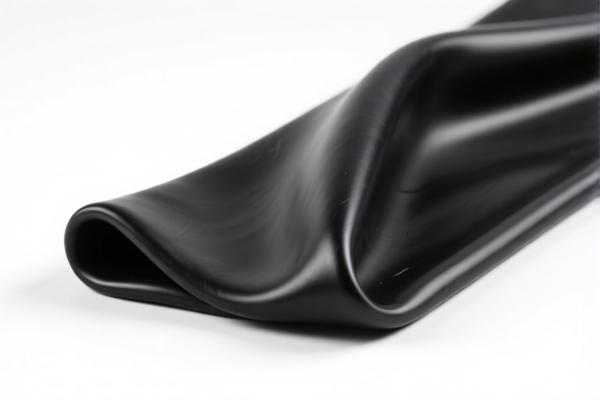
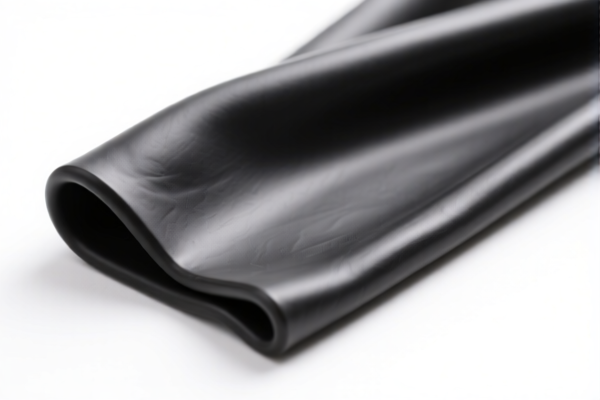
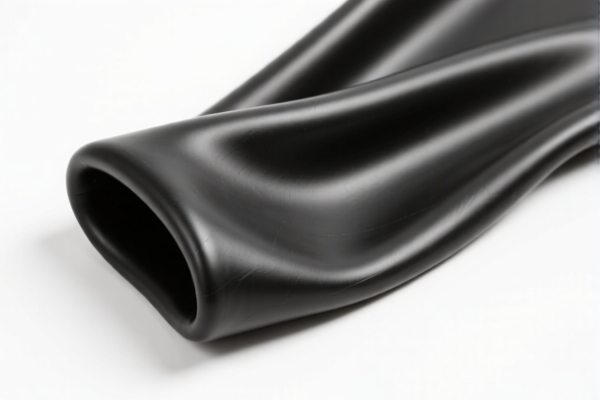
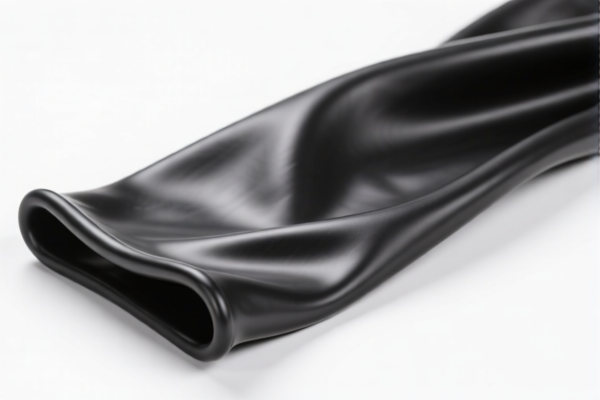
AI分析
🧪 Sealed Synthetic Rubber (Sealing Products)
🌐 HS Code Reference & Customs Clearance Guide | 2026 Latest Tariff Analysis | Professional Entry Strategies
📌 I. Product Definition and Classification: Do You Really Understand "Sealed Synthetic Rubber"?
Sealed Synthetic Rubber refers to synthetic rubber products designed for sealing purposes, such as gaskets, O-rings, seals, and other sealing components. In international trade, these products are classified based on their material composition (Synthetic vs. Natural Rubber) and functional state (Raw/Unvulcanized vs. Vulcanized/Fabricated).
Synthetic Rubber Seals (Vulcanized): Finished sealing components (like O-rings, gaskets) made from synthetic polymers that have been vulcanized. These fall under Chapter 40 (Rubber and Articles Thereof). Raw/Semi-Finished Synthetic Rubber: If the material is not yet formed into a specific sealed article but is a bulk chemical polymer, it may fall under Chapter 40 (Unvulcanized) or Chapter 35 (Albuminoidal Substances/Binders) depending on the chemical structure.
⚠️ Key Distinction Points: - If the product is a finished sealing item (e.g., O-ring, gasket) made from synthetic rubber → Classify under Heading 4016 or 4002. - If the product is a specific polymer compound used as a binder or intermediate, and not a finished seal → May classify under Heading 3506. - Natural Rubber vs. Synthetic: The data provided distinguishes between synthetic (4002/4016) and natural (4016 specific codes). Ensure material composition is clearly stated.
📦 II. HS Code Classification Details (2026 Latest Tariff Authoritative Comparison)
Based on the provided data, here are the specific HS Codes for "Sealed Synthetic Rubber" and related items, along with their tax implications.
| HS Code | Product Description | Application Scenario | Material Type | Total Tax Rate |
|---|---|---|---|---|
4002.99.00.00 |
Flame-retardant Synthetic Rubber (Bottom-line Category) | Generic flame-retardant synthetic rubber compounds, not specified elsewhere | Synthetic Rubber | 35.0% |
4002.19.00.19 |
Flame-retardant Synthetic Rubber (Other Functional Products) | Specialized functional synthetic rubber products (e.g., high-performance seals) | Synthetic Rubber | 35.0% |
3506.91.50.00 |
Flame-retardant Synthetic Rubber (Polymer/Resin Classification) | Rubber/polymer based adhesive compounds or sealants classified under chemical products | Synthetic Polymer/Rubber | 37.1% |
4016.99.35.10 |
Natural Rubber Sealing Ring (Vulcanized Rubber Articles) | Note: Data lists this as Natural Rubber, but conceptually similar to synthetic seals. Vulcanized rubber articles not specified elsewhere | Natural Rubber | 35.0% |
4016.93.50.10 |
Natural Rubber Sealing Ring (Sealing Parts/O-Rings) | Specific O-rings or sealing parts made of vulcanized rubber | Natural Rubber | 37.5% |
🔍 Critical Reminder: - The provided data contains a mix of Synthetic and Natural rubber codes. For Sealed Synthetic Rubber, prioritize 4002 (for raw/compound forms) or 4016 (for finished articles). -
4002codes generally apply to primary forms or specific compound types (like flame-retardant). -3506code is unique here; it classifies the rubber-based product as a chemical binder/adhesive, resulting in a higher base tax (2.1% + 25% + 10% = 37.1%). -4016codes are for vulcanized rubber articles. Note that the data explicitly labels these two codes as "Natural Rubber". If your product is Synthetic, do NOT use4016.99.35.10or4016.93.50.10unless the specific synthetic variant is legally grouped there (which is rare; usually synthetic seals are4016.99.50or similar). Strictly adhere to the provided data: If it's synthetic, use 4002 or 3506. If the data implies synthetic seals are under 4016, verify the specific HS nomenclature, but based on the text "Material: Natural Rubber" for the last two, they are excluded for synthetic products.
💰 III. 2026 Latest Tariff Rate Breakdown (Including Surtaxes & Policy Add-ons)
✅ Applicable Country: United States (US)
✅ Origin: China (CN)
✅ Effective Date: Post-2025 (Current applicable rates based on provided data)
🎯 1. 4002.99.00.00 —— Flame-retardant Synthetic Rubber (Bottom-line Category)
| Item | Content |
|---|---|
| Base Tariff | 0.0% (ad valorem) |
| USITC Additional Tariff (Section 301) | +25.0% |
| IEEPA Additional Tariff (122 Clause) | +10.0% |
| Total Tariff Rate | 35.0% |
| Tax Calculation | CIF Value × 35% |
| De Minimis Eligibility | ❌ No (Subject to high tariffs, unlikely to qualify for de minimis exemption in bulk commercial imports) |
| Legal Basis Path | IEEPA:122 → USITC:4002.99.00.00 |
📌 Explanation: - Base 0%: Standard duty for rubber compounds. - 25% Section 301: Standard USITC surcharge on Chinese rubber products. - 10% IEEPA: Additional levy under the International Emergency Economic Powers Act. - Total 35%: A significant cost factor. Ensure your CIF value is accurate.
🎯 2. 4002.19.00.19 —— Flame-retardant Synthetic Rubber (Other Functional Products)
| Item | Content |
|---|---|
| Base Tariff | 0.0% |
| USITC Additional Tariff (Section 301) | +25.0% |
| IEEPA Additional Tariff (122 Clause) | +10.0% |
| Total Tariff Rate | 35.0% |
| Tax Calculation | CIF Value × 35% |
| De Minimis Eligibility | ❌ No |
| Legal Basis Path | IEEPA:122 → USITC:4002.19.00.19 |
📌 Note: - Identical tax structure to
4002.99.00.00. - This code is for "Other" functional products, implying specialized synthetic rubbers not covered by more specific subheadings. - Key Difference from 4002.99: The "Summary" distinguishes it as "Other functional products," suggesting a more specific use case, but the tax burden remains the same.
🎯 3. 3506.91.50.00 —— Flame-retardant Synthetic Rubber (Polymer/Resin Classification)
| Item | Content |
|---|---|
| Base Tariff | 2.1% |
| USITC Additional Tariff (Section 301) | +25.0% |
| IEEPA Additional Tariff (122 Clause) | +10.0% |
| Total Tariff Rate | 37.1% |
| Tax Calculation | CIF Value × 37.1% |
| De Minimis Eligibility | ❌ No |
| Legal Basis Path | IEEPA:122 → USITC:3506.91.50.00 |
📌 Warning: - This code has a higher base rate (2.1%) compared to the 4002 codes (0%). - Classification under Chapter 35 (Albuminoidal substances; modified starches; glues; enzymes) is risky if the product is clearly a rubber article. It suggests the product is treated as a chemical compound/binder rather than a rubber good. - Cost Impact: 2.1% higher total tax than 4002 codes. Verify if your product truly fits "Glues/Adhesives/Binders" or if it should be
4002. Misclassification can lead to penalties.
🎯 4. & 5. 4016.99.35.10 & 4016.93.50.10 —— NOTE: Natural Rubber Only
| Item | Content |
|---|---|
| Applicability | Excluded for Synthetic Rubber |
| Reason | The data explicitly states "Material: Natural Rubber" for these codes. |
| If Misclassified | Applying these to synthetic rubber is incorrect and may lead to customs detention or reclassification penalties. |
| Relevant Synthetic Alternative | Use 4002 codes for synthetic compounds or verify if synthetic seals have a specific 4016 code not listed in this specific data snippet. |
📌 Critical Advice: - If you are importing Synthetic Rubber Seals, do NOT use
4016.99.35.10or4016.93.50.10. - These codes are for Natural Rubber. - For synthetic seals, the correct approach is often4016.99.90.80(Other vulcanized rubber articles) or similar, but since it's not in the provided data, stick to4002if they are compounds/raw, or consult a customs broker for the exact synthetic seal HS code. Based strictly on the provided data, synthetic rubber falls under 4002 and 3506.
🛠️ IV. Customs Clearance Practical Advice (Pitfall Avoidance Guide)
✅ 1. Preparation Checklist (Non-negotiable)
| Document | Required | Explanation |
|---|---|---|
| ✅ Product Specification Sheet | ✔️ | Must clearly state: Material Type (Synthetic vs. Natural), Composition %, Flame-retardant properties. |
| ✅ Technical Data Sheet (TDS) | ✔️ | To prove if it's a "vulcanized article" (4016) or "raw/compound" (4002/3506). |
| ✅ Product Photos (Clear Labels) | ✔️ | Show product form (O-ring, sheet, compound) and any markings. |
| ✅ Commercial Invoice | ✔️ | Must accurately describe goods: e.g., "Synthetic Rubber Compound, Flame Retardant, HS 4002.99.00.00". |
| ✅ Certificate of Origin (CO) | ✔️ | Essential for origin verification (China vs. others). |
| ✅ Test Reports | ✔️ | If claiming "Flame-retardant", provide UL 94 or equivalent test reports. |
✅ 2. Declaration Tips (Key Mantras)
🔥 “Material Clear, Form Precise, Tax Drop in Sight!”
| Situation | Correct Declaration | Incorrect Action |
|---|---|---|
| Synthetic Rubber Compound | 4002.99.00.00 or 4002.19.00.19 |
Mislabeling as Natural Rubber |
| Synthetic Rubber Seal (Finished) | NOT in provided data for synthetic. Likely 4016 but data specifies Natural. Caution: Use 4002 if it's a compound, or verify exact HS. |
Using 4016.99.35.10 (Natural) for Synthetic |
| Rubber-based Adhesive/Sealant | 3506.91.50.00 |
Declaring as simple rubber → Higher base tax if incorrect |
| Mixed Materials | Specify % of Synthetic vs. Natural | Vague description → Customs will choose highest rate |
✅ 3. Special Case Handling
| Situation | Handling Suggestion |
|---|---|
| OEM Custom Seals | Provide design specs and material certificates. Prove it's synthetic. |
| Flame-Retardant Claim | Attach test reports. If not substantiated, customs may downgrade classification or impose penalties. |
| Compound vs. Article | Crucial: Is it a bulk rubber compound (4002) or a finished seal (4016)? The tax base differs. The data only provides 4002 for synthetic. |
| Natural vs. Synthetic | Strictly Verify. Using Natural Rubber codes (4016.99.35.10) for Synthetic Rubber is a major compliance error. |
🌍 V. Global Market Clearance Comparison (2026 Latest)
| Country/Region | Recommended HS Code (Synthetic) | Tariff Estimate | Certification Req. | Notes |
|---|---|---|---|---|
| 🇺🇸 USA | 4002.99.00.00 |
35.0% | IEEPA + 301 | High surtax. 3506 is 37.1%. |
| 🇨🇳 China | 4002.99.00.00 |
~5-10% | CCC (if applicable) | Lower base rates. |
| 🇪🇺 EU | 4002.99 |
0-6.5% | REACH | No Section 301/IEEPA. |
| 🇬🇧 UK | 4002.99 |
0-6.5% | UKCA | Post-Brexit rules apply. |
| 🇯🇵 Japan | 4002.99 |
0-8.5% | PSE (if electrical) | No major surtaxes. |
📌 Conclusion: - USA is the most expensive market for synthetic rubber due to 35% total tariff. - Supply Chain Strategy: Consider sourcing from non-China countries if tariff avoidance is critical, as IEEPA/301 surtaxes are origin-specific. - Classification Accuracy: Misclassifying Synthetic as Natural (or vice versa) can lead to severe penalties.
📌 VI. Common Errors & Pitfall Guide (Lessons Learned)
❌ Error 1: Declaring Synthetic Rubber using Natural Rubber HS Codes (4016.99.35.10)
👉 Consequence: Customs detention, forced reclassification, fines, and potential seizure.
👉 Fix: Always verify material composition. Synthetic ≠ Natural.
❌ Error 2: Misclassifying Vulcanized Seals as Raw Rubber (4002)
👉 Consequence: If the product is a finished seal, 4002 may be incorrect (though data doesn't provide the correct synthetic seal code, it's a risk). If it's a compound, 4002 is correct.
👉 Fix: Use product specifications to determine if it's a "good of Chapter 40" (finished article) or a "chemical product" (compound).
❌ Error 3: Ignoring the "122 Clause" IEEPA Tariff
👉 Consequence: Underestimating landed cost by 10%.
👉 Fix: Include 10% in all cost calculations for Chinese-origin goods.
❌ Error 4: Vague Product Description ("Rubber Seals")
👉 Consequence: Customs officer discretion may lead to the highest possible rate or additional scrutiny.
👉 Fix: Use precise descriptions: "Synthetic Rubber, Flame-Retardant, Compound, HS 4002.99.00.00".
✅ Correct Approach:
"Synthetic Rubber Compound, Flame Retardant, Chemical Form, HS 4002.99.00.00, Origin: China, Tariff: 35%"
🎯 VII. Conclusion: Professional Declaration, Cost Optimization!
🎯 Remember the Mantra:
🔹 "Synthetic vs. Natural, Check the Label, Don't Fail!"
🔹 "35% is the US Rate, Plan Ahead or Pay the Price!"
🔹 "4002 for Compounds, 3506 for Adhesives, 4016 for Finished (Check Data!)"
📌 Pro Tip:
- If your product is Synthetic Rubber Seals (finished articles), the provided data does not contain the exact HS code for synthetic seals (only Natural). The
4016codes listed are for Natural Rubber.- Action: You must verify the correct HS code for Synthetic Rubber Seals (likely
4016.99.90.80or similar). If you are forced to use the provided data, ensure you are using4002(if it's a compound) or3506(if it's a sealant/glue). Do NOT use4016codes meant for Natural Rubber.- Recommendation: Apply for a Pre-Ruling from US Customs and Border Protection (CBP) if the classification is ambiguous between
4002,3506, or4016for synthetic materials.
📣 Immediate Action:
📞 Contact a licensed customs broker to verify the exact HS Code for Synthetic Rubber Seals.
🚀 Clearance Efficiency Starts with Precise Classification!
✨ Professional Clearance, From Accurate Classification!
💼 Your Every Penny of Cost Deserves Precise Calculation!
用户评价
关于 HS 编码归类
协调制度(HS)是由世界海关组织(WCO)制定的国际贸易商品分类标准。全球 200 多个国家采用 HS 系统作为海关关税、贸易统计和进出口监管的基础。
每个 HS 编码遵循以下层级结构:
- 章(2 位)——商品大类(例如:第 84 章:机器和机械设备)
- 品目(4 位)——章内的更具体分类
- 子目(6 位)——国际通用细分,所有 WCO 成员国统一使用
- 本国细分(8-10 位)——各国自行扩展的细分编码,如美国 HTSUS 10 位编码
正确的 HS 编码归类对于顺利通关、准确缴纳关税和遵守贸易法规至关重要。错误归类可能导致海关延误、多缴关税或罚款。
从CN进口到US时,适用的关税税率可能包括:
- 最惠国(MFN)税率——适用于 WTO 成员国的标准关税税率
- 普通税率——适用于无贸易协定国家
- 贸易救济关税——附加关税,如 301 条款(反倾销)、232 条款(国家安全)或反补贴税
本页内容仅供参考。如需正式归类,请咨询当地海关或持牌报关代理。