Self adhesive Waterproof Label
CN → US| HS编码 | 关税税率 | 原产国 | 目的国 | 文档 |
|---|---|---|---|---|
| 4821102000 | 35.0% | CN | US | 官方文档 |
| 3926909989 | 22.8% | CN | US | 官方文档 |
| 3926100000 | 15.3% | CN | US | 官方文档 |
| 4821902000 | 35.0% | CN | US | 官方文档 |
| 3919905060 | 40.8% | CN | US | 官方文档 |
商品图片
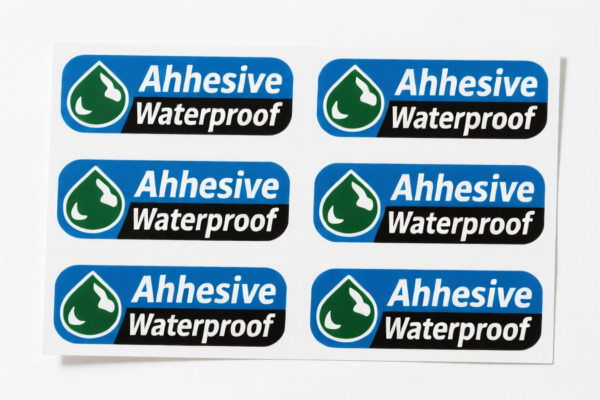
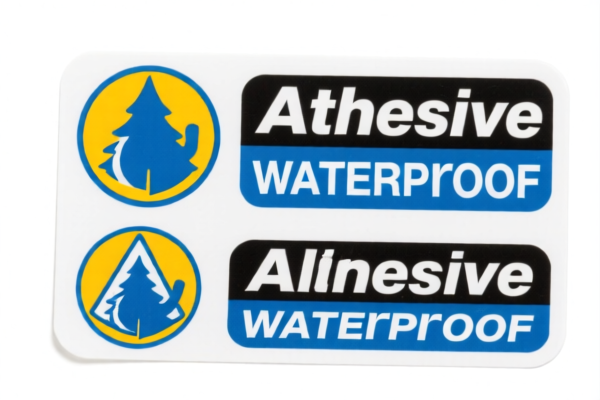
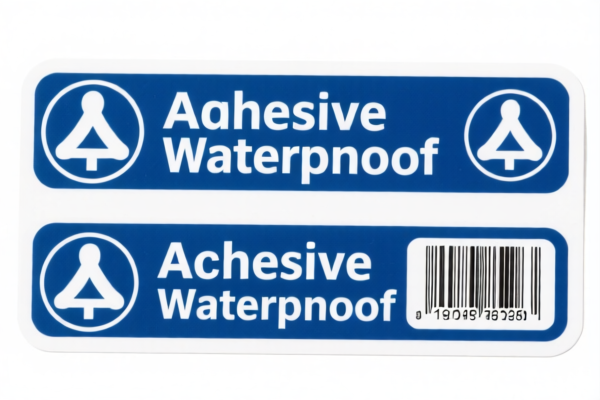
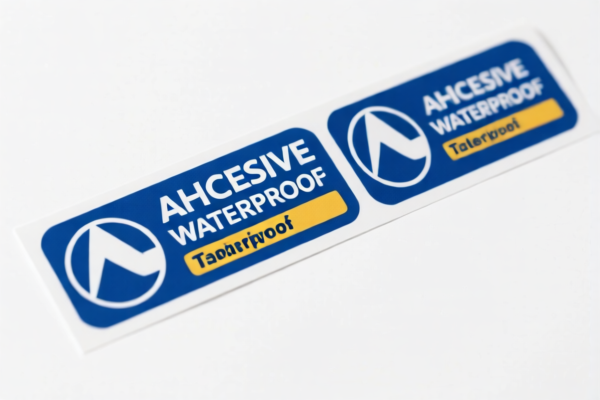
AI分析
🏷️ Self-Adhesive Waterproof Labels (Pressure-Sensitive Adhesive Labels)
🌐 HS Code Reference & Clearance Guide | 2026 Latest Tariff Analysis | Professional Customs Strategy
📌 I. Product Definition & Classification: Do You Really Understand "Self-Adhesive Labels"?
Self-adhesive waterproof labels are essential packaging and identification components used in logistics, food & beverage, cosmetics, and industrial applications. In international trade, their classification hinges on Material Composition and Form/Function.
Paper-Based Labels:
- Made primarily of paper (with adhesive backing).
- Common for food packaging, retail goods, and dry environments.
Plastic/Composite Labels:
- Made of PET, PE, PP, vinyl, or other synthetic materials.
- Essential for "waterproof" applications, outdoor use, or chemical resistance.
⚠️ Key Distinction:
- If the substrate is paper → Typically falls under Chapter 48.
- If the substrate is plastic/synthetic → Typically falls under Chapter 39 (Plastics).
- Crucial Note: The term "Waterproof" strongly suggests a plastic or coated material, but without explicit material specification, customs may infer "paper" if not clearly stated otherwise, leading to higher duties in some jurisdictions (like the US).
📦 II. HS Code Classification Details (Based on Provided Data)
| HS Code | Product Description | Material Inference | Tax Rate | Key Justification |
|---|---|---|---|---|
4821.10.20.00 |
Paper Labels | Paper | 35.0% | Matches material (paper label inferred) and use (label). Self-adhesive is a common form for labels and does not conflict with paper classification. |
3926.90.99.89 |
Other Plastic Articles | Plastic/Composite | 22.8% | Common sense inference: "Waterproof" implies plastic or composite. Falls under "Other articles" of plastics. No conflict with material or form. |
3926.10.00.00 |
Office/School Plastic Articles | Plastic/Adhesive | 15.3% | Matches "Self-adhesive" and "Label" use. Inferred material is plastic/adhesive, fitting "Other plastic articles" for office/school supplies. |
4821.90.20.00 |
Other Paper Labels | Paper/Cardboard | 35.0% | "Self-adhesive" matches "Self-adhesive"; "Label" matches material/use. "Material" reasonably inferred as paper/cardboard. |
3919.90.50.60 |
Self-Adhesive Plastic Plates/Films | Plastic | 40.8% | "Self-adhesive" matches "Self-adhesive"; "Material" inferred as plastic sheets/films. Label-type self-adhesive materials are commonly plastic. |
🔍 Critical Insight:
- High Tax Risk: HS Codes starting with4821(Paper) carry a 35% total duty due to additional tariffs (25% + 10%).
- Lower Tax Opportunity: HS Codes starting with3926(Plastics) offer rates between 15.3% and 22.8%, depending on the specific sub-category.
- Highest Risk:3919.90.50.60has a 40.8% rate, often due to stricter interpretation of "Self-Adhesive" products as general plastic films rather than finished labels.
💰 III. 2026 Latest Tariff Rate Breakdown (Including Surcharges)
✅ Applicable Country: United States (US)
✅ Country of Origin: China (CN)
✅ Effective Date: From November 10, 2025 (and subsequent imports)
🎯 1. 4821.10.20.00 & 4821.90.20.00 —— Paper Labels
Total Duty: 35.0%
| Item | Content |
|---|---|
| Base Tariff | 0.0% (ad valorem) |
| USITC Surcharge (Section 301) | +25.0% |
| IEEPA Surcharge | +10.0% (Specific to Chinese/HK products) |
| Total Duty | 35.0% |
| Calculation | CIF Value × 35% |
| De Minimis Exemption | ❌ Not Eligible |
| Legal Basis | IEEPA:9903.01.25 → USITC:4821.10.20.00 → FOOTNOTE:301.88 |
📌 Explanation:
- The 25% surcharge is from the US Trade Act Section 301.
- The 10% surcharge is from the International Emergency Economic Powers Act (IEEPA).
- Result: High duty cost. Misclassifying a plastic label as paper can lead to unnecessary 35% duty.
🎯 2. 3926.90.99.89 —— Other Plastic Articles (Labels)
Total Duty: 22.8%
| Item | Content |
|---|---|
| Base Tariff | 5.3% |
| USITC Surcharge (Section 301) | +7.5% |
| IEEPA Surcharge | +10.0% |
| Total Duty | 22.8% |
| Calculation | CIF Value × 22.8% |
| De Minimis Exemption | ❌ Not Eligible |
| Legal Basis | IEEPA:9903.01.24 → USITC:3926.90.99.89 → FOOTNOTE:301.88 |
📌 Advantage:
- This is a significant saving compared to the 35% paper classification.
- Suitable if the label is clearly made of PET, PP, PE, or Vinyl.
🎯 3. 3926.10.00.00 —— Office/School Plastic Articles
Total Duty: 15.3%
| Item | Content |
|---|---|
| Base Tariff | 5.3% |
| USITC Surcharge (Section 301) | 0.0% |
| IEEPA Surcharge | +10.0% |
| Total Duty | 15.3% |
| Calculation | CIF Value × 15.3% |
| De Minimis Exemption | ❌ Not Eligible |
| Legal Basis | IEEPA:9903.01.24 → USITC:3926.10.00.00 → FOOTNOTE:301.88 |
📌 Best Case Scenario:
- Lowest Duty Rate among the options.
- Applies if the label is considered an "Office/School Supply" and made of plastic.
- Risk: Must prove it is not a general-purpose plastic article but specifically for office/school use, or that the USITC surcharge of 0% is correctly applied.
🎯 4. 3919.90.50.60 —— Self-Adhesive Plastic Films/Plates
Total Duty: 40.8%
| Item | Content |
|---|---|
| Base Tariff | 5.8% |
| USITC Surcharge (Section 301) | +25.0% |
| IEEPA Surcharge | +10.0% |
| Total Duty | 40.8% |
| Calculation | CIF Value × 40.8% |
| De Minimis Exemption | ❌ Not Eligible |
| Legal Basis | IEEPA:9903.01.25 → USITC:3919.90.50.60 → FOOTNOTE:301.88 |
📌 Warning:
- Highest Duty Rate.
- This classification treats the label as a "self-adhesive plastic film/plate" rather than a finished "label article."
- Avoid this classification unless the product is a roll of unprinted, plain self-adhesive plastic sheets.
🛠️ IV. Customs Clearance Practical Advice (Avoiding Pitfalls)
✅ 1. Essential Documentation Checklist
| Document | Required | Description |
|---|---|---|
| ✅ Product Specification Sheet | ✔️ | Must clearly state Material (e.g., "PET," "PP," "Paper"), Size, Adhesive Type. |
| ✅ Product Photos | ✔️ | Clear images showing the label material texture, adhesive side, and printed design. |
| ✅ Commercial Invoice | ✔️ | Describe as "Waterproof Plastic Label" or "Paper Label" accurately. Do not use generic "Sticker." |
| ✅ Packing List | ✔️ | Detail quantity, weight, and packaging type. |
| ✅ Material Certificate | ✔️ | Crucial for proving plastic vs. paper content to justify lower HS codes (e.g., 3926 vs. 4821). |
✅ 2. Declaration Strategy (Key Rules)
🔥 "Material Defines Code, 'Waterproof' Points to Plastic!"
| Scenario | Correct Declaration | Incorrect Declaration |
|---|---|---|
| Plastic Label (PET/PP) | 3926.90.99.89 or 3926.10.00.00 |
Misdeclare as Paper → 35% Duty |
| Paper Label | 4821.10.20.00 |
Misdeclare as Plastic → Potential Penalty for Misclassification |
| Roll of Self-Adhesive Film | 3919.90.50.60 |
Declare as "Labels" → If unprinted/plain, may still be 3919 |
| Mixed Materials | Clarify dominant material | Vague description → Customs Inference (Often Paper = 35%) |
✅ 3. Special Considerations
| Situation | Recommendation |
|---|---|
| "Waterproof" Claim | If the label is made of plastic, use HS Code 3926... to benefit from lower duties. Provide material specs. |
| Unprinted Labels | If importing blank rolls, 3919 may apply. But if cut into labels, 3926 is more appropriate. |
| Customs Inquiry | Be prepared to provide a material composition report. Customs may reject "plastic" claims if not supported by evidence. |
| De Minimis | Not Available for China-origin goods under these HS codes due to IEEPA/301 tariffs. |
🌍 V. Global Market Comparison (2026 Update)
| Country/Region | Recommended HS Code | Duty Rate | Certification | Notes |
|---|---|---|---|---|
| 🇺🇸 USA | 3926.90.99.89 |
22.8% | No special | Best for plastic labels. Avoid 4821 (35%). |
| 🇪🇺 EU | 4823.69.00 |
~3% - 6% | CE (if applicable) | EU has different classification; plastic labels often under 3920/3921. |
| 🇨🇳 China | 4821.10.00.90 |
5% - 15% | RoHS (if electronic) | Domestic duty lower; focus on export compliance. |
| 🇬🇧 UK | 4821.10.00.90 |
5% - 10% | UKCA | Post-Brexit rules may differ; check latest UK Tariff. |
| 🇨🇦 Canada | 4821.10.00.00 |
5% - 15% | None | Similar to US but no Section 301/IEEPA. |
📌 Conclusion:
- USA is the most challenging market due to high additional tariffs (25% + 10%).
- Correct HS Code selection (Plastic vs. Paper) can save 10-20% in duty costs.
- Plastic labels (3926) are generally more favorable than Paper labels (4821) for cost-saving in the US.
📌 VI. Common Mistakes & Pitfalls (Lessons Learned)
❌ Mistake 1: Declaring "Plastic Labels" as "Paper Labels"
👉 Consequence: Overpaying duty (35% vs. 22.8%). No penalty, just lost profit.
❌ Mistake 2: Declaring "Paper Labels" as "Plastic Labels" without proof
👉 Consequence: Customs audit, penalty, and potential seizure for misclassification.
❌ Mistake 3: Using generic "Sticker" in description
👉 Consequence: Customs may default to 4821 (Paper), leading to 35% duty.
✅ Correct Practice:
"Waterproof Plastic Label, PET Material, Self-Adhesive, Cut to Size, Model XYZ"
🎯 VII. Conclusion: Professional Classification, Cost Saving, Efficiency!
🎯 Remember the Rules:
🔹 "Plastic Labels, Use 3926, Save 10-20% Duty!"
🔹 "Paper Labels, 4821, 35% Duty, Avoid if Possible!"
🔹 "Material Proof is Key, Avoid Customs Inference!"
📌 Tips:
- If your labels are made of PET, PP, or PE, insist on HS Code 3926 classification.
- Provide material specifications to support your declaration.
- Consider Advance Ruling from US Customs if importing large volumes.
📣 Immediate Action:
📞 Contact a professional customs broker.
📄 Provide Material Certificates and Product Photos.
🚀 Ensure Correct HS Code Classification to Maximize Profit!
✨ Professional Classification Starts with Precision!
💼 Every Percent Saved is Pure Profit!
用户评价
关于 HS 编码归类
协调制度(HS)是由世界海关组织(WCO)制定的国际贸易商品分类标准。全球 200 多个国家采用 HS 系统作为海关关税、贸易统计和进出口监管的基础。
每个 HS 编码遵循以下层级结构:
- 章(2 位)——商品大类(例如:第 84 章:机器和机械设备)
- 品目(4 位)——章内的更具体分类
- 子目(6 位)——国际通用细分,所有 WCO 成员国统一使用
- 本国细分(8-10 位)——各国自行扩展的细分编码,如美国 HTSUS 10 位编码
正确的 HS 编码归类对于顺利通关、准确缴纳关税和遵守贸易法规至关重要。错误归类可能导致海关延误、多缴关税或罚款。
从CN进口到US时,适用的关税税率可能包括:
- 最惠国(MFN)税率——适用于 WTO 成员国的标准关税税率
- 普通税率——适用于无贸易协定国家
- 贸易救济关税——附加关税,如 301 条款(反倾销)、232 条款(国家安全)或反补贴税
本页内容仅供参考。如需正式归类,请咨询当地海关或持牌报关代理。