Semi bleached Non coniferous Chemical Wood Pulp (High Strength)
CN → US| HS编码 | 关税税率 | 原产国 | 目的国 | 文档 |
|---|---|---|---|---|
| 4704290000 | 35.0% | CN | US | 官方文档 |
| 4704210000 | 35.0% | CN | US | 官方文档 |
| 4703290020 | 35.0% | CN | US | 官方文档 |
| 4703290040 | 35.0% | CN | US | 官方文档 |
| 4705000000 | 35.0% | CN | US | 官方文档 |
商品图片
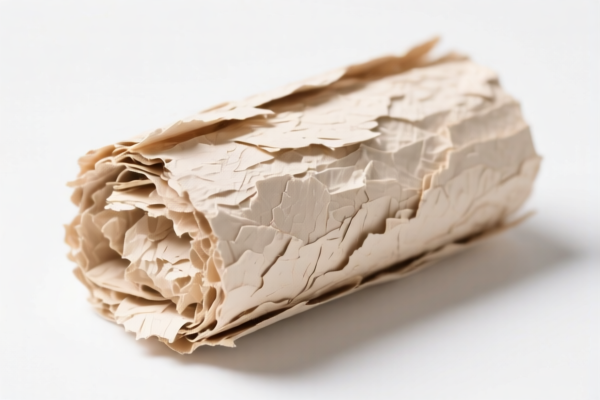
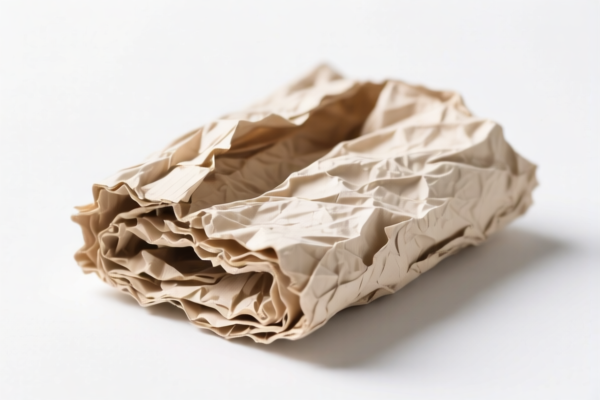
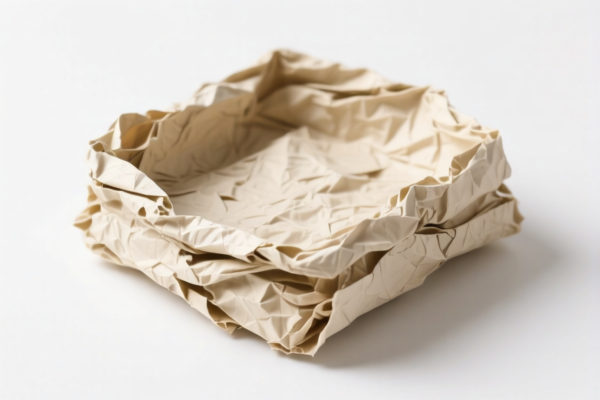
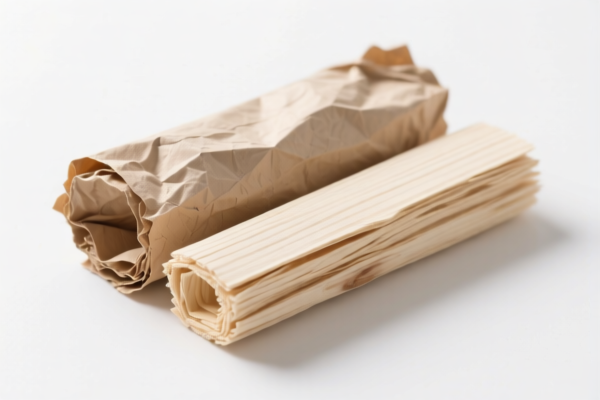
AI分析
🌲 Semi-Bleached Non-Coniferous Chemical Wood Pulp (High Strength)
🌐 HS Code Reference & Customs Clearance Guide | 2026 Latest Tariff Analysis | Professional Clearance Strategy
📌 I. Product Definition & Classification: What Exactly is "Semi-Bleached Non-Coniferous Chemical Wood Pulp"?
Semi-bleached non-coniferous chemical wood pulp (often referred to as hardwood pulp) is a vital raw material in the paper and packaging industry. It is produced from deciduous trees (such as eucalyptus, birch, poplar) using chemical processes that remove lignin, followed by a partial bleaching stage to increase brightness without sacrificing too much strength.
In international trade, classification depends on three key factors: 1. Chemical vs. Mechanical: This product is chemical pulp (lignin removed). 2. Coniferous vs. Non-Coniferous: This is non-coniferous (hardwood), not softwood. 3. Bleaching Degree: It is semi-bleached, not fully bleached or unbleached.
⚠️ Key Distinction Points:
- If it is unbleached (brown kraft/pulps) → It falls under different HS codes (e.g., 4703.21 or 4703.29 unbleached variants).
- If it is fully bleached → It falls under "Semi-bleached" codes only if the brightness is < 85%, otherwise it may be classified as "Chemically bleached" (4703.31/4703.39).
- If it is mechanical pulp → It falls under HS 4705 or 4706, not 4703/4704.
📦 II. HS Code Classification Details (2026 Latest Tariff Authority Comparison)
Based on the provided data, the following HS Codes are applicable for Semi-Bleached Non-Coniferous Chemical Wood Pulp. Note that the provided data highlights specific sub-headings that reflect variations in processing precision or specific trade classifications.
| HS Code | Product Description | Key Features & Fit | Total Tax Rate |
|---|---|---|---|
4704.29.00.00 |
Semi-bleached non-coniferous chemical wood pulp | Match: Material and form match packaging applications. This is a broad category for semi-bleached hardwood pulp. | 35.0% |
4704.21.00.00 |
Semi-bleached non-coniferous chemical wood pulp | Match: Although coniferous/non-coniferous isn't explicitly stated in the short code, the material category has no conflict. Often used for specific hardwood pulp grades. | 35.0% |
4703.29.00.20 |
Semi-bleached non-coniferous chemical wood pulp | Match: Key material and processing characteristics fully comply. This code often refers to specific bleached/unbleached distinctions within chemical pulp. | 35.0% |
4703.29.00.40 |
Semi-bleached non-coniferous chemical wood pulp | Match: Key material and treatment degree features fully comply. Similar to .20, specific for certain hardwood chemical pulp types. | 35.0% |
4705.00.00.00 |
Semi-bleached sulphite wood pulp | Match: Material and process features match "mechanical and chemical pulp combination". This is for Sulphite process specifically, which is less common than Kraft but still valid for "chemical" classification. | 35.0% |
🔍 Important Note:
- All listed codes result in a 35% Total Tax Rate.
- The choice between4703(Chemical pulp, unbleached or semi-bleached) and4704(Chemical pulp, bleached) often depends on the brightness level and residual lignin content.
- Semi-bleached typically falls under 4703 if brightness is low, or 4704 if higher, but the provided data places semi-bleached items in both 4703 and 4704 categories depending on the specific subtype (e.g., sulphite vs. kraft, or specific brightness thresholds).
💰 III. 2026 Latest Tariff Rate Breakdown (Including Surcharges & Policy Add-ons)
✅ Applicable Country: United States (US)
✅ Origin: China (CN)
✅ Effective Time: From November 10, 2025 (including subsequent imports)
🎯 1. General Tariff Structure for Wood Pulp (All Listed HS Codes)
| Item | Content |
|---|---|
| Base Tariff | 0.0% (Ad valorem) |
| Section 301 Additional Tariff | +25.0% |
| Section 122 Tariff | +10.0% |
| Total Tax Rate | 35.0% |
| Tax Calculation | CIF Value × 35% |
| De Minimis Eligibility | ❌ Not Eligible (High value commodity, usually excluded from $800 de minimis) |
| Legal Basis Path | USITC:4703/4704 → USITC:Footnote 9903.88.01 → IEEPA:9903.01.25 |
📌 Explanation:
- "Base Tariff 0%": Wood pulp is generally duty-free under normal trade conditions.
- "Section 301 Tariff 25%": This is the major trade war tariff imposed on Chinese goods under US Trade Representative actions. It applies to most chemical wood pulp products from China.
- "Section 122 Tariff 10%": This refers to tariffs imposed under Section 122 of the Trade Act of 1974, often for national security or balance of payments reasons. In this context, it is an additional layer of protectionism.
- Total 35%: This is a significant cost factor for paper manufacturers importing pulp from China.
🛠️ IV. Customs Clearance Practical Advice (Battle-Tested Pitfall Avoidance Guide)
✅ 1. Required Documentation Checklist (Non-Negotiable)
| Document | Mandatory | Explanation |
|---|---|---|
| ✅ Product Specification Sheet | ✔️ | Must specify: Type of wood (eucalyptus, birch, etc.), Pulp type (Kraft, Sulphite), Brightness (%), Viscosity, Yield, Ash content. |
| ✅ Certificate of Origin (CO) | ✔️ | To prove origin is China. Without it, you may face higher baseline duties or anti-dumping investigations. |
| ✅ Commercial Invoice | ✔️ | Must clearly state: "Semi-bleached Non-Coniferous Chemical Wood Pulp". Avoid vague terms like "Wood Fiber". |
| ✅ Packing List | ✔️ | Specify net/gross weight, number of bales, and palletization details. Pulp is heavy and bulk-heavy. |
| ✅ Bill of Lading (B/L) | ✔️ | Ensure consignee and notify party details match the invoice exactly. |
| ✅ Test Report (Lab Analysis) | ✔️ | Recommended to prove brightness and chemical composition, especially if HS code dispute arises (e.g., 4703 vs 4704). |
✅ 2. Declaration Tips (Key Mantra)
🔥 "Be Specific, Don't Vague, Match the Process, Save the Cost!"
| Scenario | Correct Declaration | Wrong Practice |
|---|---|---|
| Kraft Pulp (Non-Coniferous) | "Semi-bleached Non-Coniferous Chemical Wood Pulp (Kraft)" | Just "Wood Pulp" → Risk of misclassification |
| Sulphite Pulp | "Semi-bleached Sulphite Wood Pulp (Non-Coniferous)" | Misdeclare as Kraft → HS Code mismatch |
| Mixed Origin | Declare each lot separately by origin | Blend Chinese and Vietnamese pulp in one shipment without separate entry |
| High Brightness (>85%) | Check if it falls under "Bleached" (4703.31/4703.39) instead of "Semi-bleached" | Force "Semi-bleached" code when it should be "Bleached" → Potential penalties |
✅ 3. Special Circumstances Handling
| Scenario | Handling Advice |
|---|---|
| Anti-Dumping/Countervailing Duties (AD/CVD) | CRITICAL CHECK: Some specific wood pulp products from China may be subject to AD/CVD duties in addition to the 35% tariff. Consult with a customs broker to verify if your specific HS code is under an active AD/CVD order. |
| Hydrolysis or Resulfatation | If the pulp has undergone further chemical treatment, it may no longer be "chemical pulp" under HS Chapter 47, but rather a chemical product (Chapter 39 or 38). |
| Packaging | Pulp is usually shipped in bales wrapped in plastic. Ensure no wood packaging (pallets/crates) without ISPM 15 treatment, as wood pests can trigger inspections. |
| Moisture Content | Declare actual moisture content. If it exceeds typical limits (e.g., >10-12%), it might be considered a different commodity or incur penalties for undervaluation. |
🌍 V. Global Market Comparison (2026 Latest)
| Country/Region | Recommended HS Code | Tariff (China Origin) | Certification Required | Notes |
|---|---|---|---|---|
| 🇺🇸 USA | 4703.29.00.20 / 4704.29.00.00 |
35% (0% Base + 25% Sec301 + 10% Sec122) | None specific for pulp, but CO required | High tariff barrier. Consider Vietnam/Brazil origin. |
| 🇨🇳 China | 4703.29.00.00 |
0% | None | Duty-free import. |
| 🇪🇺 EU | 4703.29.00.00 |
0% (MFN Rate) | REACH Compliance | No additional trade war tariffs, but strict environmental regulations. |
| 🇲🇽 Mexico | 4703.29.00.00 |
0% (under USMCA if qualified) | None | Potential for zero tariff if processed into paper in Mexico. |
📌 Conclusion:
- USA is the most challenging market for Chinese wood pulp due to the 35% cumulative tariff.
- EU and China offer more favorable tariff conditions.
- Supply Chain Strategy: Many companies are shifting pulp sourcing from China to Brazil (Eucalyptus) or Southeast Asia to avoid US tariffs.
📌 VI. Common Errors & Pitfall Guide (Lessons Learned)
❌ Error 1: Declaring "Chemical Pulp" without specifying "Semi-Bleached"
👉 Consequence: Customs may assign a default duty rate or hold the shipment for clarification, causing delays.
❌ Error 2: Confusing "Semi-Bleached" with "Bleached"
👉 Consequence: If brightness is >85% ISO, it might be classified as "Bleached" (higher duty or different regulatory status). Misclassification can lead to back-taxes and fines.
❌ Error 3: Ignoring Section 122 Tariff
👉 Consequence: Many importers only account for Section 301 (25%). Forgetting the additional 10% leads to underpayment of duties and surprise bills.
❌ Error 4: Using "Paper Pulp" as a generic name
👉 Consequence: Too vague. Must specify Chemical, Non-Coniferous, and Semi-Bleached to match the 10-digit HS code.
✅ Correct Declaration Example:
"Semi-bleached Non-Coniferous Chemical Wood Pulp, Eucalyptus Kraft, Brightness 50% ISO, 100% Chemical Pulp, in Bales, Net Weight 500kg"
🎯 VII. Conclusion: Professional Declaration, Cost Control, Efficiency!
🎯 Remember the Mantra:
🔹 "Base 0%, Sec301 25%, Sec122 10%, Total 35%!"
🔹 "Specify Process, Specify Brightness, Avoid Misclassification Penalties!"
📌 Pro Tip:
If your pulp is sourced from Brazil, Indonesia, or Malaysia, the Section 301 and Section 122 tariffs do not apply (assuming no other specific sanctions). You may enjoy 0% duty in the US.
Recommendation: Conduct a tariff engineering analysis to see if sourcing from non-China origins can save you 35% on product cost, which often outweighs shipping cost increases.
📣 Immediate Action:
📞 Contact a licensed customs broker + Provide lab test reports + Apply for Advance Ruling for complex pulp blends.
🚀 Ensure your supply chain is tariff-resilient in 2026!
✨ Professional Customs Clearance Starts with Accurate Classification!
💼 Every 1% of tariff saved is pure profit!
用户评价
关于 HS 编码归类
协调制度(HS)是由世界海关组织(WCO)制定的国际贸易商品分类标准。全球 200 多个国家采用 HS 系统作为海关关税、贸易统计和进出口监管的基础。
每个 HS 编码遵循以下层级结构:
- 章(2 位)——商品大类(例如:第 84 章:机器和机械设备)
- 品目(4 位)——章内的更具体分类
- 子目(6 位)——国际通用细分,所有 WCO 成员国统一使用
- 本国细分(8-10 位)——各国自行扩展的细分编码,如美国 HTSUS 10 位编码
正确的 HS 编码归类对于顺利通关、准确缴纳关税和遵守贸易法规至关重要。错误归类可能导致海关延误、多缴关税或罚款。
从CN进口到US时,适用的关税税率可能包括:
- 最惠国(MFN)税率——适用于 WTO 成员国的标准关税税率
- 普通税率——适用于无贸易协定国家
- 贸易救济关税——附加关税,如 301 条款(反倾销)、232 条款(国家安全)或反补贴税
本页内容仅供参考。如需正式归类,请咨询当地海关或持牌报关代理。