Semi mechanical Pulper
CN → US| HS编码 | 关税税率 | 原产国 | 目的国 | 文档 |
|---|---|---|---|---|
| 8439100010 | 35.0% | CN | US | 官方文档 |
| 8439100090 | 35.0% | CN | US | 官方文档 |
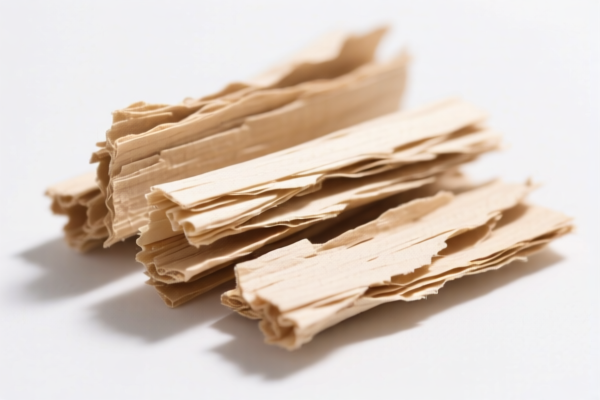
商品图片



AI分析
⚙️ Semi-Mechanical Pulper (Semi-Mechanical Pulping Machinery)
🌐 HS Code Reference & Clearance Guide | 2026 Latest Tariff Analysis | Professional Entry Strategy 📌 Part I: Product Definition and Classification: What is a "Semi-Mechanical Pulper"?
In the context of international trade and textile/wood processing machinery, a Semi-Mechanical Pulper falls under the category of equipment used to produce pulp from fibrous cellulosic materials. It is distinct from fully mechanical refiners or chemical pulping plants.
Key Characteristics: * Function: Uses mechanical action (blades, rotors) combined with some chemical or thermal treatment to break down raw materials (wood chips, straw, recycled paper) into pulp. * Classification Logic: It is specifically categorized under Heading 8439: "Machinery for making pulp of fibrous cellulosic material or for making or finishing paper or paperboard."
⚠️ Critical Distinction: * If the machinery is Brand New: It must be classified under 8439.10.00.10. * If the machinery is Used or Rebuilt: It must be classified under 8439.10.00.90. * Do not confuse this with Heading 8419 (Machinery for heat processing) or Heading 8441 (Paper converting machinery). The core function here is pulp production.
📦 Part II: HS Code Classification Details (2026 Latest Tariff Alignment)
According to the provided data source, there are exactly two relevant HS Codes for this commodity, differentiated strictly by the condition of the equipment.
| HS Code | Product Description | Condition | Applicable Scenario |
|---|---|---|---|
8439.10.00.10 |
Machinery for making pulp of fibrous cellulosic material | New | Brand new semi-mechanical pulpers purchased from manufacturers. |
8439.10.00.90 |
Machinery for making pulp of fibrous cellulosic material | Used or Rebuilt | Second-hand pulpers, or units that have been significantly repaired/refurbished. |
🔍 Key Reminder: * The description for both codes is identical in function: "Machinery for making pulp of fibrous cellulosic material." * The only differentiator is whether the item is New or Used/Rebuilt. * Ensure the commercial invoice clearly states the condition (e.g., "New", "Used", "Refurbished") to avoid misclassification delays.
💰 Part III: 2026 Latest Tariff Rate Details (Comprehensive Breakdown)
✅ Applicable Country: United States (US) ✅ Origin: China (CN) (Inferred from the provided tax data showing Chinese-origin tariffs) ✅ Effective Date: As per the provided data context
🎯 1. 8439.10.00.10 —— Semi-Mechanical Pulper (New)
| Item | Content |
|---|---|
| Base Duty Rate | 0.0% |
| Surtax / Additional Duty | +25.0% |
| Total Effective Tax Rate | 25.0% |
| Tax Calculation | CIF Value × 25% |
| De Minimis Exemption | ❌ Not Applicable (Section 321/113 exemptions generally do not apply to machinery of this heading under Section 301 tariffs). |
| Legal Basis Path | HTSUS:8439.10.00.10 → USITC:301 (Section 301 Enlistment) |
📌 Explanation: * Although the Base Tariff is 0%, the 25% Surtax applies in full. * This 25% surtax is typically levied under Section 301 of the Trade Act of 1974 against Chinese goods. * Total Cost Impact: For every $100,000 CIF value, you pay $25,000 in duties.
🎯 2. 8439.10.00.90 —— Semi-Mechanical Pulper (Used or Rebuilt)
| Item | Content |
|---|---|
| Base Duty Rate | 0.0% |
| Surtax / Additional Duty | +25.0% |
| Total Effective Tax Rate | 25.0% |
| Tax Calculation | CIF Value × 25% |
| De Minimis Exemption | ❌ Not Applicable |
| Legal Basis Path | HTSUS:8439.10.00.90 → USITC:301 (Section 301 Enlistment) |
📌 Note: * The tax treatment for Used/Rebuilt machinery is identical to New machinery in this specific dataset. * Many importers assume used machinery might have lower duties, but under the current Section 301 rules for Heading 8439, the 25% penalty applies regardless of condition. * Crucial: Ensure the "Used" status is documented (e.g., serial numbers, age certificates) to prevent CBP from reclassifying it as "New" if it appears brand new, or vice versa.
🛠️ Part IV: Customs Clearance Practical Advice (Real-World Pitfall Avoidance)
✅ 1. Required Documentation Checklist (Must-Haves)
| Document | Mandatory? | Explanation |
|---|---|---|
| ✅ Commercial Invoice | ✔️ | Must explicitly state: "Semi-Mechanical Pulper", HS Code, and Condition (New/Used). |
| ✅ Packing List | ✔️ | Detail all components. If parts are shipped separately, they must be linked to the main pulper unit. |
| ✅ Product Technical Manual | ✔️ | Proves the machine is for "making pulp" (Heading 8439) and not "paper finishing" (Heading 8437/8441). |
| ✅ Proof of Used Status | ✔️ | If applying for .90, provide age certificates, previous owner records, or photos showing wear/tear to justify the Used classification. |
| ✅ Bill of Lading / Air Waybill | ✔️ | Standard shipping document. |
✅ 2. Declaration Strategy (Key Mnemonics)
🔥 "Function Determines Heading, Condition Determines Subheading!"
| Situation | Correct Declaration | Incorrect Practice |
|---|---|---|
| Brand New Pulper | 8439.10.00.10 |
Using .90 → Potential penalty for incorrect condition declaration. |
| Used/Rebuilt Pulper | 8439.10.00.90 |
Using .10 → Risk of "False Declaration" if signs of use are visible. |
| Parts Only | Check Heading 8438 or 8448 | Declaring whole machine when only blades/rotors are shipped → Seizure Risk. |
| Chemical Pulping Plant | Might be 8419 or 8436 | Declaring as 8439 when it’s primarily a chemical reactor → Misclassification. |
✅ 3. Special Handling for "Semi-Mechanical" Nuances
| Scenario | Handling Advice |
|---|---|
| Integrated Systems | If the pulper comes with a connected refiner or screen, declare the main unit (Pulper) if it’s the primary value driver. If sold as a single system, ensure the description covers the whole line but the HS Code focuses on the pulp making aspect. |
| Rebuilt Machinery | "Rebuilt" means the unit has been restored to working order. Do not declare "Rebuilt" if it is only "Used". "Rebuilt" implies significant component replacement. |
| Parts Shipment | If importing spare parts (e.g., blades, stators) separately, these may fall under 8438.90 or 8448.33. Do not lump parts into the machinery HS Code. |
🌍 Part V: Global Market Context (2026 Comparison)
| Country/Region | Recommended HS Code | Estimated Duty (China Origin) | Certification | Notes |
|---|---|---|---|---|
| 🇺🇸 USA | 8439.10.00.10 / .90 |
25% (Surtax only) | None specific | High barrier due to Section 301. |
| 🇨🇳 China | 8439.10 |
5-10% (Import Duty) | CCC (if applicable) | Base rate varies by specific subtype. |
| 🇪🇺 EU | 8439.10 |
0-4.5% | CE Marking | Lower duties; focus on CE compliance. |
| 🇻🇳 Vietnam | 8439.10 |
0-10% | V-Kmark | Potential for lower costs if assembled locally. |
📌 Conclusion: * The USA imposes the highest effective tariff (25%) on this commodity from China. * Value Engineering: Consider if parts can be sourced from non-China countries to offset the 25% surtax. * Used Market: The used market in the US is competitive, but the 25% tax applies equally, so pricing must account for this fixed cost.
📌 Part VI: Common Errors & Pitfalls (Lessons Learned)
❌ Error 1: Classifying "Semi-Mechanical Pulper" under 8441 (Paper Converting). 👉 Consequence: Misclassification. 8441 is for cutting, folding, or binding paper. Pulp making is 8439. CBP may reject and assess back duties + penalties.
❌ Error 2: Failing to declare "Used" status for second-hand equipment.
👉 Consequence: If CBP inspects and finds signs of use but the HS Code is .10 (New), they may view it as fraud or simple error, leading to seizure or heavy fines.
❌ Error 3: Ignoring the 25% Surtax in cost modeling. 👉 Consequence: Underestimating landed cost. The 0% base rate is misleading. Always calculate on CIF × 25%.
✅ Correct Action:
"Semi-Mechanical Pulper, Model XYZ, New, Made in China, HS 8439.10.00.10, Subject to 301 Surtax."
🎯 Part VII: Conclusion: Professional Classification Saves Money!
🎯 Remember the Mantra:
🔹 "Pulp Making is 8439; New is .10, Used is .90." 🔹 "Base Rate is Zero, but Surtax is Twenty-Five Percent." 🔹 "Declare Condition Accurately to Avoid CBP Scrutiny."
📌 Pro Tip: If you are importing Used equipment, provide a detailed condition report with the entry documentation. This preempts CBP questions and speeds up the release process.
📣 Immediate Action:
📞 Verify your equipment's condition (New vs. Used). 📄 Calculate the landed cost using 25% duty. 🚀 Ensure your commercial invoice clearly states the HS Code and Condition.
✨ Professional Customs Clearance, Starting with Accurate Classification! 💼 Your bottom line depends on the right HS Code!
用户评价
关于 HS 编码归类
协调制度(HS)是由世界海关组织(WCO)制定的国际贸易商品分类标准。全球 200 多个国家采用 HS 系统作为海关关税、贸易统计和进出口监管的基础。
每个 HS 编码遵循以下层级结构:
- 章(2 位)——商品大类(例如:第 84 章:机器和机械设备)
- 品目(4 位)——章内的更具体分类
- 子目(6 位)——国际通用细分,所有 WCO 成员国统一使用
- 本国细分(8-10 位)——各国自行扩展的细分编码,如美国 HTSUS 10 位编码
正确的 HS 编码归类对于顺利通关、准确缴纳关税和遵守贸易法规至关重要。错误归类可能导致海关延误、多缴关税或罚款。
从CN进口到US时,适用的关税税率可能包括:
- 最惠国(MFN)税率——适用于 WTO 成员国的标准关税税率
- 普通税率——适用于无贸易协定国家
- 贸易救济关税——附加关税,如 301 条款(反倾销)、232 条款(国家安全)或反补贴税
本页内容仅供参考。如需正式归类,请咨询当地海关或持牌报关代理。