Sequin Yarn
CN → US| HS编码 | 关税税率 | 原产国 | 目的国 | 文档 |
|---|---|---|---|---|
| 5606000090 | 43.0% | CN | US | 官方文档 |
| 3926903500 | 24.0% | CN | US | 官方文档 |
| 5402590100 | 43.0% | CN | US | 官方文档 |
| 5402690100 | 42.5% | CN | US | 官方文档 |
| 5606000010 | 43.0% | CN | US | 官方文档 |
商品图片
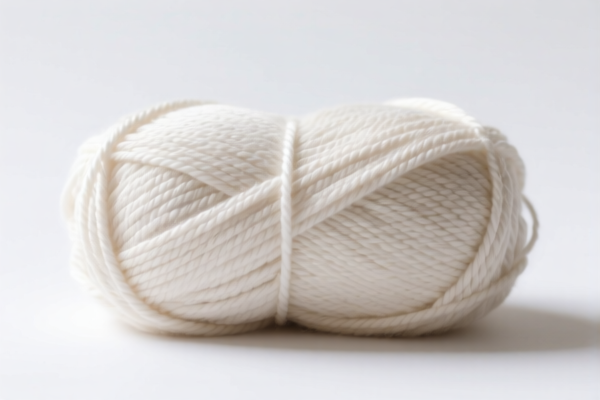
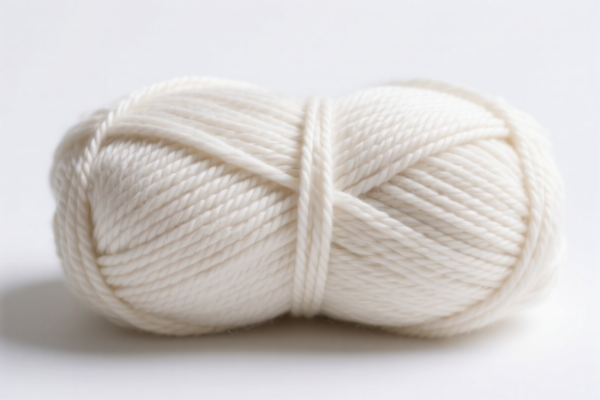
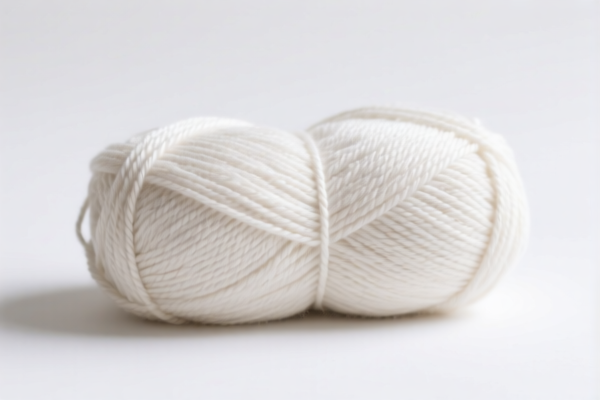
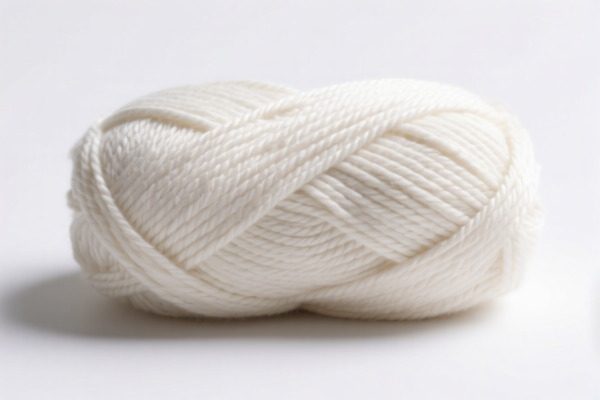
AI分析
🧵 Sequin Yarn (Sequin Thread)
🌐 HS Code Reference & Customs Clearance Guide | 2026 Latest Tariff Analysis | Professional-Level Strategy
📌 I. Product Definition & Classification: What is "Sequin Yarn"?
Sequin yarn, often referred to as "sparkle thread" or "pompette," is a specialized textile product used in fashion, embroidery, and decorative crafts. It typically consists of a core yarn (synthetic fiber) with sequins attached or woven into it. In international trade, its classification depends heavily on whether the customs authority views it primarily as a textile yarn or as a plastic decorative item.
⚠️ Key Classification Conflict:
- Textile View: It is a yarn structure, potentially multi-ply or plaited, made of synthetic fibers. → Chapter 54/56
- Plastic View: The dominant visual feature is the plastic sequin. If the sequin aspect is deemed primary, it may be classified under plastic articles. → Chapter 39
📦 II. HS Code Classification Details (2026 Latest Tariff Authority Match)
Based on the provided data, here are the specific HS Codes applicable to Sequin Yarn, categorized by the inferred nature of the product:
| HS Code | Product Description | Inferred Basis | Tariff Rate (China Origin → US) |
|---|---|---|---|
| 5606.00.00.10 | Yarn, whether or not gimped yarn, excluding stitched gut yarn, of textile materials other than metal thread. | Yarn Structure: Classified as a yarn form with twisting/structural characteristics. No conflict with material assumptions. | 43.0% |
| 5606.00.00.90 | Other twisted yarn, single or multiple, consisting of two or more strands or plaits, whether or not gimped. | Twisted Yarn: Falls under "Other" twisted yarn/striping. No explicit elastic filament description found; fits synthetic yarn inference. | 43.0% |
| 3926.90.35.00 | Other articles of plastics and articles of other materials of heading 3901 to 3914: Sequins and puffs, of plastics. | Plastic Component: The "sequin" keyword matches plastic sequins. Inferred that the sequin part is plastic, matching the material requirement. | 24.0% |
| 5402.59.01.00 | Synthetic filament yarn (other than sewing thread), textured, single, of synthetic filaments, other. | Filament Yarn: The yarn component is inferred as monofilament/filament. Sequins assumed to involve synthetic fiber coating, fitting synthetic material inference. | 43.0% |
| 5402.69.01.00 | Synthetic filament yarn (other than sewing thread), textured, multiple (folded) or cabled, of synthetic filaments, other. | Multi-ply Yarn: Assumed synthetic material. Essential nature is multi-ply/cabled fiber structure. | 42.5% |
🔍 Critical Note:
- Codes 5606 and 5402 treat the product as Textile Yarn (High Tariff: ~43%).
- Code 3926 treats the product as Plastic Sequins (Lower Tariff: ~24%).
- The difference in duty cost is significant (~19% difference). Customs may challenge the 3926 classification if the yarn core constitutes the bulk of the value or function.
💰 III. 2026 Latest Tariff Rate Breakdown (Including Additional Duties & Policies)
✅ Applicable Country: United States (US)
✅ Origin: China (CN)
✅ Effective Date: Post-November 10, 2025 (Includes subsequent imports)
🎯 1. Classification as Textile Yarn (HS 5606.00.00.10 / 5606.00.00.90 / 5402.59.01.00)
| Item | Detail |
|---|---|
| Base Duty Rate | 8.0% (Ad valorem) |
| Section 301 Additional Duty | +25.0% |
| IEEPA Section 122 Duty | +10.0% (Specific provision mentioned in data) |
| Total Effective Rate | 43.0% |
| Calculation Basis | CIF Value × 43% |
| De Minimis Exemption? | ❌ No (High value/duty nature typically excludes 8042 exemption for these categories in strict interpretations, though 8042 is complex; data implies full liability). |
| Legal Path | Base Tariff → USITC Footnote (301) → IEEPA 122 Clause |
📌 Interpretation:
- The 8% base is standard for many synthetic/textile yarns.
- The 25% Section 301 is the heavy hitter for Chinese goods.
- The 10% IEEPA 122 is a specific additional levy mentioned in the source data, pushing the total to 43%.
🎯 2. Classification as Plastic Sequins (HS 3926.90.35.00)
| Item | Detail |
|---|---|
| Base Duty Rate | 6.5% (Ad valorem) |
| Section 301 Additional Duty | +7.5% |
| IEEPA Section 122 Duty | +10.0% |
| Total Effective Rate | 24.0% |
| Calculation Basis | CIF Value × 24% |
| De Minimis Exemption? | ❌ Likely No (Plastic goods from China often still face scrutiny, but rate is lower). |
| Legal Path | Base Tariff → USITC Footnote (Lower tier for plastics?) → IEEPA 122 Clause |
📌 Interpretation:
- This is the cost-saving classification.
- The base rate is lower (6.5% vs 8.0%).
- The Section 301 rate is lower (7.5% vs 25.0%).
- Key Risk: Customs may reject this if the yarn core is significant, arguing it’s primarily a textile, not a plastic article.
🎯 3. Classification as Multi-ply Synthetic Yarn (HS 5402.69.01.00)
| Item | Detail |
|---|---|
| Base Duty Rate | 7.5% |
| Section 301 Additional Duty | +25.0% |
| IEEPA Section 122 Duty | +10.0% |
| Total Effective Rate | 42.5% |
| Calculation Basis | CIF Value × 42.5% |
📌 Interpretation:
- Very similar to the single filament class (43.0%), just 0.5% cheaper due to a slightly lower base rate (7.5% vs 8.0%).
🛠️ IV. Customs Clearance Practical Advice (Operational Pitfall Guide)
✅ 1. Documentation Checklist (Non-Negotiable)
| Document | Required? | Purpose |
|---|---|---|
| ✅ Product Specification Sheet | ✔️ | Must detail: Core material (e.g., Nylon, Polyester), Sequin material (e.g., PET Plastic), Weight ratio. |
| ✅ High-Res Photos | ✔️ | Show the sequin attachment method (woven vs. glued vs. knotted). |
| ✅ Commercial Invoice | ✔️ | Describe accurately: "Sequin Yarn, Synthetic Core, Plastic Sequins." Avoid vague terms like "Craft Supplies." |
| ✅ Labeling/Packaging | ✔️ | Clear indication of fiber content (% Synthetic, % Plastic). |
✅ 2. Declaration Strategy (Key Mnemonics)
🔥 "Core Defines, Sequin Decorates; Don't Hide the Yarn!"
| Scenario | Correct Declaration | Risk if Wrong |
|---|---|---|
| High Plastic Content (Core is thin) | Declare as 3926.90.35.00 (Plastic Sequins) | If customs inspects and finds a thick yarn core, they may reclassify to Textile (43%) + penalties. |
| High Textile Content (Core is thick) | Declare as 5606.00.00.90 (Other Yarn) | Attempting 3926 will lead to rejection and audit. |
| Mixed/Bulk Shipment | Separate shipments or clear breakdown | Mixed classification without proof leads to 100% inspection rate. |
✅ 3. Special Handling Tips
| Situation | Advice |
|---|---|
| Customs Audit Risk | For 3926.90.35.00, be prepared to prove that the plastic component is the essential character. If the yarn is >50% of weight/value, argue for Textile. |
| IEEPA 122 Clause | Ensure your HTS code supports the 122 clause applicability. The data explicitly links 122 to all these codes. Do not assume it doesn't apply. |
| Section 301 Exclusions | Check if your specific supplier has an Exclusion List number for their specific yarn type. Exclusions can remove the 25% or 7.5% additional duty. |
🌍 V. Global Market Comparison (2026 Context)
| Market | Recommended HS Code | Est. Duty (China Origin) | Notes |
|---|---|---|---|
| 🇺🇸 USA | 3926.90.35.00 or 5606.00.00.90 | 24.0% or 43.0% | High Risk/High Cost. The 10% IEEPA 122 is critical. |
| 🇨🇳 China | 5606.00.00.90 | ~10-15% | Lower base duty, no Section 301. |
| 🇪🇺 EU | 5606.00.90 | ~6-8% | No Section 301/IEEPA equivalents. Standard MFN rates apply. |
📌 Conclusion:
- The US market is the most complex due to the layered tariffs (Base + 301 + IEEPA 122).
- Cost Optimization: Arguing for 3926.90.35.00 (Plastic Sequins) saves ~19% in duties compared to textile classification.
- Compliance Warning: Only use 3926 if the plastic/sequin component is genuinely dominant in character. Misclassification can lead to fraud allegations and seizure.
📌 VI. Common Mistakes & Pitfalls (Lessons Learned)
❌ Mistake 1: Declaring as "Textile Trim" without specifying material composition.
👉 Result: Customs classifies as worst-case scenario (often highest duty or inspection).
❌ Mistake 2: Using HS 3926 for yarn with a thick cotton/polyester core.
👉 Result: Rejection, re-classification to 5606, back-taxes of ~19% + penalties.
❌ Mistake 3: Ignoring the IEEPA 122 (10%) clause.
👉 Result: Underpayment of duty. The 10% is mandatory for these codes from China, not optional.
❌ Mistake 4: Assuming "Sequin" automatically means "Plastic."
👉 Result: If sequins are metallic or fabric, 3926 is invalid. Must match material description.
✅ Correct Practice:
"Sequin Yarn, 50% Polyester Core, 50% PET Plastic Sequins, Multi-ply Construction. HS 5606.00.00.90 (if core dominant) or 3926.90.35.00 (if plastic dominant)."
🎯 VII. Conclusion: Professional Declaration, Cost Efficiency!
🎯 Remember the Strategy:
🔹 "Check the Core: Yarn or Plastic?"
🔹 "IEEPA 122 is Always On: Add that 10%!"
🔹 "3926 Saves Money, but 5606 is Safer if Yarn is Thick."
📌 Pro Tip:
If your product is shipped via de minimis (Section 321) for small parcels, verify if these HS codes are exempt. Usually, textile and plastic goods from China are NOT exempt from the $800 threshold duties in 2026.
For bulk shipments, Apply for a Pre-Ruling with US Customs to confirm your classification before shipping.
📣 Immediate Action:
📞 Consult a Customs Broker with your Bill of Materials.
📄 Prepare a Material Breakdown (Yarn % vs. Sequin %).
🚀 Optimize your HS Code to save up to 19% in duties legally.
✨ Precision in Classification, Profit in Clearance!
💼 Every percentage point matters in the China-US trade lane.
用户评价
关于 HS 编码归类
协调制度(HS)是由世界海关组织(WCO)制定的国际贸易商品分类标准。全球 200 多个国家采用 HS 系统作为海关关税、贸易统计和进出口监管的基础。
每个 HS 编码遵循以下层级结构:
- 章(2 位)——商品大类(例如:第 84 章:机器和机械设备)
- 品目(4 位)——章内的更具体分类
- 子目(6 位)——国际通用细分,所有 WCO 成员国统一使用
- 本国细分(8-10 位)——各国自行扩展的细分编码,如美国 HTSUS 10 位编码
正确的 HS 编码归类对于顺利通关、准确缴纳关税和遵守贸易法规至关重要。错误归类可能导致海关延误、多缴关税或罚款。
从CN进口到US时,适用的关税税率可能包括:
- 最惠国(MFN)税率——适用于 WTO 成员国的标准关税税率
- 普通税率——适用于无贸易协定国家
- 贸易救济关税——附加关税,如 301 条款(反倾销)、232 条款(国家安全)或反补贴税
本页内容仅供参考。如需正式归类,请咨询当地海关或持牌报关代理。