Sheet Music
CN → US| HS编码 | 关税税率 | 原产国 | 目的国 | 文档 |
|---|---|---|---|---|
| 4901990092 | 17.5% | CN | US | 官方文档 |
| 4901990093 | 17.5% | CN | US | 官方文档 |
| 4904000020 | 17.5% | CN | US | 官方文档 |
| 4904000040 | 17.5% | CN | US | 官方文档 |
| 4909004000 | 10.0% | CN | US | 官方文档 |
商品图片
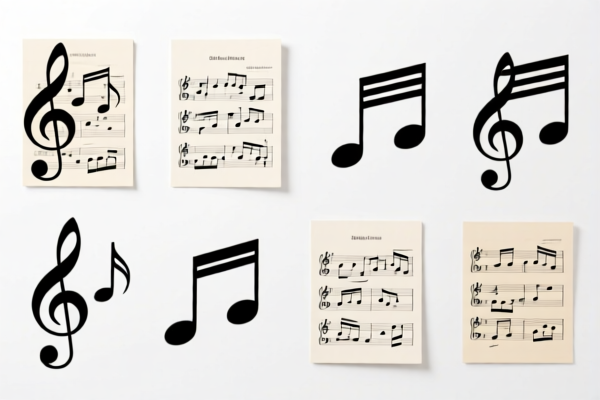
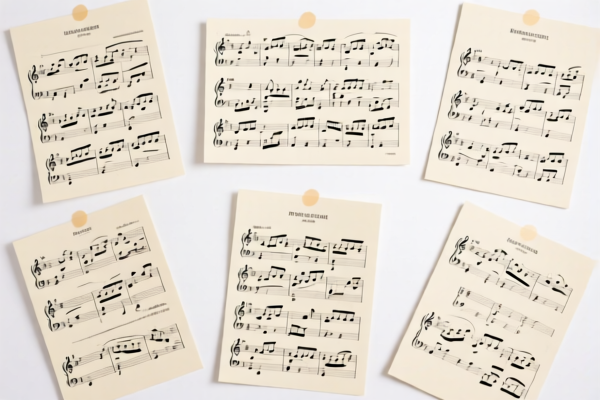
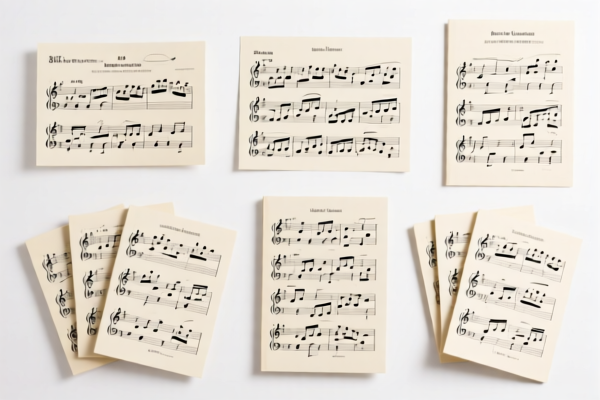
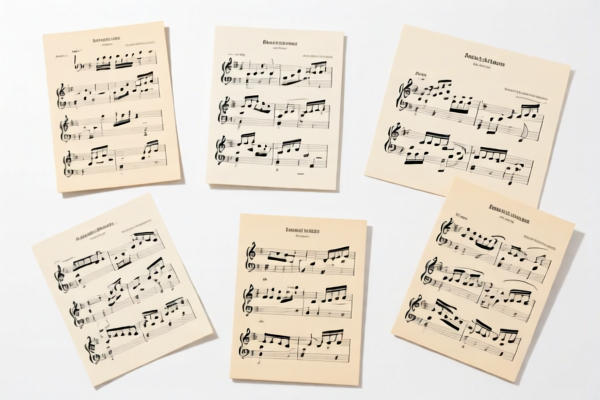
AI分析
🎵 Sheet Music (Musical Scores)
🌐 HS Code Reference & Customs Clearance Guide | 2026 Latest Tariff Analysis | Professional Clearance Strategy
📌 I. Product Definition and Classification: Do You Really Understand "Sheet Music"?
Sheet music, the physical载体 of musical notation, is a specialized category within printed goods. In international trade, it is primarily classified based on its physical form (printed paper) and specific use. The customs classification logic hinges on whether it is treated as a general printed book or a specific printed musical score.
⚠️ Key Distinction Point:
- If the item consists of loose printed pages, cards, or posters containing musical notes, intended for performance or study → Classified under 4904 or 4901/4909 depending on format.
- If bound into a booklet/binder → More likely to fall under 4901.
- If it is a printed card/poster with musical notation → 4909.
📦 II. HS Code Classification Details (2026 Latest Tariff Authority Comparison)
| HS Code | Product Description | Summary Justification | Total Tax Rate |
|---|---|---|---|
4901.99.00.92 |
Printed Books/Pamphlets (Other) | Sheet music is considered a printed item. Based on common sense, it takes the form of printed sheets/booklets. | 17.5% |
4901.99.00.93 |
Printed Books/Pamphlets (Other) | Sheet music is a printed item, fitting the attribute of printed books/brochures, usually composed of paper. | 17.5% |
4904.00.00.20 |
Printed Music | The product name "Sheet Music" completely matches the usage and form in the classification explanation. | 17.5% |
4904.00.00.40 |
Printed Music | The product name "Sheet Music" completely matches the usage in the classification, with no material or form conflicts. | 17.5% |
4909.00.40.00 |
Printed Cards/Announcements | Sheet music material is paper, usage is printed, fitting the morphological characteristics of "printed information" in printed cards/announcements. | 10.0% |
🔍 Important Reminder:
- 4904 is the most precise category for "Printed Music." - 4901 applies if the sheet music is bound as a book/brochure. - 4909 applies if the sheet music is in the form of loose cards, posters, or single sheets not bound as books. - Tax Rates Vary: While 4904 and 4901 attract a higher rate (17.5%), 4909 offers a lower rate (10%) but requires strict adherence to the "card/poster" format.
💰 III. 2026 Latest Tariff Rate Details (Including Surcharges, Policy Add-ons)
✅ Applicable Country: USA (US)
✅ Origin: China (CN)
✅ Effective Date: From November 10, 2025 (and subsequent imports)
🎯 1. 4901.99.00.92 & 4901.99.00.93 —— Printed Books/Pamphlets (Sheet Music as Books)
| Item | Content |
|---|---|
| Base Tariff | 0.0% (ad valorem) |
| Section 301 Tariff | +7.5% |
| Section 122 Tariff | +10% |
| Total Tariff Rate | 17.5% |
| Tax Calculation | CIF Value × 17.5% |
| De Minimis Eligibility | ❌ No (deny_de_minimis) |
| Legal Basis Path | Section 301: 9903.88.01 → Section 122: 9903.01.10 |
📌 Explanation:
- "Section 301 Tariff 7.5%": Additional tariff under the US Trade Act Section 301 for Chinese-origin goods.
- "Section 122 Tariff 10%": Additional tariff under the International Emergency Economic Powers Act (IEEPA) or specific Section 122 provisions for certain Chinese imports.
- Total 17.5%: This is a significant tariff burden for low-value printed goods, requiring careful cost calculation.
🎯 2. 4904.00.00.20 & 4904.00.00.40 —— Printed Music (Specific Category)
| Item | Content |
|---|---|
| Base Tariff | 0.0% (ad valorem) |
| Section 301 Tariff | +7.5% |
| Section 122 Tariff | +10% |
| Total Tariff Rate | 17.5% |
| Tax Calculation | CIF Value × 17.5% |
| De Minimis Eligibility | ❌ No (deny_de_minimis) |
| Legal Basis Path | Section 301: 9903.88.01 → Section 122: 9903.01.10 |
📌 Note:
- Even though this is the most accurate HS code for "Sheet Music," the tariff rate is identical to the general printed book category due to the application of Section 301 and Section 122 tariffs.
- There is no tariff advantage to choosing 4904 over 4901 for Chinese-origin goods in the US market under current rules.
🎯 3. 4909.00.40.00 —— Printed Cards/Announcements (Loose Sheet Music/Cards)
| Item | Content |
|---|---|
| Base Tariff | 0.0% (ad valorem) |
| Section 301 Tariff | 0.0% |
| Section 122 Tariff | +10% |
| Total Tariff Rate | 10.0% |
| Tax Calculation | CIF Value × 10.0% |
| De Minimis Eligibility | ❌ No (deny_de_minimis) |
| Legal Basis Path | Section 122: 9903.01.10 |
📌 Critical Insight:
- This is the LOWEST tariff option at 10%.
- Condition: Must be strictly classified as "Printed Cards" or "Announcements." This applies to loose-leaf sheets, single-page prints, or card-stock music that are not bound into books or brochures.
- Risk: If customs inspectors determine the item is a "booklet" or "brochure" (even if thin), they may reclassify it under 4901/4904, triggering the 17.5% rate.
- Strategy: Use this code only if the physical form is unequivocally a card or loose sheet, and provide clear evidence (e.g., product photos showing unbound sheets).
🛠️ IV. Customs Clearance Practical Advice (Battle-Tested Pitfall Avoidance Guide)
✅ 1. Preparation Checklist (All are Mandatory)
| Document | Mandatory | Explanation |
|---|---|---|
| ✅ Product Specifications | ✔️ | Detail dimensions, binding type (loose/bound), paper quality. |
| ✅ Product Photos | ✔️ | Clearly show if bound (book) or loose (cards/sheets). |
| ✅ Commercial Invoice | ✔️ | Explicitly state "Sheet Music," "Printed Music Scores," or "Musical Notes on Paper." |
| ✅ Packing List | ✔️ | Specify quantity of sheets/booklets. |
| ✅ Origin Certificate (CO) | ✔️ | Required to prove Chinese origin for tariff application. |
| ✅ Content Description | ✔️ | Confirm if lyrics/text are included (may affect classification slightly). |
✅ 2. Declaration Strategy (Key Mantra)
🔥 "Bound = 4901/4904 (17.5%), Loose/Card = 4909 (10%)! Form is King!"
| Scenario | Correct Declaration | Incorrect Approach |
|---|---|---|
| Bound Songbook/Notebook | 4901.99.00.92 or 4901.99.00.93 |
Declare as "Card" → 17.5% vs 10% risk, but 4901 is safer for bound items. |
| Loose Sheets (Single Pages) | 4904.00.00.20 or 4909.00.40.00 |
Declare as "Book" → Higher tariff if classified as 4901, but 4904 is also 17.5%. |
| Card-Stock Music/Posters | 4909.00.40.00 |
Declare as "Book" → Miss out on 10% rate. |
| Digital Sheet Music (PDF) | N/A | Not subject to HS Code/Tariffs. Digital goods are exempt from physical import duties. |
💡 Pro Tip:
- If you can choose between bound and loose format, loose sheets might allow for4909classification, saving 7.5% in tariffs.
- However,4904is the most accurate legal description for "Printed Music." If using4909, ensure the product is visually distinct from a book (e.g., perforated, cardstock, no binding).
- Risk vs. Reward: The 7.5% savings with4909is significant, but the risk of reclassification penalty exists. Weigh this against the cost of potential delays.
✅ 3. Special Case Handling
| Scenario | Handling Advice |
|---|---|
| Digital Downloads | Do not declare as physical goods. Use appropriate digital service codes if applicable, or exempt from physical import duties. |
| Gift Shop Combos | If Sheet Music is bundled with a toy, declare separately. Do not combine physical sheet music with non-paper items. |
| Vintage/Rare Books | If considered "collectible" or "antique," additional documentation may be required. Standard sheet music is not exempt. |
| Lyrics-Only Booklets | If it contains only lyrics (text), it may fall under 4901 (printed books). If it contains musical notation, 4904 is preferred. |
🌍 V. Global Market Customs Comparison (2026 Latest)
| Country/Region | Recommended HS Code | Tariff (China Origin) | Certification Requirements | Notes |
|---|---|---|---|---|
| 🇺🇸 USA | 4904.00.00.20 / 4909.00.40.00 |
17.5% / 10.0% | No special certs needed | Section 301 & 122 tariffs apply. High scrutiny on "Printed Matter." |
| 🇨🇳 China | 4904.00.00.00 |
0% | N/A | No additional surcharges. |
| 🇪🇺 EU | 4904.00.00.00 |
0% | CE (if electronic components included) | Standard 0% duty for printed music. |
| 🇬🇧 UK | 4904.00.00.00 |
0% | N/A | Post-Brexit, generally 0% for printed matter. |
| 🇨🇦 Canada | 4904.00.00.00 |
0% | N/A | Free trade agreements may apply. |
📌 Conclusion:
- The US is the most challenging market for Sheet Music imports from China due to Section 301 and Section 122 tariffs.
- EU, UK, Canada, and China have 0% tariffs, making them far more cost-effective.
- For US imports, structure your product format (loose vs. bound) and documentation meticulously to optimize within the legal framework.
📌 VI. Common Mistakes & Pitfall Guide (Lessons Learned the Hard Way)
❌ Mistake 1: Declaring "Sheet Music" as "Books" (4901) when it is loose sheets.
👉 Consequence: While tax rate is similar (17.5%), customs may demand additional proof of "binding," causing delays. If you declare as "Card" (4909) but it's actually a bound booklet, you face misdeclaration penalties.
❌ Mistake 2: Ignoring Section 122 Tariff in cost calculations.
👉 Consequence: Budgeting only for Section 301 (7.5%) and forgetting the additional 10% leads to underpayment of duties, resulting in customs holds and late fees.
❌ Mistake 3: Mixing Digital and Physical Declarations.
👉 Consequence: If you import a USB drive with sheet music, it may be classified as a data storage device (8523), not printed matter! Check the actual physical content.
❌ Mistake 4: Using "Music" as a vague description.
👉 Consequence: Customs may reject the declaration for insufficient detail. Use "Printed Musical Scores" or "Sheet Music on Paper."
✅ Correct Approach:
"Printed Sheet Music, Unbound, 8.5x11 inches, Paper, Model XYZ, 50 Sheets"
🎯 VII. Conclusion: Professional Declaration Saves Money!
🎯 Remember the Mantra:
🔹 "Bound = 17.5%, Loose/Card = 10% (US). Form Matters!"
🔹 "Sheet Music is Printed Matter, Not a 'Book' if loose! Check Section 301 & 122!"
📌 Pro Tip:
If your sheet music is digital-only, do not incur physical import duties.
If you are shipping to the US, consider consolidating shipments to absorb the fixed clearance costs, as the 17.5% (or 10%) is a percentage of value.
For high-volume imports, consult a customs broker for a Pre-Ruling to confirm if 4909 is acceptable for your specific product format.
📣 Immediate Action:
📞 Contact a Licensed Customs Broker + Provide Product Photos + Request HS Code Pre-Ruling
🚀 Clear Your Sheet Music Efficiently, Avoid Surprises, Maximize Profit!
✨ Professional Clearance Starts with Accurate Classification!
💼 Every Cent of Tariff is Calculated Precisely!
用户评价
关于 HS 编码归类
协调制度(HS)是由世界海关组织(WCO)制定的国际贸易商品分类标准。全球 200 多个国家采用 HS 系统作为海关关税、贸易统计和进出口监管的基础。
每个 HS 编码遵循以下层级结构:
- 章(2 位)——商品大类(例如:第 84 章:机器和机械设备)
- 品目(4 位)——章内的更具体分类
- 子目(6 位)——国际通用细分,所有 WCO 成员国统一使用
- 本国细分(8-10 位)——各国自行扩展的细分编码,如美国 HTSUS 10 位编码
正确的 HS 编码归类对于顺利通关、准确缴纳关税和遵守贸易法规至关重要。错误归类可能导致海关延误、多缴关税或罚款。
从CN进口到US时,适用的关税税率可能包括:
- 最惠国(MFN)税率——适用于 WTO 成员国的标准关税税率
- 普通税率——适用于无贸易协定国家
- 贸易救济关税——附加关税,如 301 条款(反倾销)、232 条款(国家安全)或反补贴税
本页内容仅供参考。如需正式归类,请咨询当地海关或持牌报关代理。