Shell Resin Binder for Casting
CN → US| HS编码 | 关税税率 | 原产国 | 目的国 | 文档 |
|---|---|---|---|---|
| 3907995050 | 41.5% | CN | US | 官方文档 |
| 3907500000 | 41.5% | CN | US | 官方文档 |
| 2902903050 | 35.0% | CN | US | 官方文档 |
| 3824994900 | 41.5% | CN | US | 官方文档 |
商品图片

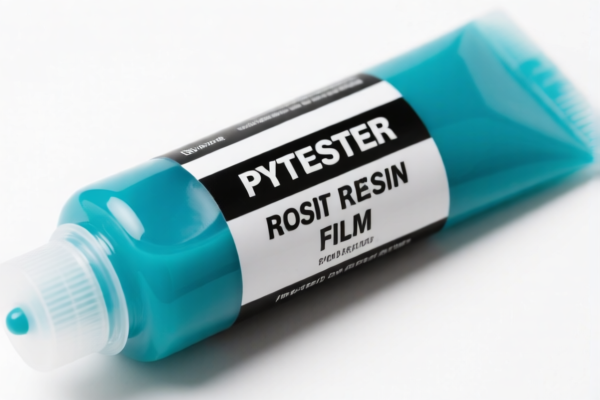


AI分析
🏗️ Shell Resin Binder for Casting (烃类壳型粘结剂)
🌐 HS Code Reference & Customs Clearance Guide | 2026 Latest Tariff Analysis | Professional Clearance Strategy
📌 I. Product Definition & Classification: Do You Really Know "Shell Resin Binder"?
Shell Resin Binders are critical materials in the foundry industry, used to create precise sand molds and cores for metal casting. In international trade, their classification depends heavily on their chemical composition, physical form, and specific function. They are generally categorized under Chapter 39 (Plastics and Articles Thereof) or Chapter 38 (Miscellaneous Chemical Products).
⚠️ Key Classification Distinction:
- If classified as a polymer/resin based on its chemical structure (e.g., polyester, phenolic): → Chapter 39
- If classified based on its source material (e.g., cyclic hydrocarbons): → Chapter 29
- If classified based on its end-use (mold/core preparation): → Chapter 38
📦 II. HS Code Classification Details (2026 Latest Tariff Authority Comparison)
Based on the provided data, there are 4 potential HS Codes for Shell Resin Binders. The choice depends on how the product is defined by the importer (Chemical vs. Functional).
| HS Code | Product Description (From Data) | Classification Basis | Total Tax Rate |
|---|---|---|---|
3907.99.50.50 |
Hydrocarbon Shell Resin Binder Summary: Classified as organic resin/polymer, matching "Other Polyesters" or similar categories. |
Chemical Composition (Polymer) Treated as a synthetic organic polymer. |
41.5% |
3907.50.00.00 |
Hydrocarbon Shell Resin Binder Summary: Morphology belongs to resin-type binders, fitting the scope of primary form resins. |
Physical Form (Primary Resin) Treated as a basic resin in primary shapes. |
41.5% |
2902.90.30.50 |
Hydrocarbon Components Summary: Hydrocarbon content fits cyclic hydrocarbons and alkylbenzene chemical material scope. |
Chemical Material (Hydrocarbon) Treated as a specific chemical substance (cyclic hydrocarbon). |
35.0% |
3824.99.49.00 |
Hydrocarbon Source Binder Summary: Derived from petroleum; shell binder fits the definition of molding/core preparation adhesives. |
End-Use (Foundry Aid) Treated as a preparation for metal casting molds/cores. |
41.5% |
🔍 Critical Note:
-3907codes are preferred if the binder is chemically defined as a polyester or primary resin.
-2902.90.30.50is the lowest tax option (35.0%), but requires strong chemical evidence that the product is primarily a cyclic hydrocarbon/alkylbenzene, not a general-purpose polymer.
-3824.99.49.00is used if the product is marketed specifically as a mold/core preparation agent, regardless of its polymer nature.
💰 III. 2026 Latest Tariff Rate Details (Including Surcharges & Policy Add-ons)
✅ Applicable Country: United States (US)
✅ Origin: China (CN)
✅ Effective Time: 2025 Nov 10 onwards (including subsequent imports)
🎯 1. 3907.99.50.50 & 3907.50.00.00 —— Classified as Resins/Polyesters
| Item | Content |
|---|---|
| Base Duty | 6.5% (Ad Valorem) |
| USITC Surcharge (Section 301) | +25.0% |
| IEEPA Surcharge (Section 122) | +10.0% |
| Total Tax Rate | 41.5% |
| Tax Calculation | CIF Value × 41.5% |
| De Minimis Exemption | ❌ Not Eligible |
| Legal Basis Path | USITC:3907.99.50.50 / 3907.50.00.00 → FOOTNOTE:301 → IEEPA:122 |
📌 Explanation:
- Both3907codes incur the same total tax of 41.5%.
- The 25% comes from Section 301 tariffs on Chinese goods.
- The 10% is an additional IEEPA surcharge.
- The 6.5% is the standard Most Favored Nation (MFN) duty rate for these resins.
🎯 2. 2902.90.30.50 —— Classified as Cyclic Hydrocarbons
| Item | Content |
|---|---|
| Base Duty | 0.0% |
| USITC Surcharge (Section 301) | +25.0% |
| IEEPA Surcharge (Section 122) | +10.0% |
| Total Tax Rate | 35.0% |
| Tax Calculation | CIF Value × 35.0% |
| De Minimis Exemption | ❌ Not Eligible |
| Legal Basis Path | USITC:2902.90.30.50 → FOOTNOTE:301 → IEEPA:122 |
📌 Note:
- This is the most cost-effective classification at 35.0%.
- However, it requires the product to be strictly defined as a cyclic hydrocarbon or alkylbenzene. If the binder contains significant polymeric binders (like phenolics or epoxies), this classification may be challenged.
🎯 3. 3824.99.49.00 —— Classified as Molding Core Preparation Agents
| Item | Content |
|---|---|
| Base Duty | 6.5% |
| USITC Surcharge (Section 301) | +25.0% |
| IEEPA Surcharge (Section 122) | +10.0% |
| Total Tax Rate | 41.5% |
| Tax Calculation | CIF Value × 41.5% |
| De Minimis Exemption | ❌ Not Eligible |
| Legal Basis Path | USITC:3824.99.49.00 → FOOTNOTE:301 → IEEPA:122 |
📌 Note:
- Same tax rate as Chapter 39 products.
- Use this if the product is explicitly labeled and sold as a "Foundry Mold/Core Adhesive" rather than a raw chemical resin.
🛠️ IV. Customs Clearance Practical Advice (Combat Pitfalls Guide)
✅ 1. Document Preparation Checklist (Missing One = Delay)
| Document | Required | Description |
|---|---|---|
| ✅ Product Specification Sheet | ✔️ | Must detail chemical composition (e.g., % hydrocarbons, % resins), melting point, and viscosity. |
| ✅ MSDS (Material Safety Data Sheet) | ✔️ | Critical for chemical classification. Must show hazardous properties and ingredients. |
| ✅ Product Photos | ✔️ | Clear images of the container, label, and product state (liquid/powder/flake). |
| ✅ Commercial Invoice | ✔️ | Must clearly state "Shell Resin Binder for Casting" and specify the HS Code. |
| ✅ Certificate of Origin (CO) | ✔️ | Required for origin verification; helps determine if any preferential rates apply (though unlikely for CN-US). |
| ✅ Packing List | ✔️ | Detailed weight and dimensions. |
| ✅ Usage Declaration | ✔️ | Explicitly state: "Used for creating sand molds and cores in metal casting." |
✅ 2. Declaration Tips (Key Mnemonic)
🔥 “Chemical First, Function Second. Match the MSDS, Avoid the Mess!”
| Scenario | Correct Declaration | Wrong Action |
|---|---|---|
| Product is primarily Polyester Resin | 3907.99.50.50 |
Misdeclare as chemical hydrocarbon → Audit Risk |
| Product is primarily Cyclic Hydrocarbon | 2902.90.30.50 |
Overpaying 41.5% when 35.0% is applicable |
| Product is a Finished Molding Agent | 3824.99.49.00 |
Declare as raw chemical → Customs may reclassify |
| Mixed Composition | Provide detailed MSDS | Vague description "Resin" → Leads to worst-case classification |
✅ 3. Special Cases Handling
| Situation | Handling Advice |
|---|---|
| OEM Custom Binder | Provide client order + technical data sheet. Prove it’s a specialized formulation. |
| Multiple Chemical Forms | If the product contains both hydrocarbons and resins, use the principal component rule. Usually, the resin content dictates Chapter 39. |
| Sample Testing | If unsure, send a sample for CBP Ruling (Preliminary Determination) before mass shipment. |
| Hydrocarbon vs. Resin | If the binder is "hydrocarbon-based" but acts as a resin, 2902 is risky. Prefer 3907 for safety unless chemical purity is high. |
🌍 V. Global Market Clearance Comparison (2026 Latest)
| Country/Region | Recommended HS Code | Duty Rate | Certification Requirements | Remarks |
|---|---|---|---|---|
| 🇺🇸 USA | 3907.50.00.00 / 3907.99.50.50 |
41.5% (CN Origin) | No specific import certs, but strict chemical labeling | High tax due to Section 301 + 122 |
| 🇺🇸 USA (Optimized) | 2902.90.30.50 |
35.0% (CN Origin) | Strict chemical evidence required | Lowest tax, high scrutiny |
| 🇨🇳 China | 3907.50.00.00 |
~6.5% - 13% | No special certs | Lower base duty |
| 🇪🇺 EU | 3907.50.00.00 |
6.5% | REACH Registration Required | No Section 301 tariff |
| 🇮🇳 India | 3907.50.00.00 |
~7.5% + SWS | IGBC/ISI Certs | Higher import barriers |
📌 Conclusion:
- USA is the most challenging market due to additional surcharges (35% total extra).
- EU and China have much lower base duties but require chemical compliance (REACH in EU).
- Always prioritize2902if chemically justifiable to save 6.5%.
📌 VI. Common Mistakes & Pitfalls Guide (Blood & Tears Lessons)
❌ Mistake 1: Declaring as "Plastic Resin" without specifying type
👉 Consequence: Customs may assign a higher duty or demand additional testing.
❌ Mistake 2: Using 3824 for a pure chemical resin
👉 Consequence: Customs may reclassify to 3907, leading to penalties for misdeclaration.
❌ Mistake 3: Ignoring MSDS chemical details
👉 Consequence: If MSDS shows high polymeric content, 2902 will be rejected.
❌ Mistake 4: Not disclosing US Origin Surcharges in internal costings
👉 Consequence: Profit margin erosion. 41.5% is significant!
✅ Correct Practice:
"Shell Mold Resin Binder, Hydrocarbon-Based, for Foundry Use, MSDS Attached, HS Code: 3907.50.00.00"
🎯 VII. Conclusion: Precision Classification Saves Money!
🎯 Remember Mnemonic:
🔹 "Hydrocarbon 2902, Save 6.5%! Resin 3907, Safe and Steady! Foundry Aid 3824, Use When Sure!"
🔹 "HS Code Determines Cost. 35% vs 41.5% = Big Difference in Profit!"
📌 Pro Tip:
- If your product is 100% cyclic hydrocarbon, aggressively pursue 2902.90.30.50.
- If it’s a mixture, consult a customs broker for Advance Ruling to avoid post-import audits.
- Keep MSDS and Technical Data Sheets updated and accessible for every shipment.
📣 Take Action Now:
📞 Engage a licensed customs broker.
📄 Provide full MSDS and chemical structure diagrams.
🚀 Optimize your supply chain to handle 41.5% tariff efficiently.
✨ Professional Customs Clearance Starts with Accurate Classification!
💼 Every Dollar Saved in Duty is Pure Profit!
用户评价
关于 HS 编码归类
协调制度(HS)是由世界海关组织(WCO)制定的国际贸易商品分类标准。全球 200 多个国家采用 HS 系统作为海关关税、贸易统计和进出口监管的基础。
每个 HS 编码遵循以下层级结构:
- 章(2 位)——商品大类(例如:第 84 章:机器和机械设备)
- 品目(4 位)——章内的更具体分类
- 子目(6 位)——国际通用细分,所有 WCO 成员国统一使用
- 本国细分(8-10 位)——各国自行扩展的细分编码,如美国 HTSUS 10 位编码
正确的 HS 编码归类对于顺利通关、准确缴纳关税和遵守贸易法规至关重要。错误归类可能导致海关延误、多缴关税或罚款。
从CN进口到US时,适用的关税税率可能包括:
- 最惠国(MFN)税率——适用于 WTO 成员国的标准关税税率
- 普通税率——适用于无贸易协定国家
- 贸易救济关税——附加关税,如 301 条款(反倾销)、232 条款(国家安全)或反补贴税
本页内容仅供参考。如需正式归类,请咨询当地海关或持牌报关代理。