Shoe Covers (for Cleanroom)
CN → US| HS编码 | 关税税率 | 原产国 | 目的国 | 文档 |
|---|---|---|---|---|
| 6217109550 | 32.1% | CN | US | 官方文档 |
| 6217109510 | 32.1% | CN | US | 官方文档 |
| 3926909989 | 22.8% | CN | US | 官方文档 |
商品图片


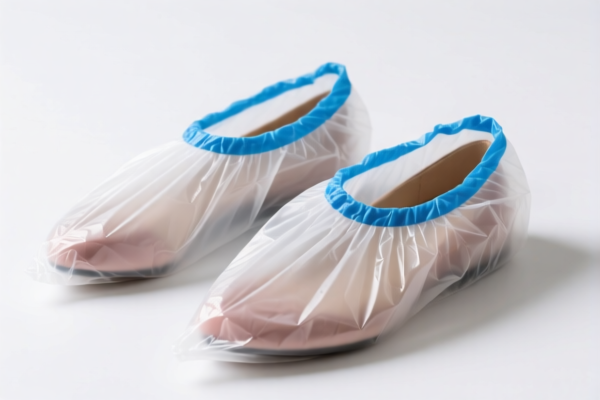
AI分析
🥾 Shoe Covers (for Cleanroom): The Ultimate HS Code & Customs Clearance Guide
🌐 HS Code Classification & Tax Strategy | 2026 Global Trade Update | Professional Logistics Protocol
📌 I. Product Definition & Classification: Are Your Shoe Covers "Textiles" or "Plastics"?
Shoe covers for cleanrooms are critical PPE (Personal Protective Equipment) used in semiconductor manufacturing, pharmaceuticals, hospitals, and electronics assembly to prevent particle contamination. In international trade, their classification is a high-stakes battleground because the HS Code determines whether they are taxed as a textile accessory or a plastic product.
The Two Main Categories:
- Textile Accessories (6217.10.95.xx): Covers made of non-woven fabric (Spunbond), fabric, or treated textile materials. These are classified under "Parts and Accessories of Clothing."
- Plastic Articles (3926.90.99.xx): Covers made of plastic, PE (Polyethylene), PVC, or synthetic sheets. These are classified under "Other Articles of Plastics."
⚠️ Critical Distinction:
- Material Composition: If the primary material is plastic film/foil (even if it looks soft) → 3926.90.99.89.
- Material Composition: If the material is non-woven fabric (textile-like, breathable, often white) → 6217.10.95.10 or 95.50.
- Risk: Misdeclaring plastic shoe covers as textiles to avoid higher duties is a common audit trigger.
📦 II. HS Code Classification Details (2026 Latest Tariff Rules)
Based on the material composition and regulatory definitions, here are the specific HS Codes for Cleanroom Shoe Covers:
| HS Code | Product Description | Material Logic | Application Scenario |
|---|---|---|---|
6217.10.95.50 |
Shoe Covers, Textile Type (Other) | Non-woven fabric, cotton, or synthetic textiles. Categorized as "Other parts and accessories of garments." | High-end cleanrooms: Where breathability and fabric texture are required. |
6217.10.95.10 |
Shoe Covers, Textile Type (General) | Non-woven fabric (PE-coated or Spunbond). A "catch-all" for textile shoe covers not specified elsewhere. | Standard pharmaceutical/medical cleanrooms: Most common "white" shoe covers. |
3926.90.99.89 |
Shoe Covers, Plastic Type (Other) | Plastic, PE, PVC, or synthetic films. Categorized as "Other articles of plastics" (unlisted). | Low-cost/Disposable: Clear, blue, or yellow plastic film covers. |
🔍 Key Insight:
- Non-woven is technically a textile product in customs classification, even if it contains plastic fibers, unless it is primarily a plastic sheet bonded to a backing. - Plastic film shoe covers (transparent, crinkly sound) MUST go to3926.90.99.89.
💰 III. 2026 Tariff Rate Analysis (China Export to US Context)
✅ Export Origin: China (CN)
✅ Import Destination: United States (US)
✅ Applicable Policies: Section 301 (Base + Additional), Section 122, and IEEPA provisions.
🎯 1. 6217.10.95.10 & 6217.10.95.50 (Textile-Based)
| Item | Content |
|---|---|
| Base Tariff | 14.6% (Standard Ad Valorem for textile accessories) |
| Section 301 Additional | +7.5% (Targeted Section 301 duties on Chinese goods) |
| Section 122 Duty | +10.0% (Additional duty under Section 122 of the Trade Act) |
| Total Tax Rate | 32.1% |
| Tax Calculation | CIF Value × 32.1% |
| De Minimis Exemption | ❌ No (Exempt only for $800 parcels, not commercial shipments) |
| Legal Path | 301:6217 → 301:9903 → Section 122:6217 |
📌 Explanation:
- 14.6% is the standard MFN (Most Favored Nation) rate for "Other parts and accessories of apparel."
- 7.5% is the Section 301 surcharge applied to specific Chinese textile categories.
- 10% is the Section 122 tariff (often applied to certain manufacturing inputs/textiles).
- Combined: These textile shoe covers face a heavy 32.1% tariff burden.
🎯 2. 3926.90.99.89 (Plastic-Based)
| Item | Content |
|---|---|
| Base Tariff | 5.3% (Standard Ad Valorem for other plastic articles) |
| Section 301 Additional | +7.5% (Section 301 surcharge on plastics) |
| Section 122 Duty | +10.0% (Section 122 surcharge) |
| Total Tax Rate | 22.8% |
| Tax Calculation | CIF Value × 22.8% |
| De Minimis Exemption | ❌ No |
| Legal Path | 301:3926 → 301:9903 → Section 122:3926 |
📌 Explanation:
- 5.3% is the significantly lower base rate for plastic articles compared to textiles.
- 7.5% + 10% are the same punitive additional duties as textiles.
- Combined: Plastic shoe covers face a 22.8% tariff burden.
- Cost Advantage: If your product is plastic-based, you save 9.3% compared to the textile classification (32.1% - 22.8% = 9.3%).
🛠️ IV. Strategic Customs Clearance & Declaration Guide
✅ 1. Preparation Checklist (Must-Have Documents)
| Document | Requirement | Purpose |
|---|---|---|
| Material Composition Report | ✔️ Critical | Must explicitly state: "100% Non-woven Polyester" vs. "100% Polyethylene (PE)". |
| Product Technical Specs | ✔️ | Thickness (microns), weight (gsm), tear strength. |
| Photographs (Close-up) | ✔️ | Show texture: Is it fabric-like (Textile) or shiny/crinkly (Plastic)? |
| Bill of Materials (BOM) | ✔️ | Breakdown of raw materials to prove classification. |
| Commercial Invoice | ✔️ | Must match the HS Code exactly. |
| Certificate of Origin | ✔️ | Provenance for Section 122/301 application. |
✅ 2. Declaration Strategy (The "Material Matters" Rule)
🔥 Golden Rule: "Texture defines the Tax!"
| Scenario | Correct Declaration | Wrong Declaration | Consequence |
|---|---|---|---|
| Product is Non-Woven (White, Fabric-like) | 6217.10.95.10 (32.1%) |
3926.90.99.89 |
Customs Audit: Claiming plastic for textile goods. Penalties + Re-classification. |
| Product is PE/Plastic (Transparent/Blue) | 3926.90.99.89 (22.8%) |
6217.10.95.10 |
Overpayment: You paid 32.1% instead of 22.8%. Hard to reclaim later. |
| Mixed Material (Fabric + Plastic) | Depends on Main Component | Vague description | Delay: Customs requests sample testing (1-2 weeks). |
📌 Tip: If your non-woven fabric is heavily coated with plastic (>50% plastic by weight or function), you might argue for
3926. However, standard cleanroom non-woven is almost always6217.
✅ 3. Special Considerations & Risk Management
| Risk Factor | Strategy |
|---|---|
| "Non-Woven" Ambiguity | Provide a lab test report confirming the fiber structure (spunbond/meltblown) to justify 6217. |
| Section 122 Scope | Verify if your specific HS Code sub-category is currently under Section 122 enforcement (often changes). |
| Section 301 Exclusions | Check if there are any Exclusion Requests available for your specific cleanroom shoe cover type. |
| Packaging | Do not ship with "Garment Accessories" packaging if declared as "Plastic". Consistency is key. |
🌍 V. Global Market Comparison (Cleanroom Shoe Covers)
| Destination | Recommended HS Code | Base Duty | Add. Tariffs (China) | Total Est. Duty | Remarks |
|---|---|---|---|---|---|
| 🇺🇸 USA | 6217.10.95.10 / 3926.90.99.89 |
5.3% - 14.6% | +17.5% (301+122) | 22.8% - 32.1% | High friction for Chinese exports. |
| 🇪🇺 EU | 6217.10.95.10 / 3926.90.99.89 |
0% - 5% | 0% (No Section 301) | 0% - 5% | Much lower tariffs than US. |
| 🇯🇵 Japan | 6217.10.95.10 / 3926.90.99.89 |
6% - 8% | 0% | 6% - 8% | Stable market, no punitive tariffs. |
| 🇨🇳 China | 6217.10.95.10 / 3926.90.99.89 |
10% - 15% | 0% | 10% - 15% | Domestic production often tax-exempt. |
📌 Conclusion: The US market is the most expensive for Chinese shoe covers due to the 17.5% surcharge stack. Exporters to the US must carefully choose between Textile (
6217) and Plastic (3926) to minimize the 9.3% rate difference.
📌 VI. Common Pitfalls & Avoidance (Lessons Learned)
❌ Pitfall 1: "It's just fabric!"
👉 Reality: Many "non-woven" shoe covers are actually plastic-based.
👉 Action: Check the MIC (Micron) thickness. If it's <0.1mm and crinkles like a bag, it's likely Plastic (3926).
❌ Pitfall 2: Declaring 6217 for Plastic Covers
👉 Reality: Customs officers have "Plastic Shoe Covers" as a high-risk audit category.
👉 Action: If you are a plastic cover manufacturer, declare 3926.90.99.89 immediately.
❌ Pitfall 3: Ignoring Section 122
👉 Reality: Section 122 is a "hidden" 10% tax on certain goods.
👉 Action: Always calculate Base + 301 + 122. Do not forget the 10%.
✅ Best Practice:
"Know your material, declare the tax, avoid the audit!"
🧪 Test your samples. If it's plastic, go 3926. If it's fabric, go 6217. Never guess.
🎯 VII. Final Verdict: How to Optimize Your Costs?
🏆 The Winner: Plastic Shoe Covers (3926.90.99.89)
- Why? Lower base tariff (5.3%) results in a Total Duty of 22.8%.
- Savings: 9.3% less than textile classification (
32.1%).
⚠️ The Loser: Textile Shoe Covers (6217.10.95.10)
- Why? Higher base tariff (14.6%) leads to a Total Duty of 32.1%.
- When to use: Only if the product requires breathable, fabric-based technology (e.g., anti-static fabric for sensitive electronics) and cannot be made of plastic.
🚀 Final Advice:
If your cleanroom requirement allows for plastic (PE/PP) covers, switch production to plastic. The 9.3% tariff saving on large volume orders translates to massive cost reductions. Always verify the exact material composition in your technical datasheet to match the declaration!
✨ Customs Success = Accurate Classification + Precise Material Declaration!
💼 Don't let a 9% tax error eat your profit margin!
用户评价
关于 HS 编码归类
协调制度(HS)是由世界海关组织(WCO)制定的国际贸易商品分类标准。全球 200 多个国家采用 HS 系统作为海关关税、贸易统计和进出口监管的基础。
每个 HS 编码遵循以下层级结构:
- 章(2 位)——商品大类(例如:第 84 章:机器和机械设备)
- 品目(4 位)——章内的更具体分类
- 子目(6 位)——国际通用细分,所有 WCO 成员国统一使用
- 本国细分(8-10 位)——各国自行扩展的细分编码,如美国 HTSUS 10 位编码
正确的 HS 编码归类对于顺利通关、准确缴纳关税和遵守贸易法规至关重要。错误归类可能导致海关延误、多缴关税或罚款。
从CN进口到US时,适用的关税税率可能包括:
- 最惠国(MFN)税率——适用于 WTO 成员国的标准关税税率
- 普通税率——适用于无贸易协定国家
- 贸易救济关税——附加关税,如 301 条款(反倾销)、232 条款(国家安全)或反补贴税
本页内容仅供参考。如需正式归类,请咨询当地海关或持牌报关代理。