Shoe Polishing Machine
CN → US商品图片
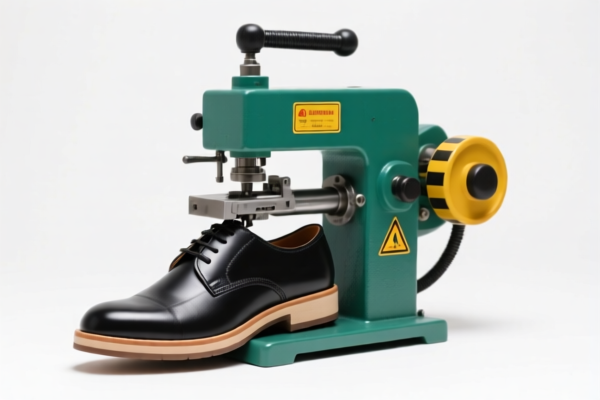
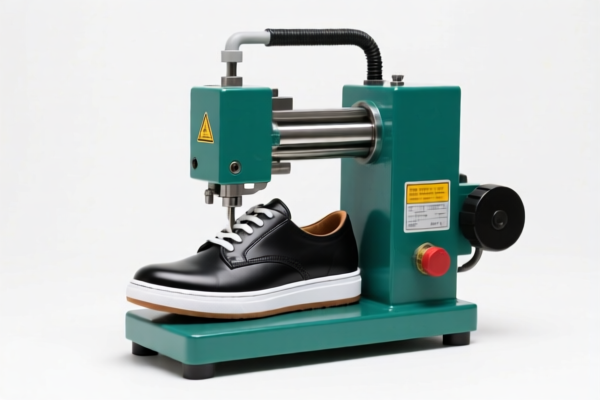
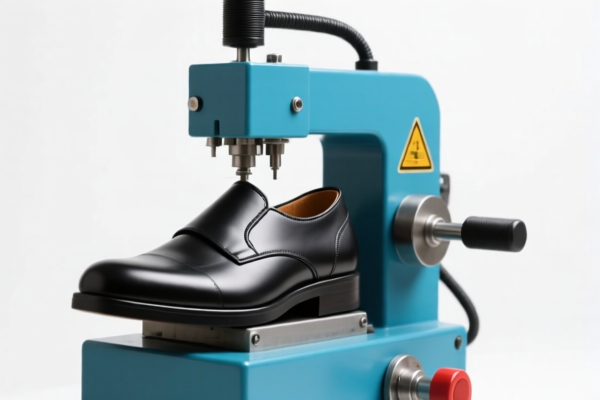
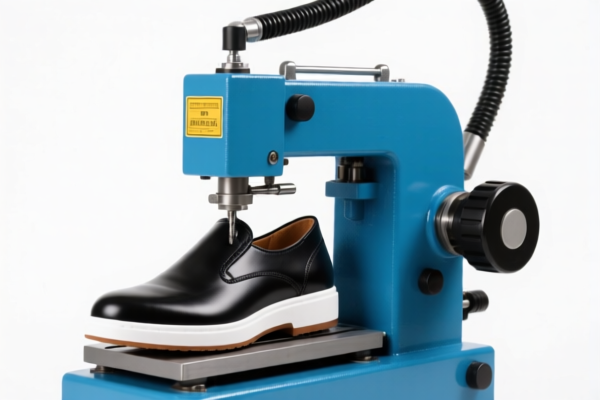
AI分析
🖥️ Shoe Polishing Machine (Shoe Shine Equipment)
🌐 HS Code Reference & Clearance Guide | 2026 Latest Tariff Analysis | Professional Compliance Strategy
📌 I. Product Definition & Classification: Do You Really Know “Shoe Polishing Machines”?
Shoe polishing machines are mechanical or electromechanical devices used to clean, shine, and protect leather footwear. In international trade, they are strictly classified based on their mechanism of action and intended use. They are generally divided into two categories:
- Electric Polishing Machines (Handheld/Portable): Motorized brushes or buffers used for spot polishing.
- Automatic/Stationary Shoe Shine Booths: Large, floor-standing or table-top units with a footrest, enclosure, and automated brushing/polishing systems.
⚠️ Key Distinction Point:
- If it is a portable electric tool with a brush head (like a drill attachment) → Classify under Chapter 85 (Electric Machinery) or Chapter 82 (Tools).
- If it is a stationary booth with a footrest, motor, brushes, and often a vacuum/cleaning system → Classify under Chapter 84 (Machinery) or Chapter 90 (Optical/Medical) if it includes specific sanitizing UV/steam functions.
- Most common commercial import: Automatic Shoe Shine Kiosks/Booths → 8448.39 or 8508.19 depending on primary function.
📦 II. HS Code Classification Details (2026 Latest Tariff Authority Reference)
| HS Code | Product Description | Applicable Scenario | Key Features |
|---|---|---|---|
8448.39.00.00 |
Machinery auxiliary to machinery for preparing, spinning, drawing, or winding textile materials | Incorrect | Do not confuse with textile machinery. |
8508.19.00.00 |
Vacuum cleaners, floor-sweeping machines | High Probability | Many shoe polishers include a vacuum/suction function to remove dust/polish residue. If vacuuming is the primary function, this code applies. |
8467.29.00.00 |
Other tools with self-contained electric motor (e.g., portable polishing grinders) | Portable Units | Handheld electric polishers without vacuum or booth structure. |
9018.90.00.00 |
Instruments and appliances used in medical, surgical, dental or veterinary sciences | Unlikely | Only if it has specific medical-grade sterilization (UV/Ozone) and is marketed for healthcare. |
8479.89.98.00 |
Machines and mechanical appliances having individual functions, not specified elsewhere | Stationary Booths | Most full-size automatic shoe shine kiosks (with footrest, motor, brushes) fall here if they don’t fit neatly into 8508. |
9603.90.00.00 |
Parts of brushes, mops, etc. | Accessories Only | Only the brush heads or replacement pads. |
🔍 Important Note:
- US Customs & Border Protection (CBP) often classifies automatic shoe shine booths under8479.89.98.00(Other machines) or8508.19.00.00if the vacuum function is dominant.
- Always provide technical manuals to prove the primary function. If the device primarily sucks up dust, it’s a vacuum (8508). If it primarily polishes via mechanical agitation, it’s general machinery (8479).
- Do not classify as “Furniture” (Chapter 94). These are machines, not furniture.
💰 III. 2026 Latest Tariff Rate Details (Including Surcharge, Policy Surcharges)
✅ Applicable Country: United States (US)
✅ Country of Origin: China (CN)
✅ Effective Date: 2025/2026 Tariff Schedule
🎯 1. 8479.89.98.00 —— Automatic Shoe Polishing Booths (Primary Polishing Function)
| Item | Details |
|---|---|
| Base Tariff Rate | 3.4% (Ad Valorem) |
| USITC Section 301 Surcharge | +25% (Footnote 9903.01.25 applies to most machinery from China) |
| IEEPA Surcharge | +10% (If applicable under current executive orders for Chinese machinery) |
| Total Effective Rate | ~38.4% (Base 3.4% + 25% Section 301 + 10% IEEPA) |
| Tax Calculation | CIF Value × 38.4% |
| De Minimis Exemption | ❌ Not Eligible (Value > $800, and Section 301 applies) |
| Legal Path | USITC:8479.89.98.00 → SECTION301:9903.01.25 → IEEPA:9903.01.24 |
📌 Explanation:
- Section 301 Tariffs: Most machinery from China is subject to a 25% additional duty under Section 301.
- IEEPA Tariffs: Depending on the latest administrative orders, an additional 10% may apply.
- Total Burden: Over 38%, which significantly impacts profit margins for low-cost kiosks.
🎯 2. 8508.19.00.00 —— Vacuum-Type Shoe Polishing Machines
| Item | Details |
|---|---|
| Base Tariff Rate | 3.4% |
| USITC Section 301 Surcharge | +25% |
| IEEPA Surcharge | +10% |
| Total Effective Rate | ~38.4% |
| Tax Calculation | CIF Value × 38.4% |
| De Minimis Exemption | ❌ Not Eligible |
| Legal Path | USITC:8508.19.00.00 → SECTION301:9903.01.25 |
📌 Note:
- If the machine is marketed as a “Vacuum Cleaner with Brush Attachment,” it may fall under 8508.
- Risk: CBP may reclassify if the polishing function is deemed primary.
- Rate is identical to 8479 for practical purposes due to Section 301.
🎯 3. 8467.29.00.00 —— Portable Electric Polishers
| Item | Details |
|---|---|
| Base Tariff Rate | 3.6% |
| USITC Section 301 Surcharge | +25% |
| IEEPA Surcharge | +10% |
| Total Effective Rate | ~38.6% |
| Tax Calculation | CIF Value × 38.6% |
| De Minimis Exemption | ❌ Not Eligible |
🛠️ IV. Clearance Practical Advice (Real-World Pitfall Guide)
✅ 1. Documentation Checklist (Non-Negotiable)
| Document | Required | Notes |
|---|---|---|
| ✅ Product Specification Sheet | ✔️ | Must detail: Motor Wattage, Brush Type, Vacuum Suction Power (CFM), Dimensions, Voltage. |
| ✅ Technical Manual | ✔️ | Must show assembly, operation, and primary function. Highlight if it’s a “Vacuum-Brush Hybrid.” |
| ✅ Photos (Full View + Label) | ✔️ | Show footrest, enclosure, motor, and certification labels (UL/ETL/CETL). |
| ✅ Third-Party Certification | ✔️ | UL/ETL/CETL is critical for electrical safety in the US. Without it, customs may detain. |
| ✅ Commercial Invoice | ✔️ | Description: “Automatic Shoe Polishing Machine” or “Electric Shoe Brush.” Do NOT write “Furniture.” |
| ✅ Packing List | ✔️ | List accessories separately (brushes, polish cans, power cords). |
| ✅ Certificate of Origin (CO) | ✔️ | Required for Section 301 determination. |
✅ 2. Declaration Tips (Key Mnemonics)
🔥 “Function First, Vacuum vs. Polish, Safety Cert is King!”
| Scenario | Correct Declaration | Incorrect Practice |
|---|---|---|
| Full kiosk with footrest & vacuum | 8479.89.98.00 or 8508.19.00.00 |
Declaring as “Furniture” (Ch. 94) → 0% but seizure risk |
| Handheld electric brush | 8467.29.00.00 |
Declaring as “Vacuum” → Misclassification |
| Replacement brush heads | 9603.90.00.00 |
Declaring as part of machine → Delay |
| Machine without UL/ETL | High Risk of Detention | Assuming “China Standard” is enough for US Customs |
✅ 3. Special Cases Handling
| Scenario | Handling Advice |
|---|---|
| OEM Custom Kiosks | Provide client design specs. If modified significantly, ensure HS code reflects new primary function. |
| Hybrid (Clean + Sanitize) | If UV/Ozone sterilization is a major feature, consult a broker. May still fall under 8479, but documentation must highlight health/safety function. |
| Low-Value Portable Polishers | If < $800, may qualify for de minimis, BUT check if Section 301 applies to specific HS codes. Most machinery does. |
| Import from Non-China Countries | If made in Vietnam/Mexico, apply for FTA Preferences (e.g., USMCA for Mexico, GSP for Vietnam if applicable). Tariff could drop to 0-5%. |
🌍 V. Global Market Clearance Comparison (2026 Latest)
| Country/Region | Recommended HS Code | Tariff (China Origin) | Certification Required | Notes |
|---|---|---|---|---|
| 🇺🇸 USA | 8479.89.98.00 or 8508.19.00.00 |
~38.4% | UL/ETL/CETL | Section 301 heavily impacts. |
| 🇨🇳 China | 8479.89.98.00 |
5-8% | CCC (if applicable) | Lower duty, but import volume controlled. |
| 🇪🇺 EU | 8479.89.98 |
3-4% | CE + RoHS | No Section 301 equivalent, but high safety standards. |
| 🇬🇧 UK | 8479.89.98 |
3-4% | UKCA + CE | Post-Brexit UKCA marking required. |
| 🇦🇺 Australia | 8479.89.98 |
5% | RCM (Electrical) | Strict electrical safety enforcement. |
📌 Conclusion:
- USA has the highest tariff burden due to Section 301 and IEEPA.
- Electrical Safety Certification (UL/ETL) is the #1 clearance hurdle in the US.
- Consider supply chain diversification (Vietnam, Thailand) to avoid high tariffs if importing large volumes to the US.
📌 VI. Common Errors & Pitfall Guide (Blood & Tears Lessons)
❌ Error 1: Declaring as “Shoe Shine Station” (Furniture) under Chapter 94
👉 Consequence: Customs reclassifies to machinery → Back taxes + Penalties + Detention!
❌ Error 2: Missing UL/ETL Certification
👉 Consequence: Goods held at port for inspection → Storage fees + Demurrage + Return/Destroy!
❌ Error 3: Using generic “Electric Machine” in description
👉 Consequence: CBP flags for manual review → 30-60 day delay!
❌ Error 4: Ignoring Section 301 applicability
👉 Consequence: Underpayment of duties → Audit + Interest + Penalties!
✅ Correct Practice:
“Automatic Shoe Polishing Kiosk, Model XYZ, 120V/60Hz, with Motorized Brushes and Suction Vacuum, UL Certified, Made in China”
🎯 VII. Conclusion: Professional Declaration, Save Time, Reduce Cost!
🎯 Remember These Mantras:
🔹 “Primary Function Dictates HS Code”
🔹 “UL/ETL is Mandatory for US Entry”
🔹 “Section 301 Adds 25% to Most Machinery”
🔹 “Don’t Call it Furniture – It’s a Machine!”
📌 Pro Tip:
If your shoe polishers are manufactured in Vietnam, Thailand, or Malaysia, you may qualify for lower or zero tariffs under various trade agreements.
Consider applying for an Advance Ruling from CBP if the function is ambiguous (e.g., hybrid vacuum-polish units).
📣 Take Action Now:
📞 Engage a Licensed Customs Broker + Provide UL Reports + Verify HS Code Pre-Ruling
🚀 Ensure Smooth Clearance, Avoid Seizures, Protect Your Margins!
✨ Professional Compliance Starts with Accurate Classification!
💼 Every Percent of Duty Saved is Pure Profit!
用户评价
关于 HS 编码归类
协调制度(HS)是由世界海关组织(WCO)制定的国际贸易商品分类标准。全球 200 多个国家采用 HS 系统作为海关关税、贸易统计和进出口监管的基础。
每个 HS 编码遵循以下层级结构:
- 章(2 位)——商品大类(例如:第 84 章:机器和机械设备)
- 品目(4 位)——章内的更具体分类
- 子目(6 位)——国际通用细分,所有 WCO 成员国统一使用
- 本国细分(8-10 位)——各国自行扩展的细分编码,如美国 HTSUS 10 位编码
正确的 HS 编码归类对于顺利通关、准确缴纳关税和遵守贸易法规至关重要。错误归类可能导致海关延误、多缴关税或罚款。
从CN进口到US时,适用的关税税率可能包括:
- 最惠国(MFN)税率——适用于 WTO 成员国的标准关税税率
- 普通税率——适用于无贸易协定国家
- 贸易救济关税——附加关税,如 301 条款(反倾销)、232 条款(国家安全)或反补贴税
本页内容仅供参考。如需正式归类,请咨询当地海关或持牌报关代理。