Sifting and Separation Machine
CN → US| HS编码 | 关税税率 | 原产国 | 目的国 | 文档 |
|---|---|---|---|---|
| 8474100090 | 35.0% | CN | US | 官方文档 |
| 8437800090 | 35.0% | CN | US | 官方文档 |
| 8421290065 | 35.0% | CN | US | 官方文档 |
| 8437100000 | 35.0% | CN | US | 官方文档 |
| 8474100010 | 35.0% | CN | US | 官方文档 |
| 8421190000 | 36.3% | CN | US | 官方文档 |
商品图片
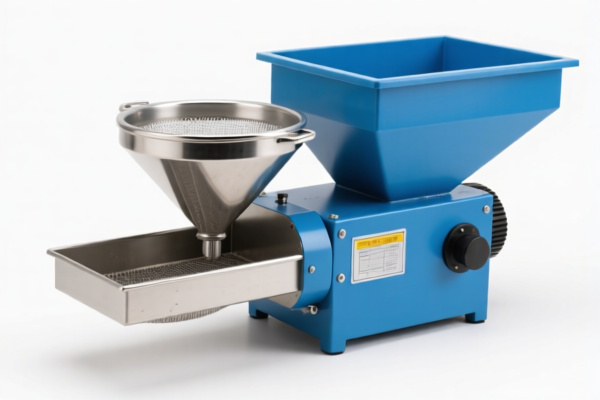
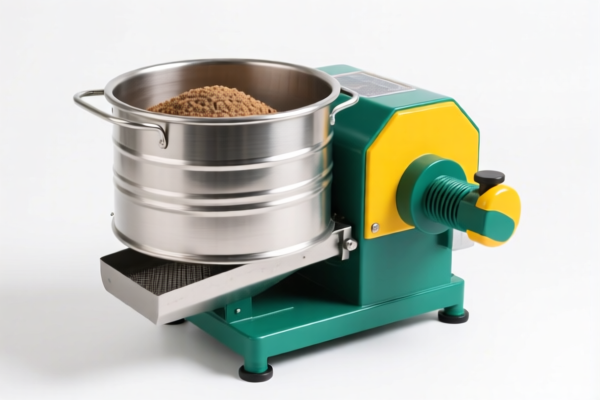
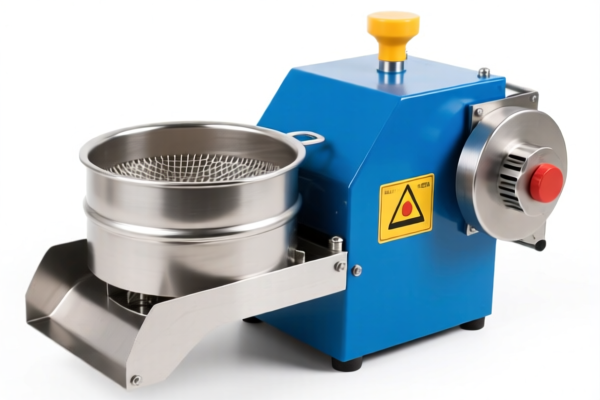
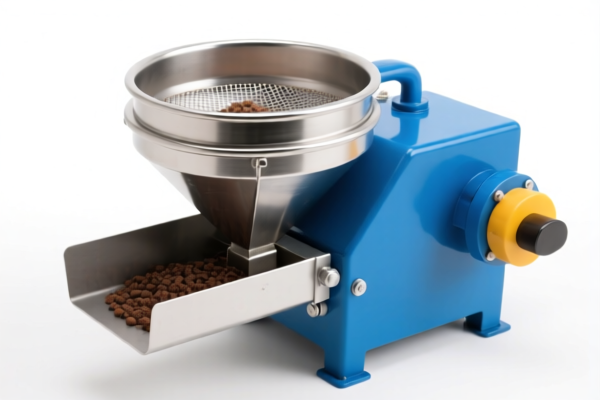
AI分析
🏭 Sifting and Separation Machines
🌐 HS Code Reference & Customs Clearance Guide | 2026 Latest Tariff Analysis | Professional Clearance Strategy
📌 Part I: Product Definition and Classification: What Exactly is a "Sifting Machine"?
In international trade, "Sifting and Separation Machines" are not a single, monolithic category. They are defined by their specific function and the material they process. Misclassification here is the #1 cause of customs delays and unexpected duties.
These machines generally fall into two broad functional buckets: 1. Grain/Seed Processing Equipment: Used for cleaning, grading, or sorting seeds, grains, or dehydrated legumes. 2. General Industrial Separators: Used for classifying, filtering, purifying liquids/gases, or general mechanical separation.
⚠️ Key Distinction:
- If the machine is specifically designed for agricultural products (seeds, grains, vegetables) → It likely belongs to Chapter 84 (8437 series).
- If the machine is for general industrial use (minerals, coal, chemicals) or liquid/gas filtration → It likely belongs to Chapter 84 (8474 or 8421 series).
📦 Part II: HS Code Classification Details (2026 Authorized Reference)
Based on the provided data, here are the precise HS Codes and their corresponding descriptions. Note: All listed codes below carry a Total Tax Rate of 35.0% due to US trade restrictions.
| HS Code | Product Description | Application Scenario | Key Function |
|---|---|---|---|
8474.10.00.90 |
Sifting/Sorting Machines for General Mechanical Classification | General industrial material processing | Classification, Sifting, Separation |
8437.80.00.90 |
Sifting/Cleaning Machines for Seeds/Grains | Agricultural processing facilities | Cleaning, Sorting, Grading seeds, grains, dehydrated legumes |
8421.29.00.65 |
Liquid/Gas Filtering and Purification Apparatus | Chemical, pharmaceutical, or fluid processing | Filtration, Purification, Separation of liquids or gases |
8437.10.00.00 |
Grain Cleaning/Grading Machines | Flour mills, grain elevators | Cleaning, Grading, Sifting grain |
8474.10.00.10 |
Sifting/Washing Machines for General Industrial Use | Mining, construction, or bulk material handling | Classification, Sifting, Separation, Washing |
🔍 Critical Reminder:
- Agricultural vs. General: If your machine cleans wheat, corn, or soybeans, choose 8437. If it sifts sand, gravel, or chemical powders, choose 8474 or 8421.
- Washing Function: If the sifting process includes washing (e.g., washing grains or minerals), check if 8474.10.00.10 is more appropriate than pure sifting codes.
- Liquid/Gas Specific: If it’s not for solids, it likely falls under 8421 (filtering/purifying).
💰 Part III: 2026 Latest Tariff Rate Breakdown (Including Additional Duties)
✅ Applicable Country: United States (US)
✅ Country of Origin: China (CN)
✅ Effective Date: 2025–2026 (Ongoing)
All five HS Codes listed in the data share the identical tariff structure due to US-China trade policies.
🎯 Universal Tax Structure for All Listed Sifting/Sorting Codes
| Item | Content |
|---|---|
| Base Tariff | 0.0% (Ad Valorem) |
| Section 301 Additional Duty | +25.0% |
| 122-Title Tariff (IEEPA/USMCA related provisions) | +10.0% |
| Total Effective Duty Rate | 35.0% |
| Tax Calculation Formula | CIF Value × 35% |
| De Minimis Exemption | ❌ NOT Applicable (deny_de_minimis) |
| Legal Basis | Section 301 Tariff List + 122-Title Additional Tariff |
📌 Explanation:
- 0% Base: The standard Most Favored Nation (MFN) duty for these machinery categories is zero.
- 25% Section 301: This is the primary retaliatory tariff imposed on Chinese industrial machinery.
- 10% 122-Title: This refers to additional tariffs under specific trade enforcement provisions (often related to national security or specific trade act sections).
- 35% Total: This is a high duty rate. Importers must factor this into their landed cost immediately. No low-value shipment exemption applies.
🛠️ Part IV: Customs Clearance Operational Advice (Practical Pitfall Avoidance)
✅ 1. Preparation Checklist (Non-Negotiable)
| Document | Required | Reason |
|---|---|---|
| ✅ Technical Data Sheet | ✔️ | Must specify: Is it for grains? Is it for liquids? What is the separation mechanism? |
| ✅ Product Photos | ✔️ | Clear images of control panels, inlet/outlet ports, and labeling. |
| ✅ Commercial Invoice | ✔️ | Must explicitly state the end-use (e.g., "Machine for sifting soybeans" vs. "Machine for filtering oil"). |
| ✅ Packing List | ✔️ | Detail all accessories (screens, motors) to avoid "missing parts" flags. |
| ✅ Country of Origin Cert | ✔️ | To confirm CN origin for the 35% calculation. |
✅ 2. Declaration Tips (Key Mnemonics)
🔥 "Function First, Material Second, Code Precise!"
| Scenario | Correct HS Code | Wrong Approach | Consequence |
|---|---|---|---|
| Sifting Wheat/Corn | 8437.10.00.00 or 8437.80.00.90 |
Using 8474 (General Machinery) |
Potential delay for clarification; risk of misclassification penalty. |
| Filtering Engine Oil | 8421.29.00.65 |
Using 8474 (Solid Sifting) |
Misclassification of machine type. |
| Sifting Coal/Sand | 8474.10.00.90 or 8474.10.00.10 |
Using 8437 (Agricultural) |
Agricultural codes are for food-grade separation; industrial codes are for bulk solids. |
| Washing & Sifting Seeds | 8437 series or 8474.10.00.10 (if industrial wash) |
Generic "Sifter" | Specificity reduces customs inquiry time. |
✅ 3. Special Cases
| Situation | Handling Advice |
|---|---|
| Dual-Use Machine (e.g., sifts both grain and plastic pellets) | Declare the primary intended use. If marketed primarily for agriculture, use 8437. If for industrial plastics, use 8474. |
| Imported with Screens/Accessories | Declare the machine and accessories together under the main HS Code if they are part of the same shipment and function. Do not split unless necessary to lower value per line (which won’t help here due to 35% flat rate). |
| Used Equipment | Provide maintenance records and proof of functional status. Customs may inspect for bio-security risks (if agricultural) or mechanical safety. |
🌍 Part V: Global Market Comparison (2026)
| Country/Region | Recommended HS Code | Tariff Rate (China Origin) | Key Certification | Notes |
|---|---|---|---|---|
| 🇺🇸 USA | Varies by function (see above) | 35% (All listed codes) | None specific for machinery, but FCC for electronic controls | High barrier due to 25% + 10% tariffs. |
| 🇨🇳 China | Varies | 0% ~ 5% | CCC (if applicable) | Domestic use is cheaper. |
| 🇪🇺 EU | Varies | 0% ~ 2.7% | CE Marking | No Section 301 equivalent. Lower duty than US. |
| 🇨🇦 Canada | Varies | 0% ~ 6% | CSA | USMCA may apply if originating in US/Mexico. |
| 🇯🇵 Japan | Varies | 0% ~ 5% | JIS/PSE | Competitive market. |
📌 Conclusion:
The USA is significantly more expensive for importing sifting/separation machines from China due to the 35% combined duty.
- Strategy: If targeting the US market, consider tariff engineering (e.g., importing components and assembling locally if feasible) or sourcing from non-China origins to avoid the 35% hit.
📌 Part VI: Common Mistakes & Pitfalls (Lessons Learned)
❌ Mistake 1: Using one generic code (e.g., "8474") for all sifting machines.
👉 Consequence: Customs may question the specific function. If it’s for grains, 8437 is more accurate. Misclassification can lead to audits.
❌ Mistake 2: Ignoring the 122-Title 10% tariff.
👉 Consequence: Importers often calculate only the 25% Section 301 duty. Missing the additional 10% leads to underpayment and penalties at customs.
❌ Mistake 3: Declaring "Machine Parts" instead of "Whole Machine" to save costs.
👉 Consequence: Parts are often subject to higher or similar rates, and splitting a complete machine can trigger a "Bill of Lading" violation or duty evasion flags.
❌ Mistake 4: Failing to specify "Agricultural" vs. "Industrial" use.
👉 Consequence: Confusion between 8437 (Agricultural) and 8474/8421 (Industrial). Correct classification ensures accurate inspection protocols (e.g., phytosanitary checks for agricultural machines).
✅ Correct Approach:
"Grain Sifting Machine, Model XYZ, 100kg/hr, for Soybean Cleaning, CE Certified, Origin: China"
🎯 Part VII: Conclusion: Precise Classification Saves Money!
🎯 Remember the Mantra:
🔹 "Function Defines Code, Agriculture is 8437, Industry is 8474/8421."
🔹 "35% is the US Price Tag, Plan for Landed Cost Early."
📌 Pro Tip:
If your sifting machine has electronic control systems, ensure they are declared correctly. While the machine itself is machinery, the control panels may have separate HS codes. However, under GRI 3(b) (Essential Character), the whole machine is usually classified under the main machine code.
📣 Immediate Action:
📞 Contact a Licensed Customs Broker + Provide Detailed Technical Specs + Request Tariff Ruling if unsure.
🚀 Accurate Classification = Smooth Clearance = Predictable Costs!
✨ Professional Clearance Starts with Precision!
💼 Every dollar of duty counts in the machinery trade!
用户评价
关于 HS 编码归类
协调制度(HS)是由世界海关组织(WCO)制定的国际贸易商品分类标准。全球 200 多个国家采用 HS 系统作为海关关税、贸易统计和进出口监管的基础。
每个 HS 编码遵循以下层级结构:
- 章(2 位)——商品大类(例如:第 84 章:机器和机械设备)
- 品目(4 位)——章内的更具体分类
- 子目(6 位)——国际通用细分,所有 WCO 成员国统一使用
- 本国细分(8-10 位)——各国自行扩展的细分编码,如美国 HTSUS 10 位编码
正确的 HS 编码归类对于顺利通关、准确缴纳关税和遵守贸易法规至关重要。错误归类可能导致海关延误、多缴关税或罚款。
从CN进口到US时,适用的关税税率可能包括:
- 最惠国(MFN)税率——适用于 WTO 成员国的标准关税税率
- 普通税率——适用于无贸易协定国家
- 贸易救济关税——附加关税,如 301 条款(反倾销)、232 条款(国家安全)或反补贴税
本页内容仅供参考。如需正式归类,请咨询当地海关或持牌报关代理。