Silicate Brick
CN → US| HS编码 | 关税税率 | 原产国 | 目的国 | 文档 |
|---|---|---|---|---|
| 6904100020 | 35.0% | CN | US | 官方文档 |
| 6904100010 | 35.0% | CN | US | 官方文档 |
商品图片
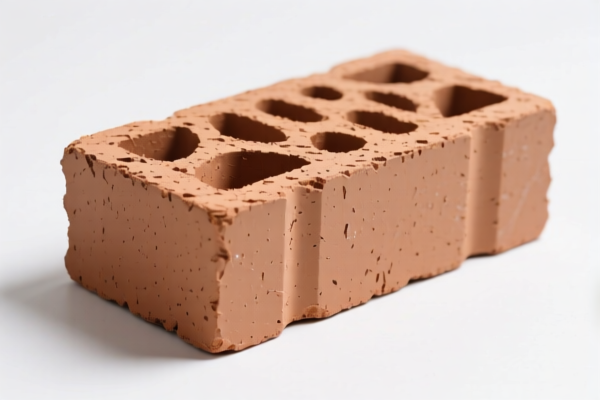
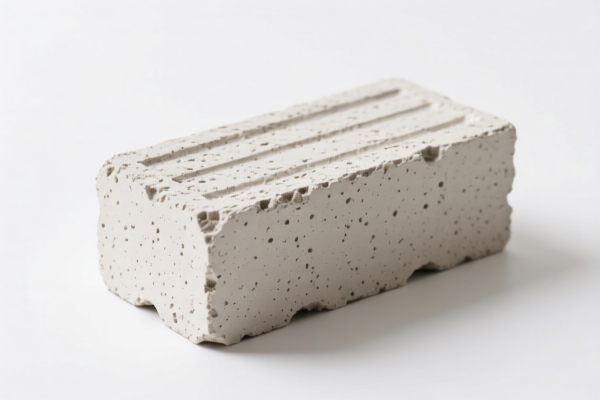
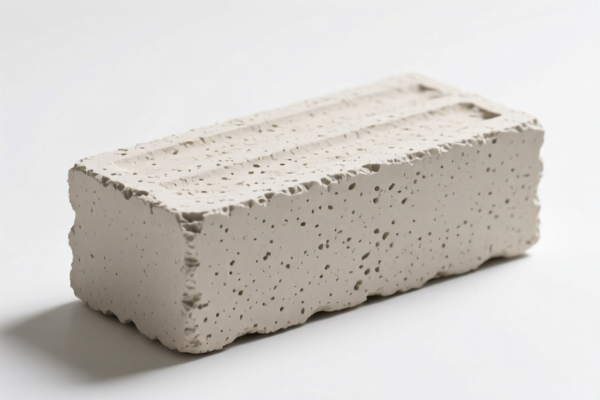
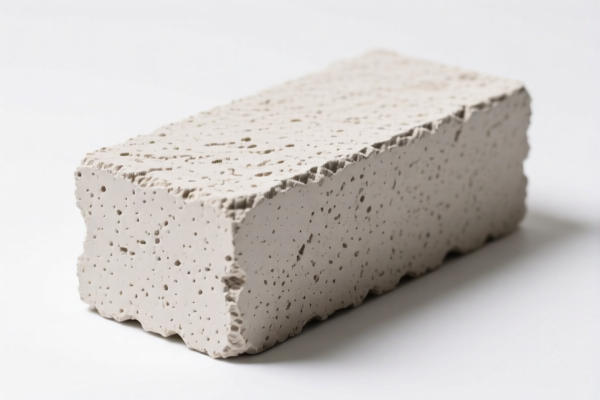
AI分析
🧱 Silicate Bricks: Ceramic Building Bricks & Paving Blocks | 2026 Customs Clearance Guide
🌐 HS Code Reference & Clearance Strategy | Latest 2026 Tariff Breakdown | Professional Compliance Guide
📌 Part I: Product Definition & Classification – Do You Know Your "Silicate Bricks"?
Silicate Bricks (also known as Sand-Lime Bricks) are a type of non-clay ceramic building material. They are primarily composed of silica (sand) and lime (calcium hydroxide), rather than the clay typical of traditional red bricks. In international trade, they fall under Chapter 69: Ceramic Products.
Crucially, for customs purposes, "Silicate Bricks" are classified based on their physical form and intended function: 1. Solid Bricks: Dense bricks used for structural support or general building. 2. Heat Insulating Bricks: Porous or low-density bricks designed for thermal insulation.
⚠️ Key Distinction:
- If the brick is dense, used for walls, floors, or general construction support → Solid Bricks.
- If the brick is specifically engineered for heat insulation (e.g., for kilns, furnaces, or energy-saving walls) → Heat Insulating.
- Do not confuse with "Firebricks" (refractory bricks for extremely high temperatures >1000°C), which may have different HS codes. Silicate bricks are generally for lower-temperature insulation or structural use.
📦 Part II: HS Code Classification Details (2026 Latest Tariff Authority)
Based on your input data, here are the two specific HS Codes applicable to Silicate Bricks:
| HS Code | Product Description | Applicable Scenario | Key Characteristic |
|---|---|---|---|
6904.10.00.20 |
Building bricks: Solid bricks: Other | General construction, walls, paving, load-bearing structures | Dense, structural, non-insulating |
6904.10.00.10 |
Building bricks: Solid bricks: Heat insulating | Thermal insulation walls, kiln linings, energy-efficient construction | Porous, low thermal conductivity |
🔍 Critical Note:
- Both codes fall under Heading 6904: Ceramic building bricks, flooring blocks, support or filler tiles and the like.
- Solid Bricks means the brick is not hollow (if hollow, it might fall under different subheadings, but your data specifies "Solid").
- "Other" in6904.10.00.20captures standard silicate bricks that are not specifically designated as heat-insulating.
💰 Part III: 2026 Latest Tariff Rate Breakdown (Including Additional Taxes)
✅ Applicable Country: United States (US)
✅ Country of Origin: China (CN)
✅ Effective Date: 2025-11-10 onwards (including subsequent imports)
🎯 1. 6904.10.00.20 – Solid Bricks (Other) / General Purpose
| Item | Detail |
|---|---|
| Base Tariff | 0.0% |
| Section 301 Additional Tariff | +25.0% |
| IEEPA Additional Tariff | +10.0% |
| Total Tariff Rate | 35.0% |
| Tax Calculation | CIF Value × 35% |
| De Minimis Eligibility | ❌ No (Deny de minimis) |
| Legal Basis Path | Section 301: 9903.01.25 → IEEPA: 9903.01.24 → USITC: 6904.10.00.20 |
📌 Explanation:
- Base Tariff (0%): Standard MFN rate for ceramic bricks is often 0%.
- Section 301 Tariff (+25%): Applied to Chinese goods under the U.S.-China Trade War.
- IEEPA Tariff (+10%): Additional levy under the International Emergency Economic Powers Act for Chinese products.
- Total: 35%. This is a high tariff burden. Must be factored into pricing.
🎯 2. 6904.10.00.10 – Solid Bricks (Heat Insulating)
| Item | Detail |
|---|---|
| Base Tariff | 0.0% |
| Section 301 Additional Tariff | +25.0% |
| IEEPA Additional Tariff | +10.0% |
| Total Tariff Rate | 35.0% |
| Tax Calculation | CIF Value × 35% |
| De Minimis Eligibility | ❌ No (Deny de minimis) |
| Legal Basis Path | Section 301: 9903.01.25 → IEEPA: 9903.01.24 → USITC: 6904.10.00.10 |
📌 Note:
- Identical Tax Treatment: Despite being "heat insulating," the total tariff rate is also 35%.
- Product Specification is Key: Customs may require technical data sheets to prove if a brick is truly "heat insulating" (e.g., thermal conductivity coefficient < 0.5 W/m·K). Misclassification can lead to penalties.
🛠️ Part IV: Clearance Practical Advice (Pitfall Avoidance Guide)
✅ 1. Required Documentation Checklist
| Document | Mandatory | Purpose |
|---|---|---|
| ✅ Product Spec Sheet | ✔️ | Must detail composition (Silica/Lime ratio), density, and thermal conductivity for insulation claims. |
| ✅ Technical Data Sheet | ✔️ | Proof of "Heat Insulating" property (if claiming 6904.10.00.10). |
| ✅ Product Photos | ✔️ | Clear images of bricks, packaging, and labeling. |
| ✅ Commercial Invoice | ✔️ | Must clearly state "Silicate Bricks" or "Sand-Lime Bricks," not just "Bricks." |
| ✅ Packing List | ✔️ | Weight and dimensions are critical for bulk cargo clearance. |
| ✅ Certificate of Origin (CO) | ✔️ | Required to prove origin as China (triggers tariffs). |
✅ 2. Declaration Tips (Golden Rules)
🔥 "Be Precise, Be Honest, Avoid General Terms!"
| Scenario | Correct Declaration | Incorrect Practice |
|---|---|---|
| General Construction Brick | 6904.10.00.20 - "Silicate Building Bricks, Solid, Non-Insulating" |
Calling it "Ceramic Tile" or "Firebrick" |
| Thermal Insulation Brick | 6904.10.00.10 - "Silicate Heat Insulating Bricks" |
Calling it "Standard Brick" to avoid scrutiny (Risky!) |
| Hollow Brick | Not Covered in Data | If hollow, it may fall under 6904.10.90 or other subheadings. Check if your brick is truly solid. |
⚠️ Warning:
- If you declare6904.10.00.10(Heat Insulating) but the brick is dense and structural, Customs will reclassify it to6904.10.00.20. Since the tax rate is the same (35%), this is mainly a compliance accuracy issue to avoid delays.
- If you declare6904.10.00.20but the brick is actually heat-insulating, no tax difference, but incorrect description may flag an audit.
✅ 3. Special Considerations
| Situation | Advice |
|---|---|
| Brick Composition | Ensure it is Ceramic (silica-lime). If it is concrete/cement-based, it falls under Chapter 68 (e.g., 6810.99.00), which has different tariffs! This is a common error. |
| Packaging | Bricks are heavy and fragile. Use pallets. Ensure packing list matches invoice weight exactly. |
| Origin Marking | Must be clearly marked "Made in China" on the product or packaging. |
🌍 Part V: Global Market Comparison (2026)
| Country/Region | Recommended HS Code | Tariff (CN Origin) | Notes |
|---|---|---|---|
| 🇺🇸 USA | 6904.10.00.10 / .20 |
35% (25% + 10%) | High barrier. Consider non-CN supply chain. |
| 🇨🇳 China | 6904.10.00.00 |
0% (Import) | Domestic production is common. |
| 🇪🇺 EU | 6904.10.00 |
0% - 3% | No Section 301 tariffs. Lower trade barrier. |
| 🇬🇧 UK | 6904.10.00 |
0% - 3% | Post-Brexit, aligned with EU tariff schedules. |
| 🇦🇺 Australia | 6904.10.00 |
5% | No additional punitive tariffs. |
📌 Conclusion:
- The USA is the most expensive market for Chinese Silicate Bricks due to the 35% combined tariff.
- Europe and other regions are much more competitive.
- If targeting the US, consider supply chain diversification (e.g., producing in Vietnam or Mexico if feasible, though silicate bricks are often produced locally due to high volume/low value).
📌 Part VI: Common Errors & Pitfalls (Lessons Learned)
❌ Error 1: Misclassifying Concrete Bricks as Silicate/Ceramic Bricks.
👉 Consequence: Concrete bricks are Chapter 68 (6810.xxxxxx). If misclassified, you may underpay duties if the ceramic rate is higher, or face fines for incorrect declaration.
Fix: Verify binder material. Lime/Sand = Ceramic (Ch 69). Cement/Sand = Concrete (Ch 68).
❌ Error 2: Assuming all "Bricks" are the same.
👉 Consequence: Failing to distinguish "Heat Insulating" vs. "Other" may lead to customs audits, even if tax is the same.
Fix: Provide technical specs proving thermal properties if claiming insulation.
❌ Error 3: Ignoring the De Minimis rule.
👉 Consequence: Silicate bricks are not eligible for the $800 de minimis exemption (Section 321) due to the additional tariffs.
Fix: Plan for full duty payment. Do not use low-value courier services to evade taxes.
🎯 Part VII: Conclusion – Precision Saves Money!
🎯 Remember the Golden Rule:
🔹 "Silicate vs. Concrete: Know your binder!"
🔹 "Solid vs. Insulating: Declare correctly!"
🔹 "USA Market: Budget for 35%!"💡 Pro Tip:
Since the tariff is high (35%), ensure your FOB price includes this cost. Consider Advance Rulings from US Customs and Border Protection (CBP) to confirm the HS Code classification, especially for new product lines.
📣 Immediate Action:
📞 Consult a Customs Broker: Provide your Technical Data Sheet to confirm if your product is truly "Heat Insulating" or "Other."
📄 Prepare Documentation: Invoice, Packing List, CO, and Spec Sheet ready before shipment.
🚀 Cost Calculation:CIF Value * 1.35 = Total Landed Cost. Ensure profitability!
✨ Accurate Classification = Smooth Clearance + Controlled Costs
💼 Don't let classification errors stall your supply chain!
用户评价
关于 HS 编码归类
协调制度(HS)是由世界海关组织(WCO)制定的国际贸易商品分类标准。全球 200 多个国家采用 HS 系统作为海关关税、贸易统计和进出口监管的基础。
每个 HS 编码遵循以下层级结构:
- 章(2 位)——商品大类(例如:第 84 章:机器和机械设备)
- 品目(4 位)——章内的更具体分类
- 子目(6 位)——国际通用细分,所有 WCO 成员国统一使用
- 本国细分(8-10 位)——各国自行扩展的细分编码,如美国 HTSUS 10 位编码
正确的 HS 编码归类对于顺利通关、准确缴纳关税和遵守贸易法规至关重要。错误归类可能导致海关延误、多缴关税或罚款。
从CN进口到US时,适用的关税税率可能包括:
- 最惠国(MFN)税率——适用于 WTO 成员国的标准关税税率
- 普通税率——适用于无贸易协定国家
- 贸易救济关税——附加关税,如 301 条款(反倾销)、232 条款(国家安全)或反补贴税
本页内容仅供参考。如需正式归类,请咨询当地海关或持牌报关代理。