Silicon Carbide Semiconductor Wafer
CN → US| HS编码 | 关税税率 | 原产国 | 目的国 | 文档 |
|---|---|---|---|---|
| 8486100000 | 35.0% | CN | US | 官方文档 |
| 3818000020 | 60.0% | CN | US | 官方文档 |
| 8541210040 | 60.0% | CN | US | 官方文档 |
| 8486900000 | 85.0% | CN | US | 官方文档 |
| 8541100040 | 10.0% | CN | US | 官方文档 |
商品图片
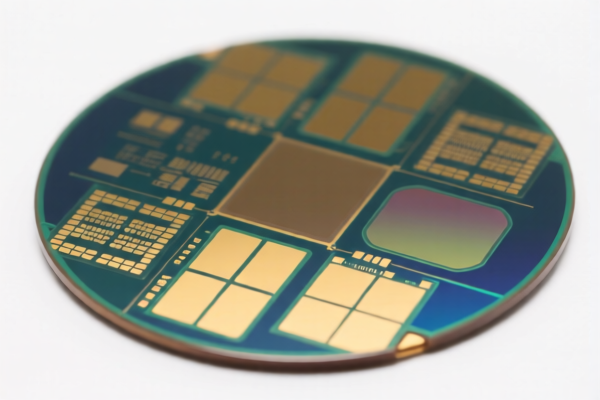
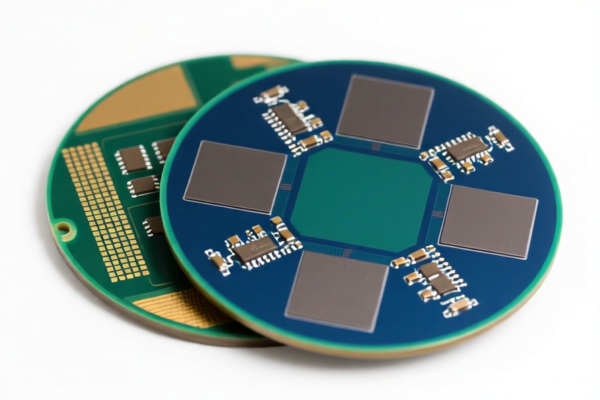
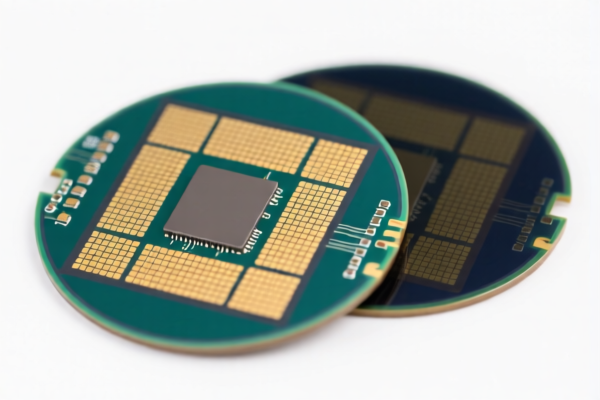
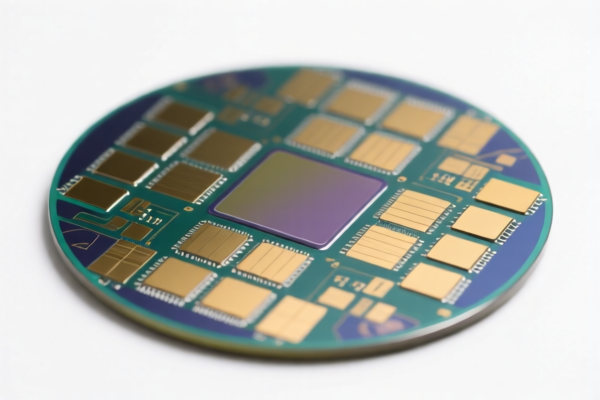
AI分析
🔬 Silicon Carbide (SiC) Semiconductor Wafer
🌐 HS Code Reference & Customs Clearance Guide | 2026 Latest Tariff Analysis | Professional Strategy for SiC Substrates
📌 I. Product Definition & Classification: Do You Really Understand "SiC Wafers"?
Silicon Carbide (SiC) wafers are the foundational substrate materials for next-generation power semiconductors. Unlike traditional Silicon (Si), SiC offers superior thermal conductivity, higher breakdown voltage, and lower energy loss, making it critical for Electric Vehicles (EVs), Fast Charging Infrastructure, Rail Transit, and Industrial Power Supplies.
In international trade, SiC wafers are not a single monolithic product. They are classified based on their physical state, material form, and integration level:
- Single Crystal SiC Wafers (The "Gold Standard"): High-purity, single-crystal structures, often sliced and polished. Used for high-end power devices (MOSFETs, Diodes).
- Polysilicon/Poly-SiC Substrates: Polycrystalline forms, sometimes used in research or specific lower-grade applications, though less common for commercial power electronics.
- Unpackaged Chips/Dies (Bare Dies): SiC wafers that have been diced into individual chips (dies) but are not yet packaged into modules.
- Specialty Components: Wafers used in specific manufacturing contexts or raw material forms.
⚠️ Critical Distinction:
- If it is a single-crystal wafer intended for semiconductor manufacturing → Likely 8486.10.00.00 or 8486.90.00.00.
- If it is polysilicon or raw material form → Likely 3818.00.00.20.
- If it is diced into bare chips/dies (no packaging) → Likely 8541.21.00.40 or 8541.10.00.40.
- Do not classify SiC wafers as simple "silicon chips" if they are in wafer form, as HS codes distinguish between raw materials, substrates, and active devices.
📦 II. HS Code Classification Details (2026 Latest Tariff Authoritative Comparison)
| HS Code | Product Description | Application Scenario | Tax Rate |
|---|---|---|---|
8486.10.00.00 |
Single Crystal SiC Wafers | High-end EV inverters, 800V+ systems, industrial motors. Wafers used as substrates for epitaxial growth. | 35.0% |
3818.00.00.20 |
Polycrystalline SiC/Poly-SiC | Raw material forms, polysilicon-like characteristics, non-single-crystal substrates. | 60.0% |
8541.21.00.40 |
Unpackaged SiC Chips/Dies | Wafers diced into bare chips (dies), ready for packaging. No leads/pins yet. | 60.0% |
8486.90.00.00 |
Other Semiconductor Wafers/Components | Specialty wafers, specific manufacturing objects, or non-standard forms not covered above. | 85.0% |
8541.10.00.40 |
Diodes (Bare/Special Form) | If classified specifically as bare diodes in wafer/die form, or specific non-packaged semiconductor devices. | 10.0% |
🔍 Key Insight:
-8486.10.00.00is the most common code for high-quality single-crystal SiC wafers. It reflects the "substrate" nature.
-3818.00.00.20applies if the material is not single-crystal (e.g., polysilicon-like). This is rare for commercial power SiC but possible for raw imports.
-8541.21.00.40applies once the wafer is diced into dies. Note the high tax rate (60%) due to "Section 301" duties.
-8541.10.00.40is a low-tax loophole (10%) but strict criteria: must be specifically identified as diodes or similar bare devices, not general wafers. Misclassification here risks severe penalties.
💰 III. 2026 Latest Tariff Rate Details (Including Surtaxes, Policy Surcharges)
✅ Applicable Country: United States (US)
✅ Origin: China (CN)
✅ Effective Date: From November 10, 2025 (including subsequent imports)
🎯 1. 8486.10.00.00 —— Single Crystal SiC Wafers (Substrate)
| Item | Content |
|---|---|
| Base Tariff | 0% (ad valorem) |
| USITC Surtax (Section 301) | +25% |
| IEEPA Surtax (122 Clause) | +10% |
| Total Tariff | 35.0% |
| Tax Calculation | CIF Value × 35% |
| De Minimis Exemption | ❌ Not Eligible |
| Legal Basis Path | USITC:8486.10.00.00 → FOOTNOTE:9903.88.01 → IEEPA:9903.01.25 |
📌 Explanation:
- SiC wafers are considered critical semiconductor substrates.
- The 25% Section 301 duty applies to a broad range of semiconductor equipment and materials.
- The 10% IEEPA duty is an additional surcharge on Chinese-origin goods.
- Total 35% is significant for high-value wafers. Cost planning must include this.
🎯 2. 3818.00.00.20 —— Polycrystalline SiC / Raw Material Forms
| Item | Content |
|---|---|
| Base Tariff | 0% |
| USITC Surtax (Section 301) | +50% |
| IEEPA Surtax (122 Clause) | +10% |
| Total Tariff | 60.0% |
| Tax Calculation | CIF Value × 60% |
| De Minimis Exemption | ❌ Not Eligible |
| Legal Basis Path | USITC:3818.00.00.20 → FOOTNOTE:9903.88.01 → IEEPA:9903.01.25 |
📌 Note:
- This code is for non-single-crystal forms. If you import high-poly SiC or raw material, the tax burden is very high (60%).
- Ensure your material is not single-crystal, or reclassify to8486.10.00.00to save 25%.
🎯 3. 8541.21.00.40 —— Unpackaged SiC Chips/Dies (Bare Dies)
| Item | Content |
|---|---|
| Base Tariff | 0% |
| USITC Surtax (Section 301) | +50% |
| IEEPA Surtax (122 Clause) | +10% |
| Total Tariff | 60.0% |
| Tax Calculation | CIF Value × 60% |
| De Minimis Exemption | ❌ Not Eligible |
| Legal Basis Path | USITC:8541.21.00.40 → FOOTNOTE:9903.88.01 → IEEPA:9903.01.25 |
📌 Caution:
- Once wafers are diced into dies, they fall under semiconductor devices.
- The 50% Section 301 duty is higher than for wafers (8486.10).
- This reflects the US policy to discourage offshoring of final semiconductor manufacturing steps.
🎯 4. 8486.90.00.00 —— Other Semiconductor Wafers/Components
| Item | Content |
|---|---|
| Base Tariff | 0% |
| USITC Surtax (Section 301) | +25% |
| IEEPA Surtax (122 Clause) | +10% |
| Steel/Aluminum/Copper Surtax | +50% (if applicable to packaging/components) |
| Total Tariff | 85.0% |
| Tax Calculation | CIF Value × 85% |
| De Minimis Exemption | ❌ Not Eligible |
| Legal Basis Path | USITC:8486.90.00.00 → FOOTNOTE:9903.88.01 → IEEPA:9903.01.25 |
📌 Warning:
- This is the highest tax bracket.
- Use only if the product does not fit other specific codes.
- Example: Wafers with non-standard materials or special manufacturing components that trigger the steel/aluminum surcharge.
🎯 5. 8541.10.00.40 —— Diodes (Bare/Special Form) / Low-Tax Option
| Item | Content |
|---|---|
| Base Tariff | 0% |
| USITC Surtax (Section 301) | 0% |
| IEEPA Surtax (122 Clause) | +10% |
| Total Tariff | 10.0% |
| Tax Calculation | CIF Value × 10% |
| De Minimis Exemption | ❌ Not Eligible |
| Legal Basis Path | USITC:8541.10.00.40 → IEEPA:9903.01.24 |
📌 Strategic Opportunity:
- Only 10% total tax!
- Conditions: The product must be clearly identifiable as diodes (e.g., Schottky diodes, which SiC is often used for) in bare/unpackaged form.
- Risk: If customs determines it is a general wafer or transistor, they may reclassify to8541.21.00.40(60%) or8486.10.00.00(35%).
- Advice: Provide technical datasheets proving the product is a diode structure (even if in wafer/die form).
🛠️ IV. Customs Clearance Practical Advice (Real-World Pitfall Guide)
✅ 1. Preparation Checklist (Missing Documents = Delays)
| Document | Required | Description |
|---|---|---|
| ✅ Technical Data Sheet | ✔️ | Must specify: Single Crystal vs. Polycrystalline, Diameter (e.g., 150mm/200mm), Orientation, Dopant Type. |
| ✅ Product Photos | ✔️ | Clear images of the wafer, labeling, and packaging. Show if diced (dies) or full wafer. |
| ✅ Bill of Materials (BOM) | ✔️ | For 8541.10.00.40, prove the component is a diode. |
| ✅ Certificate of Origin (CO) | ✔️ | Essential for claiming exemptions if originating from non-China countries (e.g., Vietnam, US). |
| ✅ Commercial Invoice | ✔️ | Describe accurately: "Single Crystal Silicon Carbide Wafer, 6H-Ni, 150mm" or "SiC Diode Die". |
| ✅ ECCN Classification | ✔️ | Determine if it requires an export license (EAR99 vs. EAR3A99). |
✅ 2. Declaration Strategy (Key Mnemonics)
🔥 "Wafer vs. Die: Structure Defines Code. Diode or Not: Tax Varies 50 Points!"
| Scenario | Correct HS Code | Incorrect Code | Consequence |
|---|---|---|---|
| Single Crystal SiC Wafer | 8486.10.00.00 |
8541.21.00.40 |
Overpay tax? No, Underpay → Audit & Penalty |
| Polysilicon SiC | 3818.00.00.20 |
8486.10.00.00 |
60% Tax vs 35% → High Cost |
| SiC Diode Die (Bare) | 8541.10.00.40 |
8541.21.00.40 |
10% Tax vs 60% → Save 50%! |
| SiC MOSFET Die | 8541.21.00.40 |
8541.10.00.40 |
60% Tax → MOSFETs are not diodes |
📌 Critical Tip:
- If you import SiC Diodess (e.g., for rectifiers), declare as8541.10.00.40if they are in bare/die form.
- If you import SiC Transistors/MOSFETs, you must use8541.21.00.40(60%). You cannot claim the 10% diode rate.
✅ 3. Special Cases
| Case | Handling Advice |
|---|---|
| OEM Custom Wafers | Provide customer design specs. Ensure "Single Crystal" is certified. |
| Wafer + Packaging | If packaged, it may become a "Module" or "Device," changing the code. |
| Multi-Crystal SiC | Ensure it is not classified as "Polysilicon" (3818.00.00.20) unless it truly is. |
| Research Samples | May apply for "Educational/Research" exemption if eligible, but still subject to tariffs. |
🌍 V. Global Market Comparison (2026 Latest)
| Country/Region | Recommended HS Code | Tariff | Certification | Notes |
|---|---|---|---|---|
| 🇺🇸 USA | 8486.10.00.00 (Wafer) |
35% (Wafer) / 60% (Die) | FCC / NRTL (if powered) | High tariffs on Chinese origin. |
| 🇨🇳 China | 8486.10.00.00 |
0% - 5% | CCC (if end-product) | Import duties for SiC wafers are low. |
| 🇪🇺 EU | 8541.21.00.00 |
0% (if eligible) | CE / RoHS | EU may have different classification for wafers vs. dies. |
| 🇯🇵 Japan | 8541.21.00.00 |
0% | PSE | Favourable for high-tech semiconductors. |
| 🇻🇳 Vietnam | 8486.10.00.00 |
0% (under USFTAA) | None | Strategic Alternative: Import from Vietnam to avoid US tariffs. |
📌 Conclusion:
- USA imposes heavy tariffs on Chinese SiC wafers/dies.
- Vietnam, Thailand, Malaysia are key alternative sourcing hubs to mitigate US tariffs.
- Diode vs. Transistor distinction is the biggest cost-saving opportunity.
📌 VI. Common Mistakes & Pitfall Guide (Blood Lessons)
❌ Mistake 1: Declaring SiC Diode Dies as 8541.21.00.40 (MOSFET/General Device)
👉 Consequence: 60% Tax instead of 10%. Loss of $500 per $1000 CIF.
❌ Mistake 2: Declaring Single Crystal SiC Wafers as 3818.00.00.20 (Polysilicon)
👉 Consequence: 60% Tax instead of 35%. Overpay $250 per $1000 CIF.
❌ Mistake 3: Ignoring the 122 Clause (IEEPA)
👉 Consequence: Even if Section 301 is 0% (rare), the 10% IEEPA surcharge still applies to Chinese goods.
❌ Mistake 4: Misidentifying Material Form
👉 Consequence: Customs rejects "Single Crystal" claim if certificates show polycrystalline structure.
✅ Correct Approach:
"SiC Single Crystal Wafer, 150mm, 6H-Polytype, for Power Devices"
vs.
"SiC Bare Diode Die, Unpackaged, for Rectifiers"
🎯 VII. Conclusion: Precision Classification Saves Millions!
🎯 Remember the Mnemonic:
🔹 "Wafer 35, Diode 10, Die 60, Poly 60. Get it wrong, pay double!"
🔹 "Structure is Key: Crystal vs. Poly, Diode vs. Transistor."
🔹 "Customs Doesn't Care About Your Brand, They Care About Your Code."
📌 Pro Tip:
If your SiC wafers/dies are originally from the US, Japan, or Europe, tariffs may be 0%.
If from China, plan for 35-60%.
Consider pre-classification rulings with US CBP if your product is borderline (e.g., is it a diode or a general device?).
📣 Immediate Action:
📞 Consult a Customs Broker + Provide Datasheets + Apply for Advance Ruling
🚀 Ensure Your SiC Wafers Cross Borders Smoothly, Profits Maximized!
✨ Professional Clearance Starts with Accurate Classification!
💼 Every Percent of Tariff is an Opportunity for Optimization!
用户评价
关于 HS 编码归类
协调制度(HS)是由世界海关组织(WCO)制定的国际贸易商品分类标准。全球 200 多个国家采用 HS 系统作为海关关税、贸易统计和进出口监管的基础。
每个 HS 编码遵循以下层级结构:
- 章(2 位)——商品大类(例如:第 84 章:机器和机械设备)
- 品目(4 位)——章内的更具体分类
- 子目(6 位)——国际通用细分,所有 WCO 成员国统一使用
- 本国细分(8-10 位)——各国自行扩展的细分编码,如美国 HTSUS 10 位编码
正确的 HS 编码归类对于顺利通关、准确缴纳关税和遵守贸易法规至关重要。错误归类可能导致海关延误、多缴关税或罚款。
从CN进口到US时,适用的关税税率可能包括:
- 最惠国(MFN)税率——适用于 WTO 成员国的标准关税税率
- 普通税率——适用于无贸易协定国家
- 贸易救济关税——附加关税,如 301 条款(反倾销)、232 条款(国家安全)或反补贴税
本页内容仅供参考。如需正式归类,请咨询当地海关或持牌报关代理。