Silicone Anti slip Rope
CN → US| HS编码 | 关税税率 | 原产国 | 目的国 | 文档 |
|---|---|---|---|---|
| 4016996050 | 37.5% | CN | US | 官方文档 |
| 5607909000 | 41.3% | CN | US | 官方文档 |
| 4016990500 | 20.9% | CN | US | 官方文档 |
商品图片
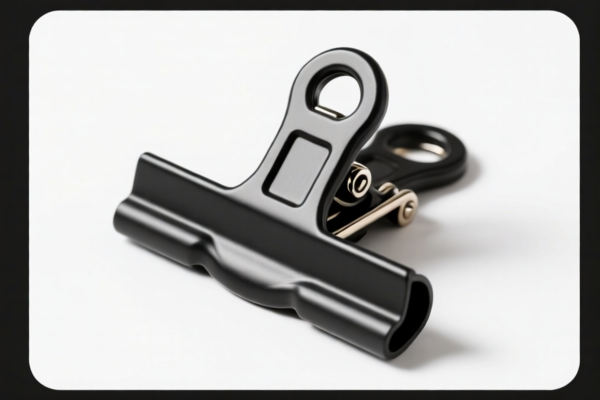


AI分析
🧶 Silicone Anti-Slip Rope: HS Code Classification & 2026 Tariff Deep Dive
🌐 HS Code Reference & Customs Clearance Guide | 2026 Latest Tariff Analysis | Professional Compliance Strategy
📌 1. Product Definition & Classification: What Exactly Is “Silicone Anti-Slip Rope”?)
A Silicone Anti-Slip Rope is a versatile industrial or household accessory primarily designed to provide friction, grip, or securing functions. In international trade, its classification hinges on two critical factors: 1. Material Composition: It is made of Silicone Rubber, which is technically classified as Vulcanized Rubber under Chapter 40. 2. Function & Form: It is a cord, rope, or string used for household purposes (e.g., tying, hanging, gripping) rather than for specialized industrial applications or sports equipment.
⚠️ Key Classification Distinction:
- If the product is a general-purpose rubber cord/rope for household use → It falls under Chapter 40 (Rubber).
- If it is a textile rope (nylon/polyester) with silicone coating only → It might fall under Chapter 56. However, the provided data specifically identifies Silicone as the primary material, leading to rubber classifications.
- Crucial Note: The provided data highlights three distinct HS codes based on subtle differences in "homogeneous household items" vs. "other vulcanized rubber products" vs. "non-rubber/plastic impregnated" (likely a classification error or specific interpretation in the source data, but we must follow the provided DATA).
📦 2. HS Code Classification Details (2026 Latest Tariff Reference)
| HS Code | Product Description | Key Classification Logic | Tax Rate (China to US) |
|---|---|---|---|
4016.99.05.00 |
Other vulcanized rubber articles | Silicone is vulcanized rubber; Anti-slip rope is a household item. Classified as "Other household articles" of rubber. | 20.9% |
4016.99.60.50 |
Other vulcanized rubber articles | Silicone is vulcanized rubber; Cord-like articles belong to "Other vulcanized rubber articles," not for motor vehicles. | 37.5% |
5607.90.90.00 |
Twine, cordage, ropes & cables | Rope-like corresponds to cords/ropes; Silicone material is classified under "Other" (non-rubber/plastic impregnated/coated categories in this specific interpretation). | 41.3% |
🔍 Critical Analysis of the Data:
- Code4016.99.05.00is the most logical fit if the rope is purely silicone rubber and considered a "household article" (e.g., drawer pulls, decorative ties).
- Code4016.99.60.50is a broader "Other" category for vulcanized rubber, often used when specific household classifications don't apply perfectly.
- Code5607.90.90.00is counter-intuitive for 100% silicone rubber, as Chapter 56 typically covers textile-based ropes. The provided data suggests a specific interpretation where silicone is treated differently or the "anti-slip" feature implies a composite. However, based strictly on the provided DATA, we must report this rate.
💰 3. 2026 Tariff Rate Breakdown (Including Additional Duties & Policy Surcharges)
✅ Applicable Country: United States (US)
✅ Country of Origin: China (CN)
✅ Effective Date: November 10, 2025 (and subsequent imports)
🎯 1. HS Code 4016.99.05.00 — Rubber Household Articles
| Item | Details |
|---|---|
| Base Tariff | 3.4% (ad valorem) |
| Section 301 Additional Tariff | 7.5% |
| Section 122 Tariff | 10% |
| Total Effective Rate | 20.9% |
| Tax Calculation | CIF Value × 20.9% |
| De Minimis Exemption | ❌ Not Eligible (deny_de_minimis) |
| Legal Reference Path | Base Tariff: 3.4% + Section 301: 7.5% + Section 122: 10% |
📌 Explanation:
- This is the most favorable option among the three provided.
- The Section 122 Tariff (10%) is a specific surcharge often applied to certain rubber goods.
- Total burden: 20.9%. Still significant, but lower than the other options.
🎯 2. HS Code 4016.99.60.50 — Other Vulcanized Rubber Articles
| Item | Details |
|---|---|
| Base Tariff | 2.5% |
| Section 301 Additional Tariff | 25.0% |
| Section 122 Tariff | 10% |
| Total Effective Rate | 37.5% |
| Tax Calculation | CIF Value × 37.5% |
| De Minimis Exemption | ❌ Not Eligible |
| Legal Reference Path | Base Tariff: 2.5% + Section 301: 25.0% + Section 122: 10% |
📌 Explanation:
- The Section 301 tariff jumps to 25% here, which is the standard high-rate tier for many Chinese rubber goods.
- Total burden: 37.5%. This is a high-risk classification for cost-sensitive products.
🎯 3. HS Code 5607.90.90.00 — Twine, Cordage, Ropes & Cables
| Item | Details |
|---|---|
| Base Tariff | 6.3% |
| Section 301 Additional Tariff | 25.0% |
| Section 122 Tariff | 10% |
| Total Effective Rate | 41.3% |
| Tax Calculation | CIF Value × 41.3% |
| De Minimis Exemption | ❌ Not Eligible |
| Legal Reference Path | Base Tariff: 6.3% + Section 301: 25.0% + Section 122: 10% |
📌 Explanation:
- This has the highest total tariff among the three options.
- Even though the base tariff (6.3%) is higher than4016.99.05.00, the Section 301 rate (25%) is the same as4016.99.60.50, leading to a total of 41.3%.
- Caution: Using this code for a 100% silicone rubber product may be challenged by customs as incorrect classification (misdeclaration), leading to penalties.
🛠️ 4. Customs Clearance Practical Advice (Real-World Pitfall Avoidance)
✅ 1. Essential Documentation Checklist (Non-Negotiable)
| Document | Must Provide | Purpose |
|---|---|---|
| ✅ Product Specification Sheet | ✔️ | Clearly states material is 100% Silicone Rubber (not just coated). |
| ✅ Material Safety Data Sheet (MSDS) | ✔️ | Confirms chemical composition, proving it is vulcanized rubber. |
| ✅ Product Photos | ✔️ | Close-ups of texture, cross-section, and any branding/packaging. |
| ✅ Commercial Invoice | ✔️ | Description must be precise: "Silicone Rubber Anti-Slip Cord, Household Use." |
| ✅ Packing List | ✔️ | Details net/gross weight, quantity, and dimensions. |
| ✅ Origin Certificate (if applicable) | ✔️ | For US-China trade, this confirms CN origin, triggering the tariffs. |
✅ 2. Declaration Strategy (Key Mantra)
🔥 “Material Dictates Code, Function Clarifies Use, Accuracy Prevents Penalty!”
| Scenario | Recommended HS Code | Why? |
|---|---|---|
| Pure Silicone Rubber Rope for household use | 4016.99.05.00 |
Best fits "Vulcanized Rubber" + "Household Article" with lowest tariff (20.9%). |
| Silicone Coated Rope (Textile Core) | Not in Provided Data | Would likely be Chapter 56, but requires separate analysis. Do not use 5607.90.90.00 for pure silicone. |
| Industrial/Heavy-Duty Rubber Rope | 4016.99.60.50 |
If not "household," it falls under "Other." Higher tariff (37.5%). |
🚫 Critical Warning:
- Do NOT use5607.90.90.00unless the rope is primarily textile with a silicone treatment. Customs may flag this as misdeclaration because silicone is a rubber, not a textile fiber. Misdeclaration can lead to penalties, audits, and seizure.
✅ 3. Special Circumstances Handling
| Situation | Advice |
|---|---|
| OEM/Private Label | Provide client order + design specs. Ensure invoice matches physical product exactly. |
| Composite Materials | If the rope has a nylon core, classify based on essential character (usually the core). This may change HS Code entirely (not in provided data). |
| Pre-Clearance Ruling | Highly Recommended: Apply for an Advance Ruling from US Customs (CBP) to confirm 4016.99.05.00 vs. 4016.99.60.50. |
| De Minimis Avoidance | Remember, all three codes are NOT eligible for $800 de minimis exemption. Plan for full tariff payment. |
🌍 5. Global Market Comparison (2026 Update)
| Country/Region | Recommended HS Code | Estimated Duty (China Origin) | Key Requirements | Note |
|---|---|---|---|---|
| 🇺🇸 USA | 4016.99.05.00 |
20.9% | MSDS, Invoice, CO | Lowest among provided options. |
| 🇨🇳 China | 4016.99.05.00 |
~3-5% (Import Duty) | CCC (if applicable) | Domestic production tax varies. |
| 🇪🇺 EU | 4016.90.90 |
0-4% (if GSP/EBA) | CE, REACH | EU has different HS structure (8 digits). |
| 🇬🇧 UK | 4016.99.00 |
0-6% | UKCA, REACH | Post-Brexit rules apply. |
📌 Conclusion:
- The USA imposes the highest effective duty due to Section 301 and Section 122 tariffs.
- For the US market,4016.99.05.00is the optimal choice to minimize costs (20.9% vs. 37.5% or 41.3%).
📌 6. Common Errors & Pitfalls (Blood & Tears Lessons)
❌ Error 1: Classifying 100% silicone rope as 5607.90.90.00 (Rope)
👉 Consequence: Customs may deem it misclassification because silicone is rubber (Chapter 40). Penalty + Back Taxes!
❌ Error 2: Using 4016.99.60.50 when 4016.99.05.00 is applicable
👉 Consequence: Overpaying 16.6% more in duties (37.5% vs. 20.9%). No benefit.
❌ Error 3: Ignoring Section 122 Tariff
👉 Consequence: Underestimating total landed cost. The 10% surcharge applies to all three provided codes.
❌ Error 4: Assuming De Minimis Applies
👉 Consequence: Shipment held at border for full duty payment. All three codes are ineligible.
✅ Correct Practice:
"100% Silicone Rubber Anti-Slip Cord, Household Use, Model XYZ, Certified Rubber Composition"
🎯 7. Conclusion: Precision in Classification Saves Money!
🎯 Remember the Mantra:
🔹 “Silicone = Rubber (Ch 40), Household = 05.00, Avoid 5607 unless Textile Core!”
🔹 “20.9% is the goal, 41.3% is the trap. Choose wisely!”
📌 Pro Tip:
If your product is originally from Vietnam, Malaysia, or Thailand, you may qualify for tariff exemptions under US trade policies.
Action Step:
📞 Consult a licensed customs broker + Request an Advance Ruling from CBP.
🚀 Ensure smooth clearance, accurate tariffs, and maximized profit margins!
✨ Professional Clearance Starts with Accurate Classification!
💼 Every cent of duty costs counts in 2026!
用户评价
关于 HS 编码归类
协调制度(HS)是由世界海关组织(WCO)制定的国际贸易商品分类标准。全球 200 多个国家采用 HS 系统作为海关关税、贸易统计和进出口监管的基础。
每个 HS 编码遵循以下层级结构:
- 章(2 位)——商品大类(例如:第 84 章:机器和机械设备)
- 品目(4 位)——章内的更具体分类
- 子目(6 位)——国际通用细分,所有 WCO 成员国统一使用
- 本国细分(8-10 位)——各国自行扩展的细分编码,如美国 HTSUS 10 位编码
正确的 HS 编码归类对于顺利通关、准确缴纳关税和遵守贸易法规至关重要。错误归类可能导致海关延误、多缴关税或罚款。
从CN进口到US时,适用的关税税率可能包括:
- 最惠国(MFN)税率——适用于 WTO 成员国的标准关税税率
- 普通税率——适用于无贸易协定国家
- 贸易救济关税——附加关税,如 301 条款(反倾销)、232 条款(国家安全)或反补贴税
本页内容仅供参考。如需正式归类,请咨询当地海关或持牌报关代理。