Silicone Duck Bill Cup
CN → US| HS编码 | 关税税率 | 原产国 | 目的国 | 文档 |
|---|---|---|---|---|
| 3924102000 | 24.0% | CN | US | 官方文档 |
| 3926901000 | 20.9% | CN | US | 官方文档 |
| 3924104000 | 13.4% | CN | US | 官方文档 |
商品图片
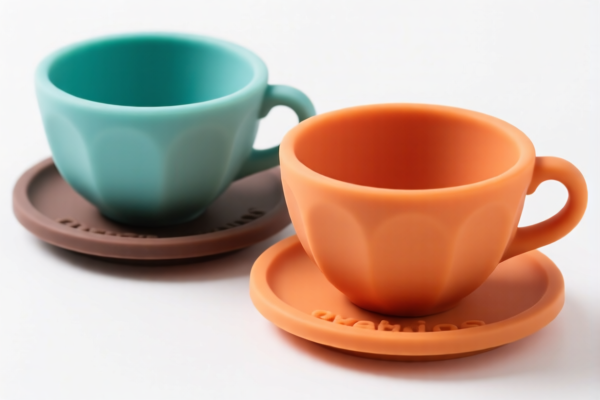
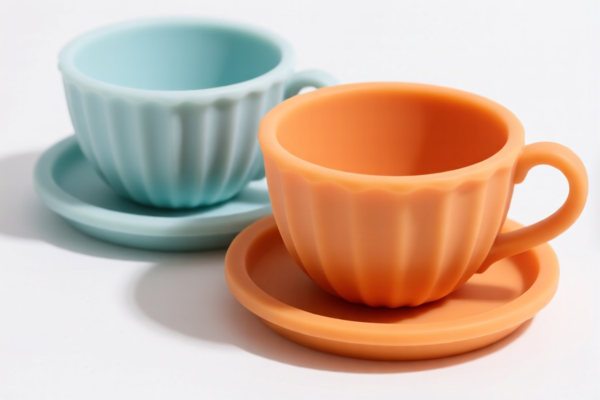
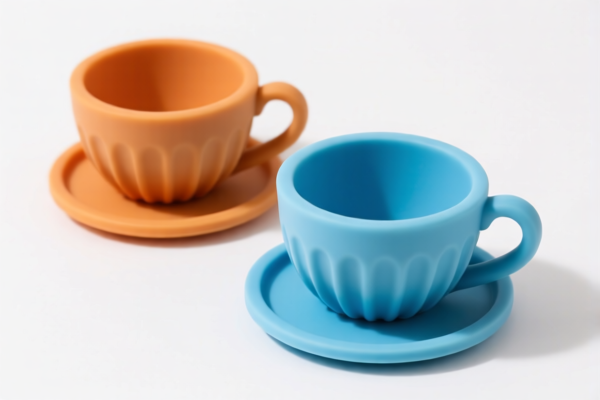
AI分析
🦆 Silicone Duck Bill Cup (Sippy Cup)
🌐 HS Code Reference & Customs Clearance Guide | 2026 Latest Tariff Analysis | Professional Level Entry Strategy
📌 1. Product Definition & Classification: Do You Really Understand the "Silicone Duck Bill Cup"?
The Silicone Duck Bill Cup is a popular drinking vessel for infants, toddlers, and individuals with special needs. It features a soft silicone spout (resembling a duck's bill) designed to prevent choking, encourage proper tongue movement, and reduce spillage.
In international trade, silicone cups are often misunderstood. They are not simple "plastic containers" nor purely "rubber products." Their classification depends heavily on their primary use (tableware/kitchenware) and material composition (silicone/polymer).
⚠️ Key Distinction Point:
- If classified as Tableware/Kitchenware (dedicated use): Falls under 3924.10.
- If classified as General Plastic Articles (general use): Falls under 3926.90.
- Note: The presence of a "duck bill" spout is a feature of tableware, reinforcing classification under Chapter 39.24.
📦 2. HS Code Classification Details (2026 Latest Tariff Authority Comparison)
| HS Code | Product Description | Applicable Scenario | Total Tax Rate |
|---|---|---|---|
3924.10.20.00 |
Tableware, kitchenware, other articles of plastics: Cups, Mugs, etc. | Silicone cups specifically designed as tableware/kitchenware | 24.0% |
3926.90.10.00 |
Other articles of plastics: Other | Silicone cups classified as general plastic containers/artcles | 20.9% |
3924.10.40.00 |
Tableware, kitchenware, other articles of plastics: Other | Silicone cups classified as high-polymer tableware/drinkware | 13.4% |
🔍 Critical Reminder:
- 3924.10 is for tableware/kitchenware. This is the most accurate classification for a "Duck Bill Cup" intended for drinking.
- 3926.90 is a residual category for "other plastic articles." Misclassifying a dedicated tableware item here may trigger customs scrutiny.
- 3924.10.40.00 offers the lowest tariff but has stricter material descriptions ("high polymer synthetic material").
💰 3. 2026 Latest Tariff Rate Breakdown (Including Additional Duties, Policy Add-ons)
✅ Applicable Country: USA (US)
✅ Origin: China (CN)
✅ Effective Date: Post-2025 (Subject to current trade policies)
🎯 1. 3924.10.20.00 — Tableware of Plastics (Cups/Mugs)
| Item | Content |
|---|---|
| Base Duty Rate | 6.5% |
| Section 301 Additional Duty | +7.5% |
| Section 122 Duty | +10.0% |
| Total Tax Rate | 24.0% |
| Tax Calculation | CIF Value × 24% |
| De Minimis Exemption? | ❌ No (Section 301 & 122 duties generally apply, though de minimis rules may vary by specific enforcement; usually high-risk for de minimis due to "China origin" and "Section 301" status.) |
| Legal Basis Path | HTSUS 3924.10.20.00 → Section 301 (Footnote 9903.88.01) → Section 122 (IEEPA 9903.01.25) |
📌 Explanation:
- Base 6.5%: Standard Most Favored Nation (MFN) rate for plastic tableware.
- Section 301 (7.5%): Additional tariff on Chinese goods to address unfair trade practices.
- Section 122 (10%): Additional tariff targeting specific import categories to protect domestic manufacturing.
- Total 24%: A significant burden. Clear documentation as "Tableware" is crucial to avoid being misclassified as a general good with potentially different penalty structures.
🎯 2. 3926.90.10.00 — Other Articles of Plastics
| Item | Content |
|---|---|
| Base Duty Rate | 3.4% |
| Section 301 Additional Duty | +7.5% |
| Section 122 Duty | +10.0% |
| Total Tax Rate | 20.9% |
| Tax Calculation | CIF Value × 20.9% |
| De Minimis Exemption? | ❌ No (Same risk profile as above) |
| Legal Basis Path | HTSUS 3926.90.10.00 → Section 301 → Section 122 |
📌 Note:
- While the total rate (20.9%) is slightly lower than3924.10.20.00, this classification is less accurate for a dedicated drinking cup.
- Customs may reject this if the product is clearly "tableware." Misclassification can lead to back taxes, penalties, and shipment delays.
🎯 3. 3924.10.40.00 — Tableware/Kitchenware (Other Plastic Articles)
| Item | Content |
|---|---|
| Base Duty Rate | 3.4% |
| Section 301 Additional Duty | 0.0% (Assumed Zero for this specific subheading under current data) |
| Section 122 Duty | +10.0% |
| Total Tax Rate | 13.4% |
| Tax Calculation | CIF Value × 13.4% |
| De Minimis Exemption? | ❌ No (Section 122 still applies) |
| Legal Basis Path | HTSUS 3924.10.40.00 → Section 122 (IEEPA 9903.01.25) |
📌 Advantage:
- This is the most cost-effective option IF the product can be accurately described as "High Polymer Synthetic Material" tableware.
- It saves 10.6% compared to the standard3924.10.20.00classification.
- Caution: Requires precise material specification (e.g., "Food-grade Silicone, classified as High Polymer").
🛠️ 4. Customs Clearance Practical Advice (Practical Pitfall Avoidance Guide)
✅ 1. Required Documentation Checklist (None Can Be Missed)
| Document | Required? | Description |
|---|---|---|
| ✅ Product Specification Sheet | ✔️ | Must detail material (100% Silicone/Food Grade), size, capacity, and intended use (Infant/Toddler Tableware). |
| ✅ Material Safety Report | ✔️ | FDA Compliance, LFGB, or BPA-Free certification. Critical for tableware. |
| ✅ Product Photos | ✔️ | Clear images showing the "Duck Bill" spout, base, and overall shape to prove it is a cup/tableware. |
| ✅ Commercial Invoice | ✔️ | Must clearly state "Silicone Sippy Cup for Tableware Use" or "Infant Drinking Cup." Avoid vague terms like "Plastic Part." |
| ✅ Packing List | ✔️ | Detailed weight and dimensions. |
✅ 2. Declaration Tips (Key Mantra)
🔥 "Be Specific About Use: Tableware, Not General Container!"
| Scenario | Correct Declaration | Wrong Practice |
|---|---|---|
| Primary Use: Drinking Tableware | HS: 3924.10.xxxx Desc: "Silicone Sippy Cup for Infants" |
HS: 3926.90.10.00 Desc: "Plastic Container" → Risk of Misclassification Penalty |
| Material: Food-Grade Silicone | Emphasize "Food-Contact Grade" | Claiming "Industrial Silicone" → Rejection |
| Packaging: Single Unit | Declare as "Set" or "Piece" | Declaring as "Parts" → Complicated Taxation |
✅ 3. Special Case Handling
| Case | Handling Advice |
|---|---|
| OEM Custom Cups | Provide design drawings showing the "duck bill" shape to justify Tableware classification. |
| Mixed Materials | If the cup has a hard plastic base (PP) and silicone spout, still classify as Tableware (3924.10) if tableware is the essential character. |
| Gift Sets | If sold with a spoon, still primarily tableware. Ensure all components are declared under Chapter 39. |
🌍 5. Global Market Comparison (2026 Latest)
| Country/Region | Recommended HS Code | Tariff (China Origin) | Certification Requirement | Remarks |
|---|---|---|---|---|
| 🇺🇸 USA | 3924.10.20.00 or 3924.10.40.00 |
13.4% - 24.0% | FDA, CPSIA | High tariffs due to Section 301 & 122. |
| 🇨🇳 China | 3924.10.20.00 |
~6.5% | CCC (if applicable) | Lower tariffs. |
| 🇪🇺 EU | 3924.10.10 |
6.5% | LFGB, Food Contact Regulations | No Section 301. Lower overall cost. |
| 🇦🇺 Australia | 3924.10.10 |
5% | Food Standards Australia New Zealand | Moderate tariff. |
| 🇯🇵 Japan | 3924.10.00 |
6% | Food Sanitation Act | Standard tariff. |
📌 Conclusion:
- USA is the most expensive market for silicone cups due to Section 301 (7.5%) and Section 122 (10%) duties.
- EU and Japan offer more favorable tariff structures without these punitive additional duties.
- For US exports, optimizing the HS Code to3924.10.40.00(if legally permissible) can save 10.6% in tariffs.
📌 6. Common Mistakes & Pitfall Guide (Lessons Learned)
❌ Mistake 1: Declaring as "Plastic Toy"
👉 Consequence: May be classified under 9503 (Toys), but if it's functional tableware, customs will reclassify to 3924, leading to back taxes + penalties. Also, Toy safety standards (CPSIA) are stricter and different.
❌ Mistake 2: Using vague descriptions like "Silicone Cup"
👉 Consequence: Customs may default to the highest duty rate (3926.90.10.00 with Section 301/122) or demand additional fees for clarification.
❌ Mistake 3: Ignoring "Section 122"
👉 Consequence: Even if base tariff is low, forgetting to account for the 10% Section 122 duty can destroy profit margins.
✅ Correct Practice:
"Food-Grade Silicone Sippy Cup with Duck Bill Spout, Designed for Infant/Tableware Use, BPA-Free, FDA Compliant, Model XYZ"
🎯 7. Conclusion: Professional Declaration, Save Money, Ensure Smooth Clearance!
🎯 Remember the Mantra:
🔹 "Tableware vs. Container: Use Determines Code."
🔹 "Silicone Cup is Tableware: 3924 is King."
🔹 "Check Section 122: Don't Let 10% Slip Away."
📌 Pro Tip:
If your silicone cup originates from Vietnam, Mexico, or Malaysia, you may be eligible for Section 301 Exclusions or lower tariffs under USMCA/FTA.
Recommend applying for an Advance Ruling with US Customs (CBP) to confirm the specific HS Code and duty rate before shipment.
📣 Immediate Action:
📞 Contact a Licensed Customs Broker + Provide Product Photos + Apply for HS Code Advance Ruling
🚀 Let your Silicone Cup Clear Smoothly, Maximize Profit, and Expand Globally!
✨ Professional Customs Clearance Starts with Accurate Classification!
💼 Every Cent of Tariff is Worth Precise Calculation!
用户评价
关于 HS 编码归类
协调制度(HS)是由世界海关组织(WCO)制定的国际贸易商品分类标准。全球 200 多个国家采用 HS 系统作为海关关税、贸易统计和进出口监管的基础。
每个 HS 编码遵循以下层级结构:
- 章(2 位)——商品大类(例如:第 84 章:机器和机械设备)
- 品目(4 位)——章内的更具体分类
- 子目(6 位)——国际通用细分,所有 WCO 成员国统一使用
- 本国细分(8-10 位)——各国自行扩展的细分编码,如美国 HTSUS 10 位编码
正确的 HS 编码归类对于顺利通关、准确缴纳关税和遵守贸易法规至关重要。错误归类可能导致海关延误、多缴关税或罚款。
从CN进口到US时,适用的关税税率可能包括:
- 最惠国(MFN)税率——适用于 WTO 成员国的标准关税税率
- 普通税率——适用于无贸易协定国家
- 贸易救济关税——附加关税,如 301 条款(反倾销)、232 条款(国家安全)或反补贴税
本页内容仅供参考。如需正式归类,请咨询当地海关或持牌报关代理。