Silk Picnic Bag
CN → US| HS编码 | 关税税率 | 原产国 | 目的国 | 文档 |
|---|---|---|---|---|
| 4202227000 | 42.0% | CN | US | 官方文档 |
| 5007906090 | 38.9% | CN | US | 官方文档 |
| 4202224010 | 42.4% | CN | US | 官方文档 |
商品图片
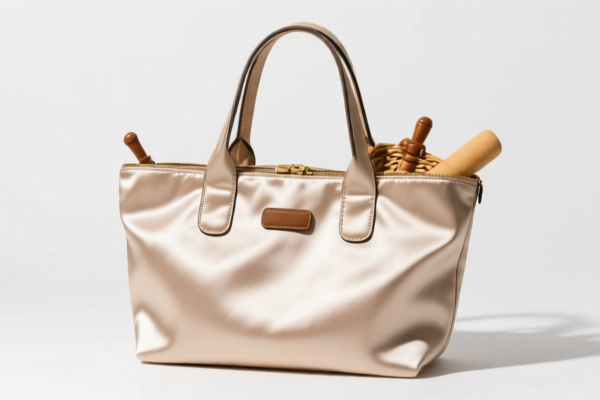
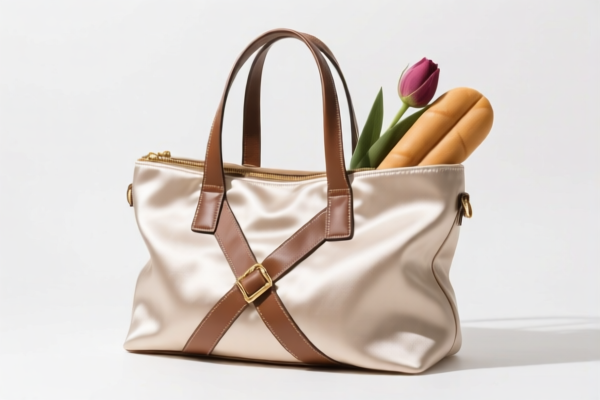
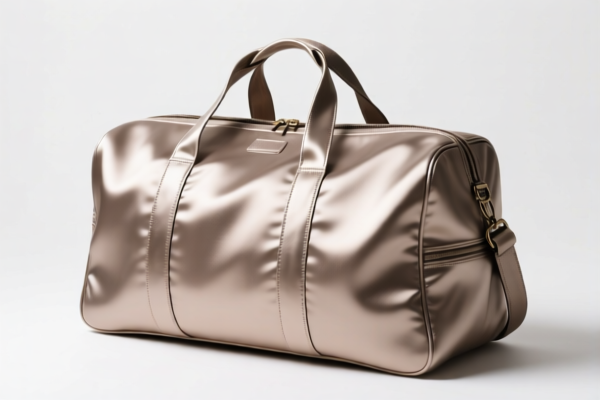
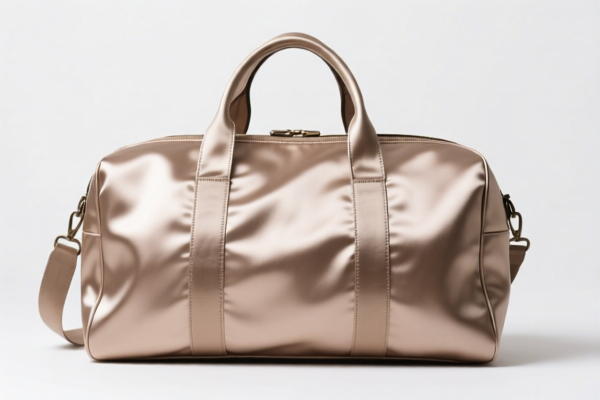
AI分析
🧺 Silk Picnic Bags (Silk Leisure Handbags & Tote Bags)
🌐 HS Code Classification & Clearance Guide | 2026 Tariff Breakdown | Strategic Entry Strategy
📌 I. Product Definition & Classification: Are Your "Silk Bags" Really Just "Bags"?
Silk Picnic Bags are luxury, fabric-based carrying solutions made primarily from silk (natural protein fiber). In international trade, they are often confused with other textile bags, leading to misclassification and excessive duties.
They fall into two main categories based on composition and form:
- Textile-Based Silk Bags (Chapter 42): Bags made of silk, classified under heading 4202 (Trunks, Suitcases, Handbags, Travel Goods). These are treated as leather-like accessories because the material is natural fiber but the product form is a "bag".
- Silk Fabric Goods (Chapter 50): If the bag is considered a simple article of silk fabric (less common for finished structured bags), it might fall under 5007 (Woven fabrics). However, finished bags are almost always classified under Chapter 42.
⚠️ Critical Distinction:
- If the bag has a structured form (handle, lining, zipper, shape retention) → HS 4202.
- If it is a loose silk fabric or unstructured pouch (rare for "picnic bags") → HS 5007.
Misclassification Risk: Declaring a structured silk handbag as "woven fabric" (5007) may save 3-4% base duty but risks 25% punitive tariffs if not the correct classification for the finished product.
📦 II. HS Code Classification Matrix (2026 Authorized Rates)
Based on your specific product data, here are the three valid classification scenarios for Silk Picnic Bags:
| HS Code | Product Description | Material & Form | Total Tax Rate |
|---|---|---|---|
| 4202.22.70.00 | Silk Leisure Bag (Handbag Type) | Silk Material, Handbag Form | 42.0% |
| 4202.22.40.10 | Silk Leisure Bag (Tote/Shopping Bag) | Textile Surface (Silk), Handbag/Tote Form | 42.4% |
| 5007.90.60.90 | Silk Leisure Bag (Fabric Match) | Silk Material, Finished Bag Form (Broad Category) | 38.9% |
🔍 Deep Dive into Sub-Headings:
- 4202.22.x.x: Specifically covers "Handbags with outer surface of textile materials". The .70 and .40 suffixes distinguish between specific "other" vs. specific "tote" styles within the textile outer surface category.
- 5007.90.60.90: A broader classification for "Other woven fabrics...". While it has a lower base rate, it is risky to use for a finished bag unless the structure is minimal.
💰 III. 2026 Tariff Rate Breakdown (Detailed Tax Clause Analysis)
✅ Applicable Market: United States (US)
✅ Origin: China (CN)
✅ Effective Date: Current Policy (Section 301 & Section 122)
🎯 1. 4202.22.70.00 – Silk Handbag (High Risk Category)
This is the standard classification for a structured silk handbag.
| Tax Component | Rate | Legal Basis / Clause |
|---|---|---|
| Base Duty (MFN) | 7.0% | Standard US Import Duty |
| Section 301 (Add-on) | 25.0% | USITC/Section 301 List 3/4 (China Origin Penalty) |
| Section 122 (Add-on) | 10.0% | Section 122 (Specific textile/packaging add-on for China) |
| TOTAL DUTY | 42.0% | High |
📌 Explanation:
- The 25% is the standard "Section 301" tariff on Chinese goods.
- The 10% is the specific "Section 122" surcharge applied to certain textile/bag categories originating from China.
- Combined: You pay 7% + 25% + 10% = 42% on the CIF value.
🎯 2. 4202.22.40.10 – Silk Tote/Shopping Bag
Used for bags with an outer surface of textile materials that are not specific handbag styles.
| Tax Component | Rate | Legal Basis / Clause |
|---|---|---|
| Base Duty (MFN) | 7.4% | Slightly higher base rate for specific sub-categories |
| Section 301 (Add-on) | 25.0% | Section 301 Penalty |
| Section 122 (Add-on) | 10.0% | Section 122 Surcharge |
| TOTAL DUTY | 42.4% | Very High |
📌 Explanation:
- The 0.4% difference in base duty (7.0% vs 7.4%) makes the 42.4% total slightly more expensive than the standard handbag.
- The 35% punitive layer (25+10) remains constant regardless of the sub-category.
🎯 3. 5007.90.60.90 – Silk Woven Fabric / Broad Bag Category
The "Optimization" Strategy (Lower Base, but Risky).
| Tax Component | Rate | Legal Basis / Clause |
|---|---|---|
| Base Duty (MFN) | 3.9% | Lower base rate for general silk fabrics |
| Section 301 (Add-on) | 25.0% | Section 301 Penalty |
| Section 122 (Add-on) | 10.0% | Section 122 Surcharge |
| TOTAL DUTY | 38.9% | Moderate (Best of the list) |
📌 Explanation:
- This is the lowest total tax (38.9%) available in your data.
- HOWEVER: This classification is only valid if the bag is considered a "silk article" under Chapter 50 rather than a "bag" under Chapter 42. If Customs audits and determines the bag has a specific bag structure (handles, lining), they will re-classify it to 4202, charging a 3.5% penalty and potentially retroactive duties.
🛠️ IV. Clearance Strategy & Operational Recommendations
✅ 1. Material Verification (The "Silk" Test)
- Action: Ensure the invoice and packing list explicitly state "100% Natural Silk" or "Silk (Raw)".
- Why: Chapter 50 (
5007) relies heavily on the definition of "silk woven fabric". If the bag contains synthetic lining or hardware that changes the "textile nature," it defaults to Chapter 42 (4202). - Strategy: If you can prove the bag is primarily a silk fabric article (minimal structure), attempt
5007.90.60.90to save 3.5% in duty. If the bag is fully structured (handles, zippers, stiff base), stick to4202.22.70.00to avoid seizure/reclassification.
✅ 2. The "Section 122" Trap
- Critical Note: All three options include a 10% Section 122 tariff.
- Recommendation: There is no exemption for Section 122 on these goods in the current dataset.
- Cost Impact: On a $1,000 shipment, you pay $100 extra just on Section 122. Factor this into your FOB pricing.
✅ 3. Declaration Precision (Avoiding "De Minimis" Errors)
- Do NOT use vague terms like "Bag" or "Pouch".
- DO use:
> "Silk Picnic Handbag, 100% Silk, Outer Surface: Textile, Structure: Handheld, Lined with Cotton"
> (For 5007 attempt): "Silk Woven Bag Article, Non-Structured, Pure Silk Fabric"
✅ 4. Special Advice for "Picnic Bags"
- Function vs. Form: If the "Picnic Bag" is a basket-style (woven basket + silk liner), it might be classified under 4602 (Basketry) or 4202.
- If it's a soft bag: Stick to 4202.
- Recommendation: If you are shipping to the US,
5007.90.60.90is the only way to get below 40% tax, but you must be prepared for a Customs audit. If you cannot prove the "fabric" classification,4202.22.70.00is the safer, legal path.
🌍 V. Market Comparison (US vs. Global)
| Region | HS Code | Base Duty | Section 301 (China) | Section 122 | Total Tax | Strategy |
|---|---|---|---|---|---|---|
| 🇺🇸 USA | 4202.22.70.00 | 7.0% | 25% | 10% | 42.0% | High Risk (Section 122 applies) |
| 🇺🇸 USA | 5007.90.60.90 | 3.9% | 25% | 10% | 38.9% | Lowest Cost (High Audit Risk) |
| 🇪🇺 EU | 4202.22.00 | 12.0% | 0% | 0% | 12.0% | No Section 301/122 (EU is cheaper) |
| 🇨🇦 Canada | 4202.22.00 | 5.5% | 0% | 0% | 5.5% | Best Alternative Market |
📌 Global Insight:
- The US market is expensive due to the 35% punitive layer (25% + 10%). - Recommendation: If possible, divert Silk Picnic Bags to Canada or Mexico (via Maquiladora) to avoid Section 301 and 122 entirely.
🚫 VI. Common Pitfalls (Avoid These!)
❌ Mistake 1: Declaring a structured silk bag as 5007 without evidence.
👉 Consequence: Customs re-classes to 4202, charges 42% duty + penalties.
❌ Mistake 2: Ignoring "Section 122".
👉 Consequence: You calculate 25% + 7% = 32%, but actually owe 42%. 10% cash flow shock.
❌ Mistake 3: Calling it a "Silk Scarf" when it's a "Bag".
👉 Consequence: Misdeclaration, detention, and potential deportation of goods.
🎯 VII. Final Strategic Conclusion
For Silk Picnic Bags, the tax landscape is harsh:
1. Safest Route: 4202.22.70.00 (42.0% Total). High certainty, high cost.
2. Optimization Route: 5007.90.60.90 (38.9% Total). Lower cost, requires strong technical proof that it is a "silk article" rather than a "bag".
3. Avoid: Attempting to bypass Section 122. It is non-negotiable for Chinese-origin silk bags entering the US.
Pro Tip:
"Structure is Key." If your bag has a rigid bottom, a zipper, and handles, you must use 4202. If you try to cheat with 5007, you will lose the shipment. If you are unsure, declare as 4202 and pay the 42% to ensure smooth clearance.
📣 Immediate Action:
📞 Consult a Customs Broker to review your bag's physical structure before declaring
5007.
🚀 Re-price your goods assuming a 42% duty on the CIF value to protect margins.
✨ Precision in Classification = Profit in the Pockets!
💼 Silk is delicate, but Customs is strict. Don't risk your silk bags on a classification gamble!
用户评价
关于 HS 编码归类
协调制度(HS)是由世界海关组织(WCO)制定的国际贸易商品分类标准。全球 200 多个国家采用 HS 系统作为海关关税、贸易统计和进出口监管的基础。
每个 HS 编码遵循以下层级结构:
- 章(2 位)——商品大类(例如:第 84 章:机器和机械设备)
- 品目(4 位)——章内的更具体分类
- 子目(6 位)——国际通用细分,所有 WCO 成员国统一使用
- 本国细分(8-10 位)——各国自行扩展的细分编码,如美国 HTSUS 10 位编码
正确的 HS 编码归类对于顺利通关、准确缴纳关税和遵守贸易法规至关重要。错误归类可能导致海关延误、多缴关税或罚款。
从CN进口到US时,适用的关税税率可能包括:
- 最惠国(MFN)税率——适用于 WTO 成员国的标准关税税率
- 普通税率——适用于无贸易协定国家
- 贸易救济关税——附加关税,如 301 条款(反倾销)、232 条款(国家安全)或反补贴税
本页内容仅供参考。如需正式归类,请咨询当地海关或持牌报关代理。