Silver Fingerprint Lock
CN → US| HS编码 | 关税税率 | 原产国 | 目的国 | 文档 |
|---|---|---|---|---|
| 8531809051 | 17.5% | CN | US | 官方文档 |
| 8301406030 | 23.2% | CN | US | 官方文档 |
| 8531100035 | 36.3% | CN | US | 官方文档 |
| 8301106080 | 23.6% | CN | US | 官方文档 |
商品图片
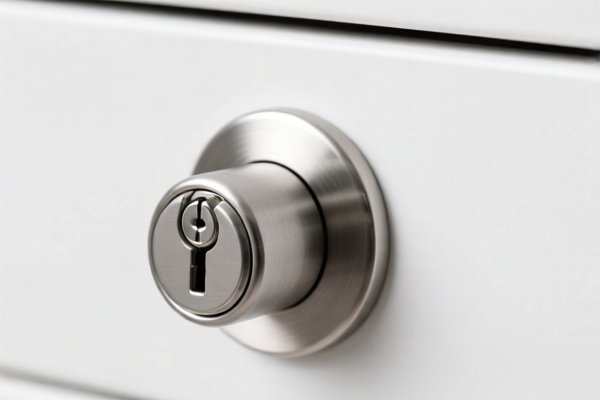
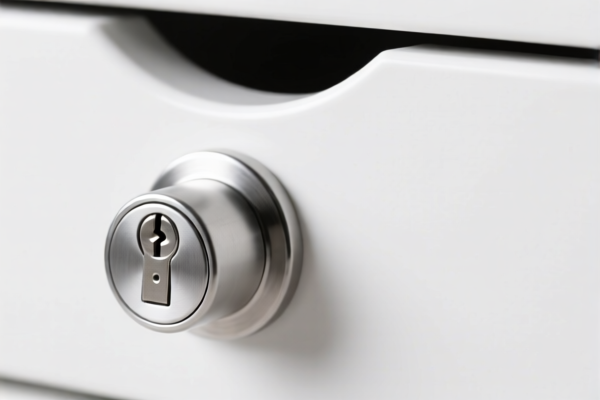
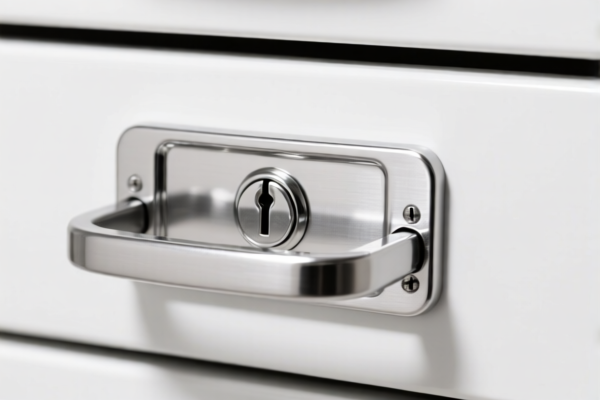
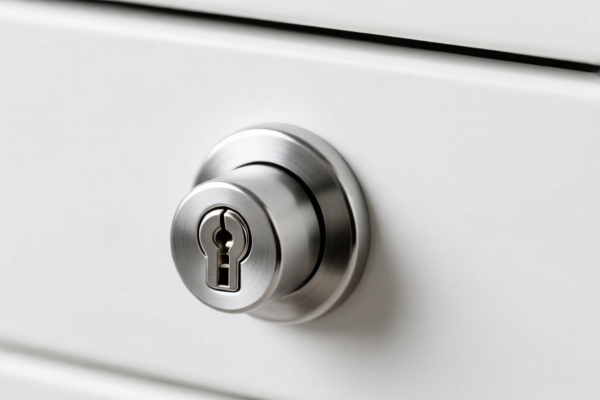
AI分析
🔐 Silver Fingerprint Lock (Smart Locks & Security Systems)
🌐 HS Code Classification & Customs Clearance Guide | 2026 Latest Tariff Analysis | Professional Compliance Strategy
📌 I. Product Definition: What is a "Silver Fingerprint Lock"?
A "Silver Fingerprint Lock" refers to an electronic access control device that uses biometric recognition (fingerprint) to operate a locking mechanism. While "Silver" typically denotes the material finish (stainless steel, zinc alloy, or plated metal), the core classification hinges on its functionality and internal components.
In international trade, these locks are contested between two main categories: 1. Electronic Security Devices: If the focus is on the electronic circuitry, sensors, and alarm/safety logic. 2. Mechanical/Electromechanical Locks: If the focus is on the physical locking mechanism, the key/credential interface, and the metal body.
⚠️ Critical Distinction Point:
- Is it primarily a signal/alarm system with a locking function? → Look at Chapter 85.
- Is it primarily a lock with electronic assistance? → Look at Chapter 83.
📦 II. HS Code Classification Details (2026 Latest Tariff Matrix)
Based on current trade data and customs rulings, here are the four potential classifications for the Silver Fingerprint Lock, ranging from lowest to highest duty impact.
| HS Code | Product Description | Functional Logic | Estimated Total Duty (US Import) |
|---|---|---|---|
8531.80.90.51 |
Other electric sound or visual signaling devices (Electronic Control/Alarm Systems) | Focuses on the electronic control/alarm aspect. Fits the "other" catch-all for electronic signaling apparatus. | 17.5% |
8301.40.60.30 |
Locks of a kind used for motor vehicles, furniture, doors, etc. (Electric/Combination Locks) | Focuses on the lock aspect. Classified as an "electric or combination lock" made of base metal. | 23.2% |
8531.10.00.35 |
Electric sound or visual signaling apparatus (Security/Alarm Devices) | Focuses on security/alarm logic. Treated similarly to theft detection or protection systems. | 36.3% |
8301.10.60.80 |
Padlocks, Hasps, etc. (Other Locks of Base Metal) | Focuses on material/form. Treated as a variant of a padlock or hasp, assuming a base metal body. | 23.6% |
🔍 Key Insight:
-8531.80.90.51is often the most favorable if the product is marketed as a "Smart Security System" component.
-8301.40.60.30is the most common "standard" classification for residential smart door locks.
-8531.10.00.35carries the highest tariff burden and is risky unless the device is explicitly an alarm unit.
💰 III. 2026 Latest Tariff Rate Breakdown (Including Additional Duties)
✅ Applicable Country: United States (US)
✅ Origin: China (CN)
✅ Effective Date: November 10, 2025 onwards (including subsequent imports)
🎯 1. 8531.80.90.51 — Electronic Signaling Devices (Lowest Duty Option)
| Item | Content |
|---|---|
| Base Rate | 0.0% (ad valorem) |
| Section 301 Additional Duty | +7.5% |
| Section 122 Additional Duty | +10.0% |
| Total Duty Rate | 17.5% |
| Calculation Basis | CIF Value × 17.5% |
| De Minimis Eligibility | ❌ Not Eligible (Due to Section 301/122 duties) |
| Legal Authority Path | IEEPA:9903.01.25 → USITC:8531.80.90.51 → FOOTNOTE:122 |
📌 Explanation:
- This classification leverages the "other" category in Chapter 85 to avoid the higher "security apparatus" rates.
- The 17.5% rate is significantly lower than the standard lock rates, making this the preferred classification for cost optimization, provided the technical description emphasizes electronic signaling/control functions.
🎯 2. 8301.40.60.30 — Electric/Combination Locks (Standard Option)
| Item | Content |
|---|---|
| Base Rate | 5.7% |
| Section 301 Additional Duty | +7.5% |
| Section 122 Additional Duty | +10.0% |
| Total Duty Rate | 23.2% |
| Calculation Basis | CIF Value × 23.2% |
| De Minimis Eligibility | ❌ Not Eligible |
| Legal Authority Path | IEEPA:9903.01.25 → USITC:8301.40.60.30 → FOOTNOTE:122 |
📌 Explanation:
- This is the "safe" classification for traditional smart locks.
- It acknowledges the product as a lock (Chapter 83) with electronic functionality.
- The base duty of 5.7% adds to the total, resulting in a 23.2% total rate.
🎯 3. 8301.10.60.80 — Other Base Metal Locks (Padlock Variant)
| Item | Content |
|---|---|
| Base Rate | 6.1% |
| Section 301 Additional Duty | +7.5% |
| Section 122 Additional Duty | +10.0% |
| Total Duty Rate | 23.6% |
| Calculation Basis | CIF Value × 23.6% |
| De Minimis Eligibility | ❌ Not Eligible |
| Legal Authority Path | IEEPA:9903.01.25 → USITC:8301.10.60.80 → FOOTNOTE:122 |
📌 Explanation:
- This classification assumes the lock is structurally similar to a padlock or hasp.
- If the fingerprint lock is a standalone portable unit (not mounted on a door), this might apply.
- 23.6% is slightly higher than8301.40due to the higher base rate (6.1% vs 5.7%).
🎯 4. 8531.10.00.35 — Security/Alarm Signaling Devices (Highest Duty Option)
| Item | Content |
|---|---|
| Base Rate | 1.3% |
| Section 301 Additional Duty | +25.0% |
| Section 122 Additional Duty | +10.0% |
| Total Duty Rate | 36.3% |
| Calculation Basis | CIF Value × 36.3% |
| De Minimis Eligibility | ❌ Not Eligible |
| Legal Authority Path | IEEPA:9903.01.25 → USITC:8531.10.00.35 → FOOTNOTE:122 |
📌 Warning:
- This classification triggers a 25% Section 301 duty, which is a punitive rate for certain electronic security goods.
- Avoid this classification unless the product is strictly an alarm sensor without a primary locking function.
- 36.3% is prohibitively expensive for standard commercial fingerprint locks.
🛠️ IV. Customs Clearance Practical Advice (Real-World Pitfall Guide)
✅ 1. Required Documentation Checklist
| Document | Mandatory | Explanation |
|---|---|---|
| ✅ Product Specification Sheet | ✔️ | Must detail: Biometric sensor type (capacitive/optical), power supply (Battery/USB), interface (Bluetooth/Zigbee), and mounting method. |
| ✅ Circuit Board Diagram | ✔️ | Crucial for distinguishing between 8531 (Electronic) and 8301 (Mechanical). Show that the fingerprint reader is an electronic component. |
| ✅ Product Photos (Clear Label) | ✔️ | Show the "Silver" finish (material claim), brand, model number, and input voltage. |
| ✅ Commercial Invoice | ✔️ | Describe as: "Electronic Smart Door Lock with Fingerprint Sensor, Base Metal Housing, Model XYZ" |
| ✅ Country of Origin Certificate | ✔️ | Essential for calculating Section 301 and Section 122 duties. |
| ✅ Packaging List | ✔️ | List all accessories (keys, batteries, mounting screws). Do not split shipments unnecessarily. |
✅ 2. Declaration Strategy (Key Mnemonics)
🔥 "Material Defines Shape, Function Defines Code, Electronic Tips the Scale!"
| Scenario | Correct HS Code | Incorrect Declaration | Consequence |
|---|---|---|---|
| Standard Smart Door Lock (Mounted on door) | 8301.40.60.30 (23.2%) |
Misdeclare as "Electronic Part" | Risk of audit, potential reclassification to 8531.10 (36.3%) |
| Portable Safe Box Lock (Padlock style) | 8301.10.60.80 (23.6%) |
Misdeclare as "Door Lock" | Minor duty difference, but compliance risk |
| Alarm Panel with Lockout Function | 8531.10.00.35 (36.3%) |
N/A (Avoid this rate!) | Extreme Duty Burden |
| Smart Lock with Emphasis on Alarm/Signaling | 8531.80.90.51 (17.5%) |
N/A (Optimize here!) | Best Rate, if technical description supports it |
📌 Strategic Tip:
To qualify for8531.80.90.51(17.5%), emphasize the electronic control and signaling capabilities in the product description. Argue that the primary function is security monitoring/alarm integration, with the lock being a secondary actuator.
Example Description: "Electronic Security Signaling Device with Integrated Locking Actuator, Fingerprint Input, Base Metal Housing."
✅ 3. Special Cases & Handling
| Case | Handling Advice |
|---|---|
| OEM/ODM Products | Provide the design blueprint from the client. If the design emphasizes the electronic circuit board, use 8531 arguments. |
| Combined Packaging | If the lock is sold with a separate alarm keypad, declare them separately if possible, or declare as a kit. Do not merge into one "high-tariff" unit unless necessary. |
| Material Claim ("Silver") | Ensure the "silver" color is due to material (e.g., Stainless Steel, Zinc Alloy) and not just paint. If it's painted plastic, the classification might shift entirely. |
| Battery Included | Declare lithium batteries separately if required by IATA/IMO regulations, but include them in the HS code valuation if they are integral. |
🌍 V. Global Market Comparison (2026 Outlook)
| Country/Region | Recommended HS Code | Duty Rate | Certification Requirements | Note |
|---|---|---|---|---|
| 🇺🇸 USA | 8301.40.60.30 / 8531.80.90.51 |
17.5% - 23.2% | FCC + UL (Electrical Safety) | High scrutiny on Section 301/122. |
| 🇨🇳 China | 8301.40.60.30 |
5% - 10% | CCC (if applicable) | Low import duty, focus on export compliance. |
| 🇪🇺 EU | 8301.40.60.30 |
0% - 3.7% | CE + RoHS + WEEE | No punitive tariffs. Best market for profit margin. |
| 🇬🇧 UK | 8301.40.60.30 |
0% - 3.7% | UKCA + RoHS | Post-Brexit, similar to EU but different cert. |
| 🇯🇵 Japan | 8301.40.60.30 |
3% - 5% | PSE (Electrical) | Strict PSE requirements for powered locks. |
📌 Conclusion:
- USA is the most complex market due to Section 301 (7.5% or 25%) and Section 122 (10%) duties.
- EU/UK/Japan offer lower duties but stricter electrical safety certifications (CE/UKCA/PSE).
- Optimization Strategy: For the US, strive for8531.80.90.51to save 5.7% in total duties compared to the standard lock classification.
📌 VI. Common Errors & Pitfalls (Lessons Learned)
❌ Error 1: Declaring a smart lock as a "Part of a Door" (HS 73.26/83.02)
👉 Consequence: Wrong classification, potential penalty, and missed duty advantages.
❌ Error 2: Using "Fingerprint Reader" as the sole description without mentioning the lock mechanism
👉 Consequence: Customs may classify it as a peripheral computer part (HS 84.73) or signaling device, leading to disputes.
❌ Error 3: Ignoring the "Silver" Material Claim
👉 Consequence: If declared as "Plastic" but shipped as "Metal," it triggers a material mismatch audit, delaying clearance by 2-4 weeks.
❌ Error 4: Failing to Disclose "Electronic Components"
👉 Consequence: Misdeclaration as a mechanical lock. If audited, customs may reclassify to a higher-tariff electronic category.
✅ Correct Declaration Example:
"ELECTRONIC SMART DOOR LOCK, MODEL XYZ, WITH CAPACITIVE FINGERPRINT SENSOR, BATTERY OPERATED, STAINLESS STEEL (SILVER) FINISH, FOR RESIDENTIAL USE"
🎯 VII. Conclusion: Professional Declaration, Cost Savings, Risk Reduction
🎯 Remember the Golden Rules:
🔹 "Function over Form: Is it a Lock or a Signal?"
🔹 "Base Metal is Key: Chapter 83 for Locks, Chapter 85 for Electronics."
🔹 "Section 122 Adds 10%: Always Budget for This."
📌 Pro Tip:
If you are importing into the USA, consider applying for a Binding Ruling from US Customs and Border Protection (CBP) before the first shipment. This provides legal certainty on whether your "Silver Fingerprint Lock" qualifies for the lower 8531.80.90.51 rate or the standard 8301.40.60.30 rate.
📣 Immediate Action:
📞 Consult a Customs Broker + Provide Technical Diagrams + Request Pre-Ruling
🚀 Ensure Smooth Clearance, Minimize Duties, and Maximize Profit Margins!
✨ Professional Customs Clearance Starts with Precise Classification!
💼 Every Percentage Point of Duty Matters in the Age of Trade Wars!
用户评价
关于 HS 编码归类
协调制度(HS)是由世界海关组织(WCO)制定的国际贸易商品分类标准。全球 200 多个国家采用 HS 系统作为海关关税、贸易统计和进出口监管的基础。
每个 HS 编码遵循以下层级结构:
- 章(2 位)——商品大类(例如:第 84 章:机器和机械设备)
- 品目(4 位)——章内的更具体分类
- 子目(6 位)——国际通用细分,所有 WCO 成员国统一使用
- 本国细分(8-10 位)——各国自行扩展的细分编码,如美国 HTSUS 10 位编码
正确的 HS 编码归类对于顺利通关、准确缴纳关税和遵守贸易法规至关重要。错误归类可能导致海关延误、多缴关税或罚款。
从CN进口到US时,适用的关税税率可能包括:
- 最惠国(MFN)税率——适用于 WTO 成员国的标准关税税率
- 普通税率——适用于无贸易协定国家
- 贸易救济关税——附加关税,如 301 条款(反倾销)、232 条款(国家安全)或反补贴税
本页内容仅供参考。如需正式归类,请咨询当地海关或持牌报关代理。