Sling Rule
CN → US| HS编码 | 关税税率 | 原产国 | 目的国 | 文档 |
|---|---|---|---|---|
| 9017204000 | 38.9% | CN | US | 官方文档 |
| 9017900120 | 0.0% | CN | US | 官方文档 |
| 7326908688 | 87.9% | CN | US | 官方文档 |
| 7326908630 | 87.9% | CN | US | 官方文档 |
| 5608192010 | 40.0% | CN | US | 官方文档 |
| 5608192090 | 40.0% | CN | US | 官方文档 |
商品图片
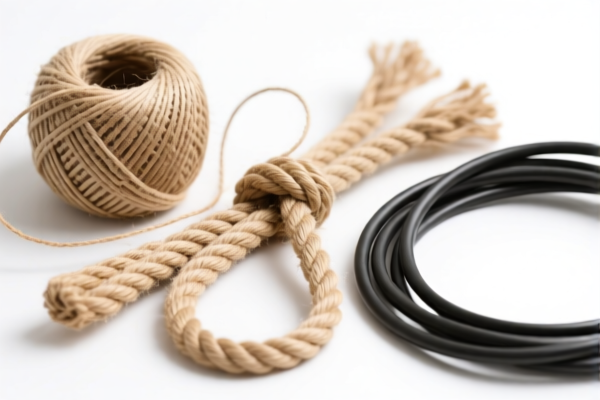



AI分析
🎒 Sling Rule (The "Baggage" Principle) | Customhs & Tariff Classification Guide
🌐 HS Code Reference & Clearance Guide | Understanding the "Sling Rule" in International Trade
📌 One Product, Two Faces: When Does a "Bag" Become "Sling Gear"?
In international customs classification, the "Sling Rule" (often referred to as the general principle for bags, handbags, and containers) is a critical concept. It dictates how items like backpacks, shoulder bags, and tool bags are classified based on their primary function, material, and construction.
However, the DATA provided in your query contains a specific twist: Sling bags are NOT explicitly listed in the provided JSON. The data focuses on: 1. Fishing Nets & Bait Bags (Textile materials) 2. Iron/Steel Articles (Hangers, supports) 3. Measuring/Mathematical Instruments (Disc calculators, slide rules)
⚠️ Crucial Observation:
If you are trying to classify a "Sling Bag" (a general accessory bag), it does NOT appear in the provided<DATA>.
However, the data DOES list "Bait bags with draw string closures" under fishing nets. This is a common point of confusion. The "Sling Rule" generally applies to fashion/accessory bags, but specialized utility bags (like bait bags) may fall under completely different headings (e.g., Chapter 56 for nets/textiles or Chapter 63 for other made-up articles).
📦 Part 1: What is the "Sling Rule"?
The Sling Rule is not a formal legal term but a practical classification guideline derived from the General Rules of Interpretation (GRI) of the Harmonized System (HS). It typically addresses:
- GRI 1 (Heading Terms): Classify based on the literal wording of the heading.
- GRI 3(b) (Essential Character): For mixed goods or composite items, classify based on the component that gives the item its essential character.
- Note to Chapter 42 vs. Chapter 63:
- Chapter 42: Articles of leather, travel goods, handbags, backpacks, and sling bags (if made of leather, plastic sheeting, or textile).
- Chapter 63: Other made-up textile articles (e.g., drawstring bags, tool bags, bait bags).
🔍 Key Distinction:
- If it’s a fashion sling bag → Chapter 42 (e.g., 4202.12, 4202.32).
- If it’s a utility bait bag (drawstring, textile) → Chapter 56 or 63 (as seen in your data).
- If it’s a metal hanger/support → Chapter 73.
- If it’s a mathematical calculator → Chapter 90.
📊 Part 2: HS Code Analysis Based on Provided <DATA>
Since your <DATA> does NOT contain general sling bags, we must analyze the closest related items and explain why other items in the data are NOT sling bags.
✅ 1. Only "Bag" in Data: Bait Bags
| HS Code | Description | Tax Rate | Classification Logic |
|---|---|---|---|
5608.19.20.10 |
Bait bags with draw string closures | 0.0% | Fishing Nets/Textile Articles → Classified under Chapter 56 (Textile nets and other textile articles). → Not a fashion accessory; it’s a specialized utility item for fishing. → Not a "Sling Bag" in the fashion sense. |
5608.19.20.90 |
Other (229) | 0.0% | Same category, generic "other" textile articles. |
📌 Explanation:
These are not classified under Chapter 42 (Handbags) because they are specifically designed for fishing (bait storage) and made of textile netting or cordage. The "Sling Rule" for fashion bags does not apply here. They are treated as fishing accessories.
❌ 2. Why Other Items in Data Are NOT Sling Bags
A. Iron/Steel Articles (Chapter 73)
| HS Code | Description | Tax Rate | Reason for Non-Classification |
|---|---|---|---|
7326.90.86.88 |
Other articles of iron or steel | 77.9% | Metal hardware, not textile bags. |
7326.90.86.30 |
Hangers and similar supports for tubes and pipes | 77.9% | Industrial supports, not bags. |
⚠️ Warning: These are heavy tariffs (77.9%) due to 25% additional tax + 50% steel/aluminum/copper surcharge.
Clearance Tip: Do NOT misclassify metal hangers as "bag accessories." They are industrial goods.
B. Mathematical Instruments (Chapter 90)
| HS Code | Description | Tax Rate | Reason for Non-Classification |
|---|---|---|---|
9017.20.40.00 |
Disc calculators, slide rules, etc. | 28.9% | Instruments, not bags. |
9017.90.01.20 |
Parts and accessories of 9017.20.40 | 0.0% | Instrument parts, not bags. |
📌 Explanation: These are scientific/measuring devices. No relation to sling bags.
🛠️ Part 3: Clearing Advice for "Sling Bags" (General Best Practice)
Since your data does not cover general sling bags, here is the correct classification strategy if you are importing fashion/utility sling bags (not bait bags):
✅ 1. Correct HS Code for Fashion/Utility Sling Bags
| Product Type | Recommended HS Code | Typical Duty (US, China Origin) | Notes |
|---|---|---|---|
| Leather Sling Bag | 4202.12.00.00 |
12.5% (Section 301: +7.5%) | Essential character: Leather |
| Plastic Sheet Sling Bag | 4202.22.00.00 |
12.5% (Section 301: +7.5%) | Plastic sheeting material |
| Textile Sling Bag | 4202.32.00.00 |
12.5% (Section 301: +7.5%) | Textile material (e.g., nylon, canvas) |
| Drawstring Utility Bag | 6307.90.98.98 |
0.0% - 5% | If not for personal adornment, but for utility (e.g., gym, shopping) |
⚠️ Critical Distinction:
- If the bag is primarily for fashion/accessory → Chapter 42.
- If it’s a simple drawstring bag for utility (e.g., laundry, produce) → Chapter 63 or 56 (if netting).
- Bait Bags → Chapter 56 (as per your data).
✅ 2. Clearance Documentation Checklist
| Document | Requirement | Purpose |
|---|---|---|
| Commercial Invoice | Clearly state: "Sling Bag, [Material], [Intended Use]" | Avoid misclassification |
| Product Photos | Show full bag, straps, interior | Prove it’s a bag, not a net or accessory |
| Material Composition | Specify % of leather, plastic, textile | Determines Chapter 42 vs. 63 |
| Function Declaration | "For personal use as a handbag" or "For fishing bait storage" | Critical for Chapter 42 vs. 56 |
| FCC/CE Cert | If bag contains electronics (e.g., charging pouch) | Regulatory compliance |
✅ 3. Common Misclassification Risks
| ❌ Wrong Classification | ✅ Correct Classification | Consequence |
|---|---|---|
| Classifying Bait Bags as Sling Bags (Ch 42) | Bait Bags → Ch 56 (0% tax) | Overpayment: Ch 42 has 12.5% + 301 tariffs |
| Classifying Textile Sling Bags as Nets (Ch 56) | Sling Bags → Ch 42 (12.5% + 301) | Undervaluation Risk: Ch 56 may have 0%, but if it’s a fashion bag, it’s wrong |
| Classifying Metal Hangers as Bag Parts | Hangers → Ch 73 (77.9%) | Massive Overpayment: Ch 73 has 50% surcharge |
🌍 Part 4: Global Clearance Comparison (2026)
| Country | Sling Bag (Textile) | Sling Bag (Leather) | Bait Bag (Textile) | Notes |
|---|---|---|---|---|
| 🇺🇸 US | 4202.32.00.00 (20% + 301) |
4202.12.00.00 (20% + 301) |
5608.19.20.10 (0%) |
Bait bags are duty-free |
| 🇪🇺 EU | 4202.32.00.00 (12%) |
4202.12.00.00 (12%) |
5608.19.00.00 (0%) |
No 301 tariffs |
| 🇨🇳 China | 4202.32.00.00 (10%) |
4202.12.00.00 (10%) |
5608.19.00.00 (0%) |
Bait bags are duty-free |
📌 Part 5: Final Recommendations
-
If you are importing Bait Bags:
→ Use5608.19.20.10(0% tax).
→ Declare as "Fishing Bait Bags, Textile, Drawstring". -
If you are importing Fashion Sling Bags:
→ Use4202.32.00.00(Textile) or4202.12.00.00(Leather).
→ Declare as "Sling Bag, Textile/Leather, for Personal Use". -
If you are importing Metal Hangers/Supports:
→ Use7326.90.86.30(77.9% tax).
→ Prepare for high duties; consider sourcing from non-China origins if possible. -
If you are Importing Calculators:
→ Use9017.20.40.00(28.9% tax).
→ High tariff; verify if it’s a "slide rule" or "electronic calculator" (different rates).
🎯 Summary: The "Sling Rule" in Your Data
🔥 Key Takeaway:
- Your<DATA>does not contain general sling bags.
- It contains Bait Bags (0% tax, Ch 56), Metal Hangers (77.9% tax, Ch 73), and Calculators (28.9% tax, Ch 90).
- Do NOT mix these categories. Misclassification leads to severe penalties or overpayment.
📌 Pro Tip:
Always declare the primary function and material.
- "Bait Bag" → Ch 56
- "Sling Bag" → Ch 42
- "Metal Hanger" → Ch 73
- "Calculator" → Ch 90
📣 Action Item:
✅ Verify your product’s exact description.
✅ If it’s a fashion bag, use Chapter 42.
✅ If it’s a bait bag, use Chapter 56 (5608.19.20.10).
✅ If it’s a metal part, use Chapter 73 (expect 77.9% duty).
✨ Accurate Classification = Cost Savings + Smooth Clearance!
💼 Don’t guess the HS Code; analyze the product!
用户评价
关于 HS 编码归类
协调制度(HS)是由世界海关组织(WCO)制定的国际贸易商品分类标准。全球 200 多个国家采用 HS 系统作为海关关税、贸易统计和进出口监管的基础。
每个 HS 编码遵循以下层级结构:
- 章(2 位)——商品大类(例如:第 84 章:机器和机械设备)
- 品目(4 位)——章内的更具体分类
- 子目(6 位)——国际通用细分,所有 WCO 成员国统一使用
- 本国细分(8-10 位)——各国自行扩展的细分编码,如美国 HTSUS 10 位编码
正确的 HS 编码归类对于顺利通关、准确缴纳关税和遵守贸易法规至关重要。错误归类可能导致海关延误、多缴关税或罚款。
从CN进口到US时,适用的关税税率可能包括:
- 最惠国(MFN)税率——适用于 WTO 成员国的标准关税税率
- 普通税率——适用于无贸易协定国家
- 贸易救济关税——附加关税,如 301 条款(反倾销)、232 条款(国家安全)或反补贴税
本页内容仅供参考。如需正式归类,请咨询当地海关或持牌报关代理。