Slow Feeder Pet Bowl
CN → US| HS编码 | 关税税率 | 原产国 | 目的国 | 文档 |
|---|---|---|---|---|
| 3924104000 | 13.4% | CN | US | 官方文档 |
| 3924905650 | 20.9% | CN | US | 官方文档 |
| 6912004810 | 19.8% | CN | US | 官方文档 |
| 6912003550 | 19.8% | CN | US | 官方文档 |
商品图片
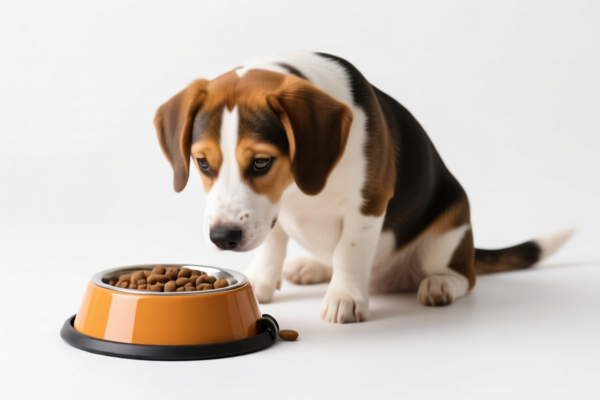
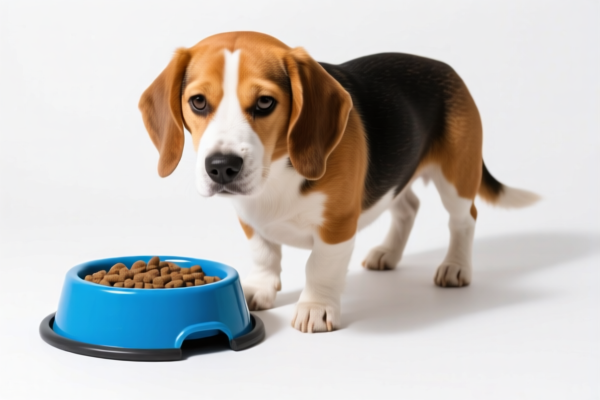


AI分析
🐕 Slow Feeder Pet Bowl (Pet Slow Eating Dish)
🌐 HS Code Reference & Customs Clearance Guide | 2026 Latest Tariff Analysis | Professional Clearance Strategy
📌 I. Product Definition & Classification: Do You Really Understand "Slow Feeders"?
A Slow Feeder Pet Bowl is a specialized feeding accessory designed to inhibit pets (typically dogs or cats) from eating too quickly. By incorporating raised ridges, maze-like patterns, or puzzle structures, it forces the animal to eat slower, reducing the risk of bloat (GDV) and improving digestion.
In international trade, the classification depends heavily on the material composition and specific usage context. While functionally similar, they are categorized differently based on whether they are viewed as general household plastic items, kitchen utensils, or ceramic dining ware.
⚠️ Key Distinction Point:
- Plastic Material: Classified under Chapter 39 (Plastics and Articles Thereof). Sub-category depends on whether it's deemed a "household article" or "other kitchenware."
- Ceramic/Metal Material: Classified under Chapter 69 (Ceramic Products) or similar. Usually treated as kitchen/dining ware.
- Note: The internal structure (maze vs. simple bowl) does not change the HS code, but the material is the decisive factor.
📦 II. HS Code Classification Details (2026 Latest Tariff Authority Comparison)
| HS Code | Product Description | Material Inference | Usage Category | Total Tax Rate* |
|---|---|---|---|---|
3924.10.40.00 |
Slow Feeder, inferred as Plastic, used for home/living supplies (feeding器具) | Plastic | Household/Living Supplies | 13.4% |
3924.90.56.50 |
Slow Feeder, inferred as Plastic, belonging to kitchen/living vessels | Plastic | Kitchen/Living Vessels | 20.9% |
6912.00.48.10 |
Slow Feeder, material may be Ceramic, Plastic, or Metal, used for kitchen/dining ware | Ceramic/Plastic/Metal | Kitchen/Dining Utensils | 19.8% |
6912.00.35.50 |
Slow Feeder, material may be Plastic or Ceramic, non-porous ceramic or other household/kitchen items | Plastic/Ceramic | Non-porous Ceramic/Other Household | 19.8% |
🔍 Key Reminder:
- Plastic vs. Ceramic: If your product is 100% plastic, choose between3924.10.40.00or3924.90.56.50. The difference lies in the specific sub-heading interpretation (Household Article vs. Kitchen Vessel).
- Mixed Materials: If the feeder has a ceramic base with plastic ridges, or is made of glazed ceramic,6912codes are more appropriate.
- Tariff Impact: The tax rate varies significantly from 13.4% to 20.9%, making accurate material declaration critical for cost control.
💰 III. 2026 Latest Tariff Rate Details (Including Surcharges & Policy Add-ons)
✅ Applicable Country: United States (US)
✅ Origin: China (CN)
✅ Effective Time: Post-2025/2026 (Incorporating current trade measures)
🎯 1. 3924.10.40.00 —— Plastic Slow Feeder (Household/Living Supplies)
| Item | Content |
|---|---|
| Base Tariff | 3.4% |
| Section 301 / Additional Tariff | 0.0% (Specific to this sub-category interpretation) |
| Section 122 Tariff | 10.0% |
| Total Tax Rate | 13.4% |
| Tax Calculation | CIF Value × 13.4% |
| De Minimis Exemption Eligible? | ❌ No (Deny De Minimis for China origin under specific clauses) |
| Legal Basis Path | Base: 3.4% + Add-on: 0.0% + Sec 122: 10% |
📌 Explanation:
- This is the lowest tax bracket for plastic feeders.
- The "Section 122 Tariff" (often referring to specific trade enforcement or recent administrative rulings) adds 10%.
- Strategic Advantage: If your product can be clearly defined as a "household/living supply" rather than a "kitchen vessel," you save 7.5% in tariffs.
🎯 2. 3924.90.56.50 —— Plastic Slow Feeder (Kitchen/Living Vessels)
| Item | Content |
|---|---|
| Base Tariff | 3.4% |
| Section 301 / Additional Tariff | 7.5% |
| Section 122 Tariff | 10.0% |
| Total Tax Rate | 20.9% |
| Tax Calculation | CIF Value × 20.9% |
| De Minimis Exemption Eligible? | ❌ No |
| Legal Basis Path | Base: 3.4% + Add-on: 7.5% + Sec 122: 10% |
📌 Warning:
- This code attracts an additional 7.5% tariff compared to3924.10.40.00.
- Customs may interpret "slow feeder" as a "kitchen vessel" (like a human plate/bowl) rather than a general household item.
- Risk: Higher clearance costs. Always provide evidence (e.g., marketing materials showing it's for "pet care," not "human dining") to argue for the lower category if possible, or accept the higher rate if clarity is low.
🎯 3. 6912.00.48.10 —— Ceramic/Multi-Material Slow Feeder (Kitchen/Dining Ware)
| Item | Content |
|---|---|
| Base Tariff | 9.8% |
| Section 301 / Additional Tariff | 0.0% |
| Section 122 Tariff | 10.0% |
| Total Tax Rate | 19.8% |
| Tax Calculation | CIF Value × 19.8% |
| De Minimis Exemption Eligible? | ❌ No |
| Legal Basis Path | Base: 9.8% + Add-on: 0.0% + Sec 122: 10% |
📌 Note:
- Base tariff is higher (9.8%) than plastic (3.4%), but no Section 301 additional tariff applies.
- Suitable for ceramic or porcelain slow feeders.
- Total rate is 19.8%, slightly lower than the plastic "kitchen vessel" rate but higher than the plastic "household" rate.
🎯 4. 6912.00.35.50 —— Non-Porous Ceramic/Other Household Items
| Item | Content |
|---|---|
| Base Tariff | 9.8% |
| Section 301 / Additional Tariff | 0.0% |
| Section 122 Tariff | 10.0% |
| Total Tax Rate | 19.8% |
| Tax Calculation | CIF Value × 19.8% |
| De Minimis Exemption Eligible? | ❌ No |
| Legal Basis Path | Base: 9.8% + Add-on: 0.0% + Sec 122: 10% |
📌 Note:
- Similar to6912.00.48.10. Use this if the product is classified as "other household articles" made of non-porous ceramic.
- For plastic slow feeders incorrectly declared as ceramic, this code is high-risk for misclassification penalties.
🛠️ IV. Customs Clearance Practical Advice (Battle-Tested Pitfall Avoidance)
✅ 1. Essential Documentation Checklist (No Exceptions)
| Document | Required | Explanation |
|---|---|---|
| ✅ Product Specification Sheet | ✔️ | Must clearly state Material Composition (e.g., "100% Food-Grade Plastic PP" vs. "Ceramic"). |
| ✅ Product Photos (Clear) | ✔️ | Show the entire product, label, and any "Pet Use Only" markings. |
| ✅ Commercial Invoice | ✔️ | Description should be precise: e.g., "Plastic Pet Slow Feeder Bowl, Model ABC" NOT just "Bowl." |
| ✅ Packing List | ✔️ | Detail quantity per carton and total gross/net weight. |
| ✅ Certificate of Origin (CO) | ✔️ | Required to prove China origin and assess Section 122/301 liabilities. |
| ✅ FCC/RoHS Test Report | ✔️ | If the feeder has electronic components (e.g., smart feeders), FCC is mandatory. For basic feeders, RoHS/material safety is good practice. |
✅ 2. Declaration Tips (Key Mnemonic)
🔥 "Material First, Use Second, Name Precise, Tax Minimized!"
| Scenario | Correct Declaration | Wrong Practice |
|---|---|---|
| 100% Plastic Feeder | 3924.10.40.00 (13.4%) |
Declaring as 3924.90.56.50 (20.9%) → Overpay 7.5% |
| Ceramic Feeder | 6912.00.48.10 (19.8%) |
Declaring as 3924... → Misclassification Penalty |
| Mixed Material (Ceramic Base + Plastic Top) | Declare primary material; consult broker | Vague description "Pet Bowl" → Customs Audit Risk |
| Smart Electronic Feeder | Chapter 85 (Electronic) | Declaring as Chapter 39/69 → Complete Rejection |
✅ 3. Special Case Handling
| Situation | Handling Advice |
|---|---|
| OEM Custom Feeder | Provide design files and material safety data sheets (MSDS) to prove plastic type. |
| Food-Grade Claim | If claiming "Food-Grade," ensure you have FDA-compliance documents. Lack thereof can lead to detention. |
| Small Sample Shipments | Even samples are subject to the same HS codes and tariffs. Do not assume "gift/sample" exempts duties for China origin. |
| Packaging with Human Dishes | If shipped in a box with human ceramic plates, declare separately. Mixed packing can confuse customs inspectors. |
🌍 V. Global Market Clearance Comparison (2026 Latest)
| Country/Region | Recommended HS Code | Tariff (China Origin) | Certification Requirements | Notes |
|---|---|---|---|---|
| 🇺🇸 USA | 3924.10.40.00 (Plastic) |
13.4% | FDA Material Compliance | 3924.90.56.50 is 20.9%. Choose wisely. |
| 🇺🇸 USA | 6912.00.48.10 (Ceramic) |
19.8% | FDA Material Compliance | Higher base tariff, no 301 add-on. |
| 🇨🇳 China | 3924.10.00.00 |
5% - 10% | No specific import restrictions | Standard export market. |
| 🇪🇺 EU | 3924.10.00 |
0% - 4% | LFGB / Food Contact Material | CE mark not required for non-electric. |
| 🇬🇧 UK | 3924.10.00 |
0% - 4% | UKCA / Food Contact Standards | Post-Brexit regulations apply. |
| 🇦🇺 Australia | 3924.10.00 |
5% | Standard Import Declaration | Low risk, straightforward. |
📌 Conclusion:
- USA is the most complex market due to Section 122 and potential Section 301 variations.
- Plastic feeders have a critical decision point:3924.10(13.4%) vs.3924.90(20.9%).
- Europe/Australia are low-friction markets with minimal tariffs.
📌 VI. Common Mistakes & Pitfall Guide (Blood-Learned Lessons)
❌ Mistake 1: Declaring a Plastic feeder under 6912 (Ceramic) codes.
👉 Consequence: Customs inspection reveals plastic material → Misclassification Fine + Delay.
❌ Mistake 2: Declaring under 3924.90.56.50 (20.9%) when 3924.10.40.00 (13.4%) is applicable.
👉 Consequence: Overpay 7.5% tariff unnecessarily. Always argue for the "Household/Living" category if the product is clearly for pets, not human kitchens.
❌ Mistake 3: Vague Description "Pet Bowl" without material specification.
👉 Consequence: Customs broker assigns highest default rate or initiates manual examination → Weeks of Delay.
❌ Mistake 4: Ignoring Section 122 Tariff (10%).
👉 Consequence: Unbudgeted costs. This 10% applies to almost all Chinese imports under these codes currently.
✅ Correct Approach:
"Plastic Pet Slow Feeder Bowl, 100% PP Material, No Electronic Components, Model XYZ, Designed for Dog/Cat Use"
🎯 VII. Conclusion: Precision Classification, Cost Optimization!
🎯 Remember the Mnemonic:
🔹 "Plastic Household: 13.4%, Plastic Kitchen: 20.9%, Ceramic: 19.8%."
🔹 "Material is King, Use is Queen, Name is the Messenger."
🔹 "Section 122 adds 10%, never forget!"
📌 Pro Tip:
If your plastic feeders are sourced from Vietnam or Malaysia, you may qualify for IEEPA/Section 301 exemptions.
However, for China-origin goods, 3924.10.40.00 is the gold standard for minimizing tax burden.
Recommend Advance Ruling (Pre-classification) for large shipments to lock in the 13.4% rate.
📣 Immediate Action:
📞 Engage a licensed customs broker + Provide material spec sheet + Request HS Code Advance Ruling
🚀 Let your pet bowls pass smoothly, clear efficiently, and maximize your profit margins!
✨ Professional Clearance Starts with Accurate Classification!
💼 Every cent of tariff saved is pure profit earned!
用户评价
关于 HS 编码归类
协调制度(HS)是由世界海关组织(WCO)制定的国际贸易商品分类标准。全球 200 多个国家采用 HS 系统作为海关关税、贸易统计和进出口监管的基础。
每个 HS 编码遵循以下层级结构:
- 章(2 位)——商品大类(例如:第 84 章:机器和机械设备)
- 品目(4 位)——章内的更具体分类
- 子目(6 位)——国际通用细分,所有 WCO 成员国统一使用
- 本国细分(8-10 位)——各国自行扩展的细分编码,如美国 HTSUS 10 位编码
正确的 HS 编码归类对于顺利通关、准确缴纳关税和遵守贸易法规至关重要。错误归类可能导致海关延误、多缴关税或罚款。
从CN进口到US时,适用的关税税率可能包括:
- 最惠国(MFN)税率——适用于 WTO 成员国的标准关税税率
- 普通税率——适用于无贸易协定国家
- 贸易救济关税——附加关税,如 301 条款(反倾销)、232 条款(国家安全)或反补贴税
本页内容仅供参考。如需正式归类,请咨询当地海关或持牌报关代理。