Small Writing Paper
CN → US| HS编码 | 关税税率 | 原产国 | 目的国 | 文档 |
|---|---|---|---|---|
| 4820102020 | 35.0% | CN | US | 官方文档 |
| 4819600000 | 35.0% | CN | US | 官方文档 |
| 4819504060 | 35.0% | CN | US | 官方文档 |
| 4823908680 | 35.0% | CN | US | 官方文档 |
| 4820104000 | 35.0% | CN | US | 官方文档 |
商品图片
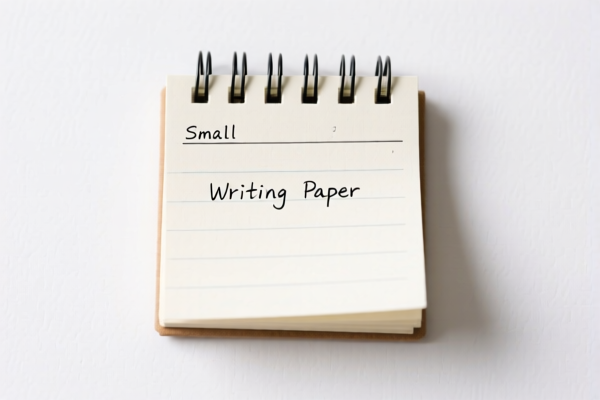
AI分析
📝 Small Writing Paper (Paper Notes/Notepads)
🌐 HS Code Reference & Customs Clearance Guide | 2026 Latest Tariff Analysis | Professional Strategy for US Import
📌 Part 1: Product Definition & Classification: Do You Really Understand "Small Writing Paper"?
"Small Writing Paper" in international trade typically refers to notepads, memo pads, letter sets, and similar paper-based stationery items. These are distinct from standard bulk paper (like A4 printer paper) because they are processed into specific shapes, sizes, or formats for writing or organizational purposes.
In customs classification, the key distinction lies in the form and purpose: * Processed Stationery: Bound pads, tear-off notepads, letterheads with specific layouts → Fall under Heading 4820 (Notebooks, account books, order books, diaries, etc.) or 4819 (Paper packaging/containers). * Raw Paper: Simple sheets without specific stationery formatting → Often fall under other paper headings.
⚠️ Critical Distinction:
- If the item is a bound notepad, loose-leaf pad, or letter set →归入 4820 or 4819.
- If it is a simple sheet of paper with no special formatting → May fall under other headings (but not in the provided dataset).
- All items in the provided dataset are classified as either "Stationery" (4820) or "Other Paper Goods" (4819/4823).
📦 Part 2: HS Code Classification Details (2026 Latest Tariff Authority Comparison)
The provided data identifies five specific HS Codes for "Small Writing Paper" (Paper Notes). All share the same tax structure but differ slightly in the legal justification for classification.
| HS Code | Product Description | Classification Logic | Usage Scenario |
|---|---|---|---|
4820.10.20.20 |
Notebooks & Letter Sets | Classified as "Notebooks, letter sets, and similar articles." | Standard notepads, branded letter pads, bound memo books. |
4819.60.00.00 |
Paper Stationery/Containers | Classified as "Paper stationery or containers extension," aligned with office supply usage. | Loose memo pads, paper-based office accessories. |
4819.50.40.60 |
Paper Packaging/Containers | Classified as "Other paper containers/objects," extending packaging logic to paper products. | Paper pads used for packaging or labeling (if dual-purpose). |
4823.90.86.80 |
Other Paper Articles | Classified as "Other paper products," fitting the general category for paper/board. | Generic paper notes not fitting specific stationery definitions. |
4820.10.40.00 |
Paper Stationery Articles | Classified as "Paper stationery items," similar to heading 4820 but different sub-item. | General paper stationery, unbound or loosely bound notes. |
🔍 Key Insight:
- Despite different HS Codes, all five categories incur the exact same tax rate.
- The choice among them depends on the manufacturer's specific product definition (e.g., is it a "notebook" vs. a "paper article"?).
- 海关实操提示:只要产品符合“纸质便签”特征,以上任一归类在税务后果上无异,但建议根据产品实际形态(如是否装订、是否成套)选择最贴切的描述以避免查验争议。
💰 Part 3: 2026 Latest Tariff Rate Breakdown (Including Surcharges & Policy Add-ons)
✅ Applicable Country: United States (US)
✅ Origin: China (CN)
✅ Effective Date: November 10, 2025 (and subsequent imports)
🎯 1. General Tax Structure for All Listed HS Codes
(Applies to: 4820.10.20.20, 4819.60.00.00, 4819.50.40.60, 4823.90.86.80, 4820.10.40.00)
| Item | Content |
|---|---|
| Base Tariff Rate | 0.0% (Ad Valorem) |
| Section 301 Surcharge (USITC) | +25.0% (Additional Tariff under Trade Act Section 301) |
| Section 122 Tariff (IEEPA) | +10.0% (Additional Tariff under International Emergency Economic Powers Act, targeting China/HK) |
| Total Tariff Rate | 35.0% |
| Tax Calculation | CIF Value × 35% |
| De Minimis Eligibility | ❌ Not Eligible (denied_de_minimis) – Cannot use $800 exemption for this product. |
| Legal Basis Path | IEEPA:9903.01.25 → IEEPA:9903.01.24 → USITC:48xx.xxxx.xxxx.xx → FOOTNOTE:9903.88.01 |
📌 Explanation:
- "Base Tariff 0%": Paper products generally have low base duties in the US Harmonized Tariff Schedule.
- "Section 301 +25%": This is the standard tariff for most Chinese goods under the Trump-era trade war tariffs, which remain in effect.
- "Section 122 +10%": A specific surcharge for Chinese-origin paper and paper products under the International Emergency Economic Powers Act.
- Total 35%: This is a high tariff burden. Importers must factor this into their pricing strategy.
- No De Minimis: Unlike small packages from individuals, commercial imports of small writing paper are not exempt from these tariffs.
🛠️ Part 4: Customs Clearance Practical Advice (Pitfall Avoidance Guide)
✅ 1. Required Documentation Checklist (Non-negotiable)
| Document | Must Provide | Notes |
|---|---|---|
| ✅ Product Specification Sheet | ✔️ | Include dimensions, paper weight (GSM), type (recycled/unbleached), and binding method. |
| ✅ Product Photos | ✔️ | Show the product in its final form (e.g., bound pad, loose sheets). Include labels/packaging. |
| ✅ Commercial Invoice | ✔️ | Clearly state "Small Writing Paper" or "Notepads" and HS Code. Avoid vague terms like "Paper Goods." |
| ✅ Packing List | ✔️ | Detail quantity, weight, and dimensions per box. |
| ✅ Origin Certificate | ✔️ | Confirm Chinese origin to apply correct tariff rates. |
| ✅ Material Declaration | ✔️ | Specify paper composition (e.g., 100% wood pulp) to support HS code classification. |
✅ 2. Declaration Tips (Key Mnemonic)
🔥 "Be Specific, Don't Say 'Paper', Bindings Matter!"
| Scenario | Correct Declaration | Wrong Practice |
|---|---|---|
| Bound Notepad | 4820.10.20.20 - "Paper Notebook" |
Saying "Paper" → Risk of misclassification. |
| Loose Memo Pads | 4819.60.00.00 - "Paper Stationery" |
Saying "Stationery" without HS code → Delay. |
| Paper Packaging | 4819.50.40.60 - "Paper Container" |
Mixing up with stationery → Audit risk. |
| General Paper Notes | 4823.90.86.80 - "Other Paper Articles" |
Vague description → Potential penalty. |
📌 Note:
- If your product is a bound notepad, use4820.10.20.20for clarity.
- If it is loose-leaf or unbound,4819.60.00.00is more appropriate.
- Consistency between product name, description, and HS code is critical to avoid CBP (Customs and Border Protection) holds.
✅ 3. Special Circumstances
| Situation | Handling Advice |
|---|---|
| Gift Items | Even if labeled "Gift," if shipped commercially, tariffs apply. No exemption. |
| Bulk vs. Retail | Bulk paper pads still incur 35% tariff. Packaging style doesn't change tax rate. |
| Mixed Shipments | If shipping with other goods, declare "Small Writing Paper" separately to apply correct 35% rate. Do not lump under general "Stationery" without HS codes. |
| Pre-Clearance | Consider ACE Portal pre-filing to ensure HS code matches CBP expectations. |
🌍 Part 5: Global Market Comparison (2026 Latest)
| Country/Region | Recommended HS Code | Tariff Rate | Certification Requirements | Notes |
|---|---|---|---|---|
| 🇺🇸 USA | 4820.10.20.20 etc. |
35% | None specific, but origin proof required | High tariff due to Section 301 & 122 |
| 🇨🇳 China | 4820.10.20.20 |
5-10% | CCC (if applicable) | No additional surcharges |
| 🇪🇺 EU | 4820.10.20.20 |
0-6.5% | CE (if applicable) | No Section 301 equivalent |
| 🇬🇧 UK | 4820.10.20.20 |
0-6.5% | UKCA (if applicable) | Post-Brexit tariffs may vary |
| 🇨🇦 Canada | 4820.10.20.20 |
0-5% | None | No similar surcharges to US |
📌 Conclusion:
- The US is the most expensive market for Chinese-origin small writing paper due to 35% combined tariffs.
- EU and UK have much lower rates (0-6.5%), making them more competitive for export.
- Consider supply chain diversification (e.g., shipping from Vietnam or Thailand) if targeting the US market to avoid Section 301/122 tariffs.
📌 Part 6: Common Mistakes & Pitfall Guide (Lessons Learned)
❌ Mistake 1: Declaring as "Paper" without specifying "Stationery"
👉 Consequence: CBP may misclassify under a higher-tariff category or demand additional documentation → Delay.
❌ Mistake 2: Ignoring Section 122 Tariff
👉 Consequence: Underpayment of duties → Penalties + Interest.
❌ Mistake 3: Assuming De Minimis Applies
👉 Consequence: If declared as a gift or low-value shipment, but value > $800 or commercial in nature, tariffs apply → Seizure.
❌ Mistake 4: Using Incorrect HS Code Description
👉 Consequence: Mismatch between invoice description and HS code → Audit risk.
✅ Correct Practice:
"Small Writing Paper, Notepad, 100 Sheet, Bound, White Paper, Model XYZ, Origin: China"
HS Code:4820.10.20.20
🎯 Part 7: Conclusion: Professional Declaration, Cost Control, Efficiency!
🎯 Remember the Mnemonic:
🔹 "Small Paper, 35% Tariff, No Exemption, Declare Clear!"
🔹 "HS Code Matters, Tax Difference is Huge, Wrong Declaration Costs Big!"
📌 Tips:
- If your small writing paper is originating from Vietnam, Mexico, Thailand, or Malaysia, you may exempt from Section 301/122 tariffs, resulting in 0-5% duty.
- Consider Applying for Advance Ruling with CBP to confirm HS code classification and avoid post-entry audits.
📣 Immediate Action:
📞 Contact a licensed customs broker + Provide product photos + Apply for HS Code Advance Ruling
🚀 Let your small writing paper clear customs smoothly, maximize profits, and expand globally!
✨ Professional Customs Clearance Starts with Precise Classification!
💼 Every Cent of Cost Deserves Precise Calculation!
用户评价
关于 HS 编码归类
协调制度(HS)是由世界海关组织(WCO)制定的国际贸易商品分类标准。全球 200 多个国家采用 HS 系统作为海关关税、贸易统计和进出口监管的基础。
每个 HS 编码遵循以下层级结构:
- 章(2 位)——商品大类(例如:第 84 章:机器和机械设备)
- 品目(4 位)——章内的更具体分类
- 子目(6 位)——国际通用细分,所有 WCO 成员国统一使用
- 本国细分(8-10 位)——各国自行扩展的细分编码,如美国 HTSUS 10 位编码
正确的 HS 编码归类对于顺利通关、准确缴纳关税和遵守贸易法规至关重要。错误归类可能导致海关延误、多缴关税或罚款。
从CN进口到US时,适用的关税税率可能包括:
- 最惠国(MFN)税率——适用于 WTO 成员国的标准关税税率
- 普通税率——适用于无贸易协定国家
- 贸易救济关税——附加关税,如 301 条款(反倾销)、232 条款(国家安全)或反补贴税
本页内容仅供参考。如需正式归类,请咨询当地海关或持牌报关代理。