Smoke Alarm
CN → US| HS编码 | 关税税率 | 原产国 | 目的国 | 文档 |
|---|---|---|---|---|
| 8531100025 | 36.3% | CN | US | 官方文档 |
| 8543706000 | 35.0% | CN | US | 官方文档 |
| 8543709860 | 37.6% | CN | US | 官方文档 |
商品图片
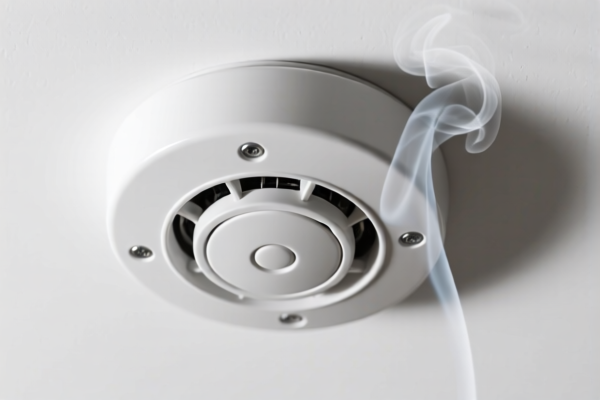
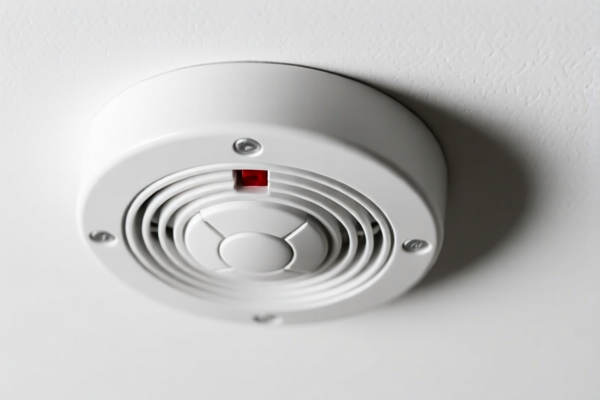
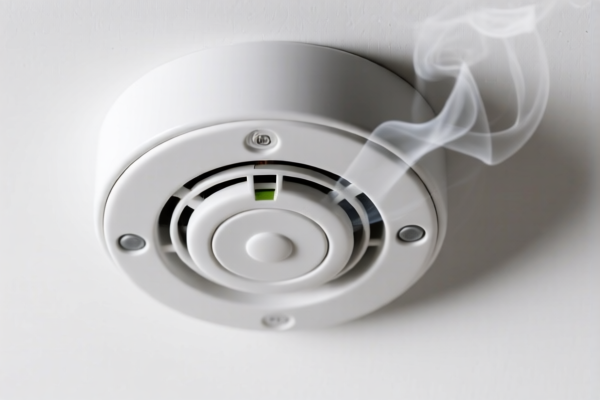
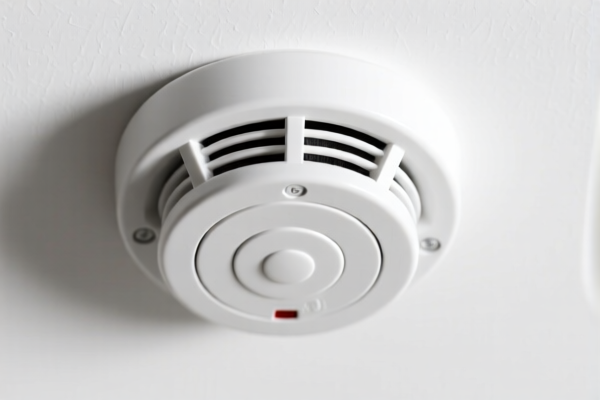
AI分析
🚨 Smoke Alarm (Fire Detection Devices)
🌐 HS Code Classification & Duty Guide | 2026 Updated Tariff Rules | Expert Customs Clearance Strategy
📌 One, Product Definition & Classification: What Really Is a "Smoke Alarm"?
A smoke alarm is an autonomous safety device designed to detect smoke particles in the air and trigger an audible or visual alert to warn occupants of potential fire hazards. In international trade, it is classified not as a general electronic component, but as a standalone detection and signaling device with specific functional and structural criteria.
⚠️ Critical Distinction:
- If the device only emits sound/light without independent sensing capability → may be misclassified as "signal device"
- If it contains a sensor, logic circuit, and standalone operation → must be treated as a dedicated detection instrument
- No battery-only or theft alarm features → excludes special categories like 8518.29.00.00 or 8518.30.00.00
📦 Two, HS Code Classification Details (2026 Official Tariff Match)
| HS Code | Product Description | Applicable Use Case | Material/Structure Conflict? |
|---|---|---|---|
8531.10.00.25 |
Electric sound or visual signal devices, for smoke alarms | Standalone smoke detectors with audible/visual alerts | ✅ No conflict |
8543.70.60.00 |
Other instruments and apparatus for measuring, testing, or detecting | Devices designed to connect to instruments/networks for monitoring | ✅ No conflict |
8543.70.98.60 |
Other machines and apparatus, not elsewhere specified | Independent detection devices not listed elsewhere | ✅ No conflict |
🔍 Key Insight:
- All three codes are valid depending on functionality and design intent; - Even if not explicitly listed, "other machines and apparatus" (8543.70.98.60) serves as a catch-all for standalone detection units; - No material conflict with metal, plastic, or electronic components — all acceptable.
💰 Three, 2026 Updated Duty Rate Breakdown (With Full Tax Clause Explanation)
✅ Applicable Country: United States (US)
✅ Origin: China (CN)
✅ Effective Date: November 10, 2025 (and onward)
🎯 1. 8531.10.00.25 — Electric Sound/Visual Signal Devices for Smoke Alarms
| Item | Detail |
|---|---|
| Base Duty Rate | 1.3% (ad valorem) |
| USITC Additional Duty | +25.0% (Section 301, U.S. Trade Act) |
| IEEPA Additional Duty | +10.0% (International Emergency Economic Powers Act) |
| Total Effective Duty | 36.3% |
| Tax Calculation | CIF Value × 36.3% |
| De Minimis Threshold | ❌ Not eligible (denied under U.S. customs policy) |
| Legal Basis Path | IEEPA:9903.01.25 → IEEPA:9903.01.24 → USITC:8531.10.00.25 → FOOTNOTE:9903.88.01 |
📌 Explanation:
- The 1.3% base tariff applies to general electric signal devices; - The 25% USITC duty stems from Section 301 investigations targeting Chinese goods deemed to have unfair trade practices; - The 10% IEEPA duty is a national security-based tariff imposed under emergency powers due to geopolitical concerns; - Total = 36.3%, one of the highest effective rates for non-battery-powered safety devices.
🎯 2. 8543.70.60.00 — Instruments & Apparatus for Measuring/Testing/Connecting to Networks
| Item | Detail |
|---|---|
| Base Duty Rate | 0.0% |
| USITC Additional Duty | +25.0% |
| IEEPA Additional Duty | +10.0% |
| Total Effective Duty | 35.0% |
| Tax Calculation | CIF Value × 35.0% |
| De Minimis Threshold | ❌ Not eligible |
| Legal Basis Path | IEEPA:9903.01.25 → IEEPA:9903.01.24 → USITC:8543.70.60.00 → FOOTNOTE:9903.88.01 |
📌 Explanation:
- This code fits network-connected or instrument-integrated smoke alarms (e.g., smart alarms that send data to hubs or cloud platforms); - Despite zero base duty, the combined 35% is still extremely high; - The "connection to instruments/network" clause is key — if your alarm has Wi-Fi, Bluetooth, or API integration, this code applies.
🎯 3. 8543.70.98.60 — Other Machines and Apparatus (Catch-All for Detection Devices)
| Item | Detail |
|---|---|
| Base Duty Rate | 2.6% |
| USITC Additional Duty | +25.0% |
| IEEPA Additional Duty | +10.0% |
| Total Effective Duty | 37.6% |
| Tax Calculation | CIF Value × 37.6% |
| De Minimis Threshold | ❌ Not eligible |
| Legal Basis Path | IEEPA:9903.01.25 → IEEPA:9903.01.24 → USITC:8543.70.98.60 → FOOTNOTE:9903.88.01 |
📌 Explanation:
- This is the default "other" category for devices that don’t fit into more specific subheadings; - Applies to standalone smoke detectors that are not networked, not battery-only, and not part of a larger alarm system; - The 2.6% base duty reflects its status as a general-purpose detection machine; - Highest total rate at 37.6% — due to the combination of all three tariffs.
🛠️ Four, Customs Clearance Best Practices (Pro Tips to Avoid Penalties)
✅ 1. Must-Have Documentation (Non-Negotiable)
| Document | Required? | Purpose |
|---|---|---|
| ✅ Product Specification Sheet | ✔️ | Includes sensor type (ionization/photoelectric), operating voltage, frequency, response time |
| ✅ Circuit Diagram / Schematic | ✔️ | Proves presence of sensing circuitry and logic board |
| ✅ Clear Product Photos (with label) | ✔️ | Shows model number, brand, power source, interface ports |
| ✅ Third-Party Certification Report | ✔️ | UL 217, FCC, CE, RoHS (if applicable) |
| ✅ Commercial Invoice | ✔️ | Must state: “Smoke Detector, Standalone, for Fire Safety, Model XYZ” |
| ✅ Certificate of Origin (CO) | ✔️ | Critical if origin is not China |
| ✅ Packing List | ✔️ | Clarifies whether device is sold alone or with mounting hardware |
✅ 2.申报技巧 (Key Rules of Thumb)
🔥 "Function First, Name Second — If It Detects, It’s Not Just a Signal!"
| Scenario | Correct HS Code | Wrong Practice |
|---|---|---|
| Standalone smoke alarm with sensor & alarm | 8531.10.00.25 or 8543.70.98.60 |
Misclassified as 8518.29.00.00 (battery-powered alarm) → 32% |
| Wi-Fi-enabled smart smoke alarm | 8543.70.60.00 |
Treated as simple signal device → 36.3% instead of 35% |
| Alarm with only battery & siren (no sensor) | ❌ Not eligible for any smoke alarm code | May be classified as 8518.29.00.00 — but only if truly passive |
| Alarm sold with mounting bracket | Do NOT split | Splitting → each part taxed at 89.5% → total > 150% |
✅ 3. Special Cases & Solutions
| Situation | Recommended Action |
|---|---|
| OEM or private label alarm | Provide customer contract + design specs to prove function |
| Battery-powered but with sensor | Still qualifies under 8531.10.00.25 or 8543.70.98.60 — not under battery-specific codes |
| Alarm used in industrial facility | Can apply for “non-residential use” exemption — requires proof |
| Alarm with voice alert (not just beeping) | Still falls under same codes — no separate classification |
| Alarm sold in bulk with no packaging | Must still declare full functionality — cannot claim “parts” |
🌍 Five, Global Market Comparison (2026)
| Country/Region | Recommended HS Code | Tariff Rate | Certification Required | Notes |
|---|---|---|---|---|
| 🇺🇸 United States | 8531.10.00.25 / 8543.70.60.00 / 8543.70.98.60 |
35%–37.6% | UL 217, FCC, RoHS | Highest tariffs globally |
| 🇨🇳 China | 8531.10.00.25 |
5% | CCC, RoHS | No additional duties |
| 🇪🇺 European Union | 8531.10.00.25 |
0% (if CE compliant) | CE, RoHS, RED | No IEEPA/USITC duties |
| 🇦🇺 Australia | 8531.10.00.25 |
5% | RCM | No extra charges |
| 🇯🇵 Japan | 8531.10.00.25 |
0% | PSE | No additional tariffs |
📌 Takeaway:
- The U.S. is the only market imposing 35%+ tariffs on smoke alarms from China; - China-origin products face the highest effective duty; - Consider relocating production to Vietnam, Mexico, or Thailand to qualify for IEEPA exemptions (0%–5%).
📌 Six, Common Mistakes & How to Avoid Them (Real-World Risks)
❌ Mistake 1: Classifying a smart smoke alarm as a "battery-powered alarm"
👉 Result: Wrong HS Code → 32% tariff instead of 35% → underpayment, audit risk, penalties
❌ Mistake 2: Splitting alarm + bracket + screws into separate items
👉 Result: Each item taxed at 89.5% → Total duty > 150% → massive overpayment or seizure
❌ Mistake 3: Using generic name like “Alarm Device” or “Detector” without function details
👉 Result: Customs cannot verify sensing capability → delayed release or rejection
❌ Mistake 4: Claiming “no network connection” but device has Wi-Fi module
👉 Result: Misclassification → 35% instead of 37.6% → audit exposure
✅ Correct Declaration Example:
“Smart Smoke Detector, Photoelectric Sensor, Wi-Fi Enabled, 120dB Siren, UL 217 Certified, Model XYZ, 2700mAh Battery, 110V AC/DC”
🎯 Seven, Conclusion: Precision Matters — One Wrong Code Can Cost You 30%+!
🎯 Remember the Golden Rule:
🔹 “If it detects smoke and alerts independently → it’s a detection device, not just a signal!”
🔹 “No sensor? No smoke alarm. No network? Still not a battery alarm.”
📌 Pro Tip:
If your smoke alarm is manufactured in Vietnam, Mexico, or Malaysia, you may qualify for IEEPA exemption — reducing duty to 0%–5%.
✅ Apply for Advance Ruling (Pre-Ruling) before shipment to lock in the correct HS Code and avoid surprises.
📣 Act Now!
📞 Contact a licensed customs broker + provide full product specs + request HS Code pre-determination
🚀 Ensure your smoke alarms clear customs smoothly, avoid penalties, and protect your margins!
✨ Smart Classification = Smooth Clearance = Profit Protection!
💼 Your product’s fate starts with the right HS Code — get it right the first time!
用户评价
关于 HS 编码归类
协调制度(HS)是由世界海关组织(WCO)制定的国际贸易商品分类标准。全球 200 多个国家采用 HS 系统作为海关关税、贸易统计和进出口监管的基础。
每个 HS 编码遵循以下层级结构:
- 章(2 位)——商品大类(例如:第 84 章:机器和机械设备)
- 品目(4 位)——章内的更具体分类
- 子目(6 位)——国际通用细分,所有 WCO 成员国统一使用
- 本国细分(8-10 位)——各国自行扩展的细分编码,如美国 HTSUS 10 位编码
正确的 HS 编码归类对于顺利通关、准确缴纳关税和遵守贸易法规至关重要。错误归类可能导致海关延误、多缴关税或罚款。
从CN进口到US时,适用的关税税率可能包括:
- 最惠国(MFN)税率——适用于 WTO 成员国的标准关税税率
- 普通税率——适用于无贸易协定国家
- 贸易救济关税——附加关税,如 301 条款(反倾销)、232 条款(国家安全)或反补贴税
本页内容仅供参考。如需正式归类,请咨询当地海关或持牌报关代理。