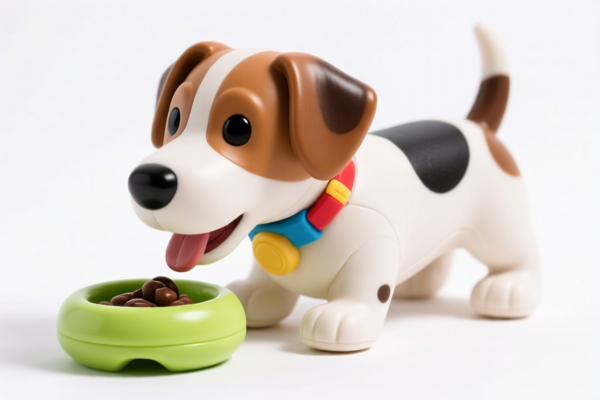
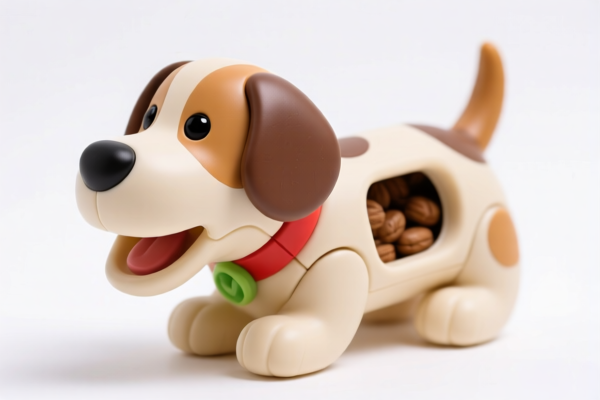
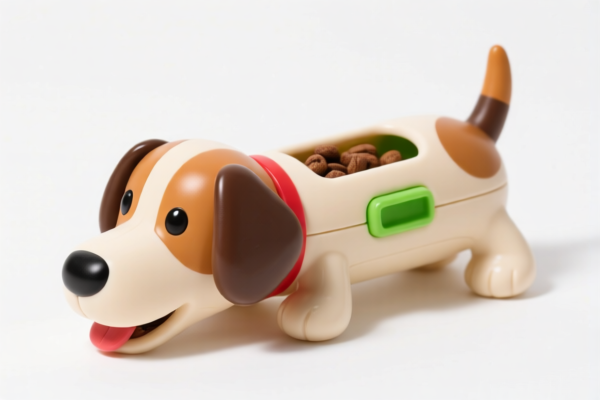
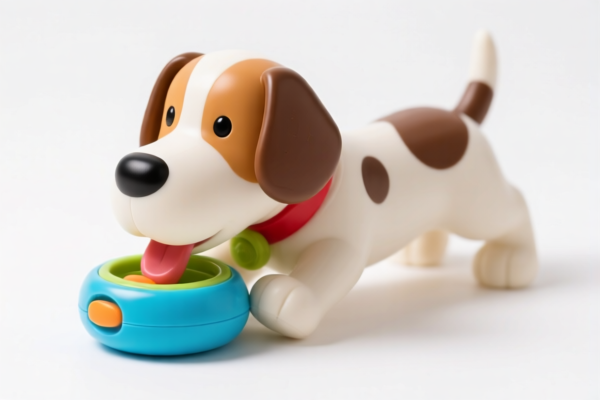
Snack Dispensing Dog Toy
CN → US| HS编码 | 关税税率 | 原产国 | 目的国 | 文档 |
|---|---|---|---|---|
| 4016990500 | 20.9% | CN | US | 官方文档 |
| 9503000071 | 10.0% | CN | US | 官方文档 |
| 3926909989 | 22.8% | CN | US | 官方文档 |
| 9503000073 | 10.0% | CN | US | 官方文档 |
| 4016992000 | 14.3% | CN | US | 官方文档 |
| 3926909905 | 22.8% | CN | US | 官方文档 |
商品图片
AI分析
🐶 Snack Dispensing Dog Toy
🌐 HS Code Reference & Customs Clearance Guide | 2026 Latest Tariff Analysis | Professional Clearance Strategy
📌 Part 1: Product Definition & Classification: What Exactly Is a "Snack Dispensing Dog Toy"?
A Snack Dispensing Dog Toy is an interactive pet product designed to engage dogs by requiring them to manipulate the toy to release treats or snacks. In international trade, these items are classified based on their primary function (play/toy) and material composition (rubber, plastic, fabric, etc.).
⚠️ Key Classification Logic:
- If the primary purpose is entertainment/play, it falls under Chapter 95 (Toys).
- If the primary purpose is chewing/wear (like rawhide alternatives) without interactive dispensing, it might fall under Chapter 40 (Rubber) or Chapter 39 (Plastics), but this is less common for "dispensing" mechanisms.
- Crucial Distinction: The "dispensing" feature strongly supports classification as a Toy rather than a simple chew toy or pet accessory.
📦 Part 2: HS Code Classification Details (Based on Provided Data)
| HS Code | Product Description | Reason for Classification | Total Tax Rate |
|---|---|---|---|
9503.00.00.71 |
Toys, including constructed kits | Primary Function: Toy. The item is explicitly designed for play and interaction, fitting the "Toys and Games" category. | 10.0% |
9503.00.00.73 |
Toys, including constructed kits (Rubber/Fabric) | Primary Function: Toy + Material. Inferred as made of rubber or fabric (durable materials for dogs), still firmly within the Toy category. | 10.0% |
4016.99.05.00 |
Other articles of vulcanized rubber | Material: Rubber. Inferred as vulcanized rubber article for household use. Less ideal if the toy has mechanical parts, but possible for solid rubber toys. | 20.9% |
4016.99.20.00 |
Other articles of vulcanized rubber (Pet Toys) | Specific Use: Pet Toy. Specifically matches "vulcanized rubber articles" for pet toys. Note: This is often for simple chew toys, not complex dispensers. | 14.3% |
3926.90.99.89 |
Other articles of plastic | Material: Plastic. Inferred as a plastic article. Fits "Other plastic articles" if made primarily of synthetic materials. | 22.8% |
3926.90.99.05 |
Other articles of plastic (Non-specific) | Material: Plastic. Fits "Other plastic articles" not elsewhere specified. Common for plastic-based dispensing toys. | 22.8% |
🔍 重点提醒 (Key Takeaway):
- Best Classification:9503.00.00.71or9503.00.00.73(Toys) offer the lowest tax rate (10.0%).
- Why Toys? Because the item is designed for play and engagement, not just for consumption or simple chewing.
- Avoid Rubber/Plastic Codes (4016,3926) unless the toy is purely a solid rubber/plastic block with no complex dispensing mechanism, as they carry higher taxes (14.3% - 22.8%).
💰 Part 3: 2026 Latest Tariff Rate Breakdown (Including Additional Taxes)
✅ Applicable Country: United States (US)
✅ Origin: China (CN)
✅ Effective Date: Post-November 10, 2025 (Includes subsequent imports)
🎯 1. 9503.00.00.71 & 9503.00.00.73 —— Toys (Recommended)
| Item | Details |
|---|---|
| Base Tariff | 0.0% (Ad Valorem) |
| USITC Additional Tax | 0.0% |
| IEEPA Additional Tax (Section 301) | +10% (122 Section Tariff for Chinese Products) |
| Total Tax Rate | 10.0% |
| Tax Calculation | CIF Value × 10% |
| De Minimis Exemption | ❌ Not Eligible (Due to Section 301/IEEPA taxes) |
| Legal Basis | IEEPA:9903.01.25 (Section 301) → USITC:9503.00.00.71/73 |
📌 Explanation:
- Toys generally have a 0% base tariff in the US.
- However, Chinese-origin toys are subject to an additional 10% tariff under Section 301 (listed as "122 Section Tariff" in your data).
- Result: A very competitive 10% total tax rate.
🎯 2. 4016.99.20.00 —— Vulcanized Rubber Articles (Pet Toys)
| Item | Details |
|---|---|
| Base Tariff | 4.3% |
| USITC Additional Tax | 0.0% |
| IEEPA Additional Tax (Section 301) | +10% |
| Total Tax Rate | 14.3% |
| Tax Calculation | CIF Value × 14.3% |
| De Minimis Exemption | ❌ Not Eligible |
| Legal Basis | IEEPA:9903.01.25 → USITC:4016.99.20.00 |
📌 Explanation:
- Higher base tariff (4.3%) makes this less optimal than the Toy classification.
- Still subject to the 10% Section 301 tax.
🎯 3. 4016.99.05.00 & 3926.90.99.89 & 3926.90.99.05 —— Rubber/Plastic Articles
| Item | Details |
|---|---|
| Base Tariff | 3.4% (Rubber) / 5.3% (Plastic) |
| USITC Additional Tax | 7.5% (Section 301) |
| IEEPA Additional Tax (Section 301) | +10% (122 Section Tariff) |
| Total Tax Rate | 20.9% (Rubber) / 22.8% (Plastic) |
| Tax Calculation | CIF Value × 20.9% or 22.8% |
| De Minimis Exemption | ❌ Not Eligible |
| Legal Basis | IEEPA:9903.01.25 → USITC:4016.99.05.00 / 3926.90.99.89/05 |
📌 Explanation:
- These codes carry higher base tariffs and additional Section 301 taxes (7.5%) plus the standard 10% IEEPA tax.
- Result: Significantly higher cost (20-23% vs 10%).
- Avoid unless the product cannot be classified as a toy (e.g., if it’s purely a decorative item or non-play object).
🛠️ Part 4: Customs Clearance Practical Advice (Best Practices)
✅ 1. Documentation Checklist (Must-Have)
| Document | Required | Explanation |
|---|---|---|
| ✅ Product Specifications | ✔️ | Include dimensions, weight, material composition (e.g., "Natural Rubber & Food-Grade Plastic"), and dispensing mechanism details. |
| ✅ Product Photos | ✔️ | Clear images showing the toy, dispensing holes, and any packaging. |
| ✅ Commercial Invoice | ✔️ | Clearly state "Interactive Dog Toy, Snack Dispensing" (Not just "Pet Toy" or "Plastic Item"). |
| ✅ Material Declaration | ✔️ | Specify if made of rubber, plastic, or fabric to support the "Toy" classification. |
| ✅ Certificate of Origin (CO) | ✔️ | If applicable, for potential future tariff reductions (though Section 301 currently applies). |
✅ 2. Declaration Tips (Key Mnemonic)
🔥 "Function is King: If it plays, it’s a Toy!"
| Scenario | Correct HS Code | Incorrect HS Code | Risk |
|---|---|---|---|
| Interactive Snack Dispenser | 9503.00.00.71 (Toy) |
3926.90.99.89 (Plastic) |
Overpayment (22.8% vs 10%) |
| Solid Rubber Chew Ball | 4016.99.20.00 (Rubber) |
9503.00.00.71 (Toy) |
Possible rejection if deemed non-functional |
| Fabric Plush Toy | 9503.00.00.73 (Toy) |
3926.90.99.05 (Plastic) |
Material mismatch, audit risk |
📌 Strategy:
- Always emphasize the play value and interactive nature in your product description.
- Use terms like "Interactive", "Dispensing", "Game", and "Enrichment" to support the9503classification.
- Avoid terms like "Chew Toy" if it’s complex, as customs may lean toward rubber/plastic codes.
✅ 3. Special Considerations
| Situation | Recommendation |
|---|---|
| Multi-Material Toy | If the toy has both plastic and rubber parts, classify as a Toy (9503) if the primary purpose is play. Do not split into materials. |
| Food-Grade Materials | Ensure materials are FDA-compliant if treats touch the toy. This doesn’t change HS code but helps with safety compliance. |
| OEM/Branded Products | Include brand name and model number on the invoice to avoid confusion with generic goods. |
| High-Value Toys | For expensive interactive toys, consider applying for an Advance Ruling from US Customs to confirm the 9503 classification. |
🌍 Part 5: Global Market Comparison (2026)
| Country/Region | Recommended HS Code | Total Tax (China Origin) | Certification Required | Notes |
|---|---|---|---|---|
| 🇺🇸 USA | 9503.00.00.71 |
10.0% | CPC (Children’s Product Certificate) if under 12; ASTM F963 | Section 301 tax applies |
| 🇨🇳 China | 9503.00.00.71 |
~5-10% | CCC (if applicable) | Lower base tariffs |
| 🇪🇺 EU | 9503.00 |
0-3% | CE Mark, EN71 | No Section 301 equivalent |
| 🇬🇧 UK | 9503.00 |
0-5% | UKCA Mark | Post-Brexit rules apply |
| 🇨🇦 Canada | 9503.00 |
0-6.5% | CCPSA | CUSMA benefits may apply |
📌 Conclusion:
- The USA is the most complex market due to Section 301 tariffs.
- However, classifying as a Toy (9503) keeps the US tax at a manageable 10%, compared to 20-23% for rubber/plastic codes.
- Always choose the Toy classification for snack dispensing dogs toys to minimize costs.
📌 Part 6: Common Mistakes & Pitfalls (Lessons Learned)
❌ Mistake 1: Classifying as "Plastic Article" (3926.90.99.89)
👉 Consequence: Pay 22.8% tax instead of 10% → Loss of 12.8% margin!
❌ Mistake 2: Calling it "Pet Accessory" without specifying function
👉 Consequence: Customs may reclassify to Rubber/Plastic codes → Higher tax + Delays.
❌ Mistake 3: Ignoring Section 301 Taxes
👉 Consequence: Underquoting total landed cost → Profit erosion.
✅ Correct Action:
"Interactive Dog Toy, Snack Dispensing, Made of Food-Grade Plastic & Rubber, ASTM F963 Compliant"
🎯 Part 7: Conclusion: Smart Classification, Maximizing Profit!
🎯 Remember the Mantra:
🔹 "Play Value = Toy Code = 10% Tax!"
🔹 "Rubber/Plastic Codes = 20%+ Tax = Avoid!"
🔹 "Describe the Function, Not Just the Material!"
📌 Pro Tip:
- For high-volume shipments, consider applying for an HS Code Binding Ruling from US Customs to lock in the 9503 classification.
- If sourcing from Vietnam, Mexico, or Thailand, you may qualify for exemptions from Section 301 tariffs, reducing the tax to 0%~5%.
📣 Act Now:
📞 Consult a licensed customs broker + Provide product photos + Apply for Advance Ruling
🚀 Ensure your Snack Dispensing Dog Toys clear customs smoothly, minimize taxes, and maximize your profits!
✨ Professional Customs Clearance Starts with Accurate Classification!
💼 Every Dollar Saved is a Dollar Earned!
用户评价
关于 HS 编码归类
协调制度(HS)是由世界海关组织(WCO)制定的国际贸易商品分类标准。全球 200 多个国家采用 HS 系统作为海关关税、贸易统计和进出口监管的基础。
每个 HS 编码遵循以下层级结构:
- 章(2 位)——商品大类(例如:第 84 章:机器和机械设备)
- 品目(4 位)——章内的更具体分类
- 子目(6 位)——国际通用细分,所有 WCO 成员国统一使用
- 本国细分(8-10 位)——各国自行扩展的细分编码,如美国 HTSUS 10 位编码
正确的 HS 编码归类对于顺利通关、准确缴纳关税和遵守贸易法规至关重要。错误归类可能导致海关延误、多缴关税或罚款。
从CN进口到US时,适用的关税税率可能包括:
- 最惠国(MFN)税率——适用于 WTO 成员国的标准关税税率
- 普通税率——适用于无贸易协定国家
- 贸易救济关税——附加关税,如 301 条款(反倾销)、232 条款(国家安全)或反补贴税
本页内容仅供参考。如需正式归类,请咨询当地海关或持牌报关代理。