Solar Cell Panel
CN → US| HS编码 | 关税税率 | 原产国 | 目的国 | 文档 |
|---|---|---|---|---|
| 8501729000 | 37.0% | CN | US | 官方文档 |
| 8541430080 | 60.0% | CN | US | 官方文档 |
| 8541430010 | 60.0% | CN | US | 官方文档 |
商品图片
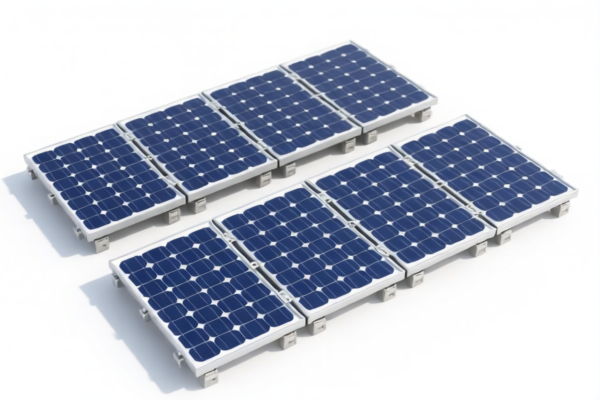
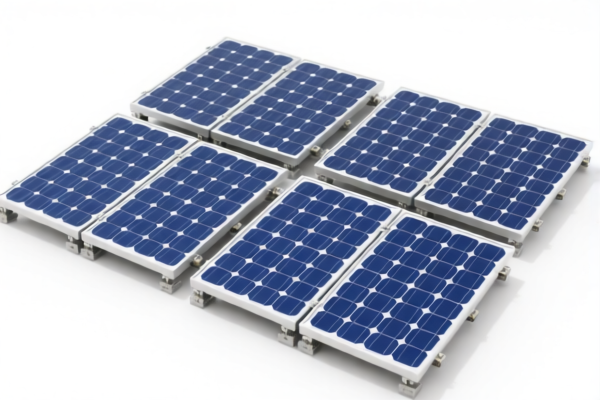
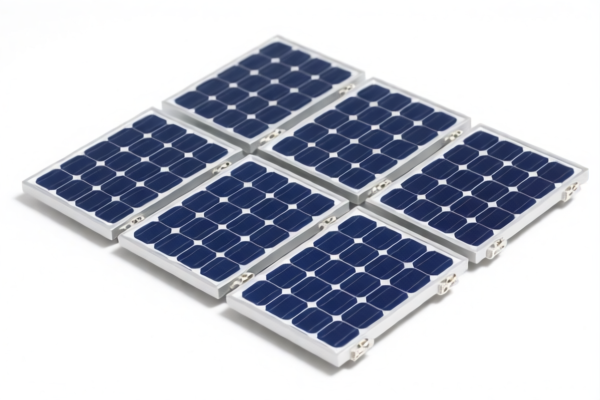

AI分析
☀️ Solar Cell Panel (Photovoltaic Modules)
🌐 HS Code Reference & Customs Clearance Guide | 2026 Latest Tariff Structure | Professional Strategy for US Market
📌 I. Product Definition & Classification: Understanding the "Solar Panel" Complexity
Solar Cell Panels, commonly referred to as Solar PV Modules, are devices that convert sunlight into electricity. In international trade, they are categorized based on their internal cell structure (crystalline vs. thin-film) and their functional configuration (generator vs. component). Misclassification here can lead to massive duty differences due to the complex US tariff structure.
Key Distinctions:
Photovoltaic Generators (8501): Panels configured as standalone power generation units with specific output characteristics.
Semiconductor Components/Modules (8541): Panels classified as assemblies of semiconductor materials (Mono-crystalline, Poly-crystalline, or Amorphous Silicon), regardless of being "finished" modules.
⚠️ Critical Classification Logic:
- If the panel is described as a "DC Generator" or focuses on its power output capacity → Potential classification under 8501.72.90.00.
- If the panel is described by its material composition (Crystalline Silicon or Thin-Film/Amorphous) → Classification under 8541.43.xx.
📦 II. HS Code Classification Matrix (2026 Latest Tariff Authority)
Based on the provided data, here are the three authoritative HS Codes for Solar Cell Panels:
| HS Code | Product Description | Key Criteria | Material/Shape |
|---|---|---|---|
8501.72.90.00 |
Solar panels as Photovoltaic DC Generators | Fits the classification logic of power output and usage as a generator. | General PV Generator Logic |
8541.43.00.80 |
Other Assembled PV Modules | Assembled panel form; Material is Non-crystalline Silicon (e.g., Amorphous) or other semiconductors. | Thin-Film / Amorphous |
8541.43.00.10 |
Crystalline Silicon PV Modules | Core material is Crystalline Silicon (Mono/Poly); Form is an assembled panel/module. | Crystalline Silicon |
🔍 Key Insight:
- 8541.43.00.10 is the most common for standard rooftop and utility-scale solar panels (Mono/Poly Silicon).
- 8541.43.00.80 is for newer technologies or older thin-film panels (Amorphous Silicon).
- 8501.72.90.00 is a less common but valid classification if the product is explicitly marketed and designed as a "DC Generator" unit rather than just a semiconductor module.
💰 III. 2026 Latest Tariff Rate Breakdown (Heavy Tariff Impact)
✅ Applicable Country: United States (US)
✅ Origin: China (CN)
✅ Effective Date: Current rates apply (Post-2025 adjustments)
🎯 1. 8501.72.90.00 — Solar Panels as DC Generators
| Item | Details |
|---|---|
| Base Tariff | 2.0% (Ad Valorem) |
| Section 301 Tariff | +25.0% |
| Section 122 Tariff | +10.0% |
| Total Effective Rate | 37.0% |
| Tax Calculation | CIF Value × 37% |
| De Minimis Exemption | ❌ Not Eligible (High value, subject to scrutiny) |
| Legal Basis Path | Base Tariff → USITC Footnote 301 → Section 122 Provision |
📌 Explanation:
- This classification offers a lower total duty (37%) compared to the 8541 categories.
- The "Section 122 Tariff" is a specific additional levy.
- Risk: Customs may challenge this if the product is clearly a semiconductor module (8541) rather than a generator unit.
🎯 2. 8541.43.00.10 — Crystalline Silicon Solar Modules
| Item | Details |
|---|---|
| Base Tariff | 0.0% |
| Section 301 Tariff | +50.0% |
| Section 122 Tariff | +10.0% |
| Total Effective Rate | 60.0% |
| Tax Calculation | CIF Value × 60% |
| De Minimis Exemption | ❌ Not Eligible |
| Legal Basis Path | Base Tariff → USITC Footnote 301 (50%) → Section 122 Provision |
📌 Explanation:
- This is the standard classification for most crystalline silicon solar panels (Mono/Poly).
- Despite a 0% base tariff, the Section 301 duty is exceptionally high at 50%, likely reflecting the recent escalation in trade measures against Chinese solar goods.
- Cost Impact: This is the most expensive classification for standard solar panels.
🎯 3. 8541.43.00.80 — Non-Crystalline/Other PV Modules
| Item | Details |
|---|---|
| Base Tariff | 0.0% |
| Section 301 Tariff | +50.0% |
| Section 122 Tariff | +10.0% |
| Total Effective Rate | 60.0% |
| Tax Calculation | CIF Value × 60% |
| De Minimis Exemption | ❌ Not Eligible |
| Legal Basis Path | Base Tariff → USITC Footnote 301 (50%) → Section 122 Provision |
📌 Explanation:
- Applies to Amorphous Silicon or other thin-film technologies.
- Tax Rate is identical to Crystalline Silicon (60%).
- No advantage in duty rate over the crystalline category.
🛠️ IV. Customs Clearance Practical Advice (Risk Mitigation)
✅ 1. Preparation Checklist (Non-Negotiable)
| Document | Required? | Purpose |
|---|---|---|
| ✅ Product Specifications Sheet | ✔️ | Must explicitly state: Cell Type (Crystalline vs. Amorphous), Output Power (Watts), Voltage/Current. |
| ✅ Technical Diagrams | ✔️ | To prove if the panel is a "Generator" (8501) or a "Semiconductor Module" (8541). |
| ✅ Commercial Invoice | ✔️ | Must match the HS Code description exactly. Avoid generic terms like "Solar Panel"; use "Photovoltaic Module, Crystalline Silicon". |
| ✅ Certificate of Origin | ✔️ | Mandatory for US customs to verify country of origin. |
| ✅ Photovoltaic Cell Test Report | ✔️ | IEC 61215/61730 certification helps prove material composition. |
✅ 2. Classification Strategy & Tips
🔥 "Material Defines Duty, Generator Defines Rate!"
| Scenario | Recommended HS Code | Duty Rate | Why? |
|---|---|---|---|
| Standard Mono/Poly Panel | 8541.43.00.10 |
60% | Most accurate for crystalline silicon modules. High duty risk. |
| Thin-Film/Amorphous Panel | 8541.43.00.80 |
60% | Accurate for non-crystalline materials. Same high duty. |
| Marketing as "DC Generator" | 8501.72.90.00 |
37% | Lower Duty! Risk: Must prove it meets "Generator" definition in legal terms, not just marketing. |
| Bare Cells (Not Assembled) | See 8541.21.00 | Varies | Not in current data, but if not assembled, it's a cell, not a panel. |
📌 Warning:
- Do NOT arbitrarily choose8501.72.90.00to save 23% in duty without solid technical justification. Customs may audit and penalize for misclassification.
- Do NOT assume "Solar Panel" is a single category. The material (Crystalline vs. Amorphous) dictates the 8541 subheading.
✅ 3. Special Cases & Pitfalls
| Situation | Advice |
|---|---|
| Mixed Shipment (Generator + Battery) | If sold as a kit, customs may classify the whole kit as a battery system or generator. Ensure clear separation or primary function definition. |
| Used/Refurbished Panels | Subject to additional strict scrutiny and potentially higher duties. Ensure "Used" is declared. |
| Origin Fraud | Transshipment from Vietnam/Malaysia does NOT exempt Section 301/122 tariffs if Chinese content is substantial. Ensure full compliance with Substantial Transformation rules. |
🌍 V. Global Market Comparison (2026 Snapshot)
| Market | Recommended HS Code | Estimated Duty (China Origin) | Notes |
|---|---|---|---|
| 🇺🇸 USA | 8541.43.00.10 |
60% | Highest barriers globally. Section 301 + 122. |
| 🇺🇸 USA | 8501.72.90.00 |
37% | Lower duty, but harder to justify classification. |
| 🇨🇳 China | 8541.43.00 |
0% | Domestic production is subsidized; exports face foreign tariffs. |
| 🇪🇺 EU | 8541.43.00 |
0% | No Section 301 equivalent, but Anti-Dumping Duties may apply. |
| 🇮🇳 India | 8541.43.00 |
20-40% | BCD (Basic Customs Duty) + SWS + Anti-Dumping. |
📌 Conclusion:
- The US market is the most challenging for Chinese solar panel exporters due to the 60% effective duty rate on standard modules.
- Exporters should rigorously evaluate whether their product can be technically classified under 8501.72.90.00 to save 23%, but must have strong legal/technical backing.
📌 VI. Common Errors & Avoidance Strategies
❌ Error 1: Using "Solar Panel" without specifying cell type.
👉 Consequence: Customs may default to the highest duty or request further documentation, delaying clearance.
❌ Error 2: Misclassifying Crystalline Silicon as "Other" (8541.43.00.80) to avoid scrutiny.
👉 Consequence: Audit failure, fines, and retroactive tax payments.
❌ Error 3: Ignoring Section 122 Tariff.
👉 Consequence: Underpayment of 10% on top of 301 duties. Always include 122 in calculations.
✅ Correct Declaration Example:
"Photovoltaic Module, Assembled, Crystalline Silicon Solar Cells, 400W, DC Output, Model XYZ, No Generator Control Circuitry" → HS 8541.43.00.10
🎯 VII. Final Recommendations
- Audit Your Technical Specs: Determine if your panel truly qualifies as a "DC Generator" (8501) or is strictly a "Semiconductor Module" (8541).
- Budget for 60% Duty: Assume the 60% rate (
8541.43.00.10) for standard crystalline panels in the US. - Consult a Customs Broker: For the 37% rate (
8501.72.90.00), seek a Pre-Ruling from US Customs and Border Protection (CBP) to mitigate risk. - Diversify Supply Chain: Consider sourcing from countries not subject to Section 301 tariffs (e.g., Vietnam, Malaysia, Thailand) if eligible under free trade rules.
📣 Immediate Action:
📞 Engage a US Licensed Customs Broker
📄 Prepare Technical Datasheets highlighting Cell Material
🚀 Calculate Landed Cost based on 60% Duty for Standard Panels
✨ Accurate Classification is Your Best Defense Against Tariffs!
💼 Every Percentage Point in Duty Impact Your Bottom Line!
用户评价
关于 HS 编码归类
协调制度(HS)是由世界海关组织(WCO)制定的国际贸易商品分类标准。全球 200 多个国家采用 HS 系统作为海关关税、贸易统计和进出口监管的基础。
每个 HS 编码遵循以下层级结构:
- 章(2 位)——商品大类(例如:第 84 章:机器和机械设备)
- 品目(4 位)——章内的更具体分类
- 子目(6 位)——国际通用细分,所有 WCO 成员国统一使用
- 本国细分(8-10 位)——各国自行扩展的细分编码,如美国 HTSUS 10 位编码
正确的 HS 编码归类对于顺利通关、准确缴纳关税和遵守贸易法规至关重要。错误归类可能导致海关延误、多缴关税或罚款。
从CN进口到US时,适用的关税税率可能包括:
- 最惠国(MFN)税率——适用于 WTO 成员国的标准关税税率
- 普通税率——适用于无贸易协定国家
- 贸易救济关税——附加关税,如 301 条款(反倾销)、232 条款(国家安全)或反补贴税
本页内容仅供参考。如需正式归类,请咨询当地海关或持牌报关代理。