Solar Energy Wall Light with Human Body Induction
CN → US商品图片
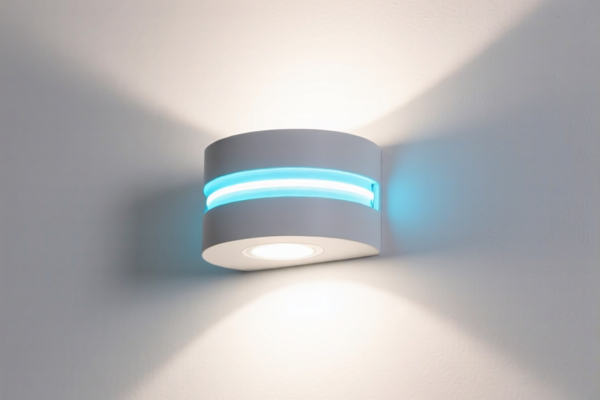
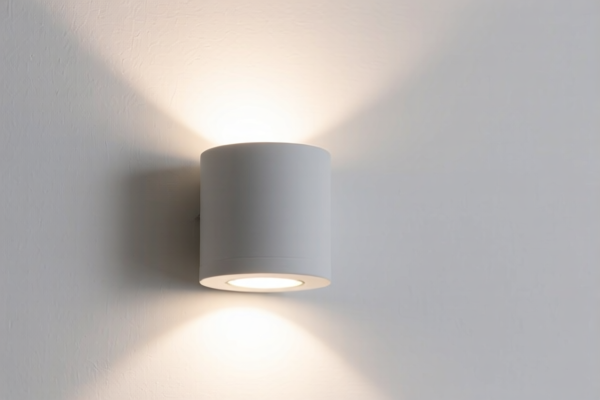
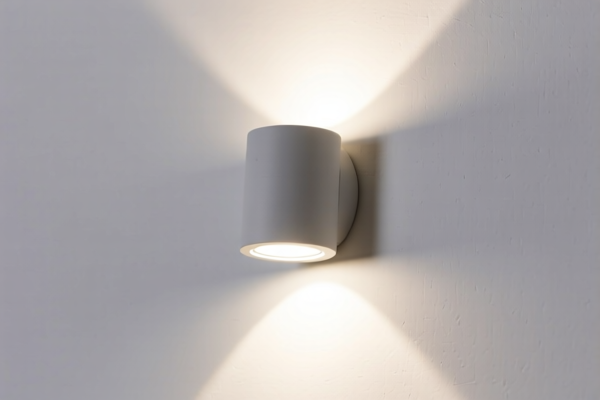
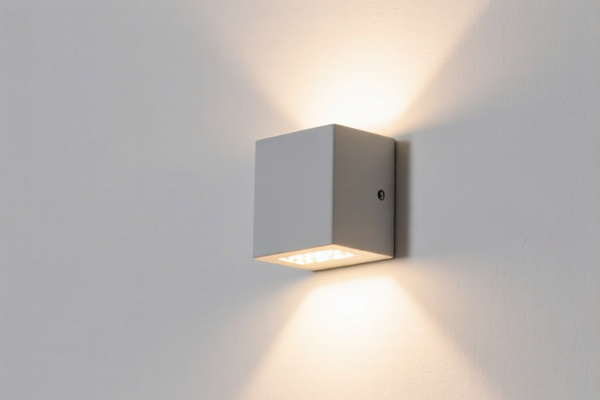
AI分析
☀️ Solar Energy Wall Light with Human Body Induction (PIR Motion Sensor)
🌐 HS Code Reference & Customs Clearance Guide | 2026 Latest Tariff Analysis | Professional-Level Compliance Strategy
📌 Part 1: Product Definition & Classification: Do You Really Understand "Smart Solar Lighting"?
Solar-powered wall lights with human body induction (PIR sensors) are intelligent outdoor lighting solutions that combine photovoltaic energy harvesting with motion detection. In international trade, they are not simple "lights." They are classified based on their primary function and energy source.
Two Main Categories:
1. Complete Solar-Powered Lighting Units (Most Common)
These are integrated devices where the solar panel, battery, LED light source, PIR sensor, and control circuit are housed in a single unit (or tightly connected housing) designed to operate independently without external power.
Classification Logic: They are considered "Electrical lighting fittings" rather than "Solar panels" or "Sensors" alone.
2. Solar Modules or Sensor Components (Rare for End-User Products)
If imported as separate components (e.g., just the solar panel, just the PIR module, or just the battery pack) for assembly elsewhere, they fall under different headings.
⚠️ Key Distinction Point:
- If the product is a complete, self-contained unit (Panel + Battery + LED + Sensor + Housing) ready for mounting → It is classified as Lighting Fitting.
- If it is a solar panel only (with connectors but no light) → It is classified as Photovoltaic Module.
- Most importers import the complete unit, so 9405 or 8539 is the primary focus.
📦 Part 2: HS Code Classification Details (2026 Latest Tariff Authority Comparison)
| HS Code | Product Description | Application Scenario | Key Identification Feature |
|---|---|---|---|
9405.42.00.00 |
Electric LED lighting fittings, solar-powered | Complete solar wall lights, garden lights, path lights with LED and PIR sensor | ✅ Integrated Unit: Solar panel + Battery + LED + Sensor + Control Circuit in one housing. Most common for this product. |
9405.41.00.00 |
Incandescent/Halogen solar lighting fittings | Older style solar lights using incandescent bulbs (rare now) | ❌ Obsolete technology |
8539.52.00.00 |
LED light sources, separate | Individual LED chips/modules sold as replacements, not integrated units | ✅ Only if selling just the LED bulb/module without housing/solar panel |
8541.40.90.00 |
Solar cells/modules, assembled | Just the solar panel (with frame/wires) sold separately for manufacturing | ✅ Component only, no light/sensor |
8530.90.80.00 |
Parts of traffic/construction signaling apparatus | PIR sensor modules sold separately for industrial automation | ✅ Component only, not a lighting unit |
9405.99.00.00 |
Parts of lighting fittings | Replacement solar panels, batteries, or brackets sold as spares | ✅ Spare parts only |
🔍 Critical Reminder:
- Do NOT classify complete solar lights under8541(Solar Cells) or8530(Sensors). Customs will reject this if the unit is functional as a light.
- The PIR sensor is considered an integral part of the lighting control, not a separate electrical apparatus.
- If the product includes a USB charging port for the battery but is primarily solar-powered, it still falls under9405.42.00.00(as the primary energy source is solar).
💰 Part 3: 2026 Latest Tariff Rate Details (Including Surcharges & Policy Add-ons)
✅ Applicable Country: United States (US)
✅ Country of Origin: China (CN)
✅ Effective Date: November 10, 2025 onwards (for subsequent imports)
🎯 1. 9405.42.00.00 —— Electric LED Lighting Fittings, Solar-Powered
| Item | Content |
|---|---|
| Base Tariff Rate | 0% (ad valorem) |
| USITC Additional Tariff (Section 301) | +25% (from USITC Footnote 9903.88.01, Chapter 94) |
| IEEPA Additional Tariff | +10% (针对中国/香港产品,自2025年11月10日起) |
| Total Tariff Rate | 35% |
| Tax Calculation | CIF Value × 35% |
| De Minimis Eligibility | ❌ Not Eligible (deny_de_minimis) |
| Legal Basis Path | IEEPA:9903.01.25 → IEEPA:9903.01.24 → USITC:9405.42.00.00 → FOOTNOTE:9903.88.01 |
📌 Explanation:
- "USITC Additional Tariff 25%": Derived from Section 301 of the Trade Act, targeting Chinese-origin goods in Chapter 94 (Furniture/Lighting).
- "IEEPA 10%": Executive Order under the International Emergency Economic Powers Act, applicable to Chinese goods entering the US post-Nov 2025.
- Total 35%: This is a high-cost category. Many importers underestimate this because the base rate is 0%. The surcharges are the main cost driver.
🎯 2. 9405.99.00.00 —— Parts of Lighting Fittings (e.g., Replacement Solar Panels)
| Item | Content |
|---|---|
| Base Tariff Rate | 0% |
| USITC Additional Tariff | +25% |
| IEEPA Additional Tariff | +10% |
| Total Tariff Rate | 35% |
| Tax Calculation | CIF × 35% |
| De Minimis Eligibility | ❌ Not Eligible |
| Legal Basis Path | IEEPA:9903.01.25 → IEEPA:9903.01.24 → USITC:9405.99.00.00 → FOOTNOTE:9903.88.01 |
📌 Note:
- Spare parts for solar lights also face the same 35% total tariff if imported from China.
- Do not try to split a complete unit into "panel" + "light" to lower duties; customs will assess the principal purpose and likely classify it as the complete unit (9405.42.00.00).
🛠️ Part 4: Customs Clearance Practical Advice (Pitfall Avoidance Guide)
✅ 1. Required Documentation Checklist (Non-Negotiable)
| Document | Mandatory | Description |
|---|---|---|
| ✅ Product Specification Sheet | ✔️ | Must include: Lumens, Wattage, Battery Capacity (mAh/Voltage), Solar Panel Wattage, Sensor Range, IP Rating (e.g., IP65) |
| ✅ Circuit Diagram / BOM List | ✔️ | Proves the integration of solar, battery, LED, and PIR sensor |
| ✅ Product Photos (Label & Assembly) | ✔️ | Show model number, voltage, wattage, and "Made in China" label |
| ✅ Third-Party Test Reports | ✔️ | FCC (EMC/RF), CE, RoHS, UL (if applicable), IEC 62133 (Battery Safety) |
| ✅ Commercial Invoice | ✔️ | Clearly state: "Solar Powered LED Wall Light with PIR Motion Sensor" |
| ✅ Packing List | ✔️ | Detail units per carton, gross/net weight |
| ✅ Certificate of Origin (CO) | ✔️ | Required for tariff calculation; confirm country of origin |
✅ 2. Declaration Tips (Key Mnemonics)
🔥 "Solar Unit = 9405, Sensor is Inside, Don't Split, Pay 35%!"
| Scenario | Correct Declaration | Wrong Practice |
|---|---|---|
| Complete Solar Wall Light (with PIR) | 9405.42.00.00 |
Misclassified as 8541.40.90.00 (Solar Panel) → Risk of audit & back taxes |
| PIR Sensor Module (for industrial use) | 8530.90.80.00 |
Misclassified as lighting → Wrong duty rate |
| Solar Panel Only (no light) | 8541.40.90.00 |
Misclassified as lighting → Delayed clearance |
| Kit (Panel + Light separate boxes) | One shipment, one HS Code | Split declaration → Higher scrutiny, potential "bundle" classification |
✅ 3. Special Case Handling
| Situation | Handling Advice |
|---|---|
| Product with USB Charging Port | Still classify as 9405.42.00.00 if solar is the primary energy source. Declare "Solar Powered with Auxiliary USB Input." |
| Lithium Battery Included | Must declare UN38.3 Certificate and MSDS. Lithium batteries in lighting units are common; ensure packaging meets IATA/IMDG if shipped by air. |
| OEM Custom Design | Provide design drawings to prove it's a single integrated unit, not a kit of parts. |
| High Lumens/High Power | If the unit includes a large external battery bank not integrated into the housing, customs may reclassify as "Battery Energy Storage System" (8507.60) or "Solar Inverter" (8504.40). Keep it integrated! |
🌍 Part 5: Global Customs Comparison (2026 Latest)
| Country/Region | Recommended HS Code | Tariff | Certification Requirements | Notes |
|---|---|---|---|---|
| 🇺🇸 USA | 9405.42.00.00 |
35% (China) | FCC + UL/ETL (Recommended) | 35% total duty; strict on lithium batteries |
| 🇨🇳 China | 9405.42.00.00 |
5% | CCC (if applicable) | No additional surcharges |
| 🇪🇺 EU | 9405.42.00.00 |
0% | CE + RoHS + ErP | No additional tariffs; VAT applies |
| 🇬🇧 UK | 9405.42.00.00 |
0% | UKCA + RoHS | Post-Brexit standards apply |
| 🇦🇺 Australia | 9405.42.00.00 |
5% | RCM + AS/NZS | No additional tariffs |
| 🇯🇵 Japan | 9405.42.00.00 |
0% | PSE (Lithium Battery) | PSE mandatory for battery |
📌 Conclusion:
- USA is the most expensive market due to the 35% total tariff.
- EU/UK/Australia/Japan offer 0%–5% duty, making them more cost-effective despite certification requirements.
- Lithium Battery Compliance is critical globally (UN38.3, MSDS, PSE, IEC 62133).
📌 Part 6: Common Mistakes & Pitfalls (Lessons from Blood & Tears)
❌ Mistake 1: Classifying the complete solar light as "Solar Panel" (8541) to avoid Section 301 tariffs.
👉 Consequence: Customs will audit, reclassify, and impose back taxes + penalties. The product's principal function is lighting, not power generation.
❌ Mistake 2: Failing to declare the Lithium Battery correctly.
👉 Consequence: Shipment seized or returned at the border. Lithium batteries are dangerous goods (DG). Must have UN38.3 test report and MSDS.
❌ Mistake 3: Not including FCC for the PIR Sensor (RF transmission).
👉 Consequence: FCC requires certification for any device emitting radio frequency. If the PIR sensor uses 433MHz or 2.4GHz wireless, FCC ID is mandatory. Without it, goods will be detained.
❌ Mistake 4: Using vague descriptions like "Garden Light" without specifying "Solar Powered" and "LED."
👉 Consequence: Customs may ask for clarification, causing delays. Be specific: "Solar Powered LED Wall Light with PIR Motion Sensor."
✅ Correct Declaration Example:
"Solar Powered LED Wall Light, IP65, 100 Lumens, 2000mAh Li-ion Battery, PIR Motion Sensor, 433MHz Wireless, Model XYZ, FCC ID: ABC123, Made in China"
🎯 Part 7: Conclusion: Professional Declaration Saves Money!
🎯 Remember the Mnemonic:
🔹 "Solar Light = 9405.42, Sensor Inside, Battery DG, Pay 35% in US!"
🔹 "HS Code Determines Duty, Split Unit = Big Trouble, Battery Certified = Smooth Clearance!"
📌 Pro Tip:
- If your solar lights are shipped from Vietnam, Malaysia, or Thailand (with sufficient local value addition), you may qualify for IEEPA Exemption, reducing the tariff to 0%–5%.
- For US imports, consider applying for a Section 301 Exclusion if available (check current HTS code exclusions).
- Pre-shipment Inspection is highly recommended for lithium battery products to avoid port delays.
📣 Immediate Action:
📞 Consult a licensed customs broker + Provide FCC/UL/UN38.3 documents + Apply for Advance Ruling if possible
🚀 Ensure your solar lights clear customs smoothly, comply with safety standards, and maximize profit!
✨ Professional Clearance Starts with Accurate Classification!
💼 Every Cent Counts in Global Trade!
用户评价
关于 HS 编码归类
协调制度(HS)是由世界海关组织(WCO)制定的国际贸易商品分类标准。全球 200 多个国家采用 HS 系统作为海关关税、贸易统计和进出口监管的基础。
每个 HS 编码遵循以下层级结构:
- 章(2 位)——商品大类(例如:第 84 章:机器和机械设备)
- 品目(4 位)——章内的更具体分类
- 子目(6 位)——国际通用细分,所有 WCO 成员国统一使用
- 本国细分(8-10 位)——各国自行扩展的细分编码,如美国 HTSUS 10 位编码
正确的 HS 编码归类对于顺利通关、准确缴纳关税和遵守贸易法规至关重要。错误归类可能导致海关延误、多缴关税或罚款。
从CN进口到US时,适用的关税税率可能包括:
- 最惠国(MFN)税率——适用于 WTO 成员国的标准关税税率
- 普通税率——适用于无贸易协定国家
- 贸易救济关税——附加关税,如 301 条款(反倾销)、232 条款(国家安全)或反补贴税
本页内容仅供参考。如需正式归类,请咨询当地海关或持牌报关代理。