Solar Photovoltaic Panel
CN → US| HS编码 | 关税税率 | 原产国 | 目的国 | 文档 |
|---|---|---|---|---|
| 8541430010 | 60.0% | CN | US | 官方文档 |
| 8541430080 | 60.0% | CN | US | 官方文档 |
| 8501729000 | 37.0% | CN | US | 官方文档 |
商品图片
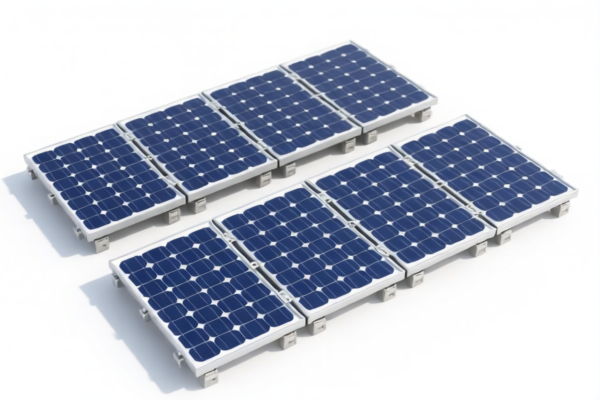
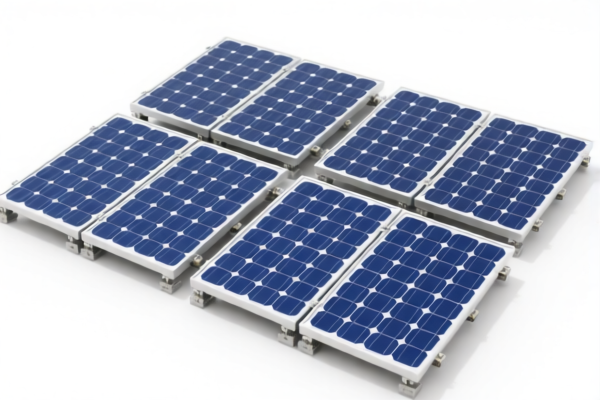
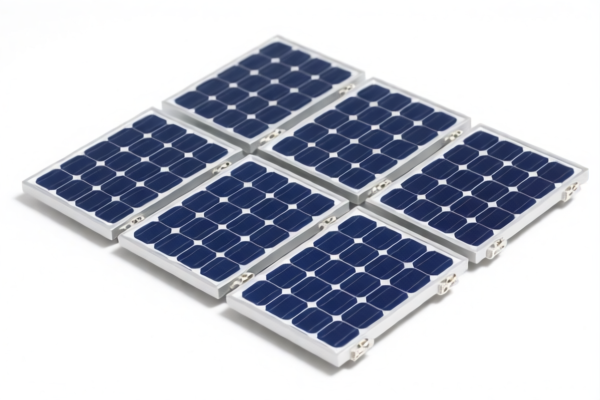

AI分析
☀️ Solar Photovoltaic (PV) Panels: HS Code Classification & Tariff Deep Dive (2026)
🌐 HS Code Reference & Customs Clearance Guide | 2026 Latest Tariff Analysis | Professional Clearance Strategy
📌 1. Product Definition: What Exactly Is a "Solar PV Panel"?
Solar Photovoltaic (PV) Panels are the core energy-harvesting components of solar power systems. In international trade, they are not a monolithic category. Their classification depends strictly on material composition, construction type, and electrical integration.
Misclassification here is dangerous. A "crystalline silicon module" faces different duties than a "thin-film amorphous silicon panel." Furthermore, if the panel is part of a larger assembly (like a standalone generator), it might fall under a different HS code entirely.
⚠️ Critical Distinction:
- Modules/Assemblies: Pre-wired, framed, or encapsulated units ready for installation.
- Generators: Panels integrated with inverters/controllers into a single functional unit.
- Material Matters: Crystalline Silicon (c-Si) vs. Amorphous/Thin-Film (a-Si).
📦 2. HS Code Classification Matrix (2026 Latest Tariff Reference)
Based on the provided data, here are the three specific classifications for Solar PV products. Note that all entries carry significant tariffs due to US trade policies.
| HS Code | Product Description | Material/Type | Key Characteristics |
|---|---|---|---|
| 8541.43.00.10 | Crystalline Silicon PV Modules or Panels | Crystalline Silicon (c-Si) | Standard monocrystalline or polycrystalline modules. The most common type in the market. |
| 8541.43.00.80 | Assembled Panels of Amorphous Silicon or Other Semiconductors | Amorphous Silicon (a-Si) / Thin-Film | Thin-film technology. Includes CIGS, CdTe, or a-Si panels. |
| 8501.72.90.00 | Solar Plates Belonging to PV DC Generators | Integrated System | Panels integrated with DC generators/inverters. Not just a "plate," but part of a power generation unit. |
🔍 Important Note:
- 8541.43.00.xx covers the panels/modules themselves.
- 8501.72.90.00 covers generators. If your product is a standalone panel without integrated power conversion electronics, do NOT use 8501.72.90.00. If it is an integrated unit, you must use this code. Misclassification leads to severe penalties.
💰 3. 2026 Tariff Rate Breakdown (USA Source, China Origin)
✅ Applicable Country: United States (US)
✅ Origin: China (CN)
✅ Effective Date: Post-2025 Policy Implementation
All listed products are subject to a Total Tax Rate of 60.0% or 37.0% depending on the HS Code. This includes Base Tariff, Section 301/201 Add-on Tariffs, and Section 122 Tariffs.
🎯 1. 8541.43.00.10 & 8541.43.00.80 — Solar Modules/Panels
Total Tax Rate: 60.0%
| Tariff Component | Rate | Legal/Policy Basis |
|---|---|---|
| Base Tariff | 0.0% | Most Free (MFN) rate for these subheadings |
| Add-on Tariff (Section 301/201) | 50.0% | U.S. Trade Law against China (Section 301) |
| Section 122 Tariff | 10.0% | Specific Section 122 Assessment |
| TOTAL | 60.0% | Cumulative Rate |
📌 Explanation:
- 0% Base: The standard WTO MFN rate is 0%.
- 50% Add-on: This is the massive tariff applied to Chinese goods under Section 301 (and potentially Section 201 for solar cells/modules).
- 10% Section 122: This is a critical, often overlooked surcharge. Section 122 of the Tariff Act allows for additional duties on goods deemed to be imported in a manner that threatens domestic industry.
- Result: You are paying 60 cents in tax for every $1 of CIF value. This is extremely high and erodes profit margins significantly.
🎯 2. 8501.72.90.00 — Solar DC Generators
Total Tax Rate: 37.0%
| Tariff Component | Rate | Legal/Policy Basis |
|---|---|---|
| Base Tariff | 2.0% | Standard MFN rate for DC Generators |
| Add-on Tariff (Section 301/201) | 25.0% | U.S. Trade Law against China |
| Section 122 Tariff | 10.0% | Specific Section 122 Assessment |
| TOTAL | 37.0% | Cumulative Rate |
📌 Explanation:
- Why is this lower? Because8501(Electrical Machinery) often has different tariff structures than8541(Semiconductors).
- Base 2% + Add-on 25% + Section 122 10% = 37%.
- Strategic Note: If your product can be legally classified as a "Generator" (i.e., it includes integrated control/inversion electronics), this 23% savings (60% vs 37%) is massive. However, you must ensure it meets the definition of a generator, not just a panel.
🛠️ 4. Customs Clearance Practical Advice (Avoiding Pitfalls)
✅ 1. Documentation Checklist (Mandatory)
| Document | Requirement | Reason |
|---|---|---|
| Commercial Invoice | Must state "Solar Photovoltaic Module" or "PV Generator" | Clear description prevents ambiguity. |
| Product Specification Sheet | Must detail material (c-Si vs a-Si) and power output | Determines between 8541.43.00.10 and .80. |
| Circuit Diagram | Required if claiming 8501.72.90.00 |
Proves integration of control/inverter components. |
| Certificate of Origin (CO) | Mandatory | To confirm China origin and apply correct tariffs. |
| Manufacturer Declaration | Confirm no forced labor (UFLPA) | Solar panels are high-risk for UFLPA compliance. |
✅ 2. Classification Strategy: How to Choose?
| Scenario | Recommended HS Code | Why? |
|---|---|---|
| Standard Rooftop Panel (Monocrystalline/Poly) | 8541.43.00.10 |
It is a crystalline silicon module. Do not try to classify as generator unless it has built-in electronics. |
| Thin-Film Roofing/Building Integrated PV | 8541.43.00.80 |
Uses amorphous silicon or other non-crystalline semiconductors. |
| All-in-One Solar Kit (Panel + Controller + Battery) | Consult Expert | If the panel is just a part of a larger system, the system might be classified differently. However, if selling just the "plate" as part of a generator assembly, use 8501.72.90.00. |
| Standalone Panel (No electronics) | NEVER use 8501.72.90.00 |
This is a misclassification. Customs will reclassify and penalize you. Use 8541.43.xx. |
✅ 3. Critical Warnings
🚨 Warning 1: Section 122 Tariffs Are Non-Negotiable
The 10% Section 122 tariff applies to ALL three codes. Do not assume "Free Trade" agreements waive this. It is a domestic policy surcharge.🚨 Warning 2: Material Matters
- If you claim8541.43.00.10(Crystalline) but the product is Amorphous, you face audits and back taxes.
- Ensure your lab tests or manufacturer specs explicitly state the semiconductor type.🚨 Warning 3: UFLPA Compliance
Solar panels from China are heavily scrutinized under the Uyghur Forced Labor Prevention Act (UFLPA).
- You must provide supply chain transparency (from polysilicon to ingot to wafer to cell to module).
- Lack of documentation = Seizure.
🌍 5. Global Market Comparison (2026)
| Market | HS Code (Approx.) | Total Tariff (China Origin) | Key Requirement |
|---|---|---|---|
| 🇺🇸 United States | 8541.43.00 |
60% | UFLPA, Section 122, IEEPA |
| 🇪🇺 European Union | 8541.43.00 |
0% (Under EBA) | CE Mark, Eco-Design, CBAM (Carbon Tax) |
| 🇨🇳 China (Import) | 8541.43.00 |
0% | CCC Certification |
| 🇦🇺 Australia | 8541.43.00 |
5% | RC Mark, Anti-Dumping Duties (Check Specific Lists) |
📌 Insight:
The US market is the most expensive for Chinese solar panels due to the combination of Section 301, 201, and 122 tariffs.
- Profit Margin Impact: A $100 panel costs $160 to enter the US (including duties).
- Strategy: Consider transshipment (if legally compliant with rules of origin) or local assembly in a non-China country to bypass these tariffs.
📌 6. Common Mistakes & How to Avoid Them
❌ Mistake 1: Classifying a standard panel as 8501.72.90.00 to save 23%.
👉 Consequence: Customs rejects it because there is no integrated generator circuit. You pay 60% + penalties.
✅ Fix: Only use 8501.72.90.00 if the product is an integrated DC generator unit.
❌ Mistake 2: Ignoring the "122 Clause" in budget calculations.
👉 Consequence: Underpricing your product, leading to cash flow crises.
✅ Fix: Always include 60% (for panels) or 37% (for generators) in your landed cost calculation.
❌ Mistake 3: Confusing "Solar Cell" (semiconductor) with "Solar Panel" (module).
👉 Consequence: Wrong HS code (8541.42.00.00 for cells vs 8541.43.00.00 for modules).
✅ Fix: Modules are assembled cells. Use 8541.43.
🎯 7. Conclusion: Strategic Recommendations
🎯 Remember This Rule:
"Crystalline = 60%, Amorphous = 60%, Integrated Generator = 37%."
- For Standard Panels: Expect a 60% tariff. Build this into your pricing or risk losing competitiveness.
- For Integrated Products: If you can design a product that includes basic DC control/inversion, explore
8501.72.90.00to save 23%. - Compliance is Key: Prepare for UFLPA audits. Document every step of the supply chain.
- Consult a Broker: Given the complexity of Section 122 and 301, always get a Binding Ruling from US Customs (CBP) before shipping.
📣 Immediate Action:
📞 Contact your customs broker with the exact technical specifications of your PV panel.
📄 Request a Binding Ruling for8541.43.00.10or8541.43.00.80.
💡 Calculate Landed Cost: CIF + 60% Duty + Brokerage + UFLPA Compliance Costs.
✨ Precision in Classification Saves Thousands.
💼 Don't let tariff uncertainty kill your solar business!
用户评价
关于 HS 编码归类
协调制度(HS)是由世界海关组织(WCO)制定的国际贸易商品分类标准。全球 200 多个国家采用 HS 系统作为海关关税、贸易统计和进出口监管的基础。
每个 HS 编码遵循以下层级结构:
- 章(2 位)——商品大类(例如:第 84 章:机器和机械设备)
- 品目(4 位)——章内的更具体分类
- 子目(6 位)——国际通用细分,所有 WCO 成员国统一使用
- 本国细分(8-10 位)——各国自行扩展的细分编码,如美国 HTSUS 10 位编码
正确的 HS 编码归类对于顺利通关、准确缴纳关税和遵守贸易法规至关重要。错误归类可能导致海关延误、多缴关税或罚款。
从CN进口到US时,适用的关税税率可能包括:
- 最惠国(MFN)税率——适用于 WTO 成员国的标准关税税率
- 普通税率——适用于无贸易协定国家
- 贸易救济关税——附加关税,如 301 条款(反倾销)、232 条款(国家安全)或反补贴税
本页内容仅供参考。如需正式归类,请咨询当地海关或持牌报关代理。