Solution Polymerized Styrene Butadiene Rubber (S SBR)
CN → US| HS编码 | 关税税率 | 原产国 | 目的国 | 文档 |
|---|---|---|---|---|
| 4005990000 | 35.0% | CN | US | 官方文档 |
| 4002190016 | 35.0% | CN | US | 官方文档 |
| 4005200000 | 35.0% | CN | US | 官方文档 |
| 3913901000 | 35.0% | CN | US | 官方文档 |
| 4005990000 | 35.0% | CN | US | 官方文档 |
商品图片
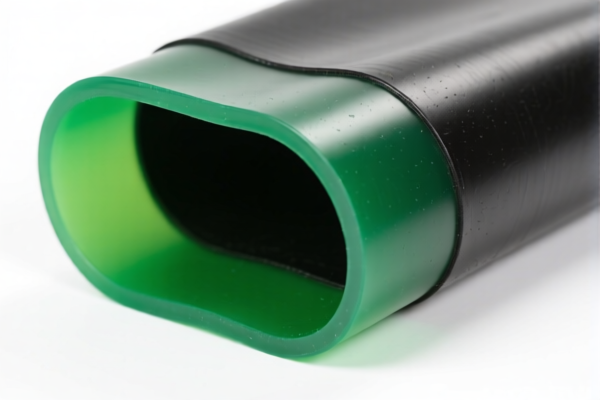
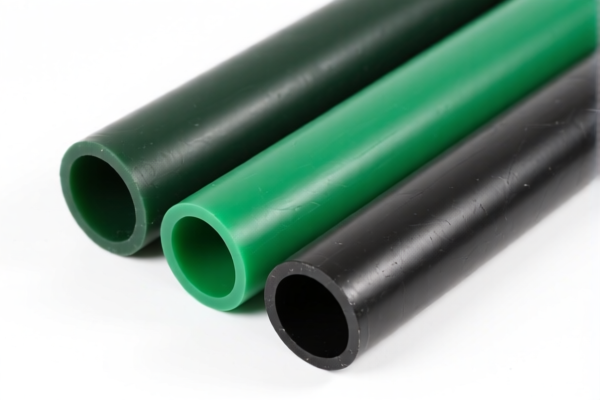
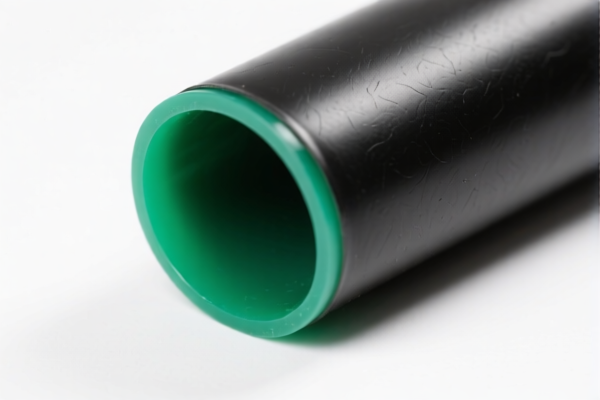
AI分析
🧪 Solution Polymerized Styrene Butadiene Rubber (S-SBR)
🌐 HS Code Reference & Customs Clearance Guide | 2026 Latest Tariff Analysis | Professional Classification Strategy
📌 I. Product Definition & Classification: Do You Really Understand "S-SBR"?
Solution Polymerized Styrene Butadiene Rubber (S-SBR) is a high-performance synthetic rubber produced through solution polymerization. It is widely used in the automotive industry (particularly for eco-friendly "green tires"), footwear, adhesives, and plastics modification.
In international trade, S-SBR is primarily classified under Chapter 40 (Rubber and Articles Thereof), specifically as unvulcanized synthetic rubber in a primary form. However, depending on the specific manufacturing process and physical state (bales vs. loose), slight variations in HS Code application may occur, particularly between heading 4002 and 4005.
⚠️ Key Distinction Point:
- If classified strictly as raw synthetic rubber in primary forms (e.g., bales, blocks, lumps) without compounding → Heading 4002 or 4005.
- The term "Bundle" or "Bale" indicates a primary physical form, which is critical for classification.
- S-SBR is distinct from Emulsion SBR (E-SBR) in terms of performance and sometimes classification nuance, but both fall under broad rubber categories.
📦 II. HS Code Classification Details (2026 Latest Tariff Authoritative Comparison)
Based on the provided data, here are the four specific HS Codes identified for this product:
| HS Code | Product Description | Application Scenario | Material/State Characteristics |
|---|---|---|---|
| 4005.99.00.00 | Unvulcanized rubber compounds, other (including blends) | S-SBR in bale/bundle form, possibly with minor additives or considered a "compound" in some interpretations | Matches "Polybutadiene-Styrene Rubber (SBR)", unvulcanized, bundle form |
| 4002.19.00.16 | Synthetic rubber (including styrene-butadiene rubber and isoprene rubber) in primary forms or in plates, sheets or strip: Other: Other | Solution Polymerized S-SBR, explicitly matching "Solution Polymerized" process and "Styrene Butadiene Rubber" material | Matches "Solution Polymerized", "S-SBR", "Bundle" form perfectly |
| 4005.20.00.00 | Rubber blends, unvulcanized, in primary forms or in plates, sheets or strip | S-SBR classified as a rubber blend/unvulcanized mixed rubber in bundle/strip form | Matches "Solution Polymerized SBR", "Rubber Category", "Unvulcanized Compound" |
| 3913.90.10.00 | Natural rubbers, balata, gutta-percha, guayule, chicle and similar natural gums in primary forms: Other: Other | Less Common/Disputed: Classifies S-SBR as a "synthetic rubber derivative polymer" under Chapter 39 (Plastics) | Claims S-SBR is a "polymer of natural rubber chemical derivatives", primary form |
🔍 重点提醒 (Key Reminders):
- 4002.19.00.16 is the most precise fit for Solution Polymerized S-SBR because it explicitly references the production method ("Solution Polymerized") and material ("S-SBR") in the summary.
- 4005.99.00.00 and 4005.20.00.00 are also valid if the S-SBR is considered a "compound" or "blend" rather than pure polymer, often due to packaging (bales) or minor additives.
- 3913.90.10.00 is highly risky. Classifying synthetic rubber under Chapter 39 (Plastics) is generally incorrect unless it is a specific copolymer not fitting Chapter 40. Most customs authorities prefer Chapter 40 for S-SBR.
- All listed codes carry a 35.0% Total Tax Rate for imports from China to the US.
💰 III. 2026 Latest Tariff Rate Breakdown (Including Additional Taxes & Policy Surcharges)
✅ Applicable Country: USA (US)
✅ Origin: China (CN)
✅ Effective Date: November 10, 2025 (for subsequent imports)
🎯 1. 4005.99.00.00 & 4005.20.00.00 & 4002.19.00.16 & 3913.90.10.00
| Item | Content |
|---|---|
| Base Tariff | 0.0% (Ad Valorem) |
| USITC Section 301 Tariff | +25.0% (Based on USITC Footnote / Section 301 List 4) |
| IEEPA Section 122 Tariff | +10.0% (Specific "122 Clause" surcharge for Chinese products) |
| Total Tax Rate | 35.0% |
| Tax Calculation | CIF Value × 35% |
| De Minimis Eligibility | ❌ No (deny_de_minimis) |
| Legal Basis Path | Base: 0% → Section 301: +25% → IEEPA 122: +10% → Total: 35% |
📌 Explanation:
- "Base Tariff 0%": Unvulcanized rubber typically has a low or zero base MFN tariff.
- "Section 301 Tariff 25%": This is the standard additional tariff for many Chinese rubber products under Trade Act Section 301.
- "IEEPA 122 Clause 10%": A specific surcharge applied to certain Chinese imports, often targeting industrial materials.
- Total 35%: This is a very high tariff burden. Importers must factor this into their cost structure. No duty-free quotas or de minimis exemptions apply.
🛠️ IV. Customs Clearance Practical Advice (Real-World Pitfall Avoidance Guide)
✅ 1. Required Documentation Checklist (Mandatory)
| Document | Required | Explanation |
|---|---|---|
| ✅ Product Specification Sheet | ✔️ | Must clearly state: "Solution Polymerized SBR", molecular weight, styrene content, Viscosity Index, Gel Content. |
| ✅ Process Description | ✔️ | Explicitly mention "Solution Polymerization" to justify HS Code 4002.19.00.16 if possible. |
| ✅ Product Photos (Including Labels) | ✔️ | Show bales/bundles, labels with HS Code recommendation, brand, and batch number. |
| ✅ Certificate of Origin (CO) | ✔️ | Crucial for proving Chinese origin and applying/avoiding specific tariffs. |
| ✅ Commercial Invoice | ✔️ | Clearly describe as "Solution Polymerized Styrene Butadiene Rubber (S-SBR), Unvulcanized, in Bales". Avoid vague terms like "Rubber Pellets" if not accurate. |
| ✅ Packing List | ✔️ | Detail net weight, gross weight, and number of bundles/bales. |
| ✅ Third-Party Test Report | ✔️ | Optional but recommended: Proof of chemical composition and unvulcanized state. |
✅ 2. Declaration Strategy (Key Mantra)
🔥 “Process Matters, Form Defines, S-SBR is Rubber, Not Plastic!”
| Scenario | Correct Declaration | Incorrect Practice |
|---|---|---|
| Pure S-SBR in Bales | 4002.19.00.16 (Best Fit) |
Misdeclare as 3913.90.10.00 (Chapter 39) → Risk of reclassification & penalties |
| S-SBR with Minor Compounds | 4005.99.00.00 or 4005.20.00.00 |
Declare as "Plastic Resin" → Wrong Chapter |
| Vulcanized Rubber Parts | Chapter 40, Heading 4016+ | Declare S-SBR (raw material) → Wrong stage of processing |
| Bale vs. Loose | Specify "Bales" or "Bundles" | Vague description → Delays for inspection |
📌 Note:
- If the product is pure solution-polymerized SBR, 4002.19.00.16 is the strongest argument due to the explicit match with "Solution Polymerized" and "S-SBR".
- If there are any additives or it’s considered a "compound", 4005 codes are safer.
- Avoid 3913 unless you have a strong legal opinion, as S-SBR is widely recognized as rubber (Chapter 40).
✅ 3. Special Circumstances Handling
| Scenario | Handling Advice |
|---|---|
| OEM S-SBR for Tire Makers | Provide end-use information, but classification depends on material, not end-use. Ensure chemical specs match 4002/4005. |
| Mixed Shipment (S-SBR + Other Rubber) | Declare separately. Do not lump into one HS Code if characteristics differ significantly. |
| Change in Form (Pellets vs. Bales) | Both are "primary forms". Ensure description matches the physical state (Bales vs. Granules). |
| Dispute on Chapter 39 vs. 40 | Prepare a Technical Data Sheet proving it is an elastomer (rubber), not a thermoplastic polymer (plastic). S-SBR is an elastomer. |
🌍 V. Global Market Comparison (2026 Latest)
| Country/Region | Recommended HS Code | Tariff (China Origin) | Certification Requirements | Notes |
|---|---|---|---|---|
| 🇺🇸 USA | 4002.19.00.16 or 4005.99.00.00 |
35.0% (0% + 25% + 10%) | No specific import license, but CO required | High tariff impact; no de minimis |
| 🇨🇳 China | 4002.19.00.00 |
~3.0% - 5.0% | None for import | Low duty, major producer/consumer |
| 🇪🇺 EU | 4002.19.00 |
0% (MFN) | REACH Registration required | Free trade under MFN; REACH compliance critical |
| 🇦🇺 Australia | 4002.19.00 |
5.0% | AICIS (Australian Industrial Chemicals Introduction Scheme) | Moderate duty |
| 🇯🇵 Japan | 4002.19.00 |
3.9% - 5.3% | None specific | Standard MFN rates apply |
📌 Conclusion:
- USA is the most costly market due to the 35% combined tariff.
- EU and Japan are more favorable in terms of duty rates, but REACH (EU) and other chemical regulations apply.
- Strategy: If targeting the US, consider supply chain diversification (e.g., sourcing from Vietnam or Thailand if possible) to mitigate the 35% tariff, though origin rules must be carefully checked.
📌 VI. Common Errors & Pitfall Guide (Lessons Learned)
❌ Error 1: Declaring S-SBR as "Plastic Resin" (Chapter 39)
👉 Consequence: Customs reclassifies to Chapter 40, applies 35% tariff + penalties.
👉 Fix: Provide TDS (Technical Data Sheet) proving elastomeric properties.
❌ Error 2: Using vague descriptions like "Rubber Raw Material"
👉 Consequence: Delayed clearance, possible inspection.
👉 Fix: Use precise terms: "Solution Polymerized Styrene Butadiene Rubber (S-SBR), Unvulcanized".
❌ Error 3: Ignoring the "122 Clause" 10% Surcharge
👉 Consequence: Underpayment of duties by 10% → Back taxes + interest.
👉 Fix: Ensure your broker includes the 10% IEEPA surcharge in calculations.
❌ Error 4: Confusing S-SBR with E-SBR (Emulsion)
👉 Consequence: Minor classification risk, but more importantly, wrong pricing for customers expecting different performance.
👉 Fix: Clearly distinguish in documentation: "Solution Polymerized" vs. "Emulsion Polymerized".
✅ Correct Declaration Example:
"SOLUTION POLYMERIZED STYRENE BUTADIENE RUBBER (S-SBR), UNVULCANIZED, IN BALES, MODEL XYZ, CHEMICAL FORMULA C12H20, STYRENE CONTENT 25%, VISCOSITY INDEX 80, HS CODE 4002.19.00.16, MADE IN CHINA"
🎯 VII. Conclusion: Professional Declaration for Cost Efficiency
🎯 Remember the Mantra:
🔹 "S-SBR is Rubber, Not Plastic!"
🔹 "Solution Polymerized Points to 4002!"
🔹 "35% Tax in USA, No De Minimis, Plan Ahead!"
🔹 "Bundle Form is Primary Form, Keep it Simple!"
📌 Tip:
If your S-SBR is originating from Vietnam, Malaysia, or Thailand, check if it qualifies for preferential tariffs under USMCA or ASEAN agreements. However, for Chinese-origin S-SBR, the 35% tariff is mandatory.
Recommend applying for a Pre-Ruling (Advance Ruling) from US CBP to confirm the exact HS Code (4002.19.00.16 vs. 4005.99.00.00) to avoid post-import audits.
📣 Immediate Action:
📞 Contact a licensed customs broker + Provide TDS + Confirm Origin
🚀 Ensure your S-SBR clears US Customs smoothly, avoiding costly delays and unexpected 35% tariffs!
✨ Professional Clearance Starts with Accurate Classification!
💼 Every Cent of Tariff Matters in Rubber Trading!
用户评价
关于 HS 编码归类
协调制度(HS)是由世界海关组织(WCO)制定的国际贸易商品分类标准。全球 200 多个国家采用 HS 系统作为海关关税、贸易统计和进出口监管的基础。
每个 HS 编码遵循以下层级结构:
- 章(2 位)——商品大类(例如:第 84 章:机器和机械设备)
- 品目(4 位)——章内的更具体分类
- 子目(6 位)——国际通用细分,所有 WCO 成员国统一使用
- 本国细分(8-10 位)——各国自行扩展的细分编码,如美国 HTSUS 10 位编码
正确的 HS 编码归类对于顺利通关、准确缴纳关税和遵守贸易法规至关重要。错误归类可能导致海关延误、多缴关税或罚款。
从CN进口到US时,适用的关税税率可能包括:
- 最惠国(MFN)税率——适用于 WTO 成员国的标准关税税率
- 普通税率——适用于无贸易协定国家
- 贸易救济关税——附加关税,如 301 条款(反倾销)、232 条款(国家安全)或反补贴税
本页内容仅供参考。如需正式归类,请咨询当地海关或持牌报关代理。