Sorting, Screening, Separating, Cleaning, or Mixing Machinery
CN → US| HS编码 | 关税税率 | 原产国 | 目的国 | 文档 |
|---|---|---|---|---|
| 8474100010 | 35.0% | CN | US | 官方文档 |
| 8474200050 | 35.0% | CN | US | 官方文档 |
| 8479820040 | 35.0% | CN | US | 官方文档 |
| 8479820080 | 35.0% | CN | US | 官方文档 |
商品图片
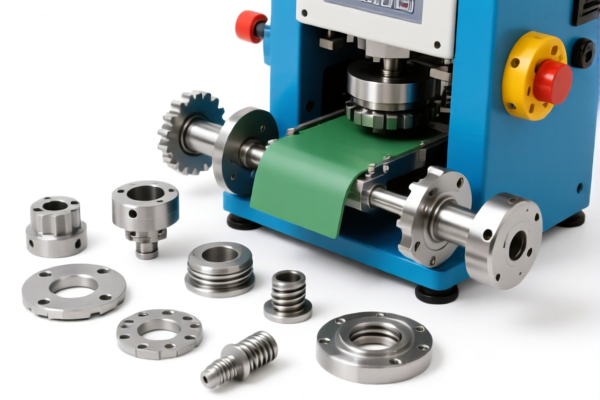
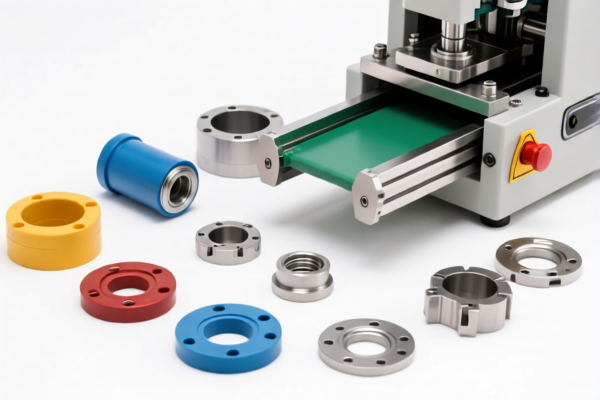
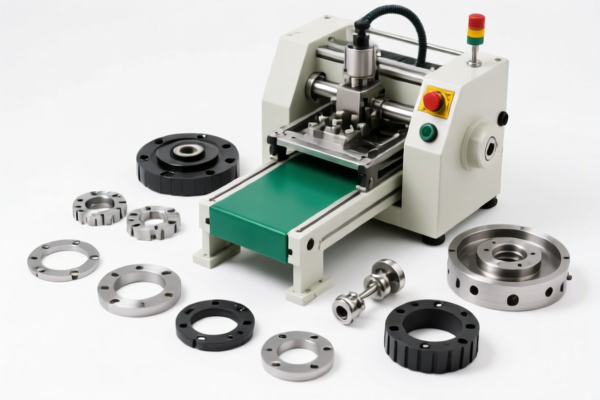
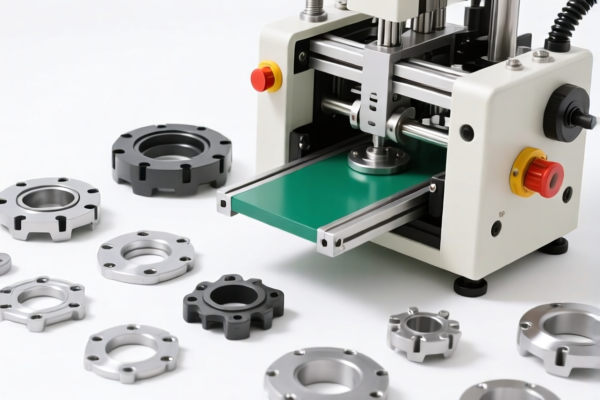
AI分析
🏭 Industrial Mineral Processing Machinery: Sorting, Screening & Mixing
🌐 HS Code Reference & Customs Clearance Guide | 2026 Latest Tariff Analysis | Professional Entry Strategy for US Imports
📌 I. Product Definition: What Are You Actually Importing?
Machinery for the sorting, screening, separating, cleaning, crushing, grinding, mixing, or stirring of mineral substances (including ores, coal, and industrial minerals) is a critical category in heavy industry. In international trade, these machines are often grouped under Heading 84.74 or 84.79, depending on their specific function and structure.
Key Functional Distinctions: - Primary Processing (Crushing/Grinding): Machines that physically break down large lumps into smaller particles (e.g., jaw crushers, ball mills). - Separation/Screening: Machines that sort particles by size or density (e.g., vibratory screens, magnetic separators). - Mixing/Blending: Machines that homogenize dry or wet mineral mixtures (e.g., ribbon blenders, pugmills).
⚠️ Critical Classification Point:
- If the machine is primarily for crushing or grinding raw minerals → Typically falls under 8474.10 / 8474.20.
- If the machine is for mixing, kneading, or mixing other materials (including minerals) but doesn't crush them → Typically falls under 8479.82.
- Note: Customs often scrutinize the primary function and material processed. Misclassification here leads to severe duty penalties.
📦 II. HS Code Classification Details (2026 Latest Tariff Alignment)
Based on the provided data, here are the four relevant HS Codes for mineral processing machinery:
| HS Code | Summary Description | Key Functionality Match | Material Scope |
|---|---|---|---|
8474.10.00.10 |
Machinery for sorting, screening, separating, cleaning, crushing, grinding, mixing, or stirring of mineral substances. | Comprehensive Match: Covers sorting, screening, separating, cleaning, crushing, grinding, mixing, or stirring. | Minerals, Ores |
8474.20.00.50 |
Machinery for sorting, screening, separating, cleaning, crushing, grinding, mixing, or stirring of mineral substances. | Specific Match: Usage (crushing) and Material (mineral/ore) fully comply. | Minerals, Ores |
8479.82.00.40 |
Machinery for sorting, screening, separating, cleaning, crushing, grinding, mixing, or stirring of mineral substances. | Functional Match: Functions of "mixing, kneading, pulverizing, grinding, screening" align with tariff description. | Minerals, Ores |
8479.82.00.80 |
Machinery for sorting, screening, separating, cleaning, crushing, grinding, mixing, or stirring of mineral substances. | Functional Match: Description of functions fully aligns with the target tariff code's functional limitations. | Minerals, Ores |
🔍 Important Clarification:
-8474Series (10 & 20): Generally covers machinery specifically designed for mineral/ore processing (e.g., mining equipment).
-8479Series (82): Covers "Machines and mechanical appliances having individual functions, not specified or included elsewhere in this Chapter." This is often used for mixers or general industrial mixers that process minerals but aren't primarily crushers/screens.
- Why 4 Codes? The variation between.40and.80in 8479.82 often relates to specific sub-classifications like "other" vs. "specialized," or historical tariff sub-divisions. Ensure your machine’s specific technical specifications match the exact wording of the chosen code.
💰 III. 2026 Latest Tariff Rate Breakdown (Including Surcharges & Policy Add-ons)
✅ Applicable Country: United States (US)
✅ Origin: China (CN)
✅ Effective Time: 2025-11-10 onwards (including subsequent imports)
✅ Total Duty Rate: 35.0%
🎯 Detailed Tariff Structure for All Four HS Codes
| Item | Content |
|---|---|
| Base Duty Rate | 0.0% (ad valorem) |
| Section 301 Surcharge | +25.0% (Based on USITC Footnote for Chinese goods under Section 301) |
| IEEPA Surcharge (Section 122) | +10.0% (Specific surcharge for Chinese origin, effective Nov 10, 2025) |
| Total Effective Duty | 35.0% |
| Tax Calculation | CIF Value × 35% |
| De Minimis Exemption | ❌ Not Applicable (deny_de_minimis) |
| Legal Basis Path | Section 301: 8474.* → IEEPA: 9903.01.25 → USITC: 8474/8479 → FOOTNOTE: 9903.88.01 |
📌 Explanation of the 35% Rate:
- Base Rate (0%): The harmonized system base rate for this machinery category is zero.
- Section 301 Tariff (+25%): Applies to a broad range of Chinese-made industrial machinery, including mining and processing equipment.
- IEEPA/Section 122 Tariff (+10%): This is a new/additional surcharge specifically targeting Chinese goods under International Emergency Economic Powers Act provisions, effective from late 2025.
- Combined Impact: Even though the base rate is 0%, the 35% total duty significantly increases landed cost. This is not eligible for de minimis (Section 321) relief for shipments under $800.
🛠️ IV. Customs Clearance Practical Advice (Avoiding Pitfalls)
✅ 1. Required Documentation Checklist
| Document | Mandatory? | Purpose |
|---|---|---|
| ✅ Detailed Product Specification Sheet | ✔️ | Must clearly state: Function (e.g., "Primary Crusher"), Material Processed (e.g., "Iron Ore"), Power, Capacity. |
| ✅ Technical Drawings / Schematics | ✔️ | To prove whether the machine is primarily for crushing (8474) or mixing (8479). |
| ✅ Product Photos (Front, Side, Nameplate) | ✔️ | Must show model number, brand, and input/output configuration. |
| ✅ Commercial Invoice | ✔️ | Must explicitly state: "Machinery for sorting, screening, separating, cleaning, crushing, grinding, mixing, or stirring of mineral substances." Do not use vague terms like "Industrial Mixer" without context. |
| ✅ Packing List | ✔️ | Details net/gross weight, dimensions, and quantity. |
| ✅ Certificate of Origin (CO) | ✔️ | Required to verify Chinese origin for surcharge application. |
| ✅ Third-Party Test Report | ✔️ | OSHA, CE, or UL certification if applicable, proves safety standards. |
✅ 2. Declaration Best Practices
🔥 Golden Rule:
"Function defines Classification. Material Confirms It. Name Must Match!"
| Scenario | Recommended HS Code | Incorrect Practice | Risk |
|---|---|---|---|
| Crusher/Grinder (Breaks rocks) | 8474.10.00.10 or 8474.20.00.50 |
Classifying as "Mixer" (8479) |
Under-declaration → Penalty |
| Vibrating Screen (Sorts by size) | 8474.10.00.10 |
Classifying as "Machine Part" | 35% vs. Higher Part Duty |
| Mineral Mixer/Blender (Mixes powders) | 8479.82.00.40 or 8479.82.00.80 |
Classifying as "Crusher" | Over-classification → Unnecessary Complexity |
| General Industrial Mixer (Non-mineral) | Possibly 8479.89 (Different Rate) |
Using mineral-specific codes | Misclassification → Audit |
💡 Tip: If your machine performs both crushing and mixing, classify based on its principal function. If crushing is primary, use 8474. If mixing is primary, use 8479.
✅ 3. Special Considerations
| Situation | Handling Advice |
|---|---|
| Used Machinery | Declare as "Used." May require additional inspection or proof of functionality. |
| OEM Custom Equipment | Provide client’s design specs to justify the specific HS code. |
| Components Shipped Separately | Do not split a complete machine into parts and headers. Ship as a complete unit. |
| Dual-Use Equipment | If used for both minerals and food, ensure safety certifications (FDA) are present, but duty is based on primary industrial function. |
🌍 V. Global Market Comparison (2026)
| Country/Region | Recommended HS Code | Base Duty | Surcharges (China Origin) | Total Duty | Notes |
|---|---|---|---|---|---|
| 🇺🇸 USA | 8474.10.00.10 / 8479.82.00.40 |
0% | +25% (301) + 10% (IEEPA) | 35% | High barriers; no de minimis. |
| 🇨🇳 China | 8474.10.00.10 |
5-10% | None | ~5-10% | Lower cost for imports into China. |
| 🇪🇺 EU | 8474.10.00.10 |
0-2% | None (WTO MFN) | ~0-2% | No trade war tariffs. |
| 🇲🇽 Mexico | 8474.10.00.10 |
0% (USMCA) | None | 0% | If assembled in Mexico/US/Canada. |
| 🇻🇳 Vietnam | 8474.10.00.10 |
0-5% | None | ~0-5% | Potential supply chain alternative. |
📌 Conclusion:
- The US market is the most expensive due to the combined 35% duty.
- Consider supply chain diversification if importing into the US.
- Ensure accurate functional description to avoid audits.
📌 VI. Common Mistakes & Pitfalls (Lessons Learned)
❌ Mistake 1: Calling the machine "Industrial Mixer" without specifying it processes minerals/ores.
👉 Consequence: Customs may classify it under a different, potentially higher-duty or restricted category.
👉 Fix: Always state "for mineral substances" in the description.
❌ Mistake 2: Assuming de minimis ($800) applies.
👉 Consequence: Seizure or penalty.
👉 Fix: These goods are explicitly denied de minimis relief due to trade policy surcharges.
❌ Mistake 3: Splitting the machine into parts for shipping.
👉 Consequence: Each part may be taxed separately, potentially at higher rates, or rejected as incomplete.
👉 Fix: Ship as a complete, assembled unit whenever possible.
❌ Mistake 4: Confusing 8474 (Mineral Processing) with 8479 (General Machinery).
👉 Consequence: If the machine is specifically designed for minerals, using 8479 might be questioned.
👉 Fix: Use 8474 if the machine is primarily for crushing, grinding, or screening minerals. Use 8479 if it’s a general-purpose mixer used for minerals.
✅ Correct Declaration Example:
"Mineral Ore Crushing Machine, Model XYZ, 100HP, designed for sorting, screening, and crushing of iron ore, FCC/CE Certified, Made in China."
🎯 VII. Conclusion: Precision Matters
🎯 Remember the Formula:
🔹 Correct HS Code = Function + Material + Origin
🔹 Total Duty = 0% (Base) + 25% (301) + 10% (IEEPA) = 35%
🔹 No De Minimis = Plan for Full Duty Payment
📌 Pro Tip:
If your machinery is not originally from China (e.g., assembled in Vietnam or Mexico), you may qualify for lower or zero tariffs.
Always apply for a Pre-Ruling (Ruling Letter) from US Customs and Border Protection (CBP) before shipping to confirm the correct HS code and duty rate.
📣 Immediate Action:
📞 Contact a licensed customs broker.
📝 Provide detailed specs and photos.
🚀 Avoid 35% surprises by declaring accurately!
✨ Professional Clearance Starts with Precise Classification!
💼 Every percent saved is pure profit!
用户评价
关于 HS 编码归类
协调制度(HS)是由世界海关组织(WCO)制定的国际贸易商品分类标准。全球 200 多个国家采用 HS 系统作为海关关税、贸易统计和进出口监管的基础。
每个 HS 编码遵循以下层级结构:
- 章(2 位)——商品大类(例如:第 84 章:机器和机械设备)
- 品目(4 位)——章内的更具体分类
- 子目(6 位)——国际通用细分,所有 WCO 成员国统一使用
- 本国细分(8-10 位)——各国自行扩展的细分编码,如美国 HTSUS 10 位编码
正确的 HS 编码归类对于顺利通关、准确缴纳关税和遵守贸易法规至关重要。错误归类可能导致海关延误、多缴关税或罚款。
从CN进口到US时,适用的关税税率可能包括:
- 最惠国(MFN)税率——适用于 WTO 成员国的标准关税税率
- 普通税率——适用于无贸易协定国家
- 贸易救济关税——附加关税,如 301 条款(反倾销)、232 条款(国家安全)或反补贴税
本页内容仅供参考。如需正式归类,请咨询当地海关或持牌报关代理。