Sound Insulation Grade Ethylene Elastomer Resin
CN → US| HS编码 | 关税税率 | 原产国 | 目的国 | 文档 |
|---|---|---|---|---|
| 3901901000 | 35.0% | CN | US | 官方文档 |
| 3921190010 | 41.5% | CN | US | 官方文档 |
| 3921190090 | 41.5% | CN | US | 官方文档 |
| 3901909000 | 41.5% | CN | US | 官方文档 |
商品图片
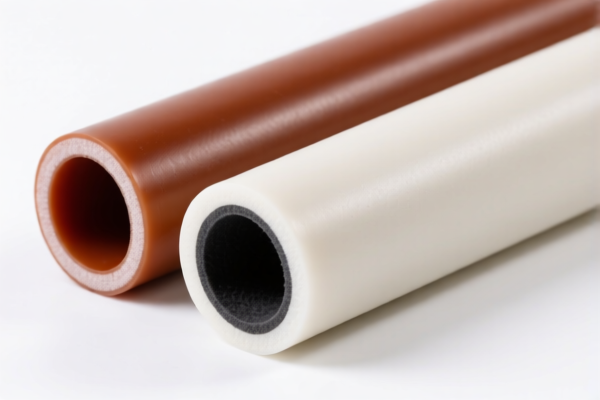
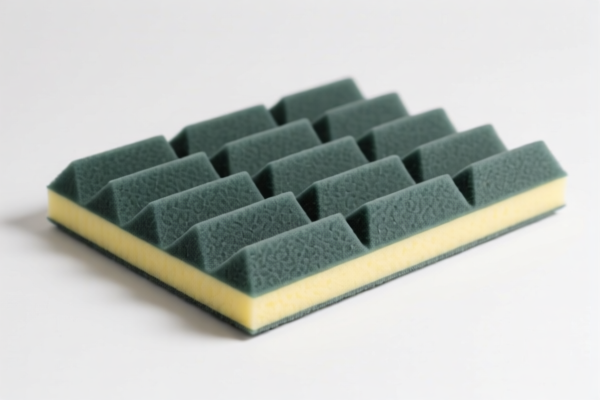


AI分析
🧪 Sound Insulation Grade Ethylene Elastomer Resin
🌐 HS Code Reference & Customs Clearance Guide | 2026 Latest Tariff Analysis | Professional Classification Strategy
📌 Part I: Product Definition & Chemical Nature: What is "Ethylene Elastomer Resin"?
Sound Insulation Grade Ethylene Elastomer Resin refers to a class of polymer materials derived from ethylene, possessing elastomeric (rubber-like) properties while maintaining the structural integrity of a resin. In international trade, these materials are primarily classified based on their chemical composition (Ethylene Polymers), physical form (Primary/Original Shape), and specific functional attributes (Elastomers).
⚠️ Key Distinction Point:
- If the product is a raw polymer granule/pellet (Primary Shape) → Classified under Chapter 39 (Plastics) as Ethylene Polymers;
- If it is processed into a specific sheet/plate with defined dimensions → It might fall under 3921 (Plates, Sheets, Film, Foil, and Strip);
- Crucial Note: The term "Elastomer" triggers specific subheadings within the Ethylene Polymer category, distinguishing it from standard Polyethylene (PE).
📦 Part II: HS Code Classification Details (2026 Latest Tariff Authority)
Based on the provided data, the product can be classified into four specific HS Codes, depending on the precise technical interpretation of its "Elastomer" vs. "Polymer" status and physical form.
| HS Code | Product Description | Applicable Scenario | Key Classification Logic |
|---|---|---|---|
| 3901.90.90.00 | Other Ethylene Polymers (Resin, Primary Shape) | Raw ethylene elastomer resin in granular/powder form; not specifically identified as "Elastomer" in sub-heading. | "Summary: Classified as Ethylene Polymer. Resin belongs to Primary/Original Shape." |
| 3901.90.10.00 | Ethylene Elastomers (Primary Shape) | Ethylene-based copolymer resin explicitly defined as an "Elastomer" in its chemical classification. | "Summary: Contains Ethylene Material + Elastomer/Resin Form, fitting the definition of Ethylene Polymers - Elastomer category." |
| 3921.19.00.10 | Other Plates, Sheets, Film, Foil, and Strip of Polyethylene | If the resin has been processed into a film/sheet and customs interprets "Elastomer" broadly as "Polyethylene." | "Summary: Ethylene Elastomer belongs to Polyethylene category, fitting the material restriction of this code." |
| 3921.19.00.90 | Other Plates, Sheets, Film, Foil, and Strip of Polyethylene | Similar to above, but for other unspecified polyethylene products not covered by .10. | "Summary: Ethylene Elastomer belongs to Polymer category. Resin is primary form. Fits Plastic Material Attributes & Morphology Extension Inference." |
🔍 Critical Reminder:
- 3901 is generally preferred for raw resin pellets.
- 3921 is typically for processed sheets/films. Using 3921 for raw resin is a common classification error that leads to disputes, unless the product is explicitly a pre-formed sheet.
- The distinction between .10 (Elastomer) and .90 (Other) in Chapter 39 significantly impacts the Base Tariff.
💰 Part III: 2026 Latest Tariff Rate Breakdown (Including Surcharges & Policy Add-ons)
✅ Applicable Country: United States (US)
✅ Country of Origin: China (CN)
✅ Effective Date: 2025/2026 (Current Trade War Context)
🎯 1. 3901.90.90.00 —— Ethylene Polymers (Other)
| Item | Details |
|---|---|
| Base Tariff Rate | 6.5% |
| Section 301 Additional Tariff | +25.0% |
| Section 122 Tariff (IEEPA) | +10.0% |
| Total Effective Tariff | 41.5% |
| Tax Calculation | CIF Value × 41.5% |
| De Minimis Exemption? | ❌ Not Applicable (High value industrial material) |
| Legal Path | HTSUS:3901.90.90 → USITC:Section 301 → IEEPA:Section 122 |
📌 Explanation:
- This code assumes the product is a standard "Other Ethylene Polymer" not specifically listed as an elastomer in the sub-headings.
- The 6.5% base rate is higher than the 0% for specific elastomers, but the surcharges are identical across all these codes.
🎯 2. 3901.90.10.00 —— Ethylene Elastomers
| Item | Details |
|---|---|
| Base Tariff Rate | 0.0% |
| Section 301 Additional Tariff | +25.0% |
| Section 122 Tariff (IEEPA) | +10.0% |
| Total Effective Tariff | 35.0% |
| Tax Calculation | CIF Value × 35.0% |
| De Minimis Exemption? | ❌ Not Applicable |
| Legal Path | HTSUS:3901.90.10 → USITC:Section 301 → IEEPA:Section 122 |
📌 Explanation:
- This is the most favorable classification if your product can be scientifically proven to be an "Ethylene Elastomer" (e.g., EPDM, OBC).
- Savings: 6.5% less than Code 3901.90.90.00.
- Requirement: Must provide technical datasheets proving the material meets the legal definition of "Elastomer" under HTS 3901.10.
🎯 3. 3921.19.00.10 & 3921.19.00.90 —— Polyethylene Sheets/Films
| Item | Details |
|---|---|
| Base Tariff Rate | 6.5% |
| Section 301 Additional Tariff | +25.0% |
| Section 122 Tariff (IEEPA) | +10.0% |
| Total Effective Tariff | 41.5% |
| Tax Calculation | CIF Value × 41.5% |
| De Minimis Exemption? | ❌ Not Applicable |
| Legal Path | HTSUS:3921.19 → USITC:Section 301 → IEEPA:Section 122 |
📌 Explanation:
- High Risk of Rejection: Customs may argue that "Resin" is not a "Sheet/Film." If you ship pellets, using 3921 is likely incorrect.
- If the product is a sheet/film, these codes are appropriate, but the tax burden is higher than 3901.90.10.00.
🛠️ Part IV: Customs Clearance Practical Advice (Avoid Pitfalls)
✅ 1. Documentation Checklist (Essential)
| Document | Must Provide? | Purpose |
|---|---|---|
| ✅ Technical Data Sheet (TDS) | ✔️ | Proves "Elastomer" vs. "Standard Polyethylene" status. Essential for claiming 0% base rate. |
| ✅ Composition Certificate | ✔️ | Details Ethylene content, co-monomers, and molecular structure. |
| ✅ Product Photos | ✔️ | Shows physical form: Granules/Pellets (supports 3901) vs. Sheets (supports 3921). |
| ✅ Commercial Invoice | ✔️ | Clearly states "Ethylene Elastomer Resin" – avoid vague terms like "Plastic." |
| ✅ Bill of Lading | ✔️ | Ensure weight and volume match invoice. |
| ✅ HS Code Pre-Ruling (Optional) | ✔️ | Recommended if this is a high-value shipment to avoid disputes. |
✅ 2. Declaration Strategy (Key Mnemonic)
🔥 "Form Determines Chapter, Chemistry Determines Code!"
| Scenario | Correct HS Code | Why? |
|---|---|---|
| Raw Resin Pellets (Common) | 3901.90.10.00 (Best) or 3901.90.90.00 |
Primary shape. If it's an elastomer, aim for .10. |
| Processed Sheets/Films | 3921.19.00.10 / .90 |
Secondary shape. Must be explicitly a sheet/film. |
| Unclear "Elastomer" Status | 3901.90.90.00 |
Conservative approach. Higher base rate (6.5%) but safer if chemical proof is weak. |
| Mistakenly Classifying Resin as Sheet | ❌ Avoid | Customs will reject 3921 for pellets → Penalty + Delay. |
✅ 3. Special Considerations
| Situation | Advice |
|---|---|
| "Sound Insulation" Labeling | Do not declare as "Acoustic Products" (Chapter 85 or 94). The primary characteristic is the material (Polymer), not the function. Keep "Sound Insulation" in marketing, but focus declaration on chemical nature. |
| Proof of "Elastomer" | To qualify for 3901.90.10.00 (35% tax), you must prove it behaves as an elastomer (reversible deformation). Provide lab test results showing elongation at break > certain %. |
| Supply Chain Diversification | If possible, verify if any raw material origin qualifies for IEEPA Exemptions (e.g., if ethylene is sourced from non-China countries, check specific FTAs, though less common for resins). |
🌍 Part V: Global Market Comparison (2026 Context)
| Country/Region | Recommended HS Code | Total Tax (Est.) | Notes |
|---|---|---|---|
| 🇺🇸 USA | 3901.90.10.00 |
35.0% | Best case. Base 0% + 25% + 10%. |
| 🇨🇳 China | 3901.90.10.00 |
~1-5% | Low base tariff. No Section 301/122. |
| 🇪🇺 EU | 3901.30.00 |
~5-6% | Different HS structure. No "Section 122" equivalent, but standard import duties apply. |
| 🇬🇧 UK | 3901.30.00 |
~5% | Post-Brexit tariffs. Similar to EU. |
📌 Conclusion:
- USA is the most challenging market due to the 35-41.5% total tariff burden.
- The 6.5% difference between3901.90.10.00(35%) and3901.90.90.00(41.5%) is significant for bulk chemical imports. Invest in chemical documentation to secure the "Elastomer" classification.
📌 Part VI: Common Errors & Pitfalls (Lessons Learned)
❌ Error 1: Declaring "Resin Pellets" as 3921 (Sheets/Films)
👉 Consequence: Customs rejects classification → Goods held → Storage fees + Potential Fine.
❌ Error 2: Using 3901.90.90.00 when it qualifies as an Elastomer
👉 Consequence: Overpaying 6.5% on CIF value. For a $1M shipment, that’s $65,000 lost.
❌ Error 3: Ignoring "Section 122" Tariff
👉 Consequence: Budgeting only for Section 301 (25%) but forgetting IEEPA (10%) → Unexpected 35% cost instead of 25%.
❌ Error 4: Vague Description "Plastic Resin"
👉 Consequence: Customs inspector has discretion → May default to highest duty code.
✅ Correct Practice:
"Ethylene Elastomer Resin, Primary Shape, Chemical Name: OBC/EPDM, Granular, For Sound Insulation Applications"
🎯 Part VII: Conclusion: Precision Classification for Cost Savings
🎯 Remember the Rule:
🔹 "Resin Pellets = Chapter 39, Not 3921."
🔹 "Elastomer Proof = 0% Base, Not 6.5%."
🔹 "Total Tax = Base + 25% (301) + 10% (122)."
🔹 "Save 6.5% by Proving Chemistry!"
📌 Pro Tip:
If this is a recurring high-volume import, consider applying for a Binding Tariff Information (BTI) / Advance Ruling from US Customs (CBP). This locks in the 35% rate and protects you from future audits.
📣 Immediate Action Required:
📞 Contact your chemical supplier for a Technical Data Sheet proving "Elastomer" status.
🚀 Submit 3901.90.10.00 declaration if eligible.
💼 Your bottom line depends on this 6.5% difference!
✨ Professional Customs Clearance Starts with Accurate Classification!
💼 Every cent saved is profit earned!
用户评价
关于 HS 编码归类
协调制度(HS)是由世界海关组织(WCO)制定的国际贸易商品分类标准。全球 200 多个国家采用 HS 系统作为海关关税、贸易统计和进出口监管的基础。
每个 HS 编码遵循以下层级结构:
- 章(2 位)——商品大类(例如:第 84 章:机器和机械设备)
- 品目(4 位)——章内的更具体分类
- 子目(6 位)——国际通用细分,所有 WCO 成员国统一使用
- 本国细分(8-10 位)——各国自行扩展的细分编码,如美国 HTSUS 10 位编码
正确的 HS 编码归类对于顺利通关、准确缴纳关税和遵守贸易法规至关重要。错误归类可能导致海关延误、多缴关税或罚款。
从CN进口到US时,适用的关税税率可能包括:
- 最惠国(MFN)税率——适用于 WTO 成员国的标准关税税率
- 普通税率——适用于无贸易协定国家
- 贸易救济关税——附加关税,如 301 条款(反倾销)、232 条款(国家安全)或反补贴税
本页内容仅供参考。如需正式归类,请咨询当地海关或持牌报关代理。