Soybean Lecithin
CN → US| HS编码 | 关税税率 | 原产国 | 目的国 | 文档 |
|---|---|---|---|---|
| 2923202050 | 40.0% | CN | US | 官方文档 |
| 2923202010 | 40.0% | CN | US | 官方文档 |
| 3504001000 | 22.5% | CN | US | 官方文档 |
| 2106900900 | 0.0% | CN | US | 官方文档 |
商品图片
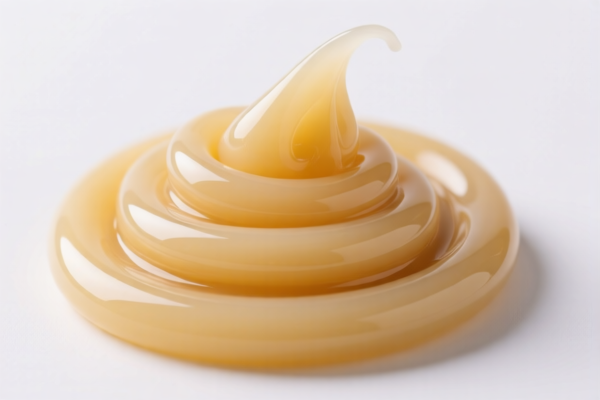
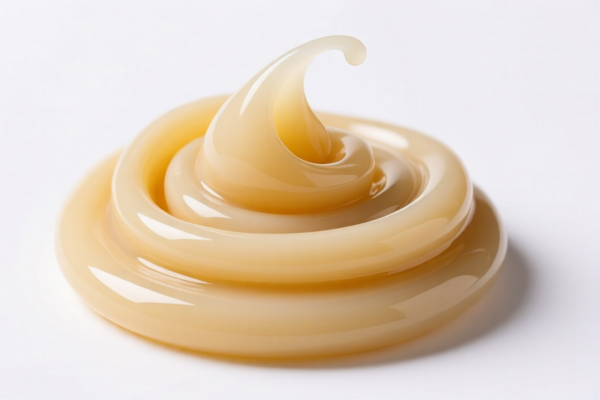
AI分析
🌿 Soybean Lecithin (Soy Lecithin)
🌐 HS Code Reference & Customs Clearance Guide | 2026 Latest Tariff Analysis | Professional Clearance Strategy
📌 I. Product Definition & Classification: Do You Really Understand "Soybean Lecithin"?
Soybean Lecithin, a natural emulsifier extracted from soybeans, is a critical ingredient in food, pharmaceutical, and industrial applications. In international trade, its classification depends heavily on its physical state, purity level, and intended use. Misclassification can lead to significant tariff discrepancies due to the complex US-China trade tariff structure.
⚠️ Key Distinction Points:
- Is it a pure chemical/organic compound (Chapter 29)? → Highest Tax Burden - Is it treated as a protein isolate/derivative (Chapter 35)? → Moderate Tax Burden - Is it used as a food additive/blend (Chapter 21)? → Specific Duty + Ad Valorem
📦 II. HS Code Classification Details (2026 Latest Tariff Authority Comparison)
| HS Code | Product Description | Application Scenario | Chemical/Nutritional Category |
|---|---|---|---|
2923.20.20.50 |
Soybean Lecithin, meets phospholipid & phosphatidylamide material requirements, not organic certified | High-purity industrial/pharma grades, non-organic source | Organic Compound / Phospholipid |
2923.20.20.10 |
Soybean Lecithin, meets core phospholipid composition & soybean origin attributes | Standard food-grade or industrial-grade lecithin, certified soy source | Organic Compound / Phospholipid |
3504.00.10.00 |
Lecithin as a lipid substance, falls under protein isolates & derivatives category (nutrition/chemistry scope) | Treated as a protein derivative/nutritional supplement ingredient | Protein Isolate / Derivative |
2106.90.09.00 |
Soybean Lecithin as a food preparation, falls under dairy derivatives & fat extract scope | Food additive blends, processed food ingredients | Food Preparation / Fat Extract |
🔍 Key Reminder:
- The choice of HS Code dramatically affects the Total Tax Rate (from 22.5% to 86.2¢/kg + 10%); - If the product is strictly defined by its chemical structure (Phospholipids), it leans toward Chapter 29; - If it is primarily valued for its nutritional/functional food properties, it may lean toward Chapter 35 or Chapter 21.
💰 III. 2026 Latest Tariff Rate Breakdown (Including Additional Taxes, Policy Surcharges)
✅ Applicable Country: USA (US)
✅ Country of Origin: China (CN)
✅ Effective Date: From November 10, 2025 (including subsequent imports)
🎯 1. 2923.20.20.50 & 2923.20.20.10 —— Soybean Lecithin (Organic/Chemical Category)
These two codes cover lecithin classified strictly as an organic chemical product (Phospholipids).
| Item | Content |
|---|---|
| Base Tariff | 5.0% (Ad Valorem) |
| Section 301 Additional Tariff | +25.0% |
| Section 122 Tariff | +10.0% |
| Total Tax Rate | 40.0% |
| Tax Calculation | CIF Value × 40% |
| De Minimis Exemption | ❌ Not Available |
| Legal Basis Path | USITC:2923.20.20 → Section 301: 25% → Section 122: 10% |
📌 Explanation:
- "Base Tariff 5%": Standard Most Favored Nation (MFN) rate for Chapter 29 organic chemicals. - "Section 301 Additional Tariff 25%": The standard trade war tariff on Chinese goods in this category. - "Section 122 Tariff 10%": Additional surcharge under Section 122 (often related to national security or specific commodity shortages). - Combined Total: 40%. This is a high tariff burden. Importers must account for this in cost modeling.
🎯 2. 3504.00.10.00 —— Lecithin (Protein Isolate/Derivative Category)
This classification treats lecithin as a protein derivative or nutritional isolate rather than a pure organic chemical.
| Item | Content |
|---|---|
| Base Tariff | 5.0% (Ad Valorem) |
| Section 301 Additional Tariff | +7.5% |
| Section 122 Tariff | +10.0% |
| Total Tax Rate | 22.5% |
| Tax Calculation | CIF Value × 22.5% |
| De Minimis Exemption | ❌ Not Available |
| Legal Basis Path | USITC:3504.00.10 → Section 301: 7.5% → Section 122: 10% |
📌 Note:
- This is a significant cost saver compared to Chapter 29 (40% vs 22.5%); - Applicable if the product is processed/sold specifically as a protein isolate or nutritional supplement ingredient; - Requires strong technical documentation proving it falls under "protein isolates and derivatives" rather than pure phospholipids.
🎯 3. 2106.90.09.00 —— Soybean Lecithin (Food Preparation Category)
This classification views lecithin as a food preparation or fat extract.
| Item | Content |
|---|---|
| Base Tariff | 86.2¢/kg (Specific Duty) |
| Section 301 Additional Tariff | 0.0% |
| Section 122 Tariff | +10.0% |
| Total Tax Structure | 86.2¢/kg + 10% Ad Valorem |
| Tax Calculation | (Weight in kg × $0.862) + (CIF Value × 10%) |
| De Minimis Exemption | ❌ Not Available |
| Legal Basis Path | USITC:2106.90.09 → Section 122: 10% |
📌 Important:
- This is a hybrid tariff (Specific + Ad Valorem); - Section 301 is 0% in this specific subheading, which is unusual but applicable here due to the "Food Preparation" classification; - For high-volume, low-value shipments, the Specific Duty (86.2¢/kg) may dominate; for high-value pharmaceutical-grade lecithin, the 10% Ad Valorem becomes significant; - Section 122 (10%) still applies.
🛠️ IV. Customs Clearance Practical Advice (Real-World Pitfall Avoidance)
✅ 1. Required Documentation Checklist (Non-Negotiable)
| Document | Mandatory | Explanation |
|---|---|---|
| ✅ Product Specification Sheet | ✔️ | Must detail phospholipid content, source (soy), and processing method. |
| ✅ COA (Certificate of Analysis) | ✔️ | Proves chemical composition to support HS Code choice (e.g., Phospholipid % vs. Protein %). |
| ✅ Organic Certification (if claimed) | ✔️ | If claiming 2923.20.20.50, explicitly state "Non-Organic". If organic, different codes may apply. |
| ✅ Commercial Invoice | ✔️ | Clearly describe as "Soybean Lecithin, Food Grade/Industrial Grade, for Emulsification". |
| ✅ Packing List | ✔️ | Include net/gross weight for Specific Duty calculation (if using 2106.90.09.00). |
| ✅ Supplier Declaration | ✔️ | Confirm no prohibited additives or contaminants. |
✅ 2. Declaration Tips (Key Mantras)
🔥 "Know Your Category: Chemical 40%, Protein 22.5%, Food Hybrid Specifics!"
| Scenario | Correct Declaration | Wrong Practice |
|---|---|---|
| Pure Pharmaceutical/Industrial Grade | 2923.20.20.10 or .50 |
Misdeclare as Food Additive → Risk of Audit & Back-Tax |
| Nutritional Supplement Ingredient | 3504.00.10.00 |
Misdeclare as Chemical → Overpay 17.5% Tax |
| General Food Emulsifier | 2106.90.09.00 |
Misdeclare as Chemical → Overpay 30% Tax |
| Bulk Liquid vs. Powder | Specify State in Docs | Ambiguous description → Delayed Clearance |
✅ 3. Special Case Handling
| Situation | Handling Advice |
|---|---|
| High-Phospholipid Content (>90%) | Lean towards Chapter 29 (2923.20...) unless specific protein derivative proof is provided. |
| Blended Lecithin (with other oils) | If it's a blend for food use, Chapter 21 (2106.90...) may be more appropriate, but ensure it's not "pure" lecithin. |
| Organic Certification | If Organic, ensure the summary matches. 2923.20.20.50 explicitly excludes organic. Organic products may have different HS codes (e.g., under 2106 or specific organic chapters). |
| Section 122 Impact | Regardless of HS Code, 10% Section 122 applies to most of these entries. Factor this into all cost calculations. |
🌍 V. Global Major Market Clearance Comparison (2026 Latest)
| Country/Region | Recommended HS Code | Tariff Structure | Certification Requirements | Notes |
|---|---|---|---|---|
| 🇺🇸 USA | 2923.20.20.10 / 3504.00.10.00 / 2106.90.09.00 |
22.5% – 40% + Section 122 | FDA Registration + COA | Highest Tariff Burden due to Section 301 & 122. |
| 🇨🇳 China | 2923.20.20 |
5% - 7% | N/A | No additional trade war tariffs for domestic consumption. |
| 🇪🇺 EU | 2106.90 or 3504 |
0% - 5% | EFSA Compliance | No Section 301/122 equivalent. Lower barrier. |
| 🇬🇧 UK | 2106.90 |
0% - 5% | FSA Compliance | Post-Brexit tariffs generally low for food ingredients. |
| 🇯🇵 Japan | 2106.90 |
0% - 3% | FSLF Compliance | Low tariffs, strong quality standards. |
📌 Conclusion:
- USA is the most expensive market for Soybean Lecithin due to Section 301 (25% or 7.5%) and Section 122 (10%); - Strategic Recommendation: If possible, justify Chapter 35 (3504.00.10.00) to reduce total tax to 22.5% instead of 40%; - Documentation is Critical: The difference between 22.5% and 40% depends entirely on how you define the product's chemical vs. nutritional nature.
📌 VI. Common Errors & Pitfall Avoidance (Lessons Learned)
❌ Error 1: Declaring Pharmaceutical-grade Lecithin as a Food Additive (2106.90.09.00)
👉 Consequence: Customs may reject it if purity specs don't match "food preparation," leading to delayed release or reclassification to Chapter 29 (40%).
❌ Error 2: Ignoring Section 122 Tariff
👉 Consequence: Underestimating costs by 10% across all categories. Every shipment must include this in the Landed Cost model.
❌ Error 3: Confusing Organic vs. Non-Organic
👉 Consequence: 2923.20.20.50 is for non-organic. If you ship organic, you may be misclassified, leading to penalties or audits.
✅ Correct Approach:
"Soybean Lecithin, Food Grade, Non-Organic, Phospholipid Content 70%, For Use as Emulsifier in Confectionery."
🎯 VII. Conclusion: Professional Declaration, Cost Savings, Efficiency!
🎯 Remember the Mantra:
🔹 "Chemical 40%, Protein 22.5%, Food Hybrid Specifics!"
🔹 "Section 122 is 10% everywhere! Don't forget it!"
🔹 "Define your product: Is it a chemical or a food ingredient?"
📌 Pro Tip:
If your Soybean Lecithin is high-purity (Pharmaceutical Grade), stick to Chapter 29 but ensure all documentation supports the "Organic Compound" definition to avoid misclassification claims.
If it is Food Grade, consider arguing for Chapter 35 to save 17.5% in tariffs, provided you have technical justification (protein isolate status).
📣 Immediate Action:
📞 Contact a professional customs broker + Provide COA + Decide on HS Code Strategy (Chemical vs. Protein vs. Food)
🚀 Clear your Soybean Lecithin smoothly, control costs, and maximize margins!
✨ Professional Clearance Starts with Precise Classification!
💼 Every Cent of Tariff Saved is Pure Profit!
用户评价
关于 HS 编码归类
协调制度(HS)是由世界海关组织(WCO)制定的国际贸易商品分类标准。全球 200 多个国家采用 HS 系统作为海关关税、贸易统计和进出口监管的基础。
每个 HS 编码遵循以下层级结构:
- 章(2 位)——商品大类(例如:第 84 章:机器和机械设备)
- 品目(4 位)——章内的更具体分类
- 子目(6 位)——国际通用细分,所有 WCO 成员国统一使用
- 本国细分(8-10 位)——各国自行扩展的细分编码,如美国 HTSUS 10 位编码
正确的 HS 编码归类对于顺利通关、准确缴纳关税和遵守贸易法规至关重要。错误归类可能导致海关延误、多缴关税或罚款。
从CN进口到US时,适用的关税税率可能包括:
- 最惠国(MFN)税率——适用于 WTO 成员国的标准关税税率
- 普通税率——适用于无贸易协定国家
- 贸易救济关税——附加关税,如 301 条款(反倾销)、232 条款(国家安全)或反补贴税
本页内容仅供参考。如需正式归类,请咨询当地海关或持牌报关代理。