Spark Ignition Reciprocating Internal Combustion Engine Parts
CN → US| HS编码 | 关税税率 | 原产国 | 目的国 | 文档 |
|---|---|---|---|---|
| 8409915081 | 37.5% | CN | US | 官方文档 |
| 8409911040 | 35.0% | CN | US | 官方文档 |
商品图片
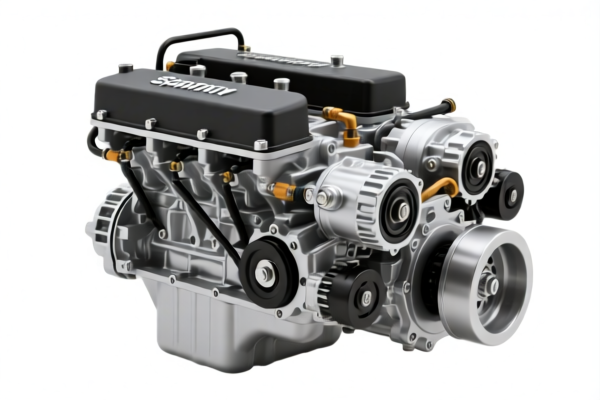
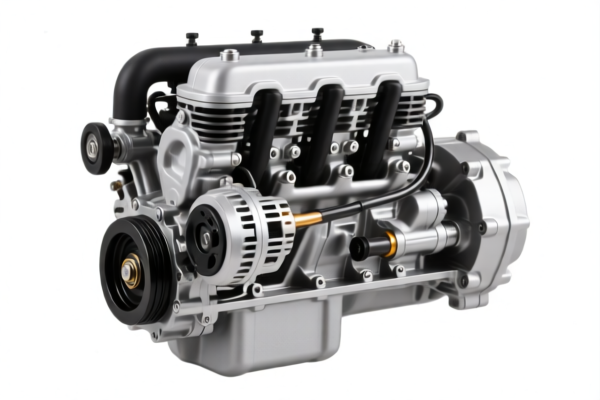
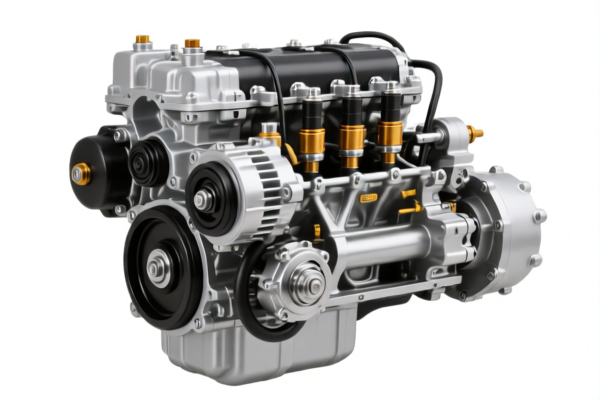
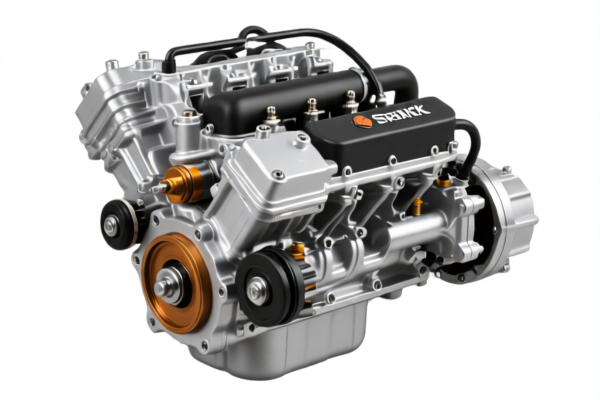
AI分析
🚛 Spark Ignition Reciprocating Internal Combustion Engine Parts
🌐 HS Code Reference & Customs Clearance Guide | 2026 Latest Tariff Analysis | Professional Clearance Strategy
📌 I. Product Definition & Classification: Do You Understand "Engine Parts"?
Spark Ignition Reciprocating Internal Combustion Engine Parts are components designed exclusively or principally for use with engines falling under Heading 8407 or 8408 (specifically Spark-Ignition Piston Engines). In international trade, these parts are strictly categorized based on material, manufacturing stage, and specific vehicle application.
Key Distinctions: 1. Steel Forgings: Precision-machined steel components typically installed in heavy-duty or specific light-duty vehicles (Subheadings 8701.21–8701.29, 8702–8704). 2. Cast-Iron Blocks/Heads (Basic Finish): Cast-iron parts that have only undergone basic cleaning and machining to remove fins, gates, sprues, and risers, or to permit location in finishing machinery. These are also designated for vehicles in Subheadings 8701.21–8701.29, 8702–8704.
⚠️ Critical Classification Point:
- If the part is a Steel Forging installed in the specified vehicle categories →归入 8409.91.50.81
- If the part is a Cast-Iron Component (only cleaned/machined for removal of casting artifacts) →归入 8409.91.10.40
- Exclusion: Parts not suitable for the specified vehicle subheadings (e.g., passenger cars 8703) may fall under different "Other" categories, but the data below strictly covers the specified high-tariff segments.
📦 II. HS Code Classification Details (2026 Latest Tariff Authority Comparison)
| HS Code | Product Description | Applicable Vehicle Scope | Material/Processing State |
|---|---|---|---|
8409.91.50.81 |
Other Steel Forgings | Vehicles of Subheadings 8701.21, 8701.22, 8701.23, 8701.24, 8701.29, or Heading 8702, 8703, 8704 | Steel Forgings |
8409.91.10.40 |
Cast-iron parts (basic cleaning/machining only) | Vehicles of Subheadings 8701.21, 8701.22, 8701.23, 8701.24, 8701.29, or Heading 8702, 8703, 8704 | Cast-Iron (Cleaned/Machined only) |
🔍 Key Reminder:
- Both codes apply specifically to Spark-Ignition Internal Combustion Piston Engines (including rotary engines).
- The vehicle scope is limited to 8701.21–8701.29 (Motor vehicles for the transport of ten or more persons), 8702 (Motor vehicles for transport of goods), and 8703 (Other motor vehicles for transport of persons), 8704 (Motor vehicles for transport of goods).
- Misclassification Risk: Applying these codes to engines for passenger cars not in the specified subheadings (e.g., standard 8703.10/11/19 if excluded by local tariff notes) or non-specified vehicles may lead to incorrect duty assessments.
💰 III. 2026 Latest Tariff Rate Details (Including Additional Duties)
✅ Applicable Country: United States (US)
✅ Origin: China (CN) (Implied by the 25% additional duty structure typical of US-China trade disputes)
✅ Effective Time: Current tariff regime
🎯 1. 8409.91.50.81 —— Steel Forgings for Spark-Ignition Engines
| Item | Content |
|---|---|
| Base Tariff Rate | 2.5% (Ad Valorem) |
| Additional Duty (Section 301) | +25.0% |
| Total Tariff Rate | 27.5% |
| Tax Calculation | CIF Value × 27.5% |
| De Minimis Exemption | ❌ Not Applicable (Standard de minimis thresholds do not typically override Section 301 duties for these HS codes) |
| Legal Basis | HTSUS 8409.91.50.81 + Section 301 List 4A/4B (depending on specific list updates) |
📌 Explanation:
- The 2.5% is the standard Most Favored Nation (MFN) base rate for engine parts.
- The 25.0% is the additional duty imposed under Section 301 of the Trade Act of 1974, targeting specific Chinese imports.
- Total: 27.5%. This is a significant cost factor that must be factored into landed cost calculations.
🎯 2. 8409.91.10.40 —— Basic Cast-Iron Parts for Spark-Ignition Engines
| Item | Content |
|---|---|
| Base Tariff Rate | 0.0% (Ad Valorem) |
| Additional Duty (Section 301) | +25.0% |
| Total Tariff Rate | 25.0% |
| Tax Calculation | CIF Value × 25.0% |
| De Minimis Exemption | ❌ Not Applicable |
| Legal Basis | HTSUS 8409.91.10.40 + Section 301 List |
📌 Note:
- Although the base rate is 0%, the 25% additional duty remains applicable.
- This applies strictly to cast-iron parts not advanced beyond cleaning and machined only for removing casting defects (fins, gates, sprues, risers) or for finishing machinery location.
- Caution: If the cast-iron part undergoes significant further machining (beyond basic cleaning/finishing), it may not qualify for this specific subheading and could be classified under a different "Other Parts" code with potentially different duties.
🛠️ IV. Customs Clearance Practical Advice (Avoiding Pitfalls)
✅ 1. Documentation Checklist (Mandatory)
| Document | Required | Description |
|---|---|---|
| ✅ Product Specification Sheet | ✔️ | Detail material (Steel vs. Cast-Iron), manufacturing process (Forging vs. Casting), and finish level. |
| ✅ Technical Drawings | ✔️ | Show dimensions and machining tolerance. Must prove "basic cleaning/machining only" if claiming 8409.91.10.40. |
| ✅ Certificate of Material | ✔️ | Verify material composition (e.g., ASTM steel grade, ISO cast-iron grade). |
| ✅ Commercial Invoice | ✔️ | Clearly state "Parts for Spark-Ignition Internal Combustion Engines" and specify vehicle subheading. |
| ✅ Packing List | ✔️ | List items by HS Code category if mixed. |
| ✅ Proof of Vehicle Application | ✔️ | Contract or PO indicating parts are for vehicles in 8701.21–8701.29, 8702, 8703, 8704. |
✅ 2. Declaration Tips (Key Mantras)
🔥 "Material Matters, Finish Defines, Vehicle Specifies, Duty Follows!"
| Scenario | Correct Declaration | Wrong Approach |
|---|---|---|
| Steel Forging | Use 8409.91.50.81 (27.5%) | Misdeclare as Cast-Iron → Risk of penalty |
| Basic Cast-Iron Block | Use 8409.91.10.40 (25.0%) | Declare as "Machined Part" → Higher duty risk if not qualified |
| Part for Non-Specified Vehicle | Check other subheadings under 8409.91 | Force fit into these codes → Customs rejection |
| Advanced Machined Cast-Iron | Likely 8409.91.90.xx (Different Duty) | Use 8409.91.10.40 → Incorrect classification |
📌 Critical Note:
- For 8409.91.10.40, the description "not advanced beyond cleaning" is strict. Any complex machining (e.g., precise bore finishing, thread cutting) may disqualify it.
- Ensure the vehicle subheading matches exactly (8701.21–29, 8702, 8703, 8704).
✅ 3. Special Situations
| Situation | Handling Advice |
|---|---|
| Mixed Shipment (Steel + Cast-Iron) | Separate invoices or clear line items. Do not combine under one HS Code. |
| OEM Parts for Aftermarket | Provide OEM part number and cross-reference to prove "solely or principally" use. |
| Dispute on "Machining Level" | Prepare technical reports from a metallurgist or engineer to prove the part is only "cleaned" or "basic machined." |
| Mitigating Duties | Consider supply chain diversification if possible, as Section 301 duties are persistent. Explore exclusions if applicable (though rare for engine parts). |
🌍 V. Global Market Comparison (2026 Update)
| Country/Region | Recommended HS Code | Base Duty | Additional Duty | Total Duty (China Origin) | Notes |
|---|---|---|---|---|---|
| 🇺🇸 USA | 8409.91.50.81 / 8409.91.10.40 |
2.5% / 0% | +25% | 27.5% / 25% | Section 301 applies heavily. |
| 🇨🇳 China (Export) | Same | Varies | None | 0% (Export side) | Focus on accurate HS for destination. |
| 🇪🇺 EU | 8409.91.90 (Check CN) | ~4% | None | ~4% | No Section 301 equivalent. Check EUR.1 for preferential. |
| 🇨🇦 Canada | 8409.91.90 | ~0-2.5% | None | Low | CUSMA may apply if originating. |
📌 Conclusion:
- USA is the high-cost market due to Section 301 tariffs.
- EU and other markets generally have lower or zero additional duties, making them more attractive if supply chain allows.
- Cost Impact: A $10,000 shipment to the US could face $2,500–$2,750 in duties alone.
📌 VI. Common Errors & Pitfalls (Lessons Learned)
❌ Error 1: Declaring all engine parts under one generic HS Code
👉 Consequence: Customs audit, potential penalties, and incorrect duty payment.
❌ Error 2: Misclassifying "Machined Cast-Iron" as "Basic Cast-Iron"
👉 Consequence: Underpayment of duty (25% vs higher potential rates), leading to back-taxes and fines.
❌ Error 3: Ignoring Vehicle Subheading
👉 Consequence: If parts are for a vehicle not in 8701.21–8701.29/8702–8704, the code is invalid, leading to reclassification and delay.
❌ Error 4: Assuming De Minimis Applies
👉 Consequence: Section 301 duties often apply regardless of value, so small shipments still face 25%+ duties.
✅ Correct Approach:
"Steel Forging for Truck Engine, ASTM A105, CNC Machined, for Vehicle Subheading 8701.21"
vs.
"Cast-Iron Cylinder Block, Cleaned Only, No Advanced Machining, for Vehicle Subheading 8703.10"
🎯 VII. Conclusion: Precision in Classification Saves Costs
🎯 Remember:
🔹 "Steel Forging: 27.5% | Basic Cast-Iron: 25% | Precision is Key!"
🔹 "Verify Material, Verify Finish, Verify Vehicle - Before You Declare!"
📌 Pro Tip:
- If you are importing large volumes, consider applying for an Enforcement Action Review (EAR) or checking for any current exclusions under Section 301.
- Engage a licensed customs broker to review technical drawings before shipment to avoid clearance delays.
📣 Immediate Action:
📞 Consult with a customs expert.
📄 Prepare detailed technical specs.
🚀 Ensure compliance to avoid costly delays and unexpected duties.
✨ Professional Clearance Starts with Accurate Classification!
💼 Every percentage point matters in global trade!
用户评价
关于 HS 编码归类
协调制度(HS)是由世界海关组织(WCO)制定的国际贸易商品分类标准。全球 200 多个国家采用 HS 系统作为海关关税、贸易统计和进出口监管的基础。
每个 HS 编码遵循以下层级结构:
- 章(2 位)——商品大类(例如:第 84 章:机器和机械设备)
- 品目(4 位)——章内的更具体分类
- 子目(6 位)——国际通用细分,所有 WCO 成员国统一使用
- 本国细分(8-10 位)——各国自行扩展的细分编码,如美国 HTSUS 10 位编码
正确的 HS 编码归类对于顺利通关、准确缴纳关税和遵守贸易法规至关重要。错误归类可能导致海关延误、多缴关税或罚款。
从CN进口到US时,适用的关税税率可能包括:
- 最惠国(MFN)税率——适用于 WTO 成员国的标准关税税率
- 普通税率——适用于无贸易协定国家
- 贸易救济关税——附加关税,如 301 条款(反倾销)、232 条款(国家安全)或反补贴税
本页内容仅供参考。如需正式归类,请咨询当地海关或持牌报关代理。