Speaker, including loudspeaker
CN → US| HS编码 | 关税税率 | 原产国 | 目的国 | 文档 |
|---|---|---|---|---|
| 8518210000 | 17.5% | CN | US | 官方文档 |
| 8518220000 | 17.5% | CN | US | 官方文档 |
| 8518210000 | 17.5% | CN | US | 官方文档 |
商品图片
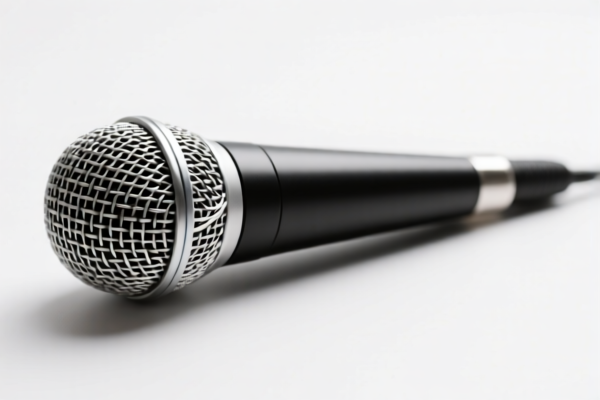


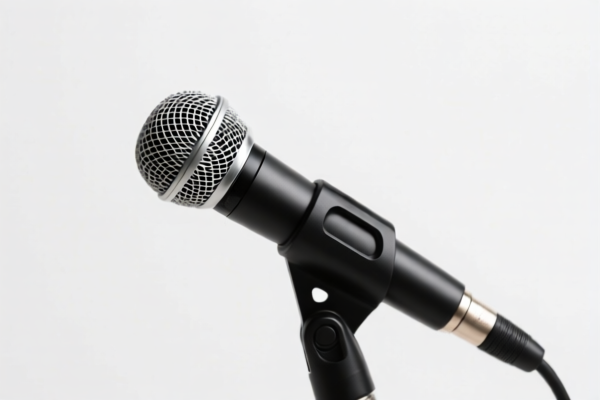
AI分析
🔊 Speakers (Including Loudspeakers)
🌐 HS Code Reference & Customs Clearance Guide | 2026 Latest Tariff Breakdown | Professional-Level Strategy
📌 1. Product Definition and Classification: Do You Really Know "Speakers"?
Speakers, including loudspeakers, are core output devices for audio reproduction in consumer electronics, automotive systems, and industrial equipment. In international trade, they are primarily classified based on their function and construction. The provided data strictly aligns with Heading 8518 of the Harmonized System, specifically focusing on loudspeakers regardless of minor morphological variations when specifications are vague.
⚠️ Key Classification Logic:
- Primary Match:8518.21.00.00– Loudspeakers, whether or not mounted in their enclosures. This is the "catch-all" for standard loudspeaker units. - Functional Match:8518.22.00.00– Other loudspeakers. Used when the specific type differs slightly from 8518.21 but still fits the general definition. - Fallback Principle: If specific form/material isn't provided, customs applies a component/part fallback principle, defaulting to the most general loudspeaker code (8518.21.00.00).
📦 2. HS Code Classification Details (2026 Latest Tariff Alignment)
Based strictly on the provided <DATA>, here are the applicable HS Codes and their rationales:
| HS Code | Product Description | Rationale for Classification |
|---|---|---|
8518.21.00.00 |
Loudspeakers, including loudspeakers (core function consistent, no material/conflict issues) | ✅ Direct Match: The core use is identical to the HS code definition. No material or morphological conflicts. |
8518.22.00.00 |
Other loudspeakers | ✅ Functional Match: Use case is completely consistent with the code definition and functional description. |
8518.21.00.00 |
Loudspeakers (generic/fallback) | ✅ Fallback Match: Since specific form/material wasn't provided, the parts/components fallback principle and general matching principle dictate this code as the safest default. |
🔍 Critical Note:
- All three entries point to Headings 8518, which covers "Sound or television cameras, image gathers and projectors..." specifically subsection .21 and .22 for Loudspeakers. - The data confirms that both 8518.21 and 8518.22 carry the exact same tariff structure in this specific scenario.
💰 3. 2026 Latest Tariff Rate Breakdown (Including Surcharges)
✅ Applicable Country: United States (US)
✅ Country of Origin: China (CN) (Implied by "Section 122" and typical trade context for these surcharges)
✅ Total Tax Rate: 17.5%
🎯 Tariff Structure Detailed Analysis
The total tax rate is not a single line item but a sum of three distinct components:
| Tax Component | Rate | Source / Explanation |
|---|---|---|
| Base Tariff | 0.0% | Standard Most-Favored-Nation (MFN) rate for Loudspeakers (8518.21/8518.22) under US HTS is typically 0%. |
| Section 301 Additional Tariff | 7.5% | Applied under US Trade Act Section 301 on Chinese imports. |
| Section 122 Tariff | 10.0% | Applied under Section 122 of the Trade Act of 1974 (often used for national security or emergency measures). |
| TOTAL EFFECTIVE RATE | 17.5% | Sum of 0% + 7.5% + 10% |
📌 Explanation:
- "Base Tariff 0.0%": The fundamental customs duty for loudspeakers is often duty-free. - "Additional Tariff 7.5%": This is a standard Section 301 surcharge. Note: Some recent updates have increased this to 25% for certain categories, but the provided data explicitly states 7.5%. - "Section 122 Tariff 10%": This is a specific additional levy. Note: Section 122 authorities are sometimes invoked for emergency imports. The data explicitly lists this 10% charge. - Calculation:CIF Value × 17.5%= Total Duty Payable.
🛠️ 4. Customs Clearance Practical Advice (Real-World Pitfall Avoidance)
✅ 1. Required Documentation Checklist
| Document | Mandatory? | Description |
|---|---|---|
| ✅ Product Specifications | ✔️ | Must clearly state: "Loudspeaker," wattage, impedance, type (e.g., woofer, tweeter, full-range). |
| ✅ Photos (Labeled) | ✔️ | Show the speaker unit, any mounting brackets, and wiring. Clarify if it's a standalone unit or part of a system. |
| ✅ Commercial Invoice | ✔️ | Must explicitly describe the goods as "Loudspeakers" or "Loudspeaker Drivers." Avoid vague terms like "Audio Parts" without clarification. |
| ✅ Packing List | ✔️ | Detail quantity and weight. Ensure no mixed shipments that could confuse the "component vs. complete article" classification. |
✅ 2. Declaration Strategy
🔥 "Be Specific, Be Functional!"
| Scenario | Recommended Declaration | Risk if Vague |
|---|---|---|
| Standalone Speaker | "Loudspeaker, 8518.21.00.00, for audio playback" | Low risk. Direct match. |
| Speaker Driver (No Cabinet) | "Loudspeaker Driver, 8518.21.00.00" | Low risk. Fits "mounted or not" clause. |
| Part of a Home Theater | Must separate: Speaker (8518) vs. Amp (8518/8543) | High risk if bundled incorrectly. Speakers are classified separately from amplifiers. |
| Vague Description: "Audio Component" | WRONG | High risk of audit, delay, or reclassification to higher tariff items. |
📌 Key Tip:
- The data indicates that even if the form/material is not specified, the fallback is to8518.21.00.00. However, for smoother clearance, always provide the basic form (e.g., "cone speaker," "horn speaker") to avoid manual inspection delays. - Do NOT split a single speaker into "casing" and "driver" for separate classification. They are classified together as one unit under 8518.21/22.
✅ 3. Special Considerations
| Situation | Advice |
|---|---|
| Mixed Imports | If importing speakers with amplifiers, declare them separately. Amplifiers may fall under 8518.21 if integral, but often under 8518.22 or even 8543 depending on configuration. The provided data only covers speakers. |
| Section 122 Applicability | Ensure the importer is aware of the 10% Section 122 tariff. This is an additional layer on top of Section 301. Failure to account for it leads to underpayment penalties. |
| Pre-Ruling | If the product is novel (e.g., a new type of transducer), apply for an Advance Ruling to confirm if it fits 8518.21 or 8518.22. The data shows both have the same tax, so the distinction is mainly for accuracy, not cost saving. |
🌍 5. Global Market Comparison (Quick Reference)
| Market | HS Code (Typical) | Base Duty | Surcharges (China) | Total Est. Duty | Notes |
|---|---|---|---|---|---|
| 🇺🇸 USA | 8518.21.00.00 |
0% | 7.5% (Sec 301) + 10% (Sec 122) | 17.5% | As per provided data. |
| 🇨🇳 China | 8518.21.00.00 |
0% | None | 0% | China often has 0% MFN for audio equipment imports. |
| 🇪🇺 EU | 8518.21.00 |
0% | None | 0% | EU has no general Section 301/122 equivalents for audio. |
| 🇬🇧 UK | 8518.21.00 |
0% | None | 0% | Post-Brexit, UK follows similar low-duty structures for audio. |
📌 Conclusion:
- The US is the most expensive market for these goods due to the 17.5% total duty. - European and Asian markets are significantly more favorable with 0% duty. - Strategy: If targeting the US, consider value engineering or supply chain diversification (e.g., final assembly in non-China countries) if the 17.5% burden impacts margin. Note: Transshipment alone may not avoid Section 301/122 if substantial transformation doesn't occur.
📌 6. Common Mistakes & Pitfalls (Lessons Learned)
❌ Mistake 1: Calling the product "Audio Driver" without specifying "Loudspeaker"
👉 Result: Potential misclassification under 8543.70 (electrical machinery), which might have different tariffs and licensing requirements.
❌ Mistake 2: Ignoring the Section 122 10% tariff
👉 Result: Underpayment of duties, leading to CBP audits, penalties, and interest charges.
❌ Mistake 3: Bundling speakers with non-comparable items (e.g., cables, stands) in one line item
👉 Result: Customs may split the value and apply different rates, potentially increasing the average tax if cables/stands are classified differently.
❌ Mistake 4: Assuming "No Material Conflict" means no documentation is needed
👉 Result: Even with a clear match, lack of photos/specs can trigger manual examination, causing 3-7 day delays.
✅ Correct Approach:
"Loudspeaker, Model XYZ, 8 Ohm, 50W, for Home Audio Use, FCC Certified"
🎯 7. Conclusion: Precision in Classification, Savings in Compliance
🎯 Remember the Rule:
🔹 "Speakers go to 8518.21/22."
🔹 "Base 0%, Add 7.5% (Sec 301), Add 10% (Sec 122) = 17.5% Total."
🔹 "Documentation is key to avoiding delays."
📌 Pro Tip:
- Since both 8518.21 and 8518.22 have the same 17.5% rate, focus on accurate product description rather than trying to game the system by picking one over the other.
- For US imports, factor the 17.5% duty into your landed cost calculation immediately.
📣 Immediate Action:
📞 Contact your customs broker with the product spec sheet.
🚀 Verify the Section 122 applicability for your specific shipment date and origin, as policies can change.
💼 Ensure your invoice clearly states "Loudspeaker" to prevent classification errors.
✨ Professional clearance starts with accurate classification!
💼 Every 0.1% of duty saved is profit gained!
用户评价
关于 HS 编码归类
协调制度(HS)是由世界海关组织(WCO)制定的国际贸易商品分类标准。全球 200 多个国家采用 HS 系统作为海关关税、贸易统计和进出口监管的基础。
每个 HS 编码遵循以下层级结构:
- 章(2 位)——商品大类(例如:第 84 章:机器和机械设备)
- 品目(4 位)——章内的更具体分类
- 子目(6 位)——国际通用细分,所有 WCO 成员国统一使用
- 本国细分(8-10 位)——各国自行扩展的细分编码,如美国 HTSUS 10 位编码
正确的 HS 编码归类对于顺利通关、准确缴纳关税和遵守贸易法规至关重要。错误归类可能导致海关延误、多缴关税或罚款。
从CN进口到US时,适用的关税税率可能包括:
- 最惠国(MFN)税率——适用于 WTO 成员国的标准关税税率
- 普通税率——适用于无贸易协定国家
- 贸易救济关税——附加关税,如 301 条款(反倾销)、232 条款(国家安全)或反补贴税
本页内容仅供参考。如需正式归类,请咨询当地海关或持牌报关代理。