Speaker Box
CN → US| HS编码 | 关税税率 | 原产国 | 目的国 | 文档 |
|---|---|---|---|---|
| 8543709810 | 37.6% | CN | US | 官方文档 |
| 8543709860 | 37.6% | CN | US | 官方文档 |
| 8518210000 | 17.5% | CN | US | 官方文档 |
| 8518220000 | 17.5% | CN | US | 官方文档 |
| 8543709810 | 37.6% | CN | US | 官方文档 |
商品图片
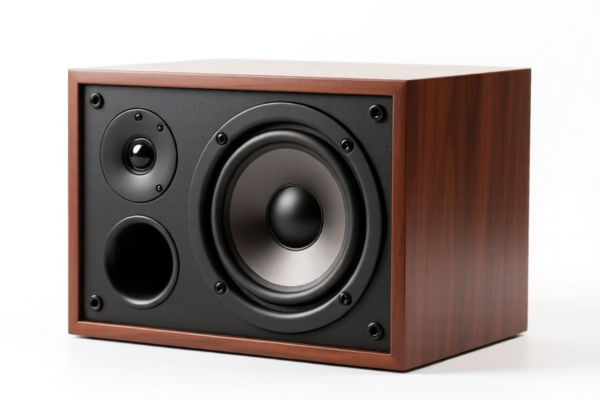
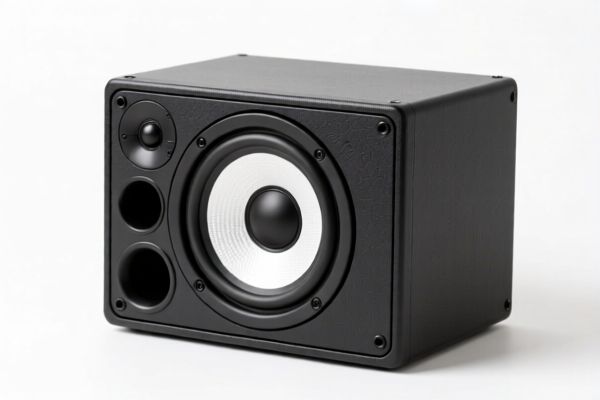
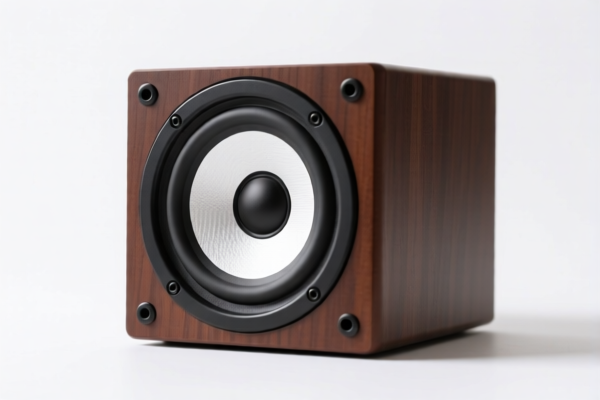
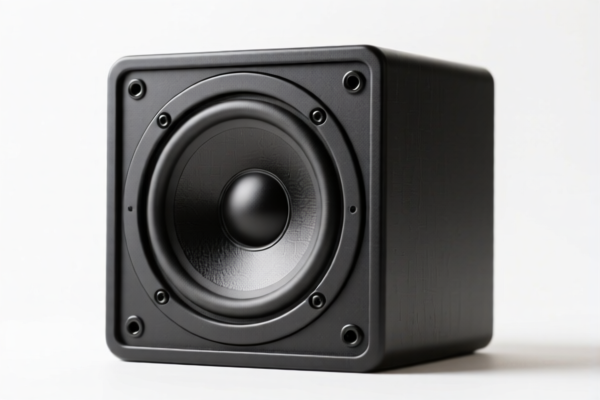
AI分析
🔊 Speaker Box (Audio Output Devices)
🌐 HS Code Reference & Customs Clearance Guide | 2024-2025 Latest Tariff Analysis | Professional Strategy
📌 I. Product Definition & Classification: Do You Really Understand "Speaker Boxes"?
A Speaker Box, in international trade, is generally categorized as an electro-acoustic device. Its classification depends heavily on its specific structure and functional independence. It is broadly divided into two main categories in customs classification:
Integrated Speakers (Complete Units): Devices with speakers installed in cabinets/enclosures, often with amplification circuits. Discrete Electro-Acoustic Equipment: Standalone audio output devices that may function independently or as part of a larger system, sometimes classified under "other machines."
⚠️ Key Distinction Point:
- If it is a standard speaker unit installed in a cabinet/box → It typically falls under Chapter 8518 (Speakers, Headphones, etc.).
- If it is a specialized audio output device with independent functionality or strongly associated with amplifiers → It may be classified under Chapter 8543 (Other electrical machines and apparatus).
📦 II. HS Code Classification Details (Latest Tariff Authority Comparison)
Based on the provided data, here are the four specific HS Codes for "Speaker Box" and their corresponding tax implications:
| HS Code | Product Description & Rationale | Applicable Scenario | Key Classification Feature |
|---|---|---|---|
8543.70.98.60 |
Speaker belongs to electro-acoustic equipment with independent functionality, classified as other machines/apparatus. | Specialized audio output devices, non-standard speakers | Independent function, not standard cabinet speaker |
8518.21.00.00 |
Speaker as a loudspeaker category, fitting the structure of speakers installed in a cabinet. | Standard box speakers, cabinet-mounted speakers | Speaker unit + Cabinet/Enclosure |
8543.70.98.10 |
Speaker as an audio output device, with strong关联性 (association) and co-existence with amplifiers. | Active speakers, integrated amp+speaker units | Audio output + Amplifier association |
8518.22.00.00 |
Speaker box contains speaker units, fitting the classification description of speakers installed in machine shells. | General cabinet speakers, shell-mounted units | Speaker unit + Machine Shell/Cabinet |
🔍 Important Note:
- Chapter 8518 (8518.21.00.00&8518.22.00.00) is for standard speakers installed in cabinets/shells.
- Chapter 8543 (8543.70.98.60&8543.70.98.10) is for other electro-acoustic machines, often involving independent functionality or amplifier integration.
- Tax rates vary significantly between these codes due to different tariff treatment (Base vs. Section 122 vs. Retaliatory tariffs).
💰 III. 2024-2025 Latest Tariff Rate Breakdown (Including Surcharge Policies)
✅ Applicable Country: United States (US)
✅ Origin: China (CN)
✅ Effective Time: Current trade war tariffs (Section 301 & IEEPA)
🎯 1. 8543.70.98.60 & 8543.70.98.10 – High Tariff Scenario
| Item | Content |
|---|---|
| Base Tariff | 2.6% (ad valorem) |
| Section 301 Surcharge | +25.0% (Retaliatory tariff) |
| Section 122 Tariff | +10.0% (Specific provision for certain electrical goods) |
| Total Tariff Rate | 37.6% |
| Tax Calculation | CIF Value × 37.6% |
| De Minimis Exemption | ❌ Not Eligible (High tariff items excluded) |
| Legal Basis | Standard USITC Schedule + Section 301 Footnotes + Section 122 |
📌 Explanation:
- These codes are classified under 8543, which is treated more strictly.
- The 25% Section 301 tariff applies to many Chinese-made electronic components and devices.
- The 10% Section 122 tariff is an additional safeguard duty.
- Total: 37.6% – This is a very high cost for importers. Must be factored into pricing.
🎯 2. 8518.21.00.00 & 8518.22.00.00 – Lower Tariff Scenario
| Item | Content |
|---|---|
| Base Tariff | 0.0% (ad valorem) |
| Section 301 Surcharge | +7.5% (Reduced rate for certain audio equipment) |
| Section 122 Tariff | +10.0% |
| Total Tariff Rate | 17.5% |
| Tax Calculation | CIF Value × 17.5% |
| De Minimis Exemption | ❌ Not Eligible |
| Legal Basis | Standard USITC Schedule + Section 301 (Excluded/Lower rate) + Section 122 |
📌 Important:
- These codes are classified under 8518 (Speakers), which often benefits from lower Section 301 rates (7.5% vs. 25%).
- The base tariff is 0%, significantly reducing the overall tax burden.
- Total: 17.5% – This is much more competitive for clearing goods.
- Recommendation: If your speaker box fits the definition of "speaker installed in a cabinet," aim for 8518 codes to save 20.1% in tariffs.
🛠️ IV. Customs Clearance Practical Advice (Avoid Pitfalls)
✅ 1. Document Checklist (All Required)
| Document | Required | Description |
|---|---|---|
| ✅ Product Spec Sheet | ✔️ | Must clearly state: Is it a speaker only? Does it include an amplifier? Is it in a cabinet? |
| ✅ Circuit Diagram | ✔️ | Critical for determining if it's "8543" (active/amp-integrated) or "8518" (passive speaker in cabinet) |
| ✅ Product Photos | ✔️ | Show the exterior (cabinet/shell), internal structure, and labels |
| ✅ Commercial Invoice | ✔️ | Must accurately describe the product as "Speaker Box" or "Audio Output Device" |
| ✅ Packing List | ✔️ | Detail components to avoid拆分申报 (split declaration) issues |
✅ 2. Classification Strategy (Key Tips)
🔥 "Cabinet = 8518 (17.5%), Independent/Amp = 8543 (37.6%)"
| Scenario | Correct HS Code | Tax Rate | Risk |
|---|---|---|---|
| Standard speaker in a wooden/plastic box | 8518.21.00.00 or 8518.22.00.00 |
17.5% | Low if structure is clear |
| Active speaker with built-in amp & power | 8543.70.98.10 |
37.6% | High tax, may be reclassified if amp is separate |
| Standalone audio output device (no cabinet) | 8543.70.98.60 |
37.6% | High tax, strict scrutiny |
| Loose speaker unit (no box) | Not applicable in this data | N/A | May fall under different headings |
✅ 3. Special Cases & Handling
| Situation | Recommendation |
|---|---|
| Active vs. Passive | If the speaker has a built-in amplifier, customs may classify it under 8543. Ensure your spec sheet clarifies this. |
| OEM/Custom Cabinets | Provide design drawings to prove it's a "cabinet" for a speaker, not a standalone machine. |
| Mixed Shipments | Do not mix 8518 and 8543 products in one HS code line. Declare separately. |
| Pre-Ruling | Strongly Recommended: Apply for an Advance Ruling from US Customs if the classification is ambiguous. Saves costly delays. |
🌍 V. Global Market Comparison (2024-2025)
| Country/Region | Recommended HS Code | Tariff (CN Origin) | Certifications | Notes |
|---|---|---|---|---|
| 🇺🇸 USA | 8518.21.00.00 |
17.5% | FCC + RoHS | Lowest among options; prefer 8518 over 8543 |
| 🇺🇸 USA | 8543.70.98.60 |
37.6% | FCC + RoHS | High tariff; avoid if possible |
| 🇨🇳 China | 8518.21.00.00 |
3.5% | CCC | Lower base tariff |
| 🇪🇺 EU | 8518.21.00.00 |
4.0% | CE + RoHS | No Section 301/122 surcharges |
| 🇦🇺 Australia | 8518.21.00.00 |
5.0% | RCM | Standard rate |
📌 Conclusion:
- The USA is the most challenging market due to Section 301 and Section 122 tariffs.
- Choosing the right HS Code (8518 vs. 8543) can save you 20.1% in taxes.
- Ensure your product description matches the 8518 definition ("speaker installed in a cabinet") to qualify for the lower rate.
📌 VI. Common Mistakes & Pitfalls (Lessons Learned)
❌ Mistake 1: Classifying an active speaker with built-in amp as a passive speaker (8518).
👉 Consequence: Customs may reclassify to 8543 → Back-taxes of 20.1% + penalties.
❌ Mistake 2: Describing the product vaguely as "Audio Equipment" without specifying structure.
👉 Consequence: Customs assumes worst-case scenario → 37.6% rate.
❌ Mistake 3: Ignoring the 10% Section 122 tariff in calculations.
👉 Consequence: Underestimating landed cost → Profit margin erosion.
✅ Correct Approach:
"Passive Speaker Box, Wooden Cabinet, Driver Unit Model XYZ, No Built-in Amplifier, FCC Certified"
→ Target HS Code:8518.21.00.00→ Tax: 17.5%
🎯 VII. Conclusion: Precise Classification, Cost Optimization
🎯 Key Takeaway:
🔹 "Cabinet Structure = 17.5% | Independent/Amp = 37.6%"
🔹 "Prove the Cabinet, Save 20%!"
🔹 "Document the Circuit, Avoid Re-Classification!"
📌 Pro Tip:
If your product is not of Chinese origin (e.g., Vietnam, Mexico), Section 301 tariffs do not apply. The tax rate may drop to just the base + Section 122 (if applicable).
Action:
📞 Consult a licensed customs broker.
📄 Provide detailed technical specs.
🚀 Clear customs smoothly, maximize profit!
✨ Professional Clearance Starts with Accurate Classification!
💼 Every Percent Counts!
用户评价
关于 HS 编码归类
协调制度(HS)是由世界海关组织(WCO)制定的国际贸易商品分类标准。全球 200 多个国家采用 HS 系统作为海关关税、贸易统计和进出口监管的基础。
每个 HS 编码遵循以下层级结构:
- 章(2 位)——商品大类(例如:第 84 章:机器和机械设备)
- 品目(4 位)——章内的更具体分类
- 子目(6 位)——国际通用细分,所有 WCO 成员国统一使用
- 本国细分(8-10 位)——各国自行扩展的细分编码,如美国 HTSUS 10 位编码
正确的 HS 编码归类对于顺利通关、准确缴纳关税和遵守贸易法规至关重要。错误归类可能导致海关延误、多缴关税或罚款。
从CN进口到US时,适用的关税税率可能包括:
- 最惠国(MFN)税率——适用于 WTO 成员国的标准关税税率
- 普通税率——适用于无贸易协定国家
- 贸易救济关税——附加关税,如 301 条款(反倾销)、232 条款(国家安全)或反补贴税
本页内容仅供参考。如需正式归类,请咨询当地海关或持牌报关代理。