Special Paper for Coding Cards
CN → US| HS编码 | 关税税率 | 原产国 | 目的国 | 文档 |
|---|---|---|---|---|
| 4823908680 | 35.0% | CN | US | 官方文档 |
| 4823906700 | 35.0% | CN | US | 官方文档 |
| 4811412100 | 35.0% | CN | US | 官方文档 |
| 8471801000 | 35.0% | CN | US | 官方文档 |
| 8542390090 | 60.0% | CN | US | 官方文档 |
商品图片
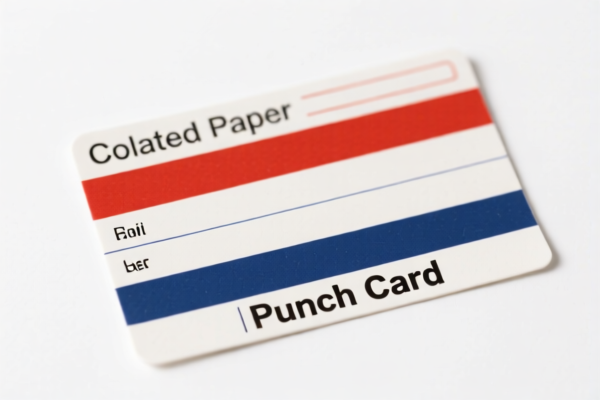
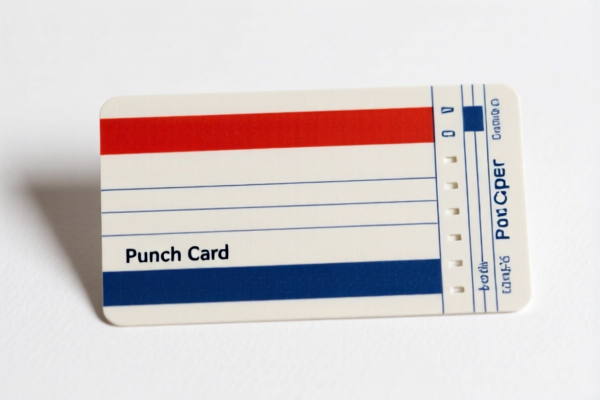
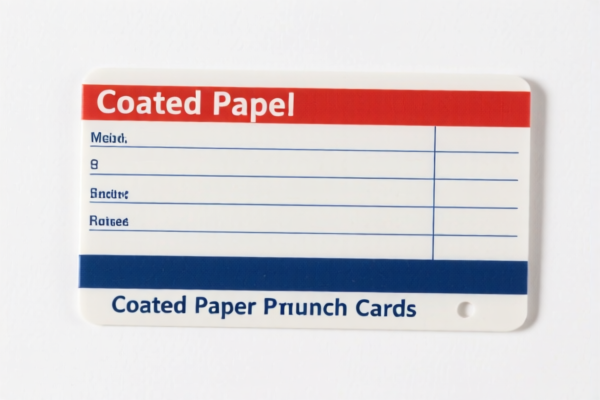
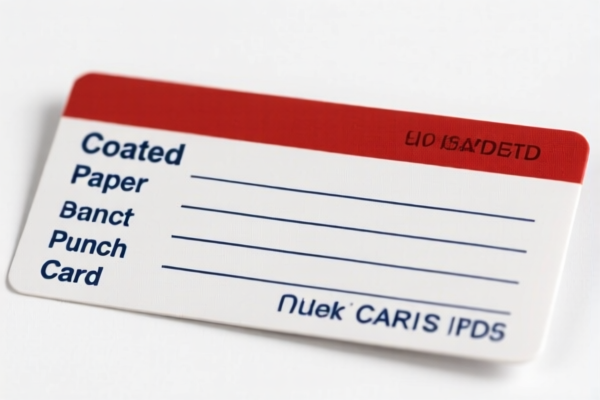
AI分析
🃏 Special Paper for Coding Cards (打码卡专用纸 / Programming Cards)
🌐 HS Code Reference & Clearance Guide | 2026 Latest Tariff Analysis | Strategic Customs Compliance
📌 I. Product Definition & Classification: What exactly is "Coding Card Paper"?
"Special Paper for Coding Cards" is a niche industrial material primarily used in the manufacturing of programming cards, smart cards, or data storage media. Depending on the specific manufacturing stage, material composition, and final application, these products fall into distinct categories under the Harmonized System (HS).
The key to accurate classification lies in distinguishing between: 1. Raw Material Stage: Paper substrates (uncoated, coated, or cut) intended for further processing. 2. Finished Component Stage: Coated or laminated paper ready for printing/adhesive application. 3. Electronic/Functional Stage: Cards integrated with circuits or designed for data processing control.
⚠️ Critical Distinction Point:
- If the product is merely paper (raw or cut) → It falls under Chapter 48 (Paper).
- If the product contains electronic circuits or functions as a data processing unit → It may fall under Chapter 84 or 85 (Machinery/Electronics).
- Misclassification can lead to severe penalties due to the high tariffs associated with US-China trade restrictions (Section 301 & IEEPA).
📦 II. HS Code Classification Details (2026 Latest Tariff Authority Match)
Based on the provided data, here are the precise classifications for "Special Paper for Coding Cards":
| HS Code | Product Description | Application/Usage | Classification Logic |
|---|---|---|---|
4823.90.86.80 |
Special Paper for Coding Cards Material: Paper Use: Dedicated for coding cards |
Raw/Processed paper substrate used in the production of coding cards. | Other Paper Articles (Chapter 48, Heading 4823) |
4823.90.67.00 |
Special Paper for Coding Cards Material: Paper Use: Cutting/Shaping |
Paper specifically cut or shaped for use in coding card manufacturing. | Other Paper Articles (Chapter 48, Heading 4823) |
4811.41.21.00 |
Special Paper for Coding Cards Material: Paper Use: Coated for Printing |
Paper coated for printing purposes, classified as Adhesive Paper & Paperboard. | Adhesive Paper & Paperboard (Chapter 48, Heading 4811) |
8471.80.10.00 |
Programming Card Use: Data Processing Equipment Control/Adaptation Unit |
Functional cards acting as control or adaptation units for data processing equipment. | Parts & Accessories of Data Processing Machines (Chapter 84, Heading 8471) |
8542.39.00.90 |
Programming Card Material: Electronic Integrated Circuit Classification: Other Integrated Circuits |
Cards containing electronic circuits, classified as Other Integrated Circuits. | Electronic Integrated Circuits (Chapter 85, Heading 8542) |
🔍 Key Insight:
- The first three HS codes (48xx) represent the paper material itself. They are subject to standard industrial tariffs.
- The last two HS codes (84xx,85xx) represent the functional electronic component. These are classified as high-tech goods and attract significantly higher penalties under current US trade policies.
💰 III. 2026 Latest Tariff Rate Breakdown (Including Additional Taxes & Policy Surcharges)
✅ Applicable Country: United States (US)
✅ Origin: China (CN)
✅ Effective Time: Current trade restrictions apply (Section 301 & IEEPA)
🎯 1. Paper Substrates (4823.90.86.80, 4823.90.67.00, 4811.41.21.00)
These codes classify the product as paper products, not electronics. However, they are still subject to significant US trade surcharges.
| Item | Content |
|---|---|
| Base Tariff | 0.0% (ad valorem) |
| Section 301 Additional Tariff | +25.0% (USITC Footnote 9903.88.01) |
| IEEPA Additional Tariff (Section 122) | +10.0% (Targeting Chinese products) |
| Total Effective Tariff | 35.0% |
| Tax Calculation | CIF Value × 35% |
| De Minimis Exemption | ❌ Not Applicable (High-risk category) |
| Legal Basis Path | USITC:4823.90.86.80 → SECTION301:Footnote9903.88.01 → IEEPA:Section122 |
📌 Explanation:
- Even though these are "paper" products, their specific use in coding/programming cards may trigger scrutiny.
- The 35% total rate is a combination of the 25% Section 301 tariff and the 10% IEEPA tariff.
- Note: If the paper is deemed a "basic commodity," some argue for 0%, but current enforcement typically applies the full 35% for specialized industrial inputs from China.
🎯 2. Functional Programming Cards (8471.80.10.00)
This code classifies the card as a part of data processing equipment.
| Item | Content |
|---|---|
| Base Tariff | 0.0% |
| Section 301 Additional Tariff | +25.0% |
| IEEPA Additional Tariff (Section 122) | +10.0% |
| Total Effective Tariff | 35.0% |
| Tax Calculation | CIF Value × 35% |
| De Minimis Exemption | ❌ Not Applicable |
| Legal Basis Path | USITC:8471.80.10.00 → SECTION301 → IEEPA:Section122 |
📌 Explanation:
- Classified as a "control or adaptation unit," it inherits the same 35% tariff burden as the paper substrates in this specific data set.
- However, customs may view this as a higher-value electronic component, increasing the risk of audit.
🎯 3. Electronic Integrated Circuit Cards (8542.39.00.90)
This code classifies the card as an electronic integrated circuit. This is the highest-risk classification due to the electronic nature.
| Item | Content |
|---|---|
| Base Tariff | 0.0% |
| Section 301 Additional Tariff | +50.0% (Higher rate for advanced electronics) |
| IEEPA Additional Tariff (Section 122) | +10.0% |
| Total Effective Tariff | 60.0% |
| Tax Calculation | CIF Value × 60% |
| De Minimis Exemption | ❌ Not Applicable |
| Legal Basis Path | USITC:8542.39.00.90 → SECTION301:HigherTier → IEEPA:Section122 |
📌 Critical Warning:
- If your "Programming Card" contains actual microchips or circuits, it MUST be classified under8542.39.00.90.
- The 60% tariff is catastrophic for margins.
- Do NOT attempt to classify electronic cards as paper (48xx) to avoid this rate; this constitutes customs fraud.
🛠️ IV. Clearance Practical Advice (Evading Pitfalls Guide)
✅ 1. Preparation Checklist (Mandatory)
| Document | Required? | Description |
|---|---|---|
| ✅ Technical Specification Sheet | ✔️ | Must detail material composition (paper vs. circuit), dimensions, and coating type. |
| ✅ Bill of Materials (BOM) | ✔️ | Clearly separates raw paper from electronic components. |
| ✅ Product Photos (Clear) | ✔️ | Show both the physical appearance and any internal layers (if transparent packaging). |
| ✅ Certificate of Origin (CO) | ✔️ | Critical for verifying origin to apply correct trade remedies. |
| ✅ Commercial Invoice | ✔️ | Must match the HS Code description exactly (e.g., "Paper Substrate" vs. "IC Card"). |
| ✅ Customs Ruling (Pre-filing) | ✔️ | Highly Recommended for 8471 or 8542 codes to avoid disputes. |
✅ 2. Classification Strategy (Key Tips)
🔥 "Material First, Function Second: Paper Stays in Ch.48, Chips Jump to Ch.85!"
| Scenario | Correct HS Code | Reason |
|---|---|---|
| Uncoated Paper Sheets for coding cards | 4823.90.86.80 |
Pure paper article, no printing/circuitry. |
| Pre-cut Paper for coding cards | 4823.90.67.00 |
Shaped paper product. |
| Coated Paper ready for printing | 4811.41.21.00 |
Treated for adhesive/printing use. |
| Card with simple printing (no circuits) | 4823.90.86.80 |
Still a paper product; function doesn't change material. |
| Card with control logic (no chip) | 8471.80.10.00 |
Acts as a control unit for data processing. |
| Card with Microchip/IC | 8542.39.00.90 |
Contains integrated circuits; highest tariff. |
✅ 3. Special Circumstances Handling
| Situation | Recommendation |
|---|---|
| Hybrid Products (Paper + Simple Circuit) | If the circuit is non-functional or purely decorative, argue for 48xx. If functional, use 84xx/85xx. Consult a customs broker. |
| OEM for Third Party | Provide the end-user's specification sheet. If the end-user designs it as a paper product, use 48xx. |
| Low-Value Shipments | Even for low value, IEEPA 10% and Section 301 apply. De minimis (under $800) may not protect against these specific duties if flagged. |
| Audit Risk | 8542.39.00.90 is high-risk for audits. Ensure you have test reports proving the IC type. |
🌍 V. Global Clearance Comparison (2026 Snapshot)
| Market | Recommended HS Code | Est. Total Tariff (China Origin) | Notes |
|---|---|---|---|
| 🇺🇸 USA | 4823.90.86.80 / 8542.39.00.90 |
35% (Paper) to 60% (IC) | Heavy Section 301 + IEEPA surcharges. |
| 🇨🇳 China | 4823.90.86.80 |
~6-9% | Standard import duty + VAT. No trade war tariffs. |
| 🇪🇺 EU | 4823.90.86.80 |
~4-6% | No additional Section 301/IEEPA equivalents. |
| 🇨🇦 Canada | 4823.90.86.80 |
~5-6% | MFN rates apply; no major surcharges. |
📌 Conclusion:
- The US is the most difficult market due to the layered tariff structure.
- Paper classifications (48xx) are safer than electronic ones (85xx) but still carry a 35% hit.
- Electronic IC cards (85xx) are prohibitively expensive at 60%. Consider supply chain shifts if margins are thin.
📌 VI. Common Errors & Pitfalls (Lessons Learned)
❌ Error 1: Classifying an IC Card as Paper (48xx) to save 25%
👉 Consequence: Customs audit → Back taxes + Penalties (25-100% of duty) + Possible seizure.
❌ Error 2: Using Generic Description ("Card") on Invoice
👉 Consequence: Customs broker guesses the HS Code → Misclassification → Delays.
❌ Error 3: Ignoring IEEPA 10% surcharge
👉 Consequence: Underpayment of duties → Interest on unpaid duties + fines.
❌ Error 4: Assuming De Minimis ($800) applies to Section 301 goods
👉 Consequence: Incorrect. Many Section 301 goods do not qualify for de minimis exemption if they are high-risk or specifically excluded. Verify with CBP.
✅ Correct Approach:
"Special Paper for Coding Cards, Uncoated, 100% Wood Pulp, For Industrial Printing Use, Model XYZ"
(For paper products)"Integrated Circuit Card, Programmable, For Data Processing Control, Contains CMOS IC, Model ABC"
(For electronic products)
🎯 VII. Conclusion: Precision Saves Money!
🎯 Remember the Key Principles:
🔹 "Paper is Paper, Chip is Chip."
🔹 "35% for Paper, 60% for Chips."
🔹 "Accurate Description Saves Thousands."
🔹 "Consult CBP for Hybrid Products."
📌 Pro Tip:
If your product is paper-based but has a simple magnetic strip or non-functional conductive ink, ensure it is classified under Chapter 48. Do not let a simple conductive trace push your entire shipment into the 60% Chapter 85 category.
📣 Immediate Action:
📞 Verify your BOM with a Customs Broker.
📄 Request a Binding Ruling from CBP if the product has electronic components.
🚀 Optimize your supply chain to mitigate the 35%-60% tariff burden.
✨ Smart Classification, Smarter Profits!
💼 Every HS Code counts. Choose wisely.
用户评价
关于 HS 编码归类
协调制度(HS)是由世界海关组织(WCO)制定的国际贸易商品分类标准。全球 200 多个国家采用 HS 系统作为海关关税、贸易统计和进出口监管的基础。
每个 HS 编码遵循以下层级结构:
- 章(2 位)——商品大类(例如:第 84 章:机器和机械设备)
- 品目(4 位)——章内的更具体分类
- 子目(6 位)——国际通用细分,所有 WCO 成员国统一使用
- 本国细分(8-10 位)——各国自行扩展的细分编码,如美国 HTSUS 10 位编码
正确的 HS 编码归类对于顺利通关、准确缴纳关税和遵守贸易法规至关重要。错误归类可能导致海关延误、多缴关税或罚款。
从CN进口到US时,适用的关税税率可能包括:
- 最惠国(MFN)税率——适用于 WTO 成员国的标准关税税率
- 普通税率——适用于无贸易协定国家
- 贸易救济关税——附加关税,如 301 条款(反倾销)、232 条款(国家安全)或反补贴税
本页内容仅供参考。如需正式归类,请咨询当地海关或持牌报关代理。