Spherical Graphite Catalyst Support
CN → US| HS编码 | 关税税率 | 原产国 | 目的国 | 文档 |
|---|---|---|---|---|
| 3815905000 | 40.0% | CN | US | 官方文档 |
| 3801105090 | 35.0% | CN | US | 官方文档 |
| 3815190000 | 35.0% | CN | US | 官方文档 |
| 6909195095 | 39.0% | CN | US | 官方文档 |
商品图片
AI分析
⚛️ Spherical Graphite Catalyst Support
🌐 HS Code Reference & Customs Clearance Guide | 2026 Latest Tariff Analysis | Professional-Level Clearance Strategy
📌 I. Product Definition & Classification: Do You Really Understand "Graphite Catalyst Support"?
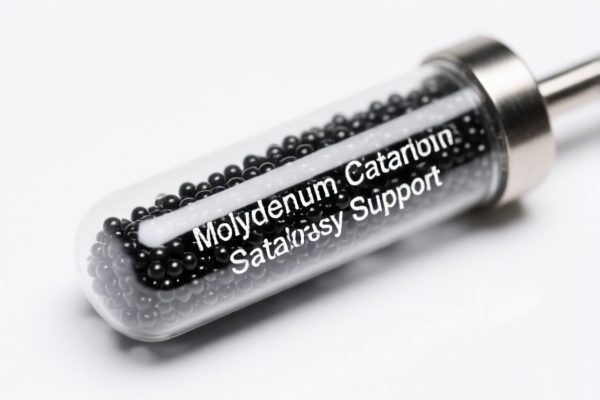
A Spherical Graphite Catalyst Support is a specialized industrial material used primarily in chemical, petrochemical, and pharmaceutical processes. It serves as a structural base (carrier) for active catalytic agents, enhancing reaction efficiency and stability.
In international trade, this product sits at the intersection of materials science (graphite) and chemical processing (catalysts). It can be classified in two distinct ways depending on how customs authorities view its primary function:
1. As a Chemical Catalyst/Reagent (Category 38):
If the primary purpose is viewed as a chemical agent or an additive to facilitate a reaction, it falls under Chapter 38.
2. As a Graphite Product (Category 38/69):
If the primary characteristic is the material itself (synthetic graphite) and it acts as a generic support without specific catalytic chemical properties defined in the tariff, it may fall under other graphite-related categories or general chemical miscellaneous categories.
⚠️ Key Distinction Point:
- If it is explicitly sold as a "Catalyst Support" intended to hold other chemicals → HS Code 3815 (Catalysts) is the most logical functional fit.
- If it is sold merely as "Graphite Spheres" used broadly in various applications (including as a generic carrier) → HS Code 3801 (Synthetic Graphite) or 6909 (Ceramic, if oxidized/modified) might be considered, though 3801 is more common for raw graphite forms.
- Note: Some interpretations might argue for 6909 if the graphite is treated with ceramic-like oxides for high-temperature stability, but 3815 is generally preferred for "supports" in catalytic contexts.
📦 II. HS Code Classification Details (2026 Latest Tariff Authority Comparison)
| HS Code | Product Description | Applicable Scenario | Material/Function Conflict |
|---|---|---|---|
3815.90.50.00 |
Catalysts (Other): Catalysts and catalyst carriers, not elsewhere specified | The product name explicitly contains "Catalyst Support"; Graphite is an inorganic substance compatible with "chemical preparations" | ✅ High Match: Function aligns with "Catalytic Preparations"; Graphite has no material conflict with the "catch-all" clause for chemical agents. |
3801.10.50.90 |
Synthetic Graphite (Other): Other articles of graphite or other carbon | Product name contains "Graphite"; Target code is for "Other" catch-all items for graphite | ✅ Possible Match: Material (Graphite) aligns with the code's material scope. No conflict with form or use shown in the generic name. |
3815.19.00.00 |
Catalysts on Supporting Substrates: Other catalysts on supporting substrates | Inferred as a supporting component for catalysts | ✅ Logical Inference: Although morphology isn't explicit, it is inferred as a support component, conflicting with no attributes of "Other Supporting Catalysts." |
6909.19.50.95 |
Ceramic Wares: Ceramic wares suitable for chemical, technical, or laboratory uses | Material inferred as Ceramic (Alumina/etc.) for catalyst carriers | ⚠️ Low Match: Only applicable if the graphite has been heavily processed/oxidized into a ceramic-like structure. Less likely for pure graphite spheres. |
🔍 Key Reminder:
- 3815.90.50.00 is the strongest functional match because the term "Catalyst Support" directly implies its role in catalysis.
- 3801.10.50.90 is the strongest material match because it is made of graphite.
- 6909.19.50.95 is only relevant if the product is not pure graphite but a ceramic-coated or oxidized variant, which is less common for "Graphite Catalyst Support."
💰 III. 2026 Latest Tariff Rate Details (Including Surtaxes & Policy Add-ons)
✅ Applicable Country: United States (US)
✅ Origin: China (CN)
✅ Effective Date: From November 10, 2025 (including subsequent imports)
🎯 1. 3815.90.50.00 —— Catalysts, Other (Highest Risk: Function-Based)
| Item | Content |
|---|---|
| Base Tariff Rate | 5.0% (ad valorem) |
| USITC Surtax (Section 301) | +25% (from USITC Footnote 9903.88.01) |
| IEEPA Surtax | +10% (Targeting China/Hong Kong products, from Nov 10, 2025) |
| Total Tariff Rate | 40.0% |
| Tax Calculation | CIF Value × 40% |
| De Minimis Exemption | ❌ Not Eligible (deny_de_minimis) |
| Legal Basis Path | IEEPA:9903.01.25 → IEEPA:9903.01.24 → USITC:3815.90.50.00 → FOOTNOTE:9903.88.01 |
📌 Explanation:
- "USITC Surtax 25%": Derived from Section 301 of the Trade Act.
- "IEEPA 10%": Additional tariff under the International Emergency Economic Powers Act.
- Total 40%: A high tariff rate. Because this code is based on function (catalyst), it is strictly scrutinized.
🎯 2. 3801.10.50.90 —— Synthetic Graphite, Other (Material-Based)
| Item | Content |
|---|---|
| Base Tariff Rate | 0.0% |
| USITC Surtax (Section 301) | +25% |
| IEEPA Surtax | +10% |
| Total Tariff Rate | 35.0% |
| Tax Calculation | CIF Value × 35% |
| De Minimis Exemption | ❌ Not Eligible |
| Legal Basis Path | IEEPA:9901.25 → IEEPA:9903.01.24 → USITC:3801.10.50.90 → FOOTNOTE:9903.88.01 |
📌 Note:
- Savings: This option saves 5% compared to3815.90.50.00.
- Risk: Customs may challenge this if the product is explicitly labeled "Catalyst Support," arguing it fits the specific "Catalyst" heading (3815) better than "Graphite Articles" (3801).
🎯 3. 3815.19.00.00 —— Catalysts on Supporting Substrates, Other
| Item | Content |
|---|---|
| Base Tariff Rate | 0.0% |
| USITC Surtax (Section 301) | +25% |
| IEEPA Surtax | +10% |
| Total Tariff Rate | 35.0% |
| Tax Calculation | CIF Value × 35% |
| De Minimis Exemption | ❌ Not Eligible |
| Legal Basis Path | IEEPA:9901.25 → IEEPA:9903.01.24 → USITC:3815.19.00.00 → FOOTNOTE:9903.88.01 |
📌 Note:
- This is technically a "better" fit than 3815.90.50.00 if the product is specifically a substrate for catalysts.
- However, if the support is just plain graphite without specific catalytic chemical treatment, 3801 might be safer.
🎯 4. 6909.19.50.95 —— Ceramic Wares (Lowest Likelihood)
| Item | Content |
|---|---|
| Base Tariff Rate | 4.0% |
| USITC Surtax (Section 301) | +25% |
| IEEPA Surtax | +10% |
| Total Tariff Rate | 39.0% |
| Tax Calculation | CIF Value × 39% |
| De Minimis Exemption | ❌ Not Eligible |
| Legal Basis Path | IEEPA:9901.25 → IEEPA:9903.01.24 → USITC:6909.19.50.95 → FOOTNOTE:9903.88.01 |
📌 Note:
- Only applicable if the "Graphite" is actually a ceramic composite.
- Risk: High risk of misclassification if it is pure graphite.
🛠️ IV. Customs Clearance Practical Advice (Real-World Pitfall Avoidance Guide)
✅ 1. Preparation Checklist (Indispensable)
| Material | Required | Description |
|---|---|---|
| ✅ Product Specification Sheet | ✔️ | Must detail material composition (Pure Graphite vs. Composite), particle size, density, and specific surface area. |
| ✅ Technical Data Sheet (TDS) | ✔️ | Explain the function: Is it inert (just a carrier) or active? |
| ✅ Product Photos | ✔️ | Clear images showing spherical shape, texture, and packaging. |
| ✅ Bill of Lading & Commercial Invoice | ✔️ | Description should be precise: "Spherical Graphite Catalyst Support, Inorganic, Graphite-based." |
| ✅ Certificate of Origin (CO) | ✔️ | Essential for determining origin-based tariffs. |
| ✅ Safety Data Sheet (SDS) | ✔️ | To prove it is not hazardous waste or restricted chemical. |
✅ 2. Declaration Tips (Key Mantras)
🔥 "Function Defines Code, Material Defines Subcode. Don't Split, Don't Guess!"
| Scenario | Correct Declaration | Incorrect Practice |
|---|---|---|
| Explicitly "Catalyst Support" | 3815.90.50.00 or 3815.19.00.00 | Misdeclaring as "Graphite Powder" → 35% vs 40% risk |
| Generic "Graphite Spheres" | 3801.10.50.90 | Over-declaring as "Catalyst" when not specified → 40% |
| Ceramic-Coated Graphite | 6909.19.50.95 | Declaring as pure graphite → Misclassification |
| Mixed Shipment | Whole Shipment Declaration | Splitting into "Graphite" + "Chemical Additive" → Complexity & Audit Risk |
✅ 3. Special Circumstances Handling
| Situation | Handling Advice |
|---|---|
| OEM Customization | Provide client design specs. If the client specifies "For Catalytic Reaction X," use 3815. If "For General Filler," use 3801. |
| Graphite Oxidation | If the graphite is highly oxidized (functionalized), it may be considered a "Chemical Preparation" → 3815. |
| Pure Graphite | If unmodified, inert graphite spheres → 3801.10.50.90 is safer and cheaper (35%). |
| Small Samples | Still subject to tariffs if value exceeds de minimis limits (though unlikely for catalyst supports which are usually B2B). |
🌍 V. Global Market Customs Comparison (2026 Latest)
| Country/Region | Recommended HS Code | Tariff | Certification | Notes |
|---|---|---|---|---|
| 🇺🇸 USA | 3815.90.50.00 or 3801.10.50.90 |
35% - 40% | None Specific | High scrutiny on "Catalyst" vs "Material". |
| 🇨🇳 China | 3815.90.50.00 |
5% | None | Lower base rate, no Section 301. |
| 🇪🇺 EU | 3815.90.50.00 |
~5-7% | REACH Registration | REACH compliance is critical for chemicals/catalysts. |
| 🇦🇺 Australia | 3815.90.50.00 |
5% | None | Similar to EU, lower tariffs. |
| 🇯🇵 Japan | 3815.90.50.00 |
~0-5% | None | Generally low tariffs for industrial inputs. |
📌 Conclusion:
- USA has the highest effective tariff due to the combination of base duty and Section 301/IEEPA surcharges.
- Choosing between 3815 and 3801 depends on the intended use declared in the contract.
- EU/Japan are more tariff-friendly but require strict chemical safety documentation (REACH in EU).
📌 VI. Common Errors & Pitfall Guide (Lessons Learned from Blood & Tears)
❌ Error 1: Declaring "Catalyst Support" as "Graphite Pencil Leads" or "Batteries"
👉 Consequence: Severe misclassification → Penalties + Retroactive Duties + Audit.
❌ Error 2: Declaring as "Ceramic" when it is Graphite
👉 Consequence: Customs lab test will fail → Seizure or Return.
❌ Error 3: Ignoring the "Catalyst" keyword in the name
👉 Consequence: If you declare as generic graphite (3801) but the invoice says "Catalyst," Customs will assess 3815 (40%) anyway. Better to declare correctly upfront.
❌ Error 4: Splitting the shipment into "Graphite" and "Catalyst" to lower average tax
👉 Consequence: Customs will view it as a single shipment → Double Penalty.
✅ Correct Approach:
"Spherical Graphite Catalyst Support, Synthetic Graphite, Inorganic, Not Elsewhere Specified, For Chemical Reaction Enhancement"
🎯 VII. Conclusion: Professional Declaration, Save Time, Reduce Costs!
🎯 Remember the Mantra:
🔹 "If it's for catalysis, it's 3815 (40%). If it's just graphite, it's 3801 (35%). Don't gamble with 6909 unless it's ceramic!"
🔹 "HS Code is life. 5% difference is huge. Declaration precision saves thousands!"
📌 Pro Tip:
If your product is pure graphite and not chemically treated as a catalyst, declare it under 3801.10.50.90 to save 5% (35% vs 40%). Ensure the product name and description emphasize "Graphite Spheres" rather than "Catalyst" if it is inert.
📣 Immediate Action:
📞 Contact a professional customs broker + Provide Product TDS + Apply for Advance Ruling if possible.
🚀 Let your graphite catalyst support clear smoothly, efficiently, and profitably!
✨ Professional Clearance Starts with Accurate Classification!
💼 Every cent of cost deserves to be calculated precisely!
用户评价
关于 HS 编码归类
协调制度(HS)是由世界海关组织(WCO)制定的国际贸易商品分类标准。全球 200 多个国家采用 HS 系统作为海关关税、贸易统计和进出口监管的基础。
每个 HS 编码遵循以下层级结构:
- 章(2 位)——商品大类(例如:第 84 章:机器和机械设备)
- 品目(4 位)——章内的更具体分类
- 子目(6 位)——国际通用细分,所有 WCO 成员国统一使用
- 本国细分(8-10 位)——各国自行扩展的细分编码,如美国 HTSUS 10 位编码
正确的 HS 编码归类对于顺利通关、准确缴纳关税和遵守贸易法规至关重要。错误归类可能导致海关延误、多缴关税或罚款。
从CN进口到US时,适用的关税税率可能包括:
- 最惠国(MFN)税率——适用于 WTO 成员国的标准关税税率
- 普通税率——适用于无贸易协定国家
- 贸易救济关税——附加关税,如 301 条款(反倾销)、232 条款(国家安全)或反补贴税
本页内容仅供参考。如需正式归类,请咨询当地海关或持牌报关代理。