Sponge Beauty Blender
CN → US| HS编码 | 关税税率 | 原产国 | 目的国 | 文档 |
|---|---|---|---|---|
| 3926903500 | 24.0% | CN | US | 官方文档 |
| 3926909989 | 22.8% | CN | US | 官方文档 |
| 4016100000 | 35.0% | CN | US | 官方文档 |
| 4016990500 | 20.9% | CN | US | 官方文档 |
商品图片
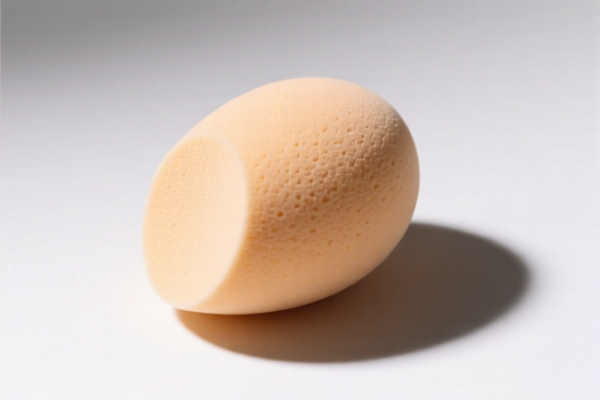
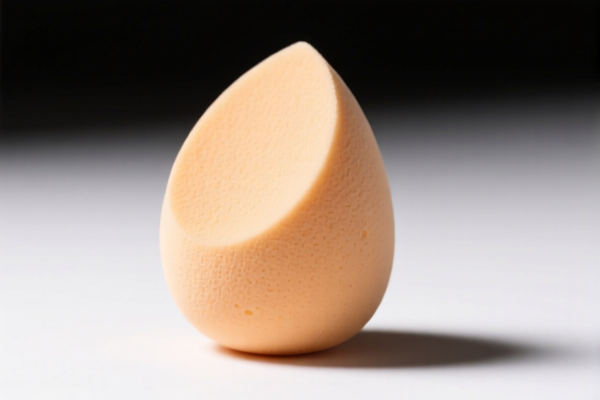
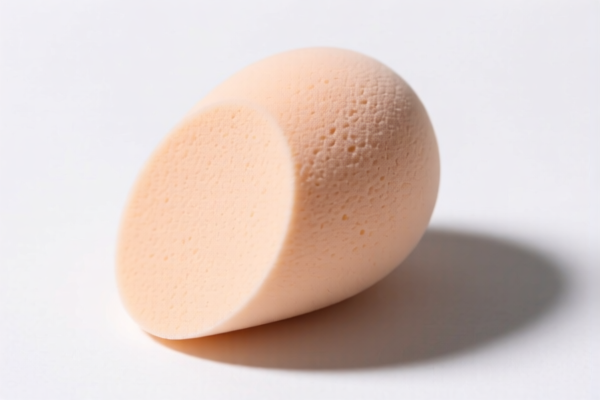
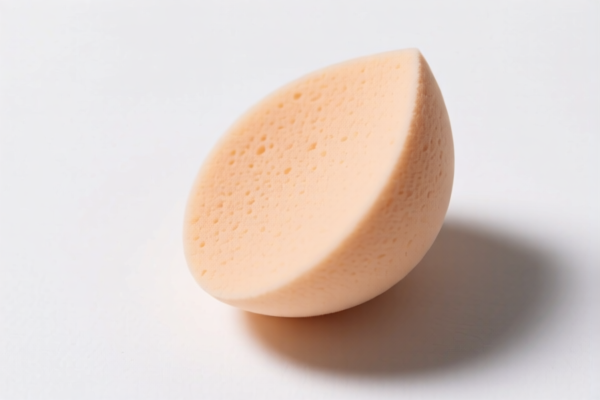
AI分析
🧽 Sponge Beauty Blender (Sponge Makeup Blender)
🌐 HS Code Reference & Customs Clearance Guide | 2026 Latest Tariff Analysis | Professional Entry Strategies 📌 I. Product Definition & Classification: Do You Really Understand "Beauty Blenders"?
A "Sponge Beauty Blender" is a portable, ergonomic tool used for applying liquid, cream, or powder cosmetics to the face. In international trade, its classification is highly controversial and depends entirely on the chemical composition of the sponge material. It is generally categorized under two main chapters: * Chapter 39 (Plastics and Articles Thereof): If the sponge is made of Polyurethane (PU) foam or similar synthetic plastics. * Chapter 40 (Rubber and Articles Thereof): If the sponge is made of porous polyurethane foam that is chemically analogous to vulcanized rubber.
⚠️ Key Distinction Point: - If the material is explicitly described as "Polyurethane Foam" or "Synthetic Plastic" → It likely falls under Chapter 39. - If the material is described as "Porous Polyurethane" or "Synthetic Rubber" with properties similar to vulcanized rubber → It may fall under Chapter 40.
📦 II. HS Code Classification Details (Latest Tariff Authority Comparison)
Based on the provided data, there are four potential HS Codes depending on the precise material definition.
| HS Code | Product Description | Applicable Scenario | Material Basis |
|---|---|---|---|
3926.90.35.00 |
Other articles of plastics and articles of other materials of headings 39.01 to 39.14, not elsewhere specified or included. | Plastic-based sponges. Defined as "porous polyurethane plastic articles." | ✅ Polyurethane (Plastic) |
3926.90.99.89 |
Other articles of plastics and articles of other materials of headings 39.01 to 39.14, not elsewhere specified or included. | General Plastic Sponges. Defined as "Sponge material is polyurethane or similar plastic/synthetic material, not specifically listed in subheadings." | ✅ Polyurethane (Plastic) |
4016.10.00.00 |
Other articles of cellular rubber. | Rubber-analogous Sponges. Defined as "Sponge material is porous polyurethane or similar synthetic rubber, falling under the category of vulcanized rubber articles." | ✅ Synthetic Rubber |
4016.99.05.00 |
Other articles of rubber and articles of other materials of heading 40.01 to 40.14, not elsewhere specified or included. | Household Rubber Items. Defined as "Sponge material analogous to rubber articles, shaped as household beauty用品, falling under household items among other vulcanized rubber articles." | ✅ Synthetic Rubber |
🔍 Key Reminder: - Chapter 39 vs. Chapter 40: The critical factor is whether customs authorities classify the specific polyurethane foam as a "plastic" (39) or a "rubber" (40). This often requires technical specifications from the manufacturer. - Misclassification Risk: Declaring a plastic sponge as rubber (or vice versa) leads to significant tariff discrepancies and potential penalties.
💰 III. 2026 Latest Tariff Rate Details (Including Surtaxes & Policy Add-ons)
✅ Applicable Country: United States (US) ✅ Origin: China (CN) ✅ Effective Time: Current rates include Section 301/122 Clause tariffs.
🎯 1. 3926.90.35.00 —— Porous Polyurethane Plastic Article
| Item | Content |
|---|---|
| Base Tariff | 6.5% |
| Surtax (Section 301) | +7.5% |
| Section 122 Clause Tariff | +10% |
| Total Tax Rate | 24.0% |
| Tax Calculation | CIF Value × 24.0% |
| De Minimis Eligibility | ❌ No (High tariff rate usually disqualifies from $800 de minimis exemption for China-origin goods) |
| Legal Basis Path | HTS:3926.90.35.00 → Section 301: 7.5% → Section 122: 10% |
📌 Explanation: - This code treats the beauty blender as a standard plastic article. - The base tariff is moderate (6.5%), but the addition of Section 301 and Section 122 tariffs pushes the total to 24.0%.
🎯 2. 3926.90.99.89 —— Other Plastic Articles (General)
| Item | Content |
|---|---|
| Base Tariff | 5.3% |
| Surtax (Section 301) | +7.5% |
| Section 122 Clause Tariff | +10% |
| Total Tax Rate | 22.8% |
| Tax Calculation | CIF Value × 22.8% |
| De Minimis Eligibility | ❌ No |
| Legal Basis Path | HTS:3926.90.99.89 → Section 301: 7.5% → Section 122: 10% |
📌 Note: - This is a "basket" code for plastic items not specifically listed elsewhere. - The base tariff is slightly lower (5.3%) than
3926.90.35.00, resulting in a total of 22.8%. - Suitable if the sponge is made of generic synthetic plastic materials not specifically defined as "porous polyurethane" in other subheadings.
🎯 3. 4016.10.00.00 —— Cellular Rubber Articles
| Item | Content |
|---|---|
| Base Tariff | 0.0% |
| Surtax (Section 301) | +25.0% |
| Section 122 Clause Tariff | +10% |
| Total Tax Rate | 35.0% |
| Tax Calculation | CIF Value × 35.0% |
| De Minimis Eligibility | ❌ No |
| Legal Basis Path | HTS:4016.10.00.00 → Section 301: 25.0% → Section 122: 10% |
📌 Explanation: - If classified as rubber, the base tariff is 0%, which looks attractive initially. - However, the Section 301 surtax is 25% (much higher than the 7.5% for plastics). - Total Rate: 35.0%. This is the highest tax burden among the options. Avoid this classification unless legally required by material science documentation.
🎯 4. 4016.99.05.00 —— Other Rubber Articles (Household Items)
| Item | Content |
|---|---|
| Base Tariff | 3.4% |
| Surtax (Section 301) | +7.5% |
| Section 122 Clause Tariff | +10% |
| Total Tax Rate | 20.9% |
| Tax Calculation | CIF Value × 20.9% |
| De Minimis Eligibility | ❌ No |
| Legal Basis Path | HTS:4016.99.05.00 → Section 301: 7.5% → Section 122: 10% |
📌 Note: - This is the most cost-effective classification if the product can be legally defined as a rubber household item. - Total Rate: 20.9%. - Requires strong justification that the polyurethane foam behaves as "vulcanized rubber" and is used as a "household item."
🛠️ IV. Customs Clearance Practical Advice (Combat Pitfall Guide)
✅ 1. Required Documentation Checklist (All Mandatory)
| Document | Must Provide | Description |
|---|---|---|
| ✅ Product Specification Sheet | ✔️ | Must explicitly state material composition (e.g., "100% Polyurethane Foam" vs. "Cellular Rubber"). |
| ✅ Material Safety Data Sheet (MSDS) | ✔️ | Confirms chemical nature (Plastic vs. Rubber). |
| ✅ Product Photos (Clear) | ✔️ | Show texture, shape, and packaging. |
| ✅ Commercial Invoice | ✔️ | Clearly describe the item as "Sponge Makeup Blender" and specify material. |
| ✅ Packing List | ✔️ | Detail quantities and weights. |
| ✅ Certificate of Origin (CO) | ✔️ | Required for origin verification and tariff calculation. |
✅ 2. Declaration Strategy (Key Mantra)
🔥 "Material is King, Code Defines Cost!"
| Scenario | Correct Declaration | Error to Avoid |
|---|---|---|
| Standard PU Sponge | 3926.90.35.00 or 3926.90.99.89 |
Declare as 4016... (Rubber) → Risk of penalty if material is plastic. |
| Rubber-analogous Foam | 4016.99.05.00 |
Declare as 3926... (Plastic) → May miss out on lower base rate (3.4% vs 6.5%). |
| Mixed Packaging | Whole Item Declaration | Do not split sponge and packaging box into different HS codes unless they are sold separately. |
✅ 3. Special Handling
| Situation | Advice |
|---|---|
| OEM/Custom Colors | Provide color swatches and material specs. |
| High-Value Luxury Brands | Ensure invoice reflects actual value to avoid undervaluation penalties. |
| De Minimis ($800) Risk | ⚠️ Warning: Due to total tariffs >20%, most customs brokers advise against using De Minimis (Section 321) for China-origin beauty blenders. Pre-pay duties are safer to avoid hold-ups. |
| Material Dispute | If customs questions "Plastic vs. Rubber," provide third-party lab test reports confirming the polymer structure. |
🌍 V. Global Market Customs Comparison (2026 Latest)
| Country/Region | Recommended HS Code | Estimated Tariff | Notes |
|---|---|---|---|
| 🇺🇸 USA | 3926.90.35.00 or 4016.99.05.00 |
20.9% - 24.0% | Highest tariffs due to Section 122 & 301. |
| 🇨🇳 China | 3926.90.99.89 |
5.3% + VAT | No additional surtaxes. |
| 🇪🇺 EU | 3926.90.99.80 |
~3.7% + VAT | No Section 301 equivalents. |
| 🇬🇧 UK | 3926.90.99 |
~3.7% | Post-Brexit standard rates apply. |
| 🇯🇵 Japan | 3926.90.90 |
3.9% | Low base tariff. |
📌 Conclusion: - USA is the most expensive market for importing Beauty Blenders due to layered tariffs. - Optimizing HS Code between Chapter 39 and 40 can save up to 3.1% (24.0% vs 20.9%) or incur 14.1% more (24.0% vs 35.0% if misclassified as high-surtax rubber).
📌 VI. Common Mistakes & Pitfalls (Lessons Learned)
❌ Mistake 1: Declaring as "Plastic" but providing rubber lab reports. 👉 Consequence: Customs flags inconsistency → Audit & Delay.
❌ Mistake 2: Ignoring Section 122 Tariff. 👉 Consequence: Underpayment → Back taxes + Penalties.
❌ Mistake 3: Using "Beauty Tool" as the only description. 👉 Consequence: Too vague → Customs may assign a higher default code or request reclassification.
❌ Mistake 4: Assuming all PU sponges are Plastic.
👉 Consequence: Missing out on 4016.99.05.00 (20.9%) if technically rubber-analogous.
✅ Correct Practice:
"Sponge Makeup Blender, 100% Polyurethane Foam, Porous, Used for Cosmetics, Material Code: PU-Foam-X"
🎯 VII. Conclusion: Professional Declaration, Cost Saving!
🎯 Remember the Mantra:
🔹 "Plastic is 24%, Rubber is 21% or 35%, Check Material First!" 🔹 "Section 122 adds 10%, No De Minimis for China!"
📌 Pro Tip: If your beauty blenders are manufactured in Vietnam, Thailand, or Malaysia, you may qualify for preferential tariffs or exemptions from Section 301/122 clauses. Recommendation: Apply for a Pre-Ruling (Advance Ruling) with US CBP to confirm the HS Code (39 vs 40) before bulk shipment.
📣 Immediate Action:
📞 Contact a licensed customs broker + Provide Material Specs + Apply for HS Code Pre-Ruling. 🚀 Let your Beauty Blenders clear smoothly, save costs, and boost profits!
✨ Professional Customs Clearance Starts with Precise Classification! 💼 Every cent of cost deserves precise calculation!
用户评价
关于 HS 编码归类
协调制度(HS)是由世界海关组织(WCO)制定的国际贸易商品分类标准。全球 200 多个国家采用 HS 系统作为海关关税、贸易统计和进出口监管的基础。
每个 HS 编码遵循以下层级结构:
- 章(2 位)——商品大类(例如:第 84 章:机器和机械设备)
- 品目(4 位)——章内的更具体分类
- 子目(6 位)——国际通用细分,所有 WCO 成员国统一使用
- 本国细分(8-10 位)——各国自行扩展的细分编码,如美国 HTSUS 10 位编码
正确的 HS 编码归类对于顺利通关、准确缴纳关税和遵守贸易法规至关重要。错误归类可能导致海关延误、多缴关税或罚款。
从CN进口到US时,适用的关税税率可能包括:
- 最惠国(MFN)税率——适用于 WTO 成员国的标准关税税率
- 普通税率——适用于无贸易协定国家
- 贸易救济关税——附加关税,如 301 条款(反倾销)、232 条款(国家安全)或反补贴税
本页内容仅供参考。如需正式归类,请咨询当地海关或持牌报关代理。