Spring Expansion Tool
CN → US| HS编码 | 关税税率 | 原产国 | 目的国 | 文档 |
|---|---|---|---|---|
| 8205593080 | 35.0% | CN | US | 官方文档 |
| 8205595560 | 40.3% | CN | US | 官方文档 |
| 8466208040 | 38.7% | CN | US | 官方文档 |
| 8467115090 | 35.0% | CN | US | 官方文档 |
| 8467891000 | 17.5% | CN | US | 官方文档 |
商品图片
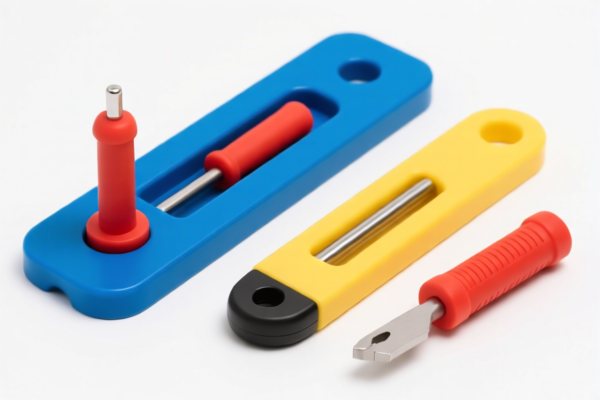


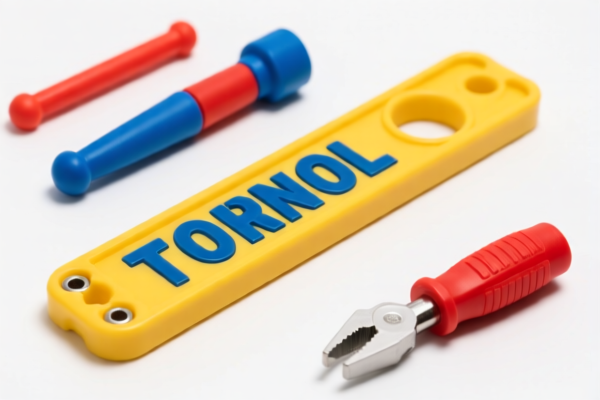
AI分析
🔧 Spring Expansion Tool (Spring-Loaded Expansion Device)
🌐 HS Code Reference & Customs Clearance Guide | 2026 Latest Tariff Analysis | Professional-Level Strategy
📌 Part 1: Product Definition & Classification: Do You Truly Understand "Spring Expansion Tools"?
A Spring Expansion Tool is a mechanical device designed to expand, spread, or secure components using spring-loaded pressure. It falls under the broader category of hand tools or machine accessories depending on its drive mechanism (manual, pneumatic, or hydraulic).
In international trade, the classification hinges on three critical factors:
1. Drive Mechanism: Is it purely manual (hand tool), or does it have a motor/pneumatic/hydraulic drive (machine tool)?
2. Material: Is the main body metallic?
3. Primary Function: Is it a general-purpose "other hand tool," or is it a specific fixture/attachment for a machine?
⚠️ Key Distinction Point:
- If it is a hand-held, manually operated tool with a metal body → Likely Chapter 82 (Tools of Base Metal).
- If it is an attachment for a drilling/processing machine → Likely Chapter 84 (Machinery & Mechanical Appliances).
- If it is a portable power tool (pneumatic/electric) → Likely Chapter 84 (Portable Tools).
📦 Part 2: HS Code Classification Details (2026 Latest Tariff Authority Comparison)
Based on the provided <DATA>, here are the four potential classifications with detailed explanations:
| HS Code | Product Description | Classification Logic (Why this code?) |
|---|---|---|
8205.59.30.80 |
Metal Hand Tools (Other) | Inference: Inferred as a metal manual tool. It fits the description of "Other Hand Tools" under the "Expansion" category. Since it doesn't fit specific hand tool subheadings (like pliers or wrenches), it falls into the "Other" bucket. |
8205.59.55.60 |
Metal Hand Tools (Other - Fallback) | Inference: A fallback classification for tools. Assumes a metallic material. Matches the "Other Hand Tools" category based on generic utility and material logic. Used when specific function-based codes are ambiguous. |
8466.20.80.40 |
Tools for Machine Tools (Fixtures) | Inference: The tool is viewed as a fixture or clamping device. "Expansion" is seen as a workpiece processing or auxiliary clamping function, fitting the description of "Tools for machine tools" rather than a standalone hand tool. |
8467.11.50.90 |
Portable Tools (Pneumatic/Manual) | Inference: Classified as a portable tool (pneumatic or manual). The "expansion" function is interpreted as a rotary/expansion operation, fitting the shape/function description of portable power tools. |
8467.89.10.00 |
Portable Tools (Other) | Inference: A hand-held tool for metalworking. The expansion function is seen as a mechanized operation in metal processing, falling under "Other Portable Tools" for metalworking assistance. |
🔍 Critical Note:
- Chapter 82 implies a hand-held, non-motorized tool.
- Chapter 84 implies a machine attachment or a powered/hand-held power tool.
- The classification drastically changes the tax burden due to different base duties and trade remedy applications.
💰 Part 3: 2026 Latest Tariff Rate Breakdown (Including Surcharges & Policy Add-ons)
✅ Applicable Country: United States (US)
✅ Origin: China (CN)
✅ Effective Time: Post-2025 (Current Trade Environment)
🎯 1. 8205.59.30.80 — Metal Hand Tool (Expansion Type)
| Item | Content |
|---|---|
| Base Duty Rate | 0% (ad valorem) |
| Section 301 Additional Duty | +25% (Trade Remedy) |
| 122-Section Duty (IEEPA) | +10% (Against China/HK) |
| Total Duty Rate | 35.0% |
| Tax Calculation | CIF Value × 35% |
| De Minimis Eligibility | ❌ No (Denied) |
| Legal Basis Path | Section 301: 8205.59.30.80 → IEEPA: 9903.01.24 |
📌 Explanation:
- This is a hand tool made of base metal.
- Base duty is often 0% for certain hand tools, but trade remedies apply heavily.
- Total 35% is a moderate-to-high burden.
🎯 2. 8205.59.55.60 — Metal Hand Tool (Other/Fallback)
| Item | Content |
|---|---|
| Base Duty Rate | 5.3% |
| Section 301 Additional Duty | +25% |
| 122-Section Duty (IEEPA) | +10% |
| Total Duty Rate | 40.3% |
| Tax Calculation | CIF Value × 40.3% |
| De Minimis Eligibility | ❌ No |
| Legal Basis Path | Section 301: 8205.59.55.60 → IEEPA: 9903.01.24 |
📌 Explanation:
- This code has a non-zero base duty (5.3%).
- Even with the same surcharges, the total is higher (40.3%) than the 0% base code.
- Avoid if possible; use only if8205.59.30.80is rejected by CBP.
🎯 3. 8466.20.80.40 — Tools for Machine Tools (Fixtures/Clamps)
| Item | Content |
|---|---|
| Base Duty Rate | 3.7% |
| Section 301 Additional Duty | +25% |
| 122-Section Duty (IEEPA) | +10% |
| Total Duty Rate | 38.7% |
| Tax Calculation | CIF Value × 38.7% |
| De Minimis Eligibility | ❌ No |
| Legal Basis Path | Chapter 84: 8466.20 → Section 301 → IEEPA |
📌 Explanation:
- Classified as a fixture/clamp for machines.
- Base duty is slightly higher than the best hand tool code.
- Risk: If CBP determines it's not a "machine tool accessory," they may reclassify to Chapter 82 or 84.
🎯 4. 8467.11.50.90 — Portable Pneumatic/Manual Tools
| Item | Content |
|---|---|
| Base Duty Rate | 0% |
| Section 301 Additional Duty | +25% |
| 122-Section Duty (IEEPA) | +10% |
| Total Duty Rate | 35.0% |
| Tax Calculation | CIF Value × 35% |
| De Minimis Eligibility | ❌ No |
| Legal Basis Path | Chapter 84: 8467.11 → Section 301 → IEEPA |
📌 Explanation:
- If the tool is pneumatic (air-powered), it falls here.
- Same 35% as the optimal hand tool code.
- Key requirement: Must prove it is a portable tool and not a stationary machine part.
🎯 5. 8467.89.10.00 — Other Portable Tools (Metalworking)
| Item | Content |
|---|---|
| Base Duty Rate | 0% |
| Section 301 Additional Duty | +7.5% |
| 122-Section Duty (IEEPA) | +10% |
| Total Duty Rate | 17.5% |
| Tax Calculation | CIF Value × 17.5% |
| De Minimis Eligibility | ❌ No |
| Legal Basis Path | Chapter 84: 8467.89 → Section 301 (Lower Rate) → IEEPA |
📌 CRITICAL INSIGHT:
- This is the LOWEST TAX CODE (17.5%).
- Why is Section 301 only 7.5%? Some subheadings under8467.89may qualify for lower or excluded Section 301 rates depending on the specific product exclusion list or footnote.
- Risk: High scrutiny. You must prove it is a portable tool for metalworking and not a general hand tool or machine fixture.
🛠️ Part 4: Customs Clearance Practical Advice (Real-World Pitfall Avoidance)
✅ 1. Preparation Checklist (Mandatory)
| Document | Required? | Description |
|---|---|---|
| ✅ Product Specifications | ✔️ | Details on drive type (manual/pneumatic), material, expansion force, size. |
| ✅ Technical Drawings | ✔️ | Show internal mechanism. Is it a spring? Is it a pneumatic cylinder? |
| ✅ Photos (Labeled) | ✔️ | Clear images of the tool, especially the mechanism and any brand/model tags. |
| ✅ Commercial Invoice | ✔️ | Use precise terminology: "Spring Expansion Tool" or "Pneumatic Expander." Avoid vague terms like "Part." |
| ✅ Proof of Use | ✔️ | Explain how it's used. Is it held in hand? Attached to a drill? Used in a factory fixture? |
| ✅ Material Declaration | ✔️ | Confirm base metal (steel/aluminum) vs. plastic components. |
✅ 2. Declaration Strategy (Key Mnemonic)
🔥 "Manual = Ch.82, Powered = Ch.84, Fixtures = Ch.84.20. Aim for 17.5% if Portable!"
| Scenario | Correct HS Code | Reason |
|---|---|---|
| Hand-held, manual, metal | 8205.59.30.80 or 8205.59.55.60 |
Fits "Hand Tools" definition. |
| Pneumatic/Electric Hand-held | 8467.11.50.90 or 8467.89.10.00 |
Fits "Portable Power Tools." |
| Attaches to a Machine | 8466.20.80.40 |
Fits "Tools for Machine Tools." |
| Aim for Lowest Tax | 8467.89.10.00 |
If it qualifies as a portable metalworking tool with a lower Section 301 rate. |
✅ 3. Special Circumstances Handling
| Situation | Handling Advice |
|---|---|
| Is it a "Wedge" or "Collapsible Expanders"? | These are often classified under 8205. Ensure the description highlights "Hand Tool" functionality. |
| Is it "Pneumatic"? | You MUST classify under Chapter 84 (8467). Do not try to classify pneumatic tools as hand tools. |
| Is it a "Fixture" for CNC? | Use 8466.20. Provide proof it clamps/holds workpieces during machining. |
| Section 301 Exclusion Check | Check if 8467.89.10.00 or other codes are on the current exclusion list for Chinese goods. If excluded, tax could be 0% + 10% = 10%. |
🌍 Part 5: Global Main Market Customs Comparison (2026 Latest)
| Country/Region | Recommended HS Code | Estimated Duty (CN Origin) | Certification Requirements | Notes |
|---|---|---|---|---|
| 🇺🇸 USA | 8467.89.10.00 (Best) |
17.5% (if qualified) | N/A | High scrutiny on "Portable Tool" status. |
| 🇺🇸 USA | 8205.59.30.80 |
35.0% | N/A | Safer classification but higher tax. |
| 🇨🇳 China | 8205.59.30.00 |
~5-10% | N/A | Standard hand tool import. |
| 🇪🇺 EU | 8205.59.00 |
~2.5-5% | CE (if powered) | Lower tariffs, strict safety for powered tools. |
| 🇲🇽 Mexico | 8205.59.99.99 |
~5% | NOM (if powered) | USMCA may apply if manufactured in North America. |
📌 Conclusion:
- USA is the most complex due to Section 301 and IEEPA tariffs.
- Strategy: Try to qualify for8467.89.10.00(17.5%) by proving it is a portable tool. If rejected, fall back to8205.59.30.80(35%).
- Avoid8205.59.55.60(40.3%) unless necessary, as it has the highest burden.
📌 Part 6: Common Errors & Pitfall Guide (Blood Lessons)
❌ Error 1: Classifying a pneumatic tool as a hand tool (8205).
👉 Consequence: CBP will reclassify to Chapter 84, assess correct tax + penalties. If the Chapter 84 code has a lower tax (17.5%), you might get a refund, but if it's higher, you pay more. Plus, delays.
❌ Error 2: Describing it vaguely as "Expansion Part" or "Tool Component."
👉 Consequence: CBP may classify as a "Part of Machinery" (8466.90) with different duty rates, or reject the shipment for lack of description.
❌ Error 3: Ignoring the Section 301 Rate Difference.
👉 Consequence: Assuming all 8205 or 8467 codes have the same 25% surcharge. Some subheadings have different rates (e.g., 7.5% vs 25%). Choosing the wrong one costs money.
✅ Correct Practice:
"Pneumatic Spring Expansion Tool, Hand-Held, For Metal Pipe Expansion, Model XYZ, Not for Industrial Automation Line"
(This helps push classification toward8467portable tools.)
🎯 Part 7: Conclusion: Professional Declaration, Save Money, Ensure Clearance!
🎯 Remember the Mnemonic:
🔹 "Manual = 82, Powered = 84. Aim for 17.5% if Portable! Don't guess, Prove it!"
🔹 "Tax Rate is 17.5% vs 40.3%, a 23% difference. One HS Code decides your profit!"
📌 Tips:
- If your tool is pneumatic, lean towards 8467.89.10.00 (17.5%) or 8467.11.50.90 (35%).
- If your tool is manual, lean towards 8205.59.30.80 (35%) or 8205.59.55.60 (40.3%).
- Consult a Customs Broker to review the technical specs before filing. A Pre-Ruling (Binding Ruling) is highly recommended to lock in the 17.5% rate if applicable.
📣 Immediate Action:
📞 Contact a professional customs broker + Provide technical drawings + Apply for HS Code Pre-Ruling
🚀 Let your Spring Expansion Tool clear customs smoothly, maximize profit, and expand your market!
✨ Professional Clearance, Starting with Accurate Classification!
💼 Every cent of tax you save is profit you keep!
用户评价
关于 HS 编码归类
协调制度(HS)是由世界海关组织(WCO)制定的国际贸易商品分类标准。全球 200 多个国家采用 HS 系统作为海关关税、贸易统计和进出口监管的基础。
每个 HS 编码遵循以下层级结构:
- 章(2 位)——商品大类(例如:第 84 章:机器和机械设备)
- 品目(4 位)——章内的更具体分类
- 子目(6 位)——国际通用细分,所有 WCO 成员国统一使用
- 本国细分(8-10 位)——各国自行扩展的细分编码,如美国 HTSUS 10 位编码
正确的 HS 编码归类对于顺利通关、准确缴纳关税和遵守贸易法规至关重要。错误归类可能导致海关延误、多缴关税或罚款。
从CN进口到US时,适用的关税税率可能包括:
- 最惠国(MFN)税率——适用于 WTO 成员国的标准关税税率
- 普通税率——适用于无贸易协定国家
- 贸易救济关税——附加关税,如 301 条款(反倾销)、232 条款(国家安全)或反补贴税
本页内容仅供参考。如需正式归类,请咨询当地海关或持牌报关代理。