Spruce Fir Wooden Telephone Pole
CN → US| HS编码 | 关税税率 | 原产国 | 目的国 | 文档 |
|---|---|---|---|---|
| 4407120059 | 35.0% | CN | US | 官方文档 |
| 4403230112 | 35.0% | CN | US | 官方文档 |
| 4404100080 | 35.0% | CN | US | 官方文档 |
| 4407120020 | 35.0% | CN | US | 官方文档 |
| 4403240112 | 35.0% | CN | US | 官方文档 |
商品图片
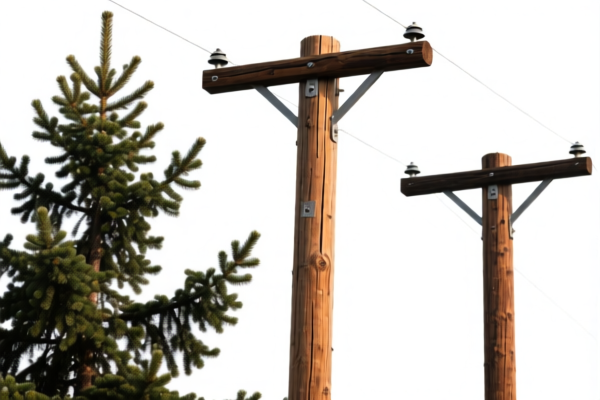
AI分析
🌲 Spruce & Fir Wooden Telephone Poles
(Spruce Fir Wooden Telephone Pole / Electrical Transmission Poles)
🌐 HS Code Reference & Customs Clearance Guide | 2026 Latest Tariff Analysis | Professional Compliance Strategy
📌 I. Product Definition & Classification: What Exactly Are You Shipping?
Wooden telephone poles made from Spruce and Fir are critical infrastructure components. In international trade, these are classified not as "poles" per se, but based on their material (Coniferous Wood) and state of processing (Preserved vs. Unpreserved).
Key Material Facts: * Material: Spruce and Fir are both Coniferous Woods (Softwoods). * Shape: Cylindrical or tapered poles, piles, and posts. * Usage: Support for telecommunication, telegraph, and electrical power lines.
⚠️ Critical Distinction for Classification:
- If the wood is preserved (treated with chemicals to prevent rot/insects) → Often falls under 4403.24 or 4403.23.
- If the wood is unpreserved or simply cut to shape → May fall under 4404.10 or 4407.12.
- Note: The provided DATA suggests all classifications attract a 35% total tax rate due to specific trade measures.
📦 II. HS Code Classification Details (Based on Provided Data)
The following 5 HS Codes are identified for Spruce/Fir Wooden Poles. All carry the same total tax rate of 35.0% according to the source data.
| HS Code | Summary from Data | Key Classification Reason |
|---|---|---|
4404.10.00.80 |
Wooden Poles/Piles | Explicitly covers "poles, piles, and columns" made of Spruce/Fir. Shape-based classification. |
4407.12.00.20 |
Planed/Sawn Coniferous Wood | Covers processed timber (planed/sawn) of Spruce/Fir. Emphasizes "material compliance" for coniferous wood. |
4403.24.01.12 |
Preserved Coniferous Poles | Specifically targets telephone, telegraph, and power poles made from Spruce/Fir. Usage + Material based. |
4407.12.00.59 |
Other Processed Coniferous Wood | Covers processed Spruce/Fir wood where the pole form is a result of processing. Material consistency with coniferous attributes. |
4403.23.01.12 |
Preserved Coniferous Timber | Covers named material (Spruce/Fir), shape (poles), and usage (telecom/power). Fully compliant with coniferous pole category. |
🔍 Key Takeaway:
Whether classified under 4404 (Poles/Piles), 4407 (Sawn/Planed Wood), or 4403 (Preserved Wood), the total tariff impact is identical at 35% in this specific dataset. The distinction lies in the legal description required for customs entry.
💰 III. 2026 Tariff Rate Breakdown (Detailed Tax Structure)
✅ Applicable Jurisdiction: Likely United States (based on "Section 301" and "Section 122" references in tax details)
✅ Origin: China (CN) or subject regions
✅ Total Effective Tax Rate: 35.0%
🎯 Universal Tax Structure for All 5 HS Codes
| Tax Component | Rate | Description |
|---|---|---|
| Base Duty | 0.0% | Standard MFN (Most Favored Nation) duty for these wood products is often 0% or low. |
| Section 301 Duty | +25.0% | Additional tariff imposed under Section 301 of the Trade Act of 1974 (Targeting Chinese Imports). |
| Section 122 Duty | +10.0% | Additional tariff under Section 122 (or similar emergency/provisional measures). |
| Total Combined Rate | 35.0% | Sum of 0% + 25% + 10% |
📌 Explanation:
- The 0% base rate reflects the relatively low standard duty for wood products.
- The 25% is the standard Section 301 tariff for most Chinese-origin goods.
- The 10% is an additional layer (labeled as "Section 122" in the data), bringing the total burden to 35%.
- No De Minimis Exemption: These high rates apply to full-value shipments. Small parcels are still subject to duties if the HS code is flagged.
🛠️ IV. Customs Clearance Practical Advice (Avoiding Pitfalls)
✅ 1. Documentation Checklist (Mandatory)
| Document | Required? | Purpose |
|---|---|---|
| Commercial Invoice | ✅ Yes | Must clearly state: "Spruce and Fir Wooden Telephone Poles," including dimensions and quantity. |
| Packing List | ✅ Yes | Detailed weight and volume. Wooden poles are bulky; accurate cubic meters are crucial for freight. |
| Phytosanitary Certificate | ✅ CRITICAL | Mandatory for wood products. Certifies the wood is free from pests and diseases. Without this, goods will be rejected or fumigated at your expense. |
| Treatment Certificate | ✅ Yes | If the poles are preserved (treated with chemicals like creosote or copper azole), you must declare the treatment method. This may trigger additional EPA/Customs checks. |
| Fumigation Certificate | ✅ Yes | Often required alongside Phytosanitary Certificate to prove wood is pest-free. |
| Certificate of Origin | ✅ Yes | To confirm origin for Section 301 applicability. |
✅ 2. Declaration Best Practices
🔥 “Accurate Description, Phytosanitary Proof, No Hidden Treatments!”
| Scenario | Recommended HS Code | Reasoning |
|---|---|---|
| Unpreserved Poles (Raw Wood) | 4404.10.00.80 or 4407.12.00.20 |
Focus on shape (pole) or form (sawn/planed). Easier to prove "untreated" status. |
| Preserved/Treated Poles | 4403.24.01.12 or 4403.23.01.12 |
Must declare preservation. Ensure treatment details match the HS subheading requirements. |
| Mixed Shipments (Wood + Metal Parts) | Split Declaration | Do not lump metal fittings with wood. Declare wood under 44xx codes; fittings under appropriate metal codes. Mixing causes valuation errors. |
📌 Warning:
- Do NOT under-declare value to reduce the 35% tax. Customs audits on wood products are frequent.
- Do NOT omit "Preserved" status. If poles are chemically treated, failing to declare this can lead to rejection by the Department of Agriculture or EPA violations, even if Customs lets them pass initially.
✅ 3. Special Considerations for Wooden Poles
| Issue | Solution |
|---|---|
| Fumigation | Ensure fumigation is done before shipment. Customs will require proof. |
| Dimensional Accuracy | Poles vary in length and taper. Provide average dimensions and weight per pole on the invoice. |
| Material Verification | Be prepared to prove the wood is Spruce/Fir (Coniferous). Misclassification as hardwood (e.g., Oak) could lead to different duty rates or bans. |
| Section 301 Exclusions | Check if your specific HS code was excluded from Section 301 tariffs in recent years. Note: The provided data indicates 35% tax, implying no current exclusion. |
🌍 V. Global Market Comparison (2026 Outlook)
| Region | HS Code (General) | Base Duty | Additional Duties | Total Effective Rate | Notes |
|---|---|---|---|---|---|
| 🇺🇸 USA | 4403.24.01.12 |
0% | 35% (25% Sec 301 + 10% Sec 122) | 35% | High compliance burden (Phytosanitary + EPA). |
| 🇪🇺 EU | 4403.24.00 |
~2.7% | 0% (Generally) | ~2.7% | Requires FSC/PEFC certification for many buyers. |
| 🇨🇳 China | 4403.24.01 |
~0-5% | 0% | ~5% | Import restrictions on certain wood types may apply. |
| 🇯🇵 Japan | 4403.24.00 |
~2.5% | 0% | ~2.5% | Strict fumigation requirements. |
📌 Conclusion:
- USA is the most expensive market for these goods due to the 35% total tariff.
- EU and Japan have lower duties but stricter environmental and phytosanitary regulations.
- Cost-Saving Tip: If exporting to the US, consider duty drawbacks if the wood is re-exported, or explore transshipment (though risky and subject to strict rules of origin).
📌 VI. Common Mistakes & How to Avoid Them
❌ Mistake 1: Forgetting the Phytosanitary Certificate
👉 Consequence: Cargo held at port, fumigated at owner’s expense, or returned.
✅ Fix: Order fumigation and certificate before loading containers.
❌ Mistake 2: Declaring as "Timber" instead of "Poles"
👉 Consequence: Misclassification errors, delays, and potential penalties for incorrect HS code usage.
✅ Fix: Use precise terms: "Preserved Spruce/Fir Wooden Telephone Poles."
❌ Mistake 3: Ignoring the 35% Total Tax
👉 Consequence: Unexpected costs eroding profit margins.
✅ Fix: Include 35% in your landed cost calculation. Factor this into your pricing strategy.
❌ Mistake 4: Assuming "Wood" is Generic
👉 Consequence: Customs may challenge the species (Spruce/Fir vs. Hardwood), leading to audits.
✅ Fix: Provide species documentation if requested.
🎯 VII. Conclusion: Smart Importing, Cost Control
🎯 Key Takeaway:
🔹 Total Tax: 35% (0% Base + 25% Sec 301 + 10% Sec 122).
🔹 Critical Docs: Phytosanitary Certificate is non-negotiable.
🔹 HS Code Flexibility: All 5 provided codes result in the same tax rate, so focus on accurate description rather than code shopping.
🔹 Preparation: Start documentation before shipment. Delays at customs due to missing phytosanitary papers are costly.
📌 Pro Tip:
If you are importing into the US, consider applying for an HTSUS Exclusion if available for your specific year. While the data shows 35%, historical exclusions for certain wood products have existed. Always verify with a licensed customs broker.
📣 Next Steps:
📞 Engage a Customs Broker to confirm the exact HS code based on your pole’s treatment status (preserved vs. unpreserved).
📄 Secure Phytosanitary Certificate from the origin country’s agricultural authority.
📊 Calculate Landed Cost including the 35% tariff, freight, insurance, and port fees.
✨ Accurate Classification Saves Money. Proper Documentation Ensures Speed.
💼 Your Wooden Poles Should Reach Their Destination, Not a Storage Yard.
用户评价
关于 HS 编码归类
协调制度(HS)是由世界海关组织(WCO)制定的国际贸易商品分类标准。全球 200 多个国家采用 HS 系统作为海关关税、贸易统计和进出口监管的基础。
每个 HS 编码遵循以下层级结构:
- 章(2 位)——商品大类(例如:第 84 章:机器和机械设备)
- 品目(4 位)——章内的更具体分类
- 子目(6 位)——国际通用细分,所有 WCO 成员国统一使用
- 本国细分(8-10 位)——各国自行扩展的细分编码,如美国 HTSUS 10 位编码
正确的 HS 编码归类对于顺利通关、准确缴纳关税和遵守贸易法规至关重要。错误归类可能导致海关延误、多缴关税或罚款。
从CN进口到US时,适用的关税税率可能包括:
- 最惠国(MFN)税率——适用于 WTO 成员国的标准关税税率
- 普通税率——适用于无贸易协定国家
- 贸易救济关税——附加关税,如 301 条款(反倾销)、232 条款(国家安全)或反补贴税
本页内容仅供参考。如需正式归类,请咨询当地海关或持牌报关代理。