Spruce and Fir Rough Wooden Guardrail Posts
CN → US| HS编码 | 关税税率 | 原产国 | 目的国 | 文档 |
|---|---|---|---|---|
| 4407120017 | 35.0% | CN | US | 官方文档 |
| 4407120019 | 35.0% | CN | US | 官方文档 |
商品图片
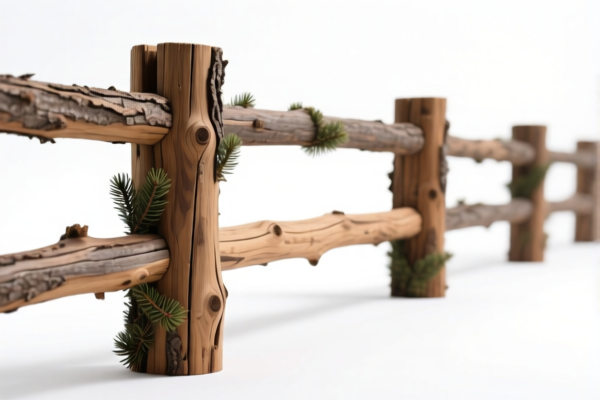
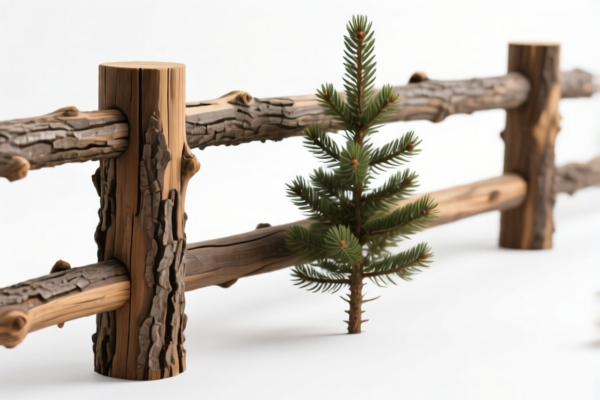
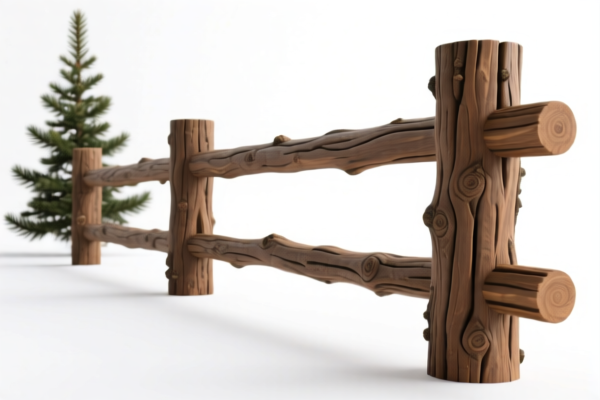
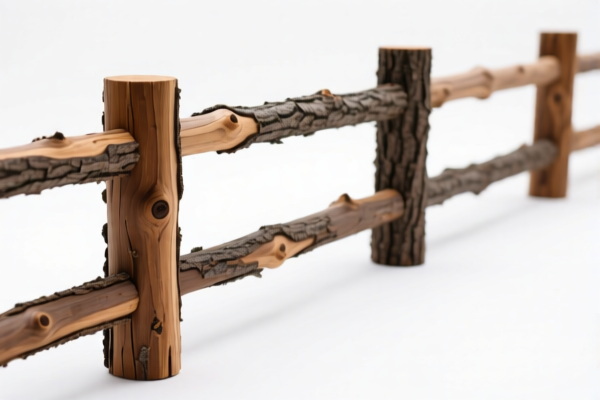
AI分析
🌲 Spruce & Fir Rough Wooden Guardrail Posts
🌐 HS Code Reference & Customs Clearance Guide | 2026 Latest Tariff Analysis | Professional Compliance Strategy
📌 I. Product Definition & Classification: What Exactly Are "Rough Wooden Guardrail Posts"?
Rough wooden guardrail posts, primarily made from Spruce (Picea spp.) and Fir (Abies spp.), are structural components used in construction, landscaping, or industrial fencing. In international trade, they fall under Chapter 44 (Wood and articles of wood; wood charcoal).
Key Characteristics: - Material: Coniferous wood (specifically Fir and Spruce). - Processing: Sawn or chipped lengthwise. - Condition: Rough (Not planed, sanded, or end-jointed in a refined manner; natural edges/surface). - Thickness: Exceeding 6 mm. - Treatment: Not treated (Untreated).
⚠️ Critical Distinction:
- If the wood is planed, sanded, or end-jointed → It may fall under a different subheading (e.g., finished lumber).
- If the wood is treated (chemically preserved) → It falls under 4403 (Wood treated with paint, stain, creosote, etc.).
- Untreated + Rough + Coniferous → Falls under 4407.12.
📦 II. HS Code Classification Details (2026 Latest Tariff Authority Alignment)
| HS Code | Product Description | Application Scenario | Surface Finish |
|---|---|---|---|
4407.12.00.17 |
Spruce/Fir Wood: Sitka Spruce (Picea sitchensis): Rough | Coastal construction, marine-grade rough posts, specific Sitka applications | ✅ Rough (Untreated) |
4407.12.00.19 |
Spruce/Fir Wood: Other Spruce/Fir: Rough | General-purpose rough posts, Douglas Fir, White Spruce, Balsam Fir | ✅ Rough (Untreated) |
🔍 Key Reminder:
- Both codes belong to 4407.12 (Coniferous wood, thickness > 6mm).
- The distinction is Species-Specific:
- Use.17ONLY for Sitka Spruce.
- Use.19for all other untreated rough Fir/Spruce (including Douglas Fir, which is often grouped here in trade data).
- "Rough" is critical: If planed/sanded, do NOT use these codes.
💰 III. 2026 Latest Tariff Rate Breakdown (Including Additional Taxes)
✅ Applicable Country: United States (US)
✅ Country of Origin: China (CN)
✅ Effective Date: Current tariff regime applies
🎯 1. 4407.12.00.17 —— Sitka Spruce, Rough
| Item | Detail |
|---|---|
| Base Tariff Rate | 0.0% (Most Favored Nation rate for wood products) |
| Section 301 Additional Tariff | +25.0% (USITC Footnote: Wood products from China) |
| Total Effective Tax Rate | 25.0% |
| Tax Calculation | CIF Value × 25% |
| De Minimis Exemption | ❌ Not Applicable (Section 301 goods are excluded from $800 de minimis rule) |
| Legal Authority Path | HTSUS:4407.12.00.17 → USITC Section 301 → Total: 25% |
📌 Explanation:
- The base duty is 0%, but Section 301 tariffs add 25% for Chinese-origin wood products.
- Total tax burden = 25%.
- This is a high-cost import category compared to non-Chinese origins.
🎯 2. 4407.12.00.19 —— Other Spruce/Fir, Rough
| Item | Detail |
|---|---|
| Base Tariff Rate | 0.0% |
| Section 301 Additional Tariff | +25.0% |
| Total Effective Tax Rate | 25.0% |
| Tax Calculation | CIF Value × 25% |
| De Minimis Exemption | ❌ Not Applicable |
| Legal Authority Path | HTSUS:4407.12.00.19 → USITC Section 301 → Total: 25% |
📌 Note:
- Same tax structure as.17.
- Applies to Douglas Fir, White Spruce, Larch, and other untreated coniferous rough wood >6mm thick.
🛠️ IV. Customs Clearance Practical Advice (Operational Pitfall Guide)
✅ 1. Essential Documentation Checklist (Mandatory)
| Document | Required? | Notes |
|---|---|---|
| ✅ Commercial Invoice | ✔️ | Must specify: "Wood, Sawed, Rough, Untreated, Species: Spruce/Fir" |
| ✅ Packing List | ✔️ | Include dimensions, weight, and number of posts per pallet |
| ✅ Species Declaration | ✔️ | Explicitly state species (e.g., "Sitka Spruce" vs. "Douglas Fir") to determine .17 vs .19 |
| ✅ ISPM 15 Phytosanitary Certificate | ✔️ | Critical for wood imports. Must show heat treatment (HT) or fumigation (MB) if required by destination |
| ✅ Bill of Lading/Air Waybill | ✔️ | Match invoice details exactly |
🚫 Common Pitfall:
- Failing to declare species accurately → Leads to misclassification (e.g., using a generic "Wood" code) → Penalties + Delay.
- Missing Phytosanitary Certificate → Held at port until fumigation is verified.
✅ 2. Classification Tips (Golden Rules)
| Scenario | Correct HS Code | Error to Avoid |
|---|---|---|
| Sitka Spruce, Rough, Untreated | 4407.12.00.17 |
Using .19 (wrong species) |
| Douglas Fir, Rough, Untreated | 4407.12.00.19 |
Using .17 (only for Sitka) |
| Planed/Sanded Spruce Posts | Not 4407.12 | Misclassifying finished lumber as "rough" → Higher scrutiny |
| Treated (Chemically) Wood | 4403.xx | Using 4407 → Wrong chapter (Treated wood is 4403, not 4407) |
🔥 Mantra:
"Rough? Untreated? Coniferous? >6mm? → 4407.12.xx.xx!"
✅ 3. Special Cases & Risk Management
| Case | Handling Advice |
|---|---|
| Mixed Species Shipment | If the shipment contains both Sitka and other Spruce, declare the majority species or separate shipments. If mixed, use the code for the bulk volume or seek pre-ruling. |
| "Rough" Definition | Ensure the wood is not planed. If edges are trimmed but surface is rough, it may still qualify. If sanded smooth, it’s 4407.41 (Softwood, planed) or similar. |
| Wood Treatment | If the wood was kiln-dried only, it is still "untreated" for HS purposes. Only chemical/creosote treatment moves it to 4403. |
| Origin Labeling | Must clearly state "Made in China" on invoice and packing list to trigger correct Section 301 tariff application. |
🌍 V. Global Market Comparison (2026 Latest)
| Country/Region | Recommended HS Code | Tariff (China Origin) | Key Requirement | Notes |
|---|---|---|---|---|
| 🇺🇸 USA | 4407.12.00.17 / .19 |
25% | ISPM 15 + Section 301 | High tariff; plan accordingly |
| 🇨🇳 China | 4407.12.00.17 / .19 |
0% - 5% | Phytosanitary Certificate | No Section 301 impact |
| 🇪🇺 EU | 4407.10.40 (approx.) |
0% | EUDR (Deforestation Regulation) | New: Must prove no deforestation |
| 🇬🇧 UK | 4407.10.40 |
0% | Plant Passport | Post-Brexit rules apply |
| 🇯🇵 Japan | 4407.10.00 |
3.2% | Phytosanitary | No additional tariffs |
📌 Conclusion:
- USA: 25% tariff is significant. Consider supply chain diversification (e.g., Canada, EU) for cost efficiency.
- EU: Watch out for EUDR (EU Deforestation Regulation). Compliance is now mandatory for wood imports.
📌 VI. Common Mistakes & Pitfall Avoidance (Blood Lessons)
❌ Mistake 1: Calling the product "Guardrail Posts" in the declaration without specifying HS-relevant attributes.
👉 Consequence: Customs may reclassify it as "Other Wood Products" (4421) → Higher duty or delay.
✅ Fix: Use precise description: "Sitka Spruce, Sawed, Rough, Untreated, >6mm Thick, HS 4407.12.00.17"
❌ Mistake 2: Assuming "Treated" means "Kiln-Dried".
👉 Consequence: Misclassification as 4407 instead of 4403.
✅ Fix: Clarify: "Kiln-Dried Only (Untreated)" vs. "Chemically Treated".
❌ Mistake 3: Ignoring ISPM 15 requirements.
👉 Consequence: Shipment rejected or destroyed at port.
✅ Fix: Ensure wood has HT (Heat Treatment) mark or fumigation certificate.
🎯 VII. Conclusion: Smart Classification, Lower Costs, Smoother Clearance
🎯 Remember the Mantra:
🔹 "Rough + Untreated + Coniferous + >6mm = 4407.12.xx.xx"
🔹 "Sitka = .17, Others = .19, Tax = 25% (China to US)"
🔹 "Phytosanitary is Key, Without It, You’re Stuck!"
📌 Pro Tip:
- If you are importing Sitka Spruce, double-check the botanical name: Picea sitchensis.
- If importing Douglas Fir, it falls under .19 ("Other Spruce/Fir") in many trade systems, even though botanically it’s Pseudotsuga menziesii. Confirm with your customs broker.
📣 Immediate Action:
📞 Contact your customs broker with:
1. Product photos (showing rough texture).
2. Species certificate.
3. ISPM 15 compliance proof.
🚀 Ensure accurate HS Code to avoid 25% unexpected costs!
✨ Precision in Classification Saves Thousands!
💼 Every Dollar of Duty Counts — Get It Right from the Start!
用户评价
关于 HS 编码归类
协调制度(HS)是由世界海关组织(WCO)制定的国际贸易商品分类标准。全球 200 多个国家采用 HS 系统作为海关关税、贸易统计和进出口监管的基础。
每个 HS 编码遵循以下层级结构:
- 章(2 位)——商品大类(例如:第 84 章:机器和机械设备)
- 品目(4 位)——章内的更具体分类
- 子目(6 位)——国际通用细分,所有 WCO 成员国统一使用
- 本国细分(8-10 位)——各国自行扩展的细分编码,如美国 HTSUS 10 位编码
正确的 HS 编码归类对于顺利通关、准确缴纳关税和遵守贸易法规至关重要。错误归类可能导致海关延误、多缴关税或罚款。
从CN进口到US时,适用的关税税率可能包括:
- 最惠国(MFN)税率——适用于 WTO 成员国的标准关税税率
- 普通税率——适用于无贸易协定国家
- 贸易救济关税——附加关税,如 301 条款(反倾销)、232 条款(国家安全)或反补贴税
本页内容仅供参考。如需正式归类,请咨询当地海关或持牌报关代理。