Spruce and Fir Wooden Utility Poles
CN → US| HS编码 | 关税税率 | 原产国 | 目的国 | 文档 |
|---|---|---|---|---|
| 4404100080 | 35.0% | CN | US | 官方文档 |
| 4407120020 | 35.0% | CN | US | 官方文档 |
| 4403240112 | 35.0% | CN | US | 官方文档 |
| 4407120059 | 35.0% | CN | US | 官方文档 |
| 4403230112 | 35.0% | CN | US | 官方文档 |
商品图片
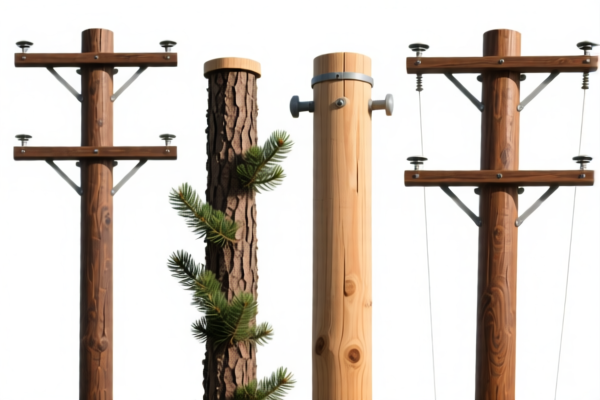
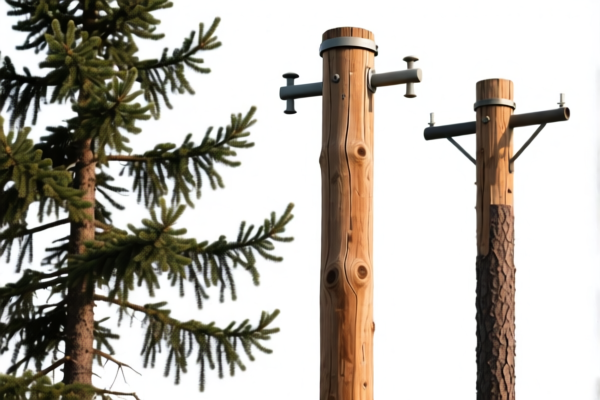
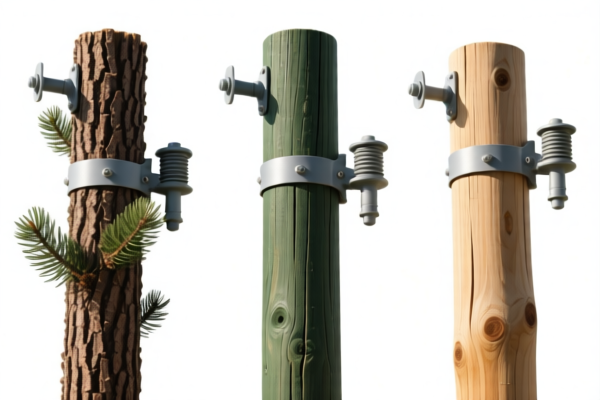
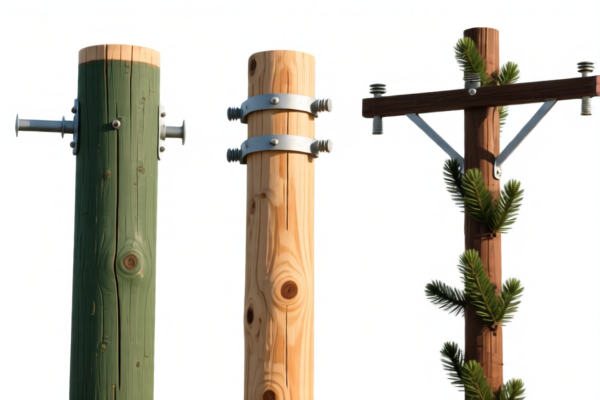
AI分析
🌲 Spruce & Fir Wooden Utility Poles: HS Code Classification & US Tariff Deep Dive (2026)
🌐 HS Code Reference & Customs Clearance Guide | 2026 Latest Tariff Rules | Professional Strategy for Wooden Infrastructure
📌 一、Product Definition: What Exactly Are "Spruce and Fir Utility Poles"?
Wooden utility poles are critical components of electrical, telecommunications, and infrastructure networks. In international trade, they are strictly classified based on raw material (Spruce/Fir = Softwood/Coniferous) and processing level (whether they are merely shaped or fully processed/laminated).
Key Classification Logic: * Material: Spruce and Fir belong to the Coniferous Wood (针叶木) category under Harmonized System Chapter 44. * Form: If they are roughly shaped but not chemically treated or further processed into veneers, they fall under Posts/Piles/Poles. If they are sawn/planned timber suitable for pole manufacturing, they fall under Sawn Wood. * US Trade Context: Most wooden poles from China are subject to high tariffs due to Section 301 and IEEPA provisions.
⚠️ Critical Distinction: * Raw/Roughly Shaped Poles (Untreated, simple cutting): Often fall under 4403 (Wood prepared for railway sleepers or other purposes, specifically poles/piles). * Sawn/Planed Timber (Processed lumber intended for poles): Often fall under 4407 (Wood sawn or chipped lengthwise, sliced or peeled).
📦 二、HS Code Classification Matrix (2026 Latest Tariff对照)
The following HS codes are extracted directly from your provided data. They represent different levels of processing for Spruce/Fir wood intended for utility poles.
| HS Code | Product Description (Chinese Summary) | Processing Level | Tariff Rate |
|---|---|---|---|
| 4403.24.01.12 | Spruce/Fir wood, form: Utility Pole, use: Telephone/Telegraph/Electric Pole. | Roughly Shaped (Directly shaped as a pole) | 35% |
| 4403.23.01.12 | Spruce/Fir wood, form: Wooden Utility Pole, use: Telephone/Telegraph/Electric. | Roughly Shaped (Directly shaped as a pole) | 35% |
| 4404.10.00.80 | Spruce/Fir (Coniferous), form: Pole, complies with pile/pole morphology. | Wooden Blocks/Rough Piles (Sawn/Chipped lengthwise but not sawn to size) | 35% |
| 4407.12.00.20 | Contains Spruce/Fir, complies with coniferous wood req, form: Wood processing/utilization. | Sawn/Planed Lumber (Processed timber, not yet a final pole shape) | 35% |
| 4407.12.00.59 | Contains Fir, complies with coniferous req, form: Wood processing product (Pole attribute). | Sawn/Planed Lumber (Other coniferous sawn wood) | 35% |
🔍 Key Insight: * 4403 vs. 4407: The difference lies in the degree of processing. * If the wood is cut into the final pole shape (tapered, trimmed) but not planed/smoothed for furniture, it typically falls under 4403. * If it is sawn into planks/lumber that will later be used to make poles or other items, it falls under 4407. * All 5 codes in your data share the same total tax rate of 35%.
💰 三、2026 US Tariff Rate Breakdown (Detailed Explanation)
✅ Applicable Country: USA (US)
✅ Origin: China (CN)
✅ Effective Date: Current trade war policies (Section 301 + IEEPA)
For ALL the HS codes listed above (4403.24.01.12, 4403.23.01.12, 4404.10.00.80, 4407.12.00.20, 4407.12.00.59), the tariff structure is identical.
🎯 Universal Tariff Structure for Spruce/Fir Wood Products
| Tax Component | Rate | Legal Basis & Explanation |
|---|---|---|
| 1. Base Tariff | 0.0% | Standard Most-Favored-Nation (MFN) rate for these specific sub-headings is often 0%. |
| 2. Section 301 Tariff | 25.0% | Additional duty under US Trade Act Section 301 against China. |
| 3. IEEPA Tariff (122 Clause) | 10.0% | Additional duty under International Emergency Economic Powers Act (IEEPA), often referenced in specific footnotes. |
| TOTAL TAX RATE | 35.0% | 0% + 25% + 10% = 35% |
📌 Tax Calculation:
Duty Payable = CIF Value (Cost + Insurance + Freight) × 35%📌 Legal Pathway:
Base Tariff→USITC Section 301 Footnote→IEEPA 122 Clause→ Final 35%.⚠️ Note on De Minimis:
These goods DO NOT qualify for the de minimis exemption (Section 321) if they are part of a larger commercial shipment or if the total value exceeds $800 per person per day. However, for large infrastructure projects (like utility poles), shipments are typically high-value, so tariffs will apply.
🛠️ 四、Customs Clearance Strategy & Practical Advice
✅ 1. Documentation Checklist (Must-Haves)
| Document | Requirement | Purpose |
|---|---|---|
| Commercial Invoice | Clearly state "Spruce and Fir Wooden Utility Poles" | Determines HS Code and Origin |
| Packing List | Detail dimensions, weight, and number of poles | Verifies quantity and prevents weight disputes |
| Product Specification Sheet | Specify Wood Species (Spruce/Fir), Treatment Status (Untreated/Treated) | Crucial: Untreated wood may require ISPM 15 fumigation certificates. |
| Bill of Lading (B/L) | Standard shipping document | Proof of shipment |
| Certificate of Origin | Form A or General Certificate of Origin | Proves China origin (triggering the 35% tax) |
⚠️ Phytosanitary Alert:
If the wooden poles are untreated, you MUST provide an ISPM 15 Fumigation Certificate or heat treatment mark. Otherwise, US Customs (CBP) and the USDA will reject or destroy the shipment for pest control risks.
✅ 2. Classification Strategy: 4403 vs. 4407
- If the poles are already cut to length and tapered: Use 4403.24.01.12 or 4403.23.01.12.
- Advantage: More accurate for "finished" pole shapes.
- If the goods are rough logs or blocks: Use 4404.10.00.80.
- If the goods are sawn planks/lumber: Use 4407.12.00.20 or 4407.12.00.59.
- Risk: Misdeclaring a processed pole as "lumber" to avoid inspection can lead to fines. Ensure the physical product matches the HS code description.
✅ 3. Cost-Saving Tips
- Pre-Arrangement Ruling: Apply for an Advance Ruling from CBP if your shipment volume is huge. This locks in the classification and tariff rate.
- Supply Chain Diversification: The 35% tariff is significant. Consider sourcing from non-China countries (e.g., Canada, Russia, or Southeast Asia if origin rules allow) to avoid the IEEPA/301 penalties.
- Packaging Optimization: Ensure minimal packaging weight to reduce CIF value (since tax is based on CIF).
🌍 五、Global Market Comparison (2026)
| Market | HS Code Trend | Approx. Tariff (China Origin) | Key Requirement |
|---|---|---|---|
| 🇺🇸 USA | 4403 / 4407 | 35% (0% Base + 25% Sec 301 + 10% IEEPA) | ISPM 15 (Phytosanitary), Detailed Description |
| 🇨🇳 China | 4403 / 4407 | 0% - 5% (Import Duty) | Standard customs clearance |
| 🇪🇺 EU | 4403 / 4407 | 0% - 3% (Standard) | FSC/PEFC Certification (Optional but recommended) |
| 🇨🇦 Canada | 4403 | 0% (CUSMA/USMCA) | Must originate in NAFTA region to be duty-free |
📌 Conclusion:
The US market is the most expensive due to the layered tariff structure (Base + 301 + IEEPA). For Spruce and Fir poles, the 35% total tax rate is fixed across all 5 HS codes in your dataset.
📌 六、Common Pitfalls & How to Avoid Them
❌ Pitfall 1: Ignoring the ISPM 15 Phytosanitary Requirement.
👉 Result: Shipment held at port, fumigated at your expense, or destroyed.
✅ Fix: Get a heat treatment certificate from the wood supplier before shipping.
❌ Pitfall 2: Misdeclaring "Utility Poles" as "Generic Wood Blocks" to hide value.
👉 Result: Customs audit, penalties, and potential seizure.
✅ Fix: Be transparent. The 35% tax is unavoidable for China-origin wood; focus on accurate documentation.
❌ Pitfall 3: Confusing Untreated vs. Treated wood.
👉 Result: If treated with creosote or copper chemicals, it may fall under a different HS code (Chapter 38) or face hazardous material regulations.
✅ Fix: Clearly state "Untreated" on the invoice if it is raw wood. If treated, provide MSDS and ensure it matches the declared HS code.
🎯 七、Final Checklist for Shippers
- [ ] Identify Wood Type: Confirm Spruce and Fir (Coniferous).
- [ ] Determine Processing Level: Rough Pole (4403) vs. Sawn Lumber (4407).
- [ ] Calculate Landed Cost: CIF Price + 35% Duty + Freight + Insurance.
- [ ] Secure Phytosanitary Cert: ISPM 15 treatment mark is mandatory.
- [ ] Prepare Docs: Invoice, Packing List, B/L, CO, Phytosanitary Cert.
📣 Action Plan:
📞 Consult your customs broker with the specific HS code (e.g.,
4403.24.01.12) and provide the ISPM 15 certificate in advance.
📉 Budget for 35% duty – there is no easy way to bypass the Section 301 and IEEPA tariffs for China-origin wood.
🌲 Ensure quality control on wood treatment and dimensions to avoid rejection.
✨ Accurate Classification = Predictable Costs = Smooth Clearance
💼 Don't let hidden tariffs kill your margin – declare correctly from day one!
用户评价
关于 HS 编码归类
协调制度(HS)是由世界海关组织(WCO)制定的国际贸易商品分类标准。全球 200 多个国家采用 HS 系统作为海关关税、贸易统计和进出口监管的基础。
每个 HS 编码遵循以下层级结构:
- 章(2 位)——商品大类(例如:第 84 章:机器和机械设备)
- 品目(4 位)——章内的更具体分类
- 子目(6 位)——国际通用细分,所有 WCO 成员国统一使用
- 本国细分(8-10 位)——各国自行扩展的细分编码,如美国 HTSUS 10 位编码
正确的 HS 编码归类对于顺利通关、准确缴纳关税和遵守贸易法规至关重要。错误归类可能导致海关延误、多缴关税或罚款。
从CN进口到US时,适用的关税税率可能包括:
- 最惠国(MFN)税率——适用于 WTO 成员国的标准关税税率
- 普通税率——适用于无贸易协定国家
- 贸易救济关税——附加关税,如 301 条款(反倾销)、232 条款(国家安全)或反补贴税
本页内容仅供参考。如需正式归类,请咨询当地海关或持牌报关代理。