Stainless Steel Nuts
CN → US| HS编码 | 关税税率 | 原产国 | 目的国 | 文档 |
|---|---|---|---|---|
| 7318160060 | 67.5% | CN | US | 官方文档 |
| 7318160060 | 67.5% | CN | US | 官方文档 |
| 7318152061 | 85.0% | CN | US | 官方文档 |
| 7318152091 | 85.0% | CN | US | 官方文档 |
| 7326908688 | 87.9% | CN | US | 官方文档 |
| 7326190080 | 87.9% | CN | US | 官方文档 |
商品图片
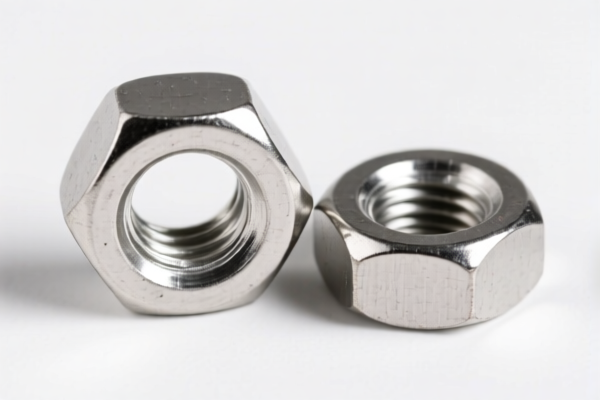
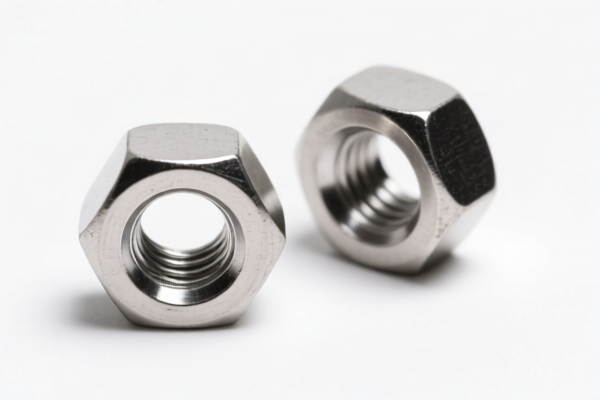
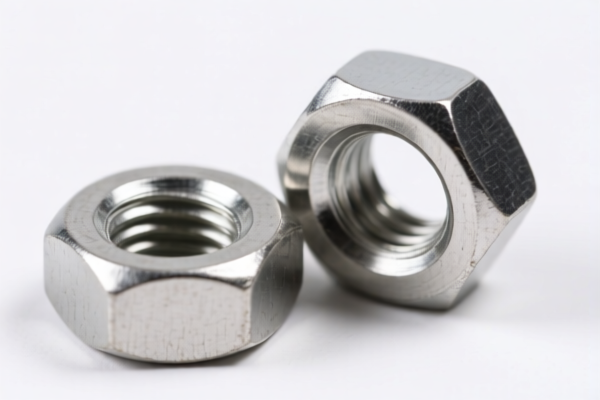
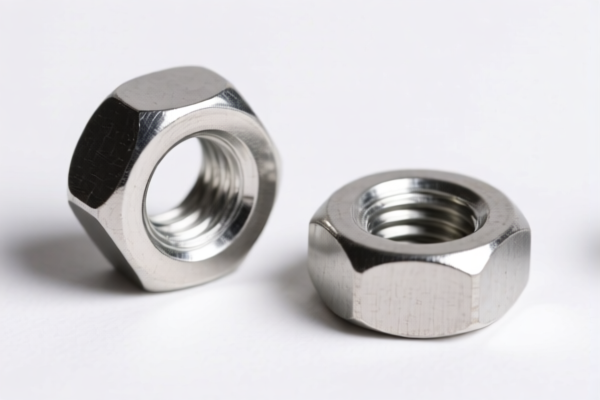
AI分析
⚙️ Stainless Steel Nuts (The Unsung Heroes of Industrial Fasteners)
🌐 HS Code Reference & Customs Clearance Guide | 2026 Latest Tariff Analysis | Professional Clearance Strategy
📌 I. Product Definition & Classification: What Exactly Are "Stainless Steel Nuts"?
Stainless steel nuts are threaded fasteners designed to mate with bolts or screws to clamp materials together. In international trade, their classification depends heavily on material precision and specific shape definitions.
Key Distinction: * True Stainless Steel Fasteners: Specifically designed for fastening, falling under Chapter 7318. * General Steel Articles: If the item doesn't meet the strict definition of a "nut" or is considered a "part" of a larger steel structure, it may fall under Chapter 7326.
⚠️ Critical Classification Point:
- If it is a dedicated nut (hexagonal, flanged, etc.) made of stainless steel → HS 7318.16.00.60
- If it is misclassified as a bolt or generic steel article → HS 7318.15.20.61 / 7326.90.86.88 (Higher Risk/Tax)
📦 II. HS Code Classification Details (2026 Latest Tariff Authority Comparison)
| HS Code | Product Description | Scenario | Tax Rate | Risk Level |
|---|---|---|---|---|
7318.16.00.60 |
Stainless Steel Nuts (Dedicated Fastener) | Standard hex nuts, flanged nuts, locking nuts made of stainless steel | 67.5% | 🟢 Low (Correct Classification) |
7318.15.20.61 |
Stainless Steel Bolts (Misclassification Risk) | If labeled as bolt but is a nut, or vice versa; high scrutiny | 85.0% | 🔴 High (Wrong Category) |
7326.90.86.88 |
Other Articles of Iron/Steel (Generic) | If material is ambiguous or deemed "other steel product" | 87.9% | 🔴 Very High (Wrong Chapter) |
7326.19.00.80 |
Forged/Stamped Steel Articles | If manufacturing process is emphasized over function | 87.9% | 🔴 Very High (Wrong Chapter) |
7318.15.20.91 |
Other Stainless Steel Fasteners (Bolts) | Alternative bolt classification, often used for similar hardware | 85.0% | 🔴 High (Wrong Category) |
🔍 Key Reminder:
- Nut vs. Bolt: A nut (7318.16) has internal threads; a bolt (7318.15) has external threads. Do not mix them up! - Stainless Steel: Must be clearly specified. If just "Steel," it may fall under 7326, increasing the base tax. - Chapter 7318 is the correct chapter for nuts and bolts. Chapter 7326 is for "Other articles of iron or steel" and should only be used if the item is NOT a standard fastener.
💰 III. 2026 Latest Tariff Rate Breakdown (Including Surcharges & Policy Add-ons)
✅ Applicable Country: United States (US)
✅ Origin: China (CN)
✅ Effective Time: Current (Based on Section 301 & IEEPA)
🎯 1. 7318.16.00.60 —— Stainless Steel Nuts (Correct Classification)
| Item | Content |
|---|---|
| Base Tariff | 0.0% (ad valorem) |
| Section 301 Surcharge | +7.5% (Specific to this subheading) |
| Section 232 (Aluminum/Steel) | +50% (Under 122 Clause for Steel Products) |
| Total Tax Rate | 67.5% |
| Tax Calculation | CIF Value × 67.5% |
| De Minimis Exemption | ❌ Not Eligible (Deny de minimis for steel/fasteners from China) |
| Legal Basis Path | USITC:7318.16.00.60 → Section 301: 7.5% → Section 232: 50% |
📌 Explanation:
- Although the base tariff is 0%, the Section 232 tariff on steel products adds a heavy 50%. - The Section 301 specific surcharge of 7.5% applies to this specific nut classification. - Total: 67.5%. This is the lowest possible rate for stainless steel nuts because it avoids the misclassification penalties.
🎯 2. 7318.15.20.61 / 7318.15.20.91 —— Stainless Steel Bolts (Misclassification or Alternative)
| Item | Content |
|---|---|
| Base Tariff | 0.0% |
| Section 301 Surcharge | +25.0% (Higher than nuts) |
| Section 232 (Aluminum/Steel) | +50% (Under 122 Clause for Steel Products) |
| Total Tax Rate | 85.0% |
| Tax Calculation | CIF Value × 85.0% |
| De Minimis Exemption | ❌ Not Eligible |
| Legal Basis Path | USITC:7318.15.20.61 → Section 301: 25% → Section 232: 50% |
📌 Note:
- If you mislabel a nut as a bolt, or vice versa, the Section 301 rate jumps to 25%. - Combined with the 50% Section 232 steel tariff, the total hits 85.0%. - Loss: 17.5% compared to correct nut classification.
🎯 3. 7326.90.86.88 / 7326.19.00.80 —— Other Steel Articles (Wrong Classification)
| Item | Content |
|---|---|
| Base Tariff | 2.9% |
| Section 301 Surcharge | +25.0% |
| Section 232 (Aluminum/Steel) | +50% (Under 122 Clause for Steel Products) |
| Total Tax Rate | 87.9% |
| Tax Calculation | CIF Value × 87.9% |
| De Minimis Exemption | ❌ Not Eligible |
| Legal Basis Path | USITC:7326.90.86.88 → Section 301: 25% → Section 232: 50% |
📌 Note:
- If the customs officer deems your item not to be a standard "nut" (Chapter 7318) but a "other steel article" (Chapter 7326), the base tax is 2.9%. - Plus 25% Section 301 and 50% Section 232. - Total: 87.9%. This is the highest rate and should be avoided at all costs.
🛠️ IV. Customs Clearance Practical Advice (Battle-Tested Pitfall Guide)
✅ 1. Required Documentation Checklist (Non-negotiable)
| Document | Mandatory | Explanation |
|---|---|---|
| ✅ Product Specification Sheet | ✔️ | Must clearly state: "Stainless Steel," "Nut," Material Grade (e.g., 304, 316). |
| ✅ Technical Drawing | ✔️ | Show internal threads to prove it is a nut, not a bolt. |
| ✅ Product Photos (Clear) | ✔️ | Show hex shape, thread type, and material label. |
| ✅ Commercial Invoice | ✔️ | Description: "Stainless Steel Hex Nuts, Grade 304, HS 7318.16.00.60." |
| ✅ Packing List | ✔️ | Weight, dimensions, and quantity. |
| ✅ Material Test Report | ✔️ | To prove Stainless Steel content (avoiding "Carbon Steel" misclassification). |
✅ 2. Declaration Tips (Key Mantra)
🔥 "Nut is Nut, Bolt is Bolt. Stainless Must Be Proved. Don't Be Lazy, Classify Correctly!"
| Scenario | Correct Declaration | Wrong Practice |
|---|---|---|
| Standard Hex Nut | 7318.16.00.60 |
Mislabeling as "Bolt" → 85% Tax |
| Flanged Nut | 7318.16.00.60 |
Mislabeling as "Steel Part" → 87.9% Tax |
| Nylon Insert Lock Nut | 7318.16.00.60 (Check if nylon is main) |
General "Hardware" → Risk of 87.9% |
| Stainless Steel Bolts | 7318.15.20.61 |
Mislabeling as "Nuts" → 85% Tax |
✅ 3. Special Case Handling
| Scenario | Handling Advice |
|---|---|
| Mixed Containers (Nuts + Bolts) | Declare separately! Nuts under 7318.16, Bolts under 7318.15. Do not lump them as "Fasteners." |
| Coated Nuts | If coating is minor (e.g., zinc plating on steel), it may change classification. For Stainless, coating is usually minimal. |
| Custom/Non-Standard Nuts | If shape is unusual, provide detailed drawings. Customs may still classify under 7318 if it functions as a nut. |
| Origin Marking | Ensure products are marked "Made in China" to avoid anti-circumvention claims. |
🌍 V. Global Market Comparison (2026 Latest)
| Country/Region | Recommended HS Code | Tariff (China Origin) | Certification | Note |
|---|---|---|---|---|
| 🇺🇸 USA | 7318.16.00.60 |
67.5% (7.5% Sec 301 + 50% Sec 232) | No specific certification required for fasteners | Highest duty due to Section 232 Steel Tariff |
| 🇨🇳 China | 7318.16.00.60 |
~5-6% | CCC (if applicable) | No Section 232 equivalent |
| 🇪🇺 EU | 7318.16.00.60 |
~6-7% | CE (if structural) | No Section 232 equivalent |
| 🇦🇺 Australia | 7318.16.00.60 |
~5% | No specific cert | Low duty |
| 🇯🇵 Japan | 7318.16.00.60 |
~3-5% | PSE (if electrical) | Low duty |
📌 Conclusion:
- USA is the most expensive market for stainless steel nuts due to Section 232 (50%) and Section 301 (7.5%) tariffs. - Correct classification (7318.16) is crucial to avoid the 85%+ rates. - Consider supply chain diversification if US margins are tight.
📌 VI. Common Errors & Pitfall Guide (Blood & Tears Lessons)
❌ Error 1: Labeling Nuts as "Bolts" or "Screws"
👉 Consequence: Rate jumps to 85.0% or 87.9% → Loss of 17.5-20.4% margin.
❌ Error 2: Vague Description "Hardware" or "Fasteners"
👉 Consequence: Customs assigns 7326 (Other Articles) → Rate 87.9% + delays.
❌ Error 3: Not Proving Stainless Steel Content
👉 Consequence: If deemed "Carbon Steel," Section 232 may still apply, but base tax changes. Risk of 87.9%.
❌ Error 4: Ignoring Section 232 Steel Tariff
👉 Consequence: Unexpected 50% bill at customs. Must be budgeted!
✅ Correct Practice:
"Stainless Steel Hex Nuts, Grade 304, HS 7318.16.00.60, Made in China"
🎯 VII. Conclusion: Precision Classification Saves Money!
🎯 Remember the Mantra:
🔹 "Nut is 67.5%, Bolt is 85%, Steel Part is 87.9%."
🔹 "Section 232 adds 50% to ALL steel/fasteners from China."
🔹 "Don't misclassify, or you pay 20% extra!"
📌 Pro Tip:
If your stainless steel nuts are originating from Vietnam, Mexico, Thailand, or Malaysia, you may be eligible for Section 232 Exemptions or lower tariffs.
Recommendation: Apply for an Advance Ruling from US Customs to confirm HS Code and tax liability before shipment.
📣 Immediate Action:
📞 Contact a professional customs broker + Provide product specs + Request HS Code Pre-Ruling
🚀 Let your stainless steel nuts clear smoothly, avoid overpayment, and boost profits!
✨ Professional Clearance Starts with Accurate Classification!
💼 Every cent of your cost deserves precise calculation!
用户评价
关于 HS 编码归类
协调制度(HS)是由世界海关组织(WCO)制定的国际贸易商品分类标准。全球 200 多个国家采用 HS 系统作为海关关税、贸易统计和进出口监管的基础。
每个 HS 编码遵循以下层级结构:
- 章(2 位)——商品大类(例如:第 84 章:机器和机械设备)
- 品目(4 位)——章内的更具体分类
- 子目(6 位)——国际通用细分,所有 WCO 成员国统一使用
- 本国细分(8-10 位)——各国自行扩展的细分编码,如美国 HTSUS 10 位编码
正确的 HS 编码归类对于顺利通关、准确缴纳关税和遵守贸易法规至关重要。错误归类可能导致海关延误、多缴关税或罚款。
从CN进口到US时,适用的关税税率可能包括:
- 最惠国(MFN)税率——适用于 WTO 成员国的标准关税税率
- 普通税率——适用于无贸易协定国家
- 贸易救济关税——附加关税,如 301 条款(反倾销)、232 条款(国家安全)或反补贴税
本页内容仅供参考。如需正式归类,请咨询当地海关或持牌报关代理。