Stationery Notebooks
CN → US| HS编码 | 关税税率 | 原产国 | 目的国 | 文档 |
|---|---|---|---|---|
| 9608100000 | 0.0% | CN | US | 官方文档 |
| 9609202000 | 17.5% | CN | US | 官方文档 |
| 9608200000 | 21.5% | CN | US | 官方文档 |
| 4820900000 | 35.0% | CN | US | 官方文档 |
| 4820104000 | 10.0% | CN | US | 官方文档 |
商品图片

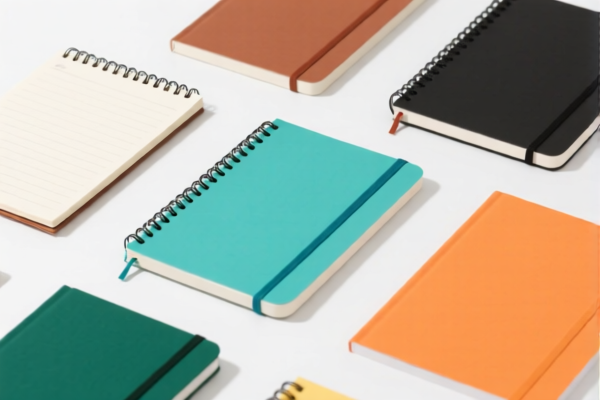
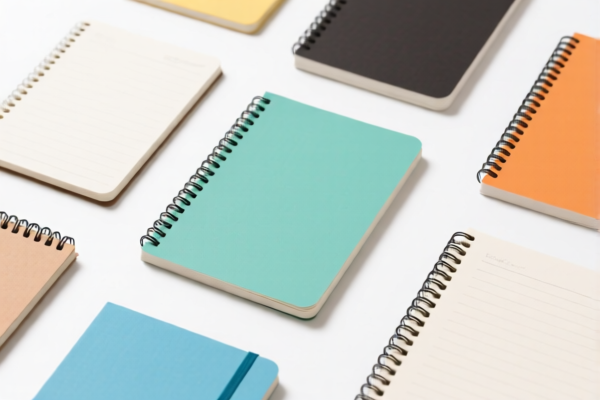

AI分析
📓 Stationery Notebooks: HS Code Classification & US Customs Clearance Guide
🌐 HS Code Reference & Customs Guide | 2026 Latest Tariff Analysis | Strategic Compliance for Stationery Imports
📌 I. Product Definition & Classification: What Exactly Are "Notebooks"?
Stationery, specifically notebooks, are essential tools for documentation, creativity, and organization in office, educational, and industrial settings. In international trade, "Stationery" is a broad category that requires precise sub-classification based on material composition and functionality.
For Paper-based Notebooks, the classification hinges on whether they are simple paper sheets bound together or part of a broader office supply system. The key distinction lies in the material (primarily paper/cardboard) and the structure.
⚠️ Critical Distinction:
- If the item is primarily paper/cardboard and used for recording (diaries, notebooks, letterheads) → Chapter 48.
- If the item includes writing instruments (pens, pencils, lead cores) → Chapter 96.
- Misclassification Risk: Declaring a paper notebook as a "pen" or vice versa can lead to massive tariff differences (e.g., 10% vs. 35%).
📦 II. HS Code Classification Details (2026 Latest Tariff Authority)
Based on the provided data for Stationery/Notebooks, here are the specific HS Codes and their rationales:
| HS Code | Product Description | Summary/Reasoning | Primary Material |
|--------|--------------------------|--------------------|
| 4820.10.40.00 | Notebooks & Registered Books | Stationery items belonging to paper products, fitting the definition of notebooks and registered books. | Paper/Cardboard |
| 4820.90.00.00 | Other Stationery Articles | Stationery items with paper/cardboard as the main inferred material, consistent with general office use. | Paper/Cardboard |
🔍 Important Note:
- The provided data focuses heavily on Chapter 48 (Paper Products) for notebooks.
- Codes9608.10.00.00(Pens),9609.20.20.00(Lead Cores), and9608.20.00.00(Markers) are also listed in the data but refer to writing instruments, not the notebooks themselves.
- If you are importing ONLY paper notebooks, you should focus on HS Codes 4820.10.40.00 and 4820.90.00.00.
- If you are importing a "Stationery Kit" containing both notebooks AND pens, you must declare them separately or ensure the primary character dictates the classification (often problematic under US rules).
💰 III. 2026 Latest Tariff Rate Breakdown (Including Surcharges)
✅ Applicable Country: United States (US)
✅ Origin: China (CN)
✅ Effective Time: 2025+ (Post-Trade War Surcharges)
🎯 1. 4820.10.40.00 —— Notebooks & Registered Books (Paper-Based)
This is the most likely classification for standard spiral-bound, stitched, or glued notebooks.
| Item | Content |
|---|---|
| Base Tariff | 0.0% (Ad Valorem) |
| Section 301 Additional Tariff | 0.0% |
| Section 122 Tariff | +10% |
| Total Tariff Rate | 10.0% |
| Tax Calculation | CIF Value × 10% |
| De Minimis Exemption | ❌ Not Eligible (Deny De Minimis) |
| Legal Basis Path | IEEPA:9903.01.25 → USITC:4820.10.40.00 → FOOTNOTE:122 |
📌 Explanation:
- While the base tariff is 0%, the Section 122 Tariff (10%) applies.
- No Section 301 (25%) is applied to this specific subheading in the provided data, making it significantly cheaper than other paper products (like4820.90.00.00).
- Crucial: Ensure the product is strictly "Notebooks" (bound paper) and not "Writing Instruments."
🎯 2. 4820.90.00.00 —— Other Stationery Articles (Paper-Based)
This code acts as a "catch-all" for stationery items made of paper/cardboard that do not fit specifically into 4820.10 (like letterheads, blank books, or specialized paper goods).
| Item | Content |
|---|---|
| Base Tariff | 0.0% |
| Section 301 Additional Tariff | +25.0% |
| Section 122 Tariff | +10% |
| Total Tariff Rate | 35.0% |
| Tax Calculation | CIF Value × 35% |
| De Minimis Exemption | ❌ Not Eligible (Deny De Minimis) |
| Legal Basis Path | IEEPA:9903.01.25 → USITC:4820.90.00.00 → FOOTNOTE:122 |
📌 Warning:
- This classification incurs a high tariff of 35%.
- Many importers mistakenly use this code for generic paper stationery.
- If your product is a standard notebook, try to classify it under4820.10.40.00(10%) instead of4820.90.00.00(35%).
🎯 Comparison: Writing Instruments (If Included in Shipment)
If your "Stationery" shipment includes Pens (9608.10.00.00) or Markers (9608.20.00.00), note the following:
| HS Code | Product | Base | 301 | 122 | Total Rate |
|---|---|---|---|---|---|
9608.10.00.00 |
Ballpoint/Pen Pens | 0.8¢/ea + 5.4% | 7.5% | 10% | ~21%+ (Complex) |
9608.20.00.00 |
Felt-Tip/Markers | 4.0% | 7.5% | 10% | 21.5% |
9609.20.20.00 |
Lead Cores/Pencil Refills | 0.0% | 7.5% | 10% | 17.5% |
⚠️ Complexity Alert:
- Pen tariffs include a specific duty (0.8¢ each) plus ad valorem rates.
- Do not mix paper notebooks with pens in a single HS Code declaration.
🛠️ IV. Customs Clearance Operational Advice (Practical Pitfall Guide)
✅ 1. Document Preparation Checklist (Must-Haves)
| Document | Required? | Explanation |
|---|---|---|
| ✅ Product Specification Sheet | ✔️ | Must clearly state: "Paper Notebook," "Bound Paper," "No Writing Instruments Included." |
| ✅ Commercial Invoice | ✔️ | Describe items as "Notebooks, Paper, Bound" not just "Stationery." |
| ✅ Packing List | ✔️ | Separate quantities if mixing notebooks with pens. |
| ✅ Material Declaration | ✔️ | Confirm main material is Paper/Cardboard (for Chapter 48). |
✅ 2. Classification Strategy (Key Tips)
🔥 Golden Rule: "Separate Materials, Separate Codes!"
| Scenario | Correct Classification | Error to Avoid |
|---|---|---|
| Pure Paper Notebooks | 4820.10.40.00 (10%) |
Do NOT classify as 9608 (Pens) → High risk of penalty. |
| Notebooks + Pens in One Box | Declare Two Lines: One for 4820.10.40.00, one for 9608.xxxx.xx |
Do NOT try to merge into one line item. |
| Blank Paper Pads | 4820.90.00.00 (35%) |
Attempt to classify as 4820.10 if not bound as a "notebook." |
| Plastic-Covered Notebooks | Still likely 4820.10 or 4820.90 |
If plastic is primary material, it might fall under Chapter 39 → Much Higher Tariff! |
✅ 3. Special Handling for Section 122 & 301
- Section 122 Tariff (10%): Applies to both
4820.10.40.00and4820.90.00.00. - Section 301 Tariff (25%): Only applies to
4820.90.00.00. - Savings Strategy:
- If your product can be reasonably described as a "Registered Book" or "Notebook" (bound, with pages), use
4820.10.40.00to save 25% in tariffs. - If it is an unbound pad or specialty paper, it may fall under
4820.90.00.00(35%).
🌍 V. Global Market Comparison (2026)
| Market | Recommended HS Code | Est. Total Tariff | Notes |
|---|---|---|---|
| 🇺🇸 USA | 4820.10.40.00 |
10% | Low risk, low tariff. Best for standard notebooks. |
| 🇺🇸 USA | 4820.90.00.00 |
35% | High tariff. Avoid if possible. |
| 🇪🇺 EU | 4820.10 |
0% - 2.5% | No Section 301/122. Much cheaper. |
| 🇨🇳 China | 4820.10 |
5% - 8% | Import duty only, no trade war surcharges. |
📌 Conclusion:
- US Importers: The 10% tariff on4820.10.40.00is highly competitive compared to other paper products.
- Key Advantage: Notebooks are less impacted by trade wars than electronics or textiles.
- Risk: Misclassifying paper notebooks as "plastic stationery" or "writing instruments" can lead to incorrect duty payments and audits.
📌 VI. Common Errors & Pitfalls (Lessons Learned)
❌ Error 1: Declaring "Notebooks" under 9608 (Pens)
👉 Consequence: Incorrect duty calculation (penalties + 0.8¢/ea error).
👉 Fix: Separate items. Notebooks = Chapter 48. Pens = Chapter 96.
❌ Error 2: Using 4820.90.00.00 for Standard Notebooks
👉 Consequence: Paying 35% instead of 10%.
👉 Fix: Provide photos showing bound pages, binding type (spiral/stitch).
❌ Error 3: Not Declaring "Section 122" Applicability
👉 Consequence: Underpayment of 10%.
👉 Fix: Always include Section 122 (10%) in US calculations for Chinese-origin paper goods.
✅ Correct Declaration Example:
"Paper Notebook, Spiral Bound, 100 Sheets, No Writing Instruments Included, Model NB-101"
HS Code:4820.10.40.00
Tariff: 10%
🎯 VII. Conclusion: Professional Classification, Cost Savings!
🎯 Remember the Rule:
🔹 "Paper Notebooks: Use 4820.10 (10%)!"
🔹 "Other Paper Stationery: 4820.90 (35%)!"
🔹 "Pens & Pencils: Separate Chapter 96!"
📌 Pro Tip:
If you are importing large volumes, consider applying for an Advance Ruling from US Customs to confirm
4820.10.40.00applicability. This protects you from retroactive duty assessments.
📣 Immediate Action:
📞 Contact Your Broker: Provide clear product photos showing binding type and paper content.
🚀 Optimize Costs: Ensure your invoice separates Notebooks from Pens to apply the correct, lower tariff rates.
✨ Precision in Classification, Profit in Logistics!
💼 Don’t let a 25% tariff gap eat your margin!
用户评价
关于 HS 编码归类
协调制度(HS)是由世界海关组织(WCO)制定的国际贸易商品分类标准。全球 200 多个国家采用 HS 系统作为海关关税、贸易统计和进出口监管的基础。
每个 HS 编码遵循以下层级结构:
- 章(2 位)——商品大类(例如:第 84 章:机器和机械设备)
- 品目(4 位)——章内的更具体分类
- 子目(6 位)——国际通用细分,所有 WCO 成员国统一使用
- 本国细分(8-10 位)——各国自行扩展的细分编码,如美国 HTSUS 10 位编码
正确的 HS 编码归类对于顺利通关、准确缴纳关税和遵守贸易法规至关重要。错误归类可能导致海关延误、多缴关税或罚款。
从CN进口到US时,适用的关税税率可能包括:
- 最惠国(MFN)税率——适用于 WTO 成员国的标准关税税率
- 普通税率——适用于无贸易协定国家
- 贸易救济关税——附加关税,如 301 条款(反倾销)、232 条款(国家安全)或反补贴税
本页内容仅供参考。如需正式归类,请咨询当地海关或持牌报关代理。