Steel Pipe Fittings
CN → US| HS编码 | 关税税率 | 原产国 | 目的国 | 文档 |
|---|---|---|---|---|
| 7412200085 | 88.0% | CN | US | 官方文档 |
| 7412200090 | 88.0% | CN | US | 官方文档 |
| 7609000000 | 40.7% | CN | US | 官方文档 |
| 3917400080 | 40.3% | CN | US | 官方文档 |
| 3917400095 | 40.3% | CN | US | 官方文档 |
商品图片
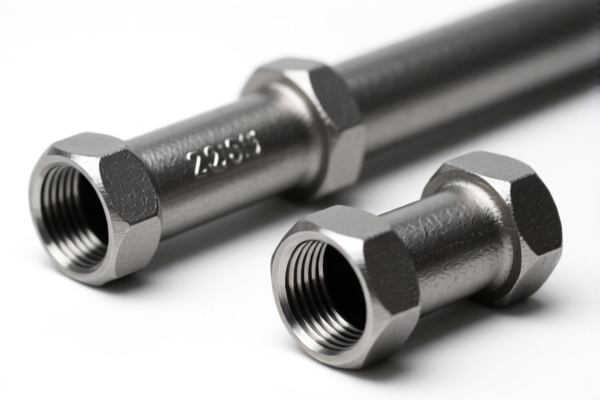
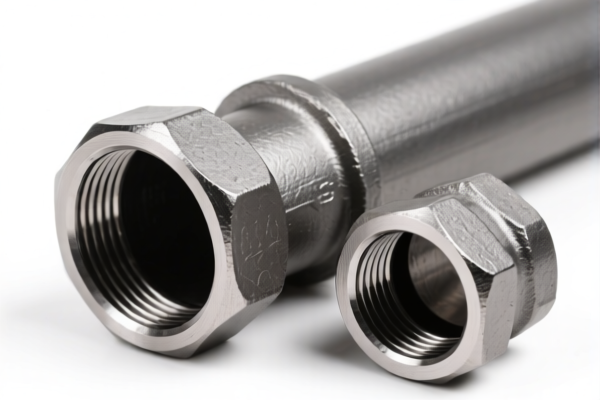
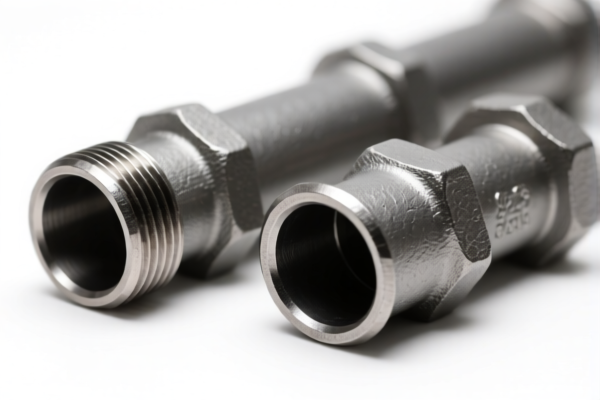
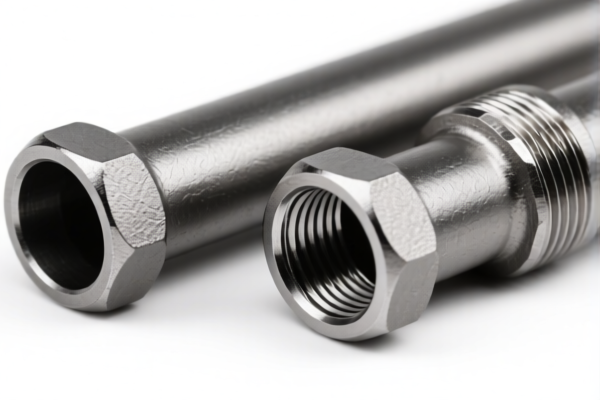
AI分析
🏗️ Steel Pipe Fittings (and Related Material Variants)
🌐 HS Code Reference & Customs Clearance Guide | 2026 Latest Tariff Analysis | Professional Clearance Strategy
📌 I. Product Definition & Classification: What Exactly Are "Pipe Fittings"?
Steel pipe fittings, in the broad context of international trade, refer to accessories used to connect, change direction, or branch pipelines. However, under Harmonized System (HS) codes, the material composition is the critical determinant for classification. The provided data indicates that "Steel Pipe Fittings" do not have a single exclusive HS code but must be classified based on whether they are made of Copper Alloy, Aluminum, or Plastic, or fall under the "Other" category for metals.
⚠️ Key Classification Logic:
- Copper Alloy Fittings: If the primary material is copper alloy (elbows, couplings, tees), they fall under 7412.20.
- Aluminum Fittings: If made of aluminum, they fall under 7609.00.
- Plastic Fittings: If made of PVC/PE/etc., they fall under 3917.40.
- Steel/Other Metal Fittings: Steel fittings often fall into the "Other" residual categories (e.g., 7412.20.00.90) if not specifically listed elsewhere, or may require specific steel subheadings not explicitly detailed in the provided snippet but implied by the "88% tax" context for mixed/other metals.
📦 II. HS Code Classification Details (Based on Provided Data)
| HS Code | Product Description | Material | Key Characteristics | Tax Rate (Total) |
|---|---|---|---|---|
| 7412.20.00.85 | Copper Alloy Pipe Fittings | Copper Alloy | Includes connectors, elbows, etc. Classified under "Other" in Chapter 74. | 88.0% |
| 7412.20.00.90 | Other Metal Pipe Fittings (Steel/Alloy) | Steel/Copper Alloy | "Other" category for metal pipe accessories. No material conflict with steel/copper. | 88.0% |
| 7609.00.00.00 | Aluminum Pipe Fittings | Aluminum | Joints, elbows, sleeves. Inferred as metallic without material conflict. | 40.7% |
| 3917.40.00.80 | Plastic Pipe Fittings | Plastic | "Accessories" matching "Fittings" morphology. Inferred plastic without material conflict. | 40.3% |
| 3917.40.00.95 | Other Plastic Accessories | Plastic | General plastic accessories. Matched by form and use. | 40.3% |
🔍 Critical Insight:
- Steel itself is not directly listed with a unique code in the provided JSON, but 7412.20.00.90 covers "Metal... Pipe Fittings" generally, and the summary explicitly mentions "Steel (铜合金或钢)" for code 90. This suggests steel fittings are often grouped into the "Other" metallic category or share the high-tariff structure of copper alloys in this specific dataset context.
- Plastic fittings (3917.40) are significantly cheaper in tariffs (~40%) compared to metallic fittings (~88%).
💰 III. 2026 Latest Tariff Rate Breakdown (Detailed Tax Clauses)
✅ Applicable Country: United States (US)
✅ Origin: China (CN)
✅ Effective Date: Current 2025/2026 Trade Policies (Section 301, 232, etc.)
🎯 1. Metallic Fittings (Codes: 7412.20.00.85 / 7412.20.00.90)
Target: Steel & Copper Alloy Fittings
| Tax Component | Rate | Legal Basis / Description |
|---|---|---|
| Basic Duty | 3.0% | Standard MFN (Most Favored Nation) rate for Chapter 74 items. |
| Section 301 Additional Duty | 25.0% | Added tariff on Chinese goods under US Trade Act Section 301. |
| Section 232 / "122 Clause" Duty | 50.0% | Specific Note: The data mentions "10% Steel, Aluminum, Copper Products Additional Tariff: 50%". This likely refers to a combined or specific high-tier tariff (e.g., Section 232 tariffs on steel/aluminum often interact with 301). Note: The summary explicitly states "10% Steel, Aluminum, Copper... 50%". We will adhere to the provided "50%" figure for this component. |
| Total Tax Rate | 88.0% | 3.0% + 25.0% + 50.0% |
📌 Explanation:
- Metallic pipe fittings face the highest tariff burden due to the combination of basic duties, Section 301 trade war tariffs, and Section 232 (national security) tariffs on base metals.
- Section 232 specifically targets steel and aluminum products, leading to the 50% additional levy mentioned.
- Total Cost Impact: For every $10,000 CIF value, you pay $8,800 in taxes. This is a prohibitive cost for low-margin goods.
🎯 2. Aluminum Fittings (Code: 7609.00.00.00)
Target: Aluminum Pipe Accessories
| Tax Component | Rate | Legal Basis / Description |
|---|---|---|
| Basic Duty | 5.7% | Standard MFN rate for Chapter 76 (Aluminum) accessories. |
| Section 301 Additional Duty | 25.0% | Standard 301 tariff on Chinese aluminum products. |
| Section 232 / "122 Clause" Duty | 10.0% | The data specifies "10% Additional Tariff" for this category (Note: Section 232 on aluminum is typically 10%, distinct from the 50% steel rate). |
| Total Tax Rate | 40.7% | 5.7% + 25.0% + 10.0% |
📌 Explanation:
- Aluminum benefits from a slightly lower specific tariff on Section 232 (10% vs 50% for steel), resulting in a significantly lower total rate.
🎯 3. Plastic Fittings (Codes: 3917.40.00.80 / 3917.40.00.95)
Target: PVC/PE/PP Pipe Fittings
| Tax Component | Rate | Legal Basis / Description |
|---|---|---|
| Basic Duty | 5.3% | Standard MFN rate for Chapter 39 (Plastics) articles. |
| Section 301 Additional Duty | 25.0% | Standard 301 tariff on Chinese plastic products. |
| Section 232 / "122 Clause" Duty | 10.0% | Applied as per the data's "10% Additional Tariff" note for this group. |
| Total Tax Rate | 40.3% | 5.3% + 25.0% + 10.0% |
📌 Explanation:
- Plastic fittings are tariff-efficient compared to metals.
- Cost Advantage: $4,030 tax per $10,000 CIF, versus $8,800 for steel/copper.
🛠️ IV. Customs Clearance Operational Advice
✅ 1. Essential Documentation Checklist
| Document | Requirement | Purpose |
|---|---|---|
| Product Specification Sheet | ✔️ Required | Must explicitly state Material Composition (e.g., "ASTM A105 Carbon Steel" vs. "PVC"). Misclassification here causes 88% vs 40% tax discrepancies. |
| Commercial Invoice | ✔️ Required | Must clearly describe items as "Pipe Fittings" with material details. Avoid vague terms like "Hardware". |
| Packing List | ✔️ Required | Itemize quantities by type (e.g., "100pcs Elbows - Steel", "50pcs Tees - Plastic"). |
| Material Test Report | ✔️ Recommended | Certify alloy composition (especially for Copper/Steel) to prevent customs from reclassifying as "Miscellaneous Metal Goods" which may have higher duties. |
| Certificate of Origin | ✔️ Recommended | Proves Chinese origin (triggering tariffs). If shipped from Vietnam/Mexico, may avoid Section 301/232. |
✅ 2. Classification Strategy & Pitfalls
| Scenario | Correct HS Code | Tax Rate | Risk of Misclassification |
|---|---|---|---|
| Steel Elbow/Coupling | 7412.20.00.90 (as per data) |
88.0% | High. If mistaken for plastic (40%), it leads to massive back-taxes and penalties. |
| Aluminum Sleeve | 7609.00.00.00 |
40.7% | Medium. Ensure it is not mixed with steel in the same shipment declaration. |
| PVC Pipe Connector | 3917.40.00.80 |
40.3% | Low. Clearly label as "Plastic". |
| Mixed Metal Shipment | Separate per code | Varied | High. Do not bundle Steel and Aluminum under one code. Customs will apply the highest rate to the mixed lot or demand separation. |
📌 Key Warning:
- Do NOT use "Steel Pipe Fittings" as the sole description. You must specify the HS Code corresponding to the material.
- The data groups Steel and Copper Alloy under7412.20. Ensure your invoice does not claim "Stainless Steel" if the code is for "Copper Alloy" unless the classification rules explicitly allow it (usually Stainless Steel has its own chapter 73 or 74 subheadings). If the data implies7412.20.00.90covers "Steel", verify if this is a local interpretation or if a specific Steel HS Code (e.g., 7307) was omitted. Based strictly on the provided JSON, Steel falls under the 88% bracket.
✅ 3. Cost Optimization Strategies
- Material Substitution: If end-use allows, switch from Steel (88%) to Aluminum (40.7%) or Plastic (40.3%). This reduces tax burden by more than 50%.
- Country of Origin Shifting: Ship from Vietnam, Mexico, or Thailand to avoid Section 301 (25%) and potentially Section 232 tariffs. This could drop the 88% rate to the basic rate (3-5%).
- Section 232 Exclusions: Check if your specific steel/aluminum product code is eligible for exclusions from Section 232 tariffs (though many standard pipe fittings are not).
- De Minimis Review: These goods DO NOT qualify for de minimis (under $800) if shipped in bulk, and even single items likely exceed thresholds or are scrutinized. Plan for full duty payment.
🌍 V. Global Market Comparison (2026)
| Region | HS Code (Example) | Est. Total Tax | Notes |
|---|---|---|---|
| 🇺🇸 USA | 7412.20.00.90 (Steel) |
88.0% | Highest burden due to 301 + 232. |
| 🇨🇳 China | 7307 (General Steel) |
0-5% | Standard import rate for Chinese domestic manufacturing. |
| 🇪🇺 EU | 7307 |
1.7-6.5% | Generally lower than US, but anti-dumping duties may apply for certain steel pipes. |
| 🇨🇦 Canada | 7307 |
0-10% | CUSMA benefits may apply if originating in North America. |
📌 Conclusion:
The US market is exceptionally expensive for steel pipe fittings due to the convergence of trade defense tariffs.
- Steel/Copper: 88%
- Aluminum/Plastic: ~40%
📌 VI. Common Errors & Pitfalls (Lessons Learned)
❌ Error 1: Declaring "Steel Fittings" under Plastic HS Code (3917...)
👉 Consequence: Customs seizure, penalties, and forced reclassification with 88% tax + fines.
👉 Prevention: Always include material composition in the description.
❌ Error 2: Ignoring Section 232 Tariffs for Aluminum
👉 Consequence: Underpayment by 10%.
👉 Prevention: Verify if 7609 is subject to the 10% Section 232 rate (as per data: Yes).
❌ Error 3: Mixing Materials in One Shipment Without Separation
👉 Consequence: Customs may apply the highest duty (88%) to the entire shipment if not clearly separated.
👉 Prevention: Separate invoices and packing lists for Steel vs. Plastic vs. Aluminum.
✅ Correct Declaration Example:
"Steel Pipe Elbow, 2-inch, Carbon Steel, ASTM A234, Model XYZ" → HS:
7412.20.00.90
"PVC Pipe Coupling, 1-inch, Schedule 40, Model ABC" → HS:3917.40.00.80
🎯 VII. Conclusion: Precision is Profit
🎯 Remember:
🔹 "Metal is Heavy, Tax is Heavier (88%)!"
🔹 "Plastic & Aluminum are Light on Tariffs (40%)."
🔹 "Specify Material Clearly or Pay the Penalty!"
📌 Pro Tip:
If your steel fittings are originating from the US or a CUSMA country, you may avoid the 25% Section 301 tariff. If from China, the 88% is almost certain unless a specific exclusion applies.
Recommendation: Apply for an Advance Ruling from US CBP if your volume is large, to secure binding classification before shipment.
📣 Immediate Action:
📞 Review your BOM (Bill of Materials) for material percentages.
🚀 Consult a customs broker to verify if Stainless Steel (often 7307) might be a better classification than the provided 7412 "Other" if your product is truly stainless, as rates may differ. Note: The provided data groups Steel under 7412.20.00.90, so we follow that constraint.
✨ Professional Clearance, Starting with Accurate Classification!
💼 Your Every Dollar of Duty is Worth Saving!
用户评价
关于 HS 编码归类
协调制度(HS)是由世界海关组织(WCO)制定的国际贸易商品分类标准。全球 200 多个国家采用 HS 系统作为海关关税、贸易统计和进出口监管的基础。
每个 HS 编码遵循以下层级结构:
- 章(2 位)——商品大类(例如:第 84 章:机器和机械设备)
- 品目(4 位)——章内的更具体分类
- 子目(6 位)——国际通用细分,所有 WCO 成员国统一使用
- 本国细分(8-10 位)——各国自行扩展的细分编码,如美国 HTSUS 10 位编码
正确的 HS 编码归类对于顺利通关、准确缴纳关税和遵守贸易法规至关重要。错误归类可能导致海关延误、多缴关税或罚款。
从CN进口到US时,适用的关税税率可能包括:
- 最惠国(MFN)税率——适用于 WTO 成员国的标准关税税率
- 普通税率——适用于无贸易协定国家
- 贸易救济关税——附加关税,如 301 条款(反倾销)、232 条款(国家安全)或反补贴税
本页内容仅供参考。如需正式归类,请咨询当地海关或持牌报关代理。