Steel Structure Components
CN → US| HS编码 | 关税税率 | 原产国 | 目的国 | 文档 |
|---|---|---|---|---|
| 8431499025 | 85.0% | CN | US | 官方文档 |
| 7308909590 | 85.0% | CN | US | 官方文档 |
| 7308906000 | 85.0% | CN | US | 官方文档 |
| 8431499081 | 85.0% | CN | US | 官方文档 |
| 7308909590 | 85.0% | CN | US | 官方文档 |
商品图片
AI分析
🏗️ Steel Structure Components
🌐 HS Code Reference & Customs Clearance Guide | 2026 Latest Tariff Analysis | Professional Clearance Strategy
📌 I. Product Definition & Classification: What Exactly Are "Steel Structure Components"?
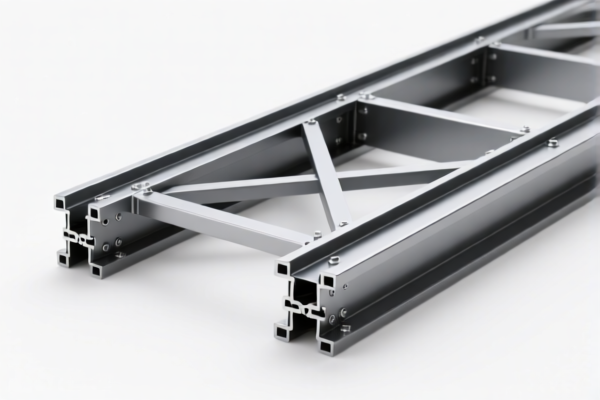
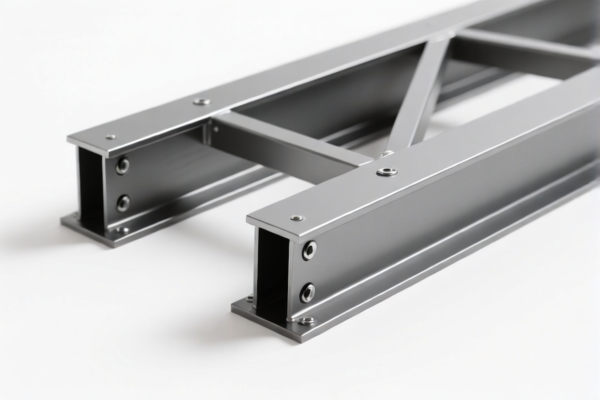
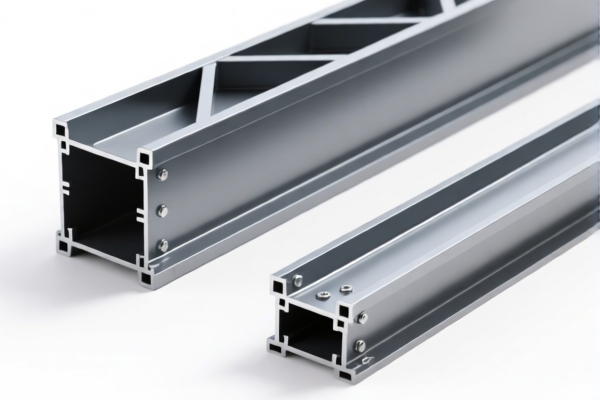
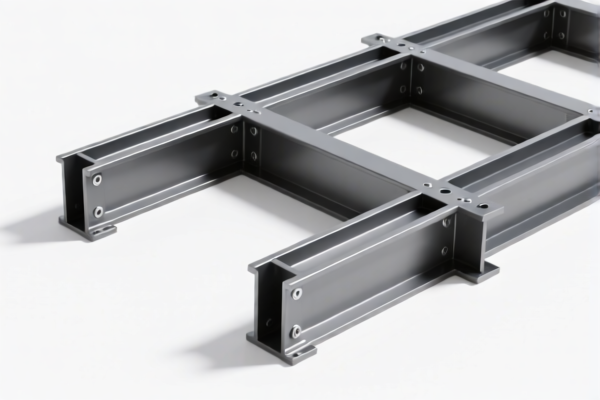
Steel Structure Components refer to prefabricated or fabricated steel parts used in the construction of buildings, bridges, industrial plants, and other large-scale structures. In international trade, these items are generally classified under Chapter 73 (Articles of Iron or Steel) or Chapter 84 (Machinery and Mechanical Appliances), depending on their specific function, material processing, and end-use.
Key Distinction: * Structural Articles (Chapter 73): Items primarily used as load-bearing structural elements (e.g., beams, columns, trusses, bridges). * Machine Parts (Chapter 84): Items that are specific parts of machinery (e.g., excavator arms, crane jibs, specific mechanical joints) and not general structural supports.
⚠️ Critical Classification Point:
- If the item is a general steel beam, column, or bridge part → Chapter 73 (7308)
- If the item is a specific part of a machine (like an excavator arm) and not a general structural component → Chapter 84 (8431)
- Do not mix general structural steel with machinery parts unless the specific mechanical function dictates Chapter 84.
📦 II. HS Code Classification Details (2026 Latest Tariff Authority Comparison)
Based on the provided data, here are the four valid HS Codes for "Steel Structure Components," along with their specific justifications and tax implications.
| HS Code | Product Description | Classification Logic (Why this code?) | Total Tax Rate |
|---|---|---|---|
| 8431.49.90.25 | Parts of machinery (Metal Parts) | Summary: Treated as "Metal Parts" category. Fits the morphology of spare parts/components. | 85.0% |
| 7308.90.95.90 | Steel Structures & Components | Summary: Name includes material (Steel) and form (Structure Components). Fits "Steel Structures and Parts" classification. | 85.0% |
| 7308.90.60.00 | Steel Structural Units | Summary: Material is steel; parts belong to the category of structural units. No material conflict. | 85.0% |
| 8431.49.90.81 | Steel Forgings / Mechanical Parts | Summary: Material is steel forgings; parts fit the use attribute of mechanical parts. Classified as spare parts/goods. | 85.0% |
🔍 Key Insight:
- All four HS Codes listed in the source data result in a Total Tax Rate of 85.0% for imports into the US from China.
- The choice between Chapter 73 (7308) and Chapter 84 (8431) depends on whether the component is a general structural element (7308) or a specific machine part (8431).
- 7308.90.60.00 and 7308.90.95.90 are the most common for general steel structures.
- 8431.49.90.25 and 8431.49.90.81 are used when the steel part is specifically identified as a "part of machinery" (e.g., for excavators, cranes).
💰 III. 2026 Latest Tariff Rate Breakdown (Including Surcharges & Policy Add-ons)
✅ Applicable Country: United States (US)
✅ Country of Origin: China (CN)
✅ Effective Date: Ongoing (Including subsequent imports)
🎯 1. General Breakdown for All Listed HS Codes
| Item | Content |
|---|---|
| Base Tariff Rate | 0.0% (Ad Valorem) |
| Section 301 / Additional Tariff | +25.0% |
| Section 122 / Aluminum & Steel Surcharge | +50.0% (Specific to steel, aluminum, and copper products) |
| Total Effective Rate | 85.0% |
| Tax Calculation | CIF Value × 85% |
| De Minimis Exemption | ❌ Not Applicable (High tariff items are excluded from $800 de minimis) |
| Legal Basis Path | Base: 0% → Section 301: +25% → Section 122 (Steel/Aluminum): +50% → Total: 85% |
📌 Explanation:
- "Base Tariff 0%": Most steel structures and machinery parts have a low base MFN rate.
- "Additional Tariff 25%": Refers to the Section 301 Tariffs imposed on a wide range of Chinese goods.
- "Section 122 Tariff 50% for Steel/Aluminum/Copper": This is a critical surcharge for steel products under the Section 122 authority (19 U.S.C. § 1862). It specifically targets imports that threaten national security due to excessive quantities. This is why the rate jumps to 85%.
- Total 85%: This is an extremely high effective tariff. It must be factored into all cost models.
🛠️ IV. Customs Clearance Practical Advice (实战避坑指南)
✅ 1. Preparation Checklist (Essential Documents)
| Document | Required? | Notes |
|---|---|---|
| ✅ Product Specifications | ✔️ | Must clearly state: Material (e.g., A36 Steel, S355), Dimensions, Weight, Coating (Galvanized/Painted). |
| ✅ Technical Drawings | ✔️ | To prove if it is a "Structure" (7308) or "Machine Part" (8431). |
| ✅ Bill of Lading / Commercial Invoice | ✔️ | Must match the declared HS Code and description exactly. |
| ✅ Origin Certificate | ✔️ | To confirm Country of Origin (China) for accurate tariff application. |
| ✅ Material Test Reports | ✔️ | To verify steel grade, especially for structural integrity claims. |
| ✅ Part List (if machinery) | ✔️ | If claiming 8431, provide a list showing which machine it belongs to. |
✅ 2. Classification Strategy (Key Tips)
🔥 "Structure vs. Part: Know the Difference!"
| Scenario | Recommended HS Code | Risk if Misclassified |
|---|---|---|
| General Steel Beams/Columns for Building | 7308.90.60.00 or 7308.90.95.90 | If misclassified as machinery, may face scrutiny, but tax rate is same (85%). |
| Excavator Arm / Crane Jib | 8431.49.90.25 or 8431.49.90.81 | If misclassified as general structure, customs may ask for proof of mechanical function. |
| Steel Forgings (Specific mechanical part) | 8431.49.90.81 | Must prove it is a "forging" and a "machine part." |
| Mixed Containers | Separate Lines | Do not mix general structural steel with machinery parts. Declare separately to avoid audit risks. |
✅ 3. Special Considerations
| Situation | Handling Advice |
|---|---|
| Section 122 Exemptions | Historically, some steel products were exempt from the 50% surcharge under specific conditions. Check if your product still qualifies. If not, the 50% is mandatory. |
| Anti-Dumping (AD) / Countervailing Duty (CVD) | Some specific steel products (e.g., certain pipes, plates) may have additional AD/CVD rates. Verify if your HS Code has separate AD/CVD cases. |
| Transshipment Risks | Do not route through third countries to hide origin. US Customs strictly enforces origin rules. |
| De Minimis ($800) | ❌ Not Allowed. Items with high tariffs (like steel structures) are explicitly excluded from the $800 de minimis exemption. |
🌍 V. Global Market Comparison (2026 Latest)
| Country/Region | Recommended HS Code | Tariff (China Origin) | Key Certifications | Notes |
|---|---|---|---|---|
| 🇺🇸 USA | 7308.90.60.00 / 8431.49.90.xx | 85.0% (0% Base + 25% Sec 301 + 50% Sec 122) | None required for customs, but engineering standards may apply | Highest tariff burden. |
| 🇨🇳 China | 7308.90.60.00 / 8431.49.90.xx | 0% (Export) | None for export | No export tax. |
| 🇪🇺 EU | 7308.90.60.00 | ~1.7% - 4.5% | CE, EN Standards | No Section 122 equivalent. |
| 🇮🇳 India | 7308.90.60.00 | ~7.5% - 10% | BIS Certification | Basic Customs Duty + Social Welfare Surcharge. |
| 🇯🇵 Japan | 7308.90.60.00 | 0% - 1.9% | JIS Standards | Low tariff, strict quality checks. |
📌 Conclusion:
- The US is the most expensive market for steel structure components due to the 85% total tariff.
- EU, Japan, and India are significantly more cost-effective for tariff purposes.
- For US-bound goods, cost optimization must focus on supply chain restructuring (e.g., non-China origin) or product redesign to qualify for different classifications (if possible).
📌 VI. Common Mistakes & Pitfalls (Lessons Learned)
❌ Mistake 1: Declaring "Steel Structure" as "General Cargo" to avoid scrutiny
👉 Consequence: Customs audit leads to delays, penalties, and retroactive application of the 85% tariff + fines.
❌ Mistake 2: Ignoring the Section 122 50% Surcharge
👉 Consequence: Underpaying duties by 50%. Customs will assess back taxes + interest + penalties.
❌ Mistake 3: Mixing "General Structural Steel" with "Machinery Parts" in one declaration
👉 Consequence: Complex classification review. Risk of misclassification errors.
❌ Mistake 4: Assuming De Minimis ($800) applies
👉 Consequence: Package seized, tax owed, and entry denied.
✅ Correct Practice:
"Steel Structural Beam, ASTM A36, Galvanized, 10ft Length, for Industrial Building Framework"
OR
"Excavator Arm Assembly, Steel Forging, Part for Hydraulic Excavator, Model XYZ"
🎯 VII. Conclusion: Professional Clearance for Cost Efficiency
🎯 Remember the Key Points:
🔹 "Structure = 7308, Machine Part = 8431. Both = 85% Total Tax."
🔹 "Section 122 50% is the killer for Steel. Don't ignore it."
🔹 "No De Minimis for High-Tariff Steel."
📌 Pro Tip:
If your steel structure components are originating from Vietnam, Mexico, or Canada (USMCA), you may qualify for 0% or low tariffs.
Recommendation:
📞 Consult a licensed customs broker to apply for an Advance Ruling (Ruling Letter) for your specific steel parts.
🚀 Consider supply chain diversification to avoid the 85% US tariff burden.
✨ Professional Clearance, Starting from Accurate Classification!
💼 Every cent of cost is worth precise calculation!
用户评价
关于 HS 编码归类
协调制度(HS)是由世界海关组织(WCO)制定的国际贸易商品分类标准。全球 200 多个国家采用 HS 系统作为海关关税、贸易统计和进出口监管的基础。
每个 HS 编码遵循以下层级结构:
- 章(2 位)——商品大类(例如:第 84 章:机器和机械设备)
- 品目(4 位)——章内的更具体分类
- 子目(6 位)——国际通用细分,所有 WCO 成员国统一使用
- 本国细分(8-10 位)——各国自行扩展的细分编码,如美国 HTSUS 10 位编码
正确的 HS 编码归类对于顺利通关、准确缴纳关税和遵守贸易法规至关重要。错误归类可能导致海关延误、多缴关税或罚款。
从CN进口到US时,适用的关税税率可能包括:
- 最惠国(MFN)税率——适用于 WTO 成员国的标准关税税率
- 普通税率——适用于无贸易协定国家
- 贸易救济关税——附加关税,如 301 条款(反倾销)、232 条款(国家安全)或反补贴税
本页内容仅供参考。如需正式归类,请咨询当地海关或持牌报关代理。