Stroller
CN → US| HS编码 | 关税税率 | 原产国 | 目的国 | 文档 |
|---|---|---|---|---|
| 9503000071 | 10.0% | CN | US | 官方文档 |
| 8715000020 | 14.4% | CN | US | 官方文档 |
| 9503000090 | 10.0% | CN | US | 官方文档 |
| 9401806021 | 35.0% | CN | US | 官方文档 |
| 9401806023 | 35.0% | CN | US | 官方文档 |
商品图片
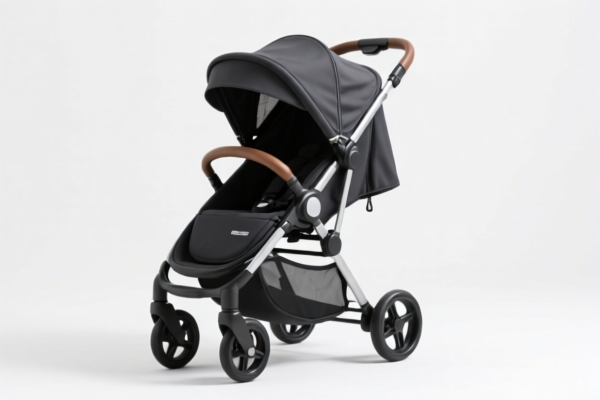
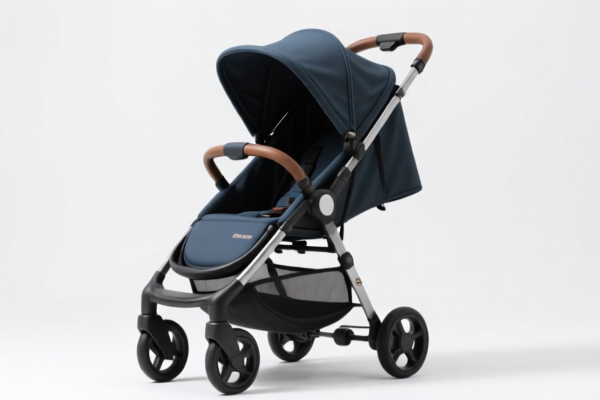
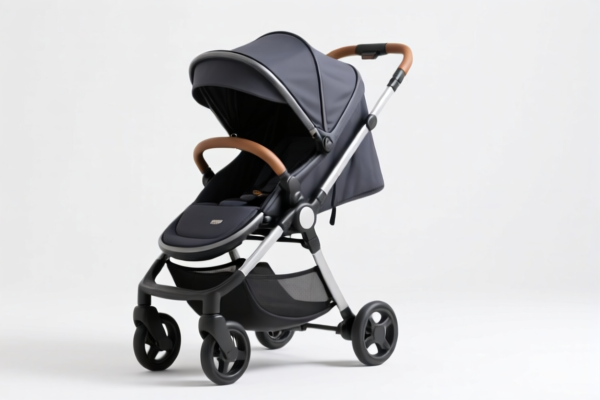
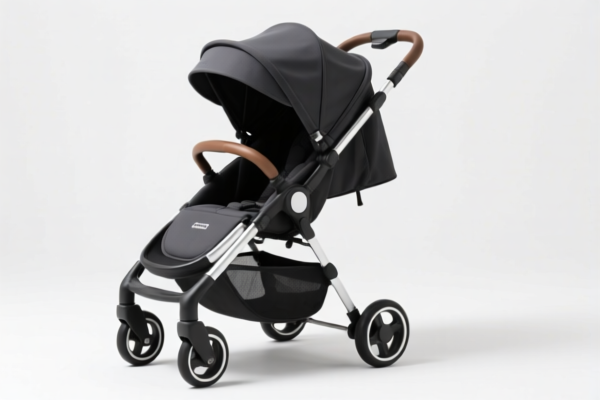
AI分析
🧸 Strollers (Baby Carriages & Pushchairs)
🌐 HS Code Reference & Customs Clearance Guide | 2026 Latest Tariff Analysis | Professional Clearance Strategy
📌 I. Product Definition & Classification: Do You Really Understand "Strollers"?
In international trade, strollers are a complex category. They are not simply "baby gear"; they are classified based on their primary function and design intent. The critical distinction lies in whether the item is viewed as a toy/plaything or a functional vehicle/part of furniture.
Strollers/Pushchairs (Functional Transport):
Designed primarily for transporting infants and toddlers. They typically feature wheels, a chassis, and a seating structure designed for mobility and safety.
⚠️ Key Distinction Point:
- If the product is marketed as a toy (e.g., a miniature ride-on car for a 3-year-old to play with inside the house, not for real transport) → It falls under Chapter 95 (Toys).
- If the product is a real stroller (for actual transport of a child) → It may fall under Chapter 87 (Vehicles) or Chapter 94 (Furniture) depending on the specific design and usage, though often misclassified into Chapter 95 for lower duties (see below).
📦 II. HS Code Classification Details (2026 Latest Tariff Authority Comparison)
Based on the provided data, here are the relevant HS codes and their specific applications for strollers and related infant safety products:
| HS Code | Product Description | Applicable Scenario | Key Classification Logic |
|---|---|---|---|
9503.00.00.71 |
Strollers classified under "Dolls' Carriages and Similar Wheels Toys" | Toy Strollers | Classified as a toy because it is a miniature version intended for play, not real transport. |
8715.00.00.20 |
Baby carriages (including strollers) | Real/Functional Strollers | Classified under Vehicles (Chapter 87). The summary explicitly states: "Identical in purpose and form to baby carriages." |
9503.00.00.90 |
Other Toys / Dolls' Carriages | Toy Strollers (Other) | Classified as toys but under the "other" category if not specifically 9503.00.00.71. |
9401.80.60.21 |
Infant Car Seats (Child Seats) | Safety Seats | Classified under Seats (Chapter 94). Specifically for car seats, not pushchairs. |
9401.80.60.23 |
Infant Car Seats (Matching Use & Seat Attributes) | Safety Seats | Classified under Seats. Matches the attributes of a seat used in vehicles. |
🔍 Critical Reminder:
- Misclassification Risk: Many importers mistakenly classify real strollers under Chapter 95 (Toys) (9503.00.00.71) to avoid higher duties. However, if the product is clearly a functional vehicle (8715.00.00.20), customs may reclassify it, leading to higher taxes and penalties.
- Car Seats vs. Strollers: Infant car seats are NOT strollers. They are classified under Chapter 94 (Seats) (9401.80.60.21/9401.80.60.23), which has significantly higher duties (35%).
💰 III. 2026 Latest Tariff Rate Details (Including Additional Taxes & Policy Add-ons)
✅ Applicable Country: United States (US)
✅ Origin: China (CN)
✅ Effective Time: 2025/2026 (Current Data)
🎯 1. 9503.00.00.71 & 9503.00.00.90 —— Strollers Classified as TOYS
These codes apply if the stroller is deemed a toy (e.g., doll carriages or miniature pushchairs).
| Item | Content |
|---|---|
| Base Tariff | 0.0% (ad valorem) |
| Section 301 Additional Tariff | 0.0% |
| Section 122 Tariff | +10.0% |
| Total Tax Rate | 10.0% |
| Tax Calculation | CIF Value × 10% |
| De Minimis Eligibility | ❌ Not Applicable (For Section 122 items, de minimis often does not apply or is restricted) |
| Legal Basis | Section 122 Tariff (Specific to toys/dolls in some contexts) |
📌 Explanation:
- If classified as a toy, the base duty is 0%.
- However, a 10% Section 122 tariff is added.
- Total Cost: Only 10%. This is significantly lower than the vehicle classification.
- Warning: Customs may challenge this if the product is a full-size, functional stroller.
🎯 2. 8715.00.00.20 —— Strollers Classified as VEHICLES (Baby Carriages)
This code applies to functional strollers that are clearly vehicles for transporting children.
| Item | Content |
|---|---|
| Base Tariff | 4.4% (ad valorem) |
| Section 301 Additional Tariff | 0.0% |
| Section 122 Tariff | +10.0% |
| Total Tax Rate | 14.4% |
| Tax Calculation | CIF Value × 14.4% |
| De Minimis Eligibility | ❌ Not Applicable |
| Legal Basis | Chapter 87 (Vehicles) + Section 122 |
📌 Explanation:
- The base duty is 4.4% because it is considered a vehicle.
- A 10% Section 122 tariff is added.
- Total Cost: 14.4%.
- Why is this higher than Toys? Because it is a functional product, not a plaything.
- Note: Some sources suggest Chapter 87 items may have different Section 301 rates, but based on the provided data, the Section 301 add-on is 0%, and Section 122 is 10%.
🎯 3. 9401.80.60.21 & 9401.80.60.23 —— Infant Car Seats (NOT Strollers)
Do not confuse these with strollers! These are for car seats.
| Item | Content |
|---|---|
| Base Tariff | 0.0% |
| Section 301 Additional Tariff | +25.0% |
| Section 122 Tariff | +10.0% |
| Total Tax Rate | 35.0% |
| Tax Calculation | CIF Value × 35% |
| De Minimis Eligibility | ❌ Not Applicable |
| Legal Basis | Chapter 94 (Seats) + Section 301 + Section 122 |
📌 Explanation:
- Infant car seats are classified as seats (Chapter 94).
- They are subject to Section 301 (25%) AND Section 122 (10%).
- Total Cost: 35%. This is the highest duty rate in this dataset.
- Key Difference: Strollers (transport) vs. Car Seats (safety restraint in vehicles).
🛠️ IV. Customs Clearance Practical Advice (Battle-Tested Pitfall Guide)
✅ 1. Required Documentation Checklist (All Must Be Provided)
| Document | Mandatory? | Description |
|---|---|---|
| ✅ Product Specification Sheet | ✔️ | Must clearly state: "Stroller," "Carriage," or "Toy" based on actual use. Include dimensions, weight, max load. |
| ✅ Product Photos | ✔️ | Show the stroller in use with a child, or as a standalone product. Must clearly show wheels, frame, and seating. |
| ✅ Marketing Materials | ✔️ | Brochures, website screenshots. If marketed as a "toy," it may be classified under Chapter 95. If marketed for "transport," it goes to Chapter 87. |
| ✅ Commercial Invoice | ✔️ | Clearly describe the item. Avoid ambiguous terms like "Baby Gear." Use "Baby Stroller" or "Doll Carriage." |
| ✅ Packing List | ✔️ | Show all components (frame, wheels, canopy, basket). |
| ✅ Third-Party Test Reports | ✔️ | ASTM F833 (US Stroller Standard) or EN 1888 (EU Standard). Required for safety compliance. |
✅ 2. Declaration Techniques (Key Mantras)
🔥 “Real Stroller? Check Chapter 87. Toy Stroller? Chapter 95. Car Seat? Chapter 94 (35%!):
| Situation | Correct Declaration | Wrong Practice |
|---|---|---|
| Full-size Functional Stroller | 8715.00.00.20 (14.4% Total) |
Misclassify as 9503.00.00.71 (10%) → Risk of Re-classification & Penalty |
| Miniature/Doll Stroller (Toy) | 9503.00.00.71 or 9503.00.00.90 (10% Total) |
Declare as vehicle → Unnecessary higher duty |
| Infant Car Seat | 9401.80.60.21 or 9401.80.60.23 (35% Total) |
Declare as stroller → Major Compliance Violation |
| Stroller with Attached Car Seat | Declare Separately | Bundle as one item → Confusion in classification |
✅ 3. Special Handling Cases
| Case | Handling Advice |
|---|---|
| OEM Custom Strollers | Provide design drawings and user manuals. If the design is clearly for transport, use 8715.00.00.20. |
| Stroller + Car Seat Combo | Declare the stroller and car seat separately. Do not combine them into one HS code. |
| "Travel Systems" | A travel system includes a stroller frame and a car seat. Both parts must be declared with their respective HS codes and duties. |
| Marketing as "Toy" | If you sell a small, non-functional stroller as a toy, ensure the product is clearly not suitable for transporting a child (e.g., too small, no safety belts). Otherwise, customs will reclassify it as a vehicle. |
🌍 V. Global Market Clearance Comparison (2026 Latest)
| Country/Region | Recommended HS Code | Tariff Rate | Certification Requirements | Notes |
|---|---|---|---|---|
| 🇺🇸 USA | 8715.00.00.20 |
14.4% (Vehicle) | ASTM F833 | If toy, 10%. Car seats 35%. |
| 🇺🇸 USA (Toy) | 9503.00.00.71 |
10.0% (Toy) | ASTM F963 | Only for non-functional/toy strollers. |
| 🇪🇺 EU | 9503.00.31.00 |
6.5% | EN 1888 | EU classifies strollers as toys more often. |
| 🇨🇳 China | 8715.00.00.20 |
0% | CCC (if applicable) | No additional tariffs for China-origin goods. |
| 🇬🇧 UK | 9503.00.31.00 |
0% | UKCA | Post-Brexit rules may vary. |
📌 Conclusion:
- The USA has a complex duty structure: 10% for toys, 14.4% for vehicles, and 35% for car seats.
- Accurate classification is crucial. Misclassifying a functional stroller as a toy can lead to back taxes and penalties.
- Car seats are always more expensive due to Section 301 tariffs.
📌 VI. Common Mistakes & Pitfall Guide (Lessons from Blood & Tears)
❌ Mistake 1: Classifying a real stroller as a toy (9503.00.00.71) to save 4.4%.
👉 Consequence: Customs audits may reclassify it, leading to back taxes + penalties. The risk is not worth the small saving.
❌ Mistake 2: Confusing Strollers with Car Seats.
👉 Consequence: Declaring a car seat as a stroller (14.4%) instead of a seat (35%) is a major fraud. Declaring a stroller as a seat is also incorrect. Keep them separate.
❌ Mistake 3: Not providing Safety Test Reports.
👉 Consequence: Strollers are safety-critical products. Without ASTM F833 (US) or EN 1888 (EU) test reports, the shipment will be held or destroyed.
❌ Mistake 4: Using vague descriptions like "Baby Product" on invoices.
👉 Consequence: Customs will request clarification, causing delays. Use precise terms: "Baby Stroller," "Infant Carriage," or "Doll Carriage."
✅ Correct Practice:
"Foldable Baby Stroller, Aluminum Frame, 3-Wheel Design, ASTM F833 Certified, Model XYZ"
🎯 VII. Conclusion: Professional Declaration, Time-Saving, Cost-Efficient!
🎯 Remember the Mantra:
🔹 “Stroller? 14.4% (Vehicle). Toy Stroller? 10%. Car Seat? 35%! Never Mix Them!”
🔹 “HS Code Determines Duty, 4% Difference Can Be Costly, Declaration Must Be Precise!”
📌 Tips:
- If your stroller is marketed as a toy (miniature, no child safety features), use Chapter 95 (10% duty).
- If your stroller is functional (for real transport), use Chapter 87 (14.4% duty).
- Car seats are always Chapter 94 (35% duty).
- Always provide safety test reports (ASTM F833 for US).
- Avoid vague descriptions on invoices.
📣 Immediate Action:
📞 Contact a professional customs broker + Provide product photos + Apply for Advance Ruling if unsure.
🚀 Ensure your strollers pass customs smoothly, avoid penalties, and maximize profit!
✨ Professional Clearance Starts with Accurate Classification!
💼 Every cent of cost should be precisely calculated!
用户评价
关于 HS 编码归类
协调制度(HS)是由世界海关组织(WCO)制定的国际贸易商品分类标准。全球 200 多个国家采用 HS 系统作为海关关税、贸易统计和进出口监管的基础。
每个 HS 编码遵循以下层级结构:
- 章(2 位)——商品大类(例如:第 84 章:机器和机械设备)
- 品目(4 位)——章内的更具体分类
- 子目(6 位)——国际通用细分,所有 WCO 成员国统一使用
- 本国细分(8-10 位)——各国自行扩展的细分编码,如美国 HTSUS 10 位编码
正确的 HS 编码归类对于顺利通关、准确缴纳关税和遵守贸易法规至关重要。错误归类可能导致海关延误、多缴关税或罚款。
从CN进口到US时,适用的关税税率可能包括:
- 最惠国(MFN)税率——适用于 WTO 成员国的标准关税税率
- 普通税率——适用于无贸易协定国家
- 贸易救济关税——附加关税,如 301 条款(反倾销)、232 条款(国家安全)或反补贴税
本页内容仅供参考。如需正式归类,请咨询当地海关或持牌报关代理。