Student Practice Grid Notebook
CN → US| HS编码 | 关税税率 | 原产国 | 目的国 | 文档 |
|---|---|---|---|---|
| 4820102030 | 35.0% | CN | US | 官方文档 |
| 4820102060 | 35.0% | CN | US | 官方文档 |
商品图片


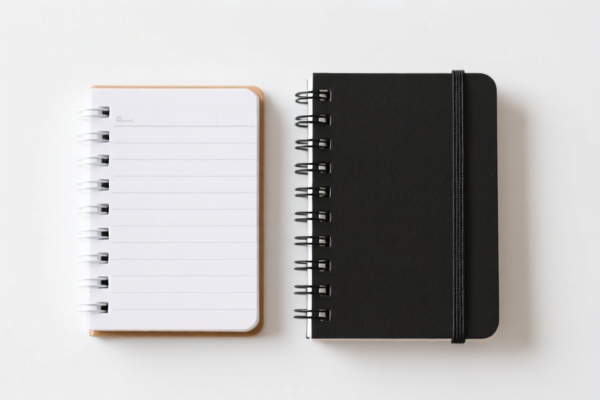

AI分析
📓 Student Practice Grid Notebook (Paper Stationery)
🌐 HS Code Reference & Customs Clearance Guide | 2024/2026 Tariff Analysis | Professional Classification Strategy
📌 I. Product Definition & Classification: What is a "Student Practice Grid Notebook"?
A Student Practice Grid Notebook is a stationery item designed primarily for educational use, featuring lined or grid-lined paper for practice exercises, mathematics, or drafting. In international trade, it falls under Chapter 48 (Paper and Paperboard) and specifically Heading 4820 (Registers, Account Books, Notebooks, etc.).
The classification depends on two critical factors: 1. Construction Method: Is it bound (sewn, glued, stapled) or loose-leaf? 2. Dimensions: Does it meet the specific size criteria for "Sewn Composition Books" or fall under "Other"?
⚠️ Key Distinction:
- If the notebook is sewn and fits specific size ranges (e.g., small side 152.4–381 mm), it may qualify for a more specific subheading.
- If it is not sewn (e.g., stapled, glued, or spiral-bound) or does not meet the specific "sewn" criteria, it falls under the "Other" category.
📦 II. HS Code Classification Details (Based on Provided DATA)
| HS Code | Product Description | Applicable Scenario | Tax Rate (China Origin to US)* |
|---|---|---|---|
4820.10.20.30 |
Sewn Composition Books Registers, account books, notebooks, etc. Specific Size Requirement: Small side: 152.4–381 mm (6"–15") Large side: 222.5–381 mm (8.75"–15") |
- Traditional sewing-bound notebooks - Meets specific dimension thresholds - Often used for formal records or specific academic formats |
0.0% |
4820.10.20.60 |
Other Diaries, notebooks, address books, bound; memorandum pads, letter pads, etc. |
- Stapled, glued, or spiral-bound notebooks - Dimensions outside the "sewn" range above - Most common student practice books - Grid notebooks for math/science |
25.0% |
🔍 Critical Note:
-4820.10.20.30requires the notebook to be sewn (specifically "sewn composition books") AND meet strict dimensional criteria. Many modern student notebooks are stapled or glued, thus falling into4820.10.20.60.
-4820.10.20.60is the catch-all for notebooks that do not meet the strict "sewn composition book" definition or dimensions. This includes most grid notebooks, doodle books, and practice pads.
💰 III. 2024/2026 Latest Tariff Rate Breakdown
✅ Applicable Country: United States (US)
✅ Origin: China (CN)
✅ Effective Date: Current trade policies (Check for latest USITC updates)
🎯 1. 4820.10.20.30 — Sewn Composition Books (Specific Dimensions)
| Item | Content |
|---|---|
| Base Tariff | 0% |
| Additional Tariff (Section 301) | 0% |
| Total Tariff | 0.0% |
| Tax Calculation | CIF Value × 0% = $0 |
| De Minimis Eligibility | ✅ Yes (if value < $800) |
| Legal Basis | US Harmonized Tariff Schedule (HTSUS) |
📌 Explanation:
- This code has no base tariff and, notably, no additional Section 301 tariff applied in the provided data.
- This makes it highly competitive for large-volume, specifically dimensioned, sewn notebooks.
- Condition: Must be sewn and meet the exact size constraints (Small: 6"–15", Large: 8.75"–15").
🎯 2. 4820.10.20.60 — Other Notebooks (Most Common)
| Item | Content |
|---|---|
| Base Tariff | 0% |
| Additional Tariff (Section 301) | +25% |
| Total Tariff | 25.0% |
| Tax Calculation | CIF Value × 25% |
| De Minimis Eligibility | ❌ No (Subject to Section 301) |
| Legal Basis | US HTSUS + USITC Footnote 9903.88.01 (or equivalent Section 301 listing) |
📌 Explanation:
- While the base tariff is 0%, an additional 25% tariff is applied under Section 301 due to the product's origin (China).
- This is the standard classification for most student grid notebooks, spiral-bound books, and stapled practice pads.
- High Cost Alert: The 25% tariff significantly impacts profitability. Importers must factor this into their pricing.
🛠️ IV. Customs Clearance Practical Advice (Avoid Pitfalls)
✅ 1. Documentation Checklist
| Document | Required? | Description |
|---|---|---|
| ✅ Commercial Invoice | ✔️ | Must clearly state "Notebooks, Grid Paper, Student Practice" |
| ✅ Packing List | ✔️ | Detail quantity, weight, and dimensions |
| ✅ Product Specifications | ✔️ | Include binding type (sewn/stapled/gluеd), paper weight, and exact dimensions |
| ✅ Proof of Origin | ✔️ | Certificate of Origin (CO) to confirm China origin (for tariff verification) |
| ✅ Photos | ✔️ | Show binding method and grid/line patterns |
✅ 2. Classification Tips (Key Mnemonic)
🔥 "Check the Stitch, Measure the Size: Sewn & Specific = 0%, Otherwise = 25%!"
| Scenario | Correct HS Code | Risk of Misclassification |
|---|---|---|
| Sewn + Fits Size Limits | 4820.10.20.30 |
Low if dimensions are verified |
| Stapled/Glued/Spiral | 4820.10.20.60 |
High risk of penalty if misclassified as "sewn" |
| Sewn + Outside Size Limits | 4820.10.20.60 |
Must pay 25% |
| Loose-Leaf/Refills | Check other codes (e.g., 4820.10.20.60 or similar) | Ensure correct subheading |
✅ 3. Special Cases
| Case | Handling Advice |
|---|---|
| Custom Grid Patterns | Ensure the description specifies "Grid" or "Squared" to distinguish from plain notebooks, though HS code remains largely the same. |
| Bundled Sets | If sold as a set with pens, the entire set may be classified under the principal article (notebooks) if the notebooks define the character of the set. |
| Dimensions Variation | If a notebook is 8" x 10", check if small side (8") is within 6"–15" and large side (10") is within 8.75"–15". If yes, and sewn, it might qualify for 0%. |
🌍 V. Global Market Comparison (2024/2026)
| Country/Region | Recommended HS Code | Tariff (China Origin) | Notes |
|---|---|---|---|
| 🇺🇸 USA | 4820.10.20.60 |
25% (Additional) | Most common; high tariff burden |
| 🇺🇸 USA | 4820.10.20.30 |
0% | Only for specific sewn books |
| 🇨🇳 China | 4820.10.20.60 |
Varies | Export duty usually 0% |
| 🇪🇺 EU | 4820.10.00 |
~3.5% – 6.5% | No Section 301 equivalent; standard WTO rates |
| 🇬🇧 UK | 4820.10.00 |
0% – 6.5% | Post-Brexit tariffs; generally favorable |
| 🇯🇵 Japan | 4820.10.00 |
0% – 3% | Often duty-free for stationery |
📌 Conclusion:
- The US market is the most expensive due to Section 301 tariffs (25%) on standard notebooks.
- EU, UK, and Japan offer much lower or zero tariffs, making them more attractive for cost-sensitive exports.
- To minimize US tariffs, consider designing notebooks that meet the "sewn composition book" criteria (if feasible) or exploring alternative markets.
📌 VI. Common Errors & Pitfalls (Lessons Learned)
❌ Error 1: Assuming all notebooks are 25%.
👉 Result: If you have a sewn book meeting size specs, you might pay 25% unnecessarily.
✅ Fix: Verify binding method and dimensions carefully.
❌ Error 2: Misdeclaring "Grid" as "Paper" (Chapter 48) vs. "Stationery" (Chapter 48).
👉 Result: Grid paper is still paper stationery. Misclassification can lead to delays.
✅ Fix: Use precise descriptions: "Student Practice Grid Notebook, Paper, Bound."
❌ Error 3: Ignoring the "Sewn" requirement for 4820.10.20.30.
👉 Result: Customs may reclassify as 4820.10.20.60 and assess 25% + penalties.
✅ Fix: Provide photos showing the sewing binding.
🎯 VII. Conclusion: Professional Classification Saves Money!
🎯 Remember the Key Rule:
🔹 "Sewn & Sized Right = 0% Tax"
🔹 "Other Binding or Size = 25% Tax"📌 Pro Tip:
If your production process allows, switching to sewn binding and adjusting dimensions to fit the4820.10.20.30criteria can save 25% in tariffs. This is a significant competitive advantage in the US market.
For most standard grid notebooks, expect to budget for the 25% additional tariff.
📣 Immediate Action:
📞 Consult a customs broker to verify your specific notebook dimensions and binding method.
📄 Request a Binding Opinion Letter from US Customs if unsure about the "sewn" classification.
🚀 Optimize your supply chain to minimize tariff impact!
✨ Accurate Classification is the First Step to Profitable Trade!
💼 Don't let 25% eat your margins—classify correctly!
用户评价
关于 HS 编码归类
协调制度(HS)是由世界海关组织(WCO)制定的国际贸易商品分类标准。全球 200 多个国家采用 HS 系统作为海关关税、贸易统计和进出口监管的基础。
每个 HS 编码遵循以下层级结构:
- 章(2 位)——商品大类(例如:第 84 章:机器和机械设备)
- 品目(4 位)——章内的更具体分类
- 子目(6 位)——国际通用细分,所有 WCO 成员国统一使用
- 本国细分(8-10 位)——各国自行扩展的细分编码,如美国 HTSUS 10 位编码
正确的 HS 编码归类对于顺利通关、准确缴纳关税和遵守贸易法规至关重要。错误归类可能导致海关延误、多缴关税或罚款。
从CN进口到US时,适用的关税税率可能包括:
- 最惠国(MFN)税率——适用于 WTO 成员国的标准关税税率
- 普通税率——适用于无贸易协定国家
- 贸易救济关税——附加关税,如 301 条款(反倾销)、232 条款(国家安全)或反补贴税
本页内容仅供参考。如需正式归类,请咨询当地海关或持牌报关代理。