Sulfurated Cork Rubber Floor Tiles
CN → US| HS编码 | 关税税率 | 原产国 | 目的国 | 文档 |
|---|---|---|---|---|
| 4016935010 | 37.5% | CN | US | 官方文档 |
| 4016931010 | 37.5% | CN | US | 官方文档 |
| 4504105000 | 35.0% | CN | US | 官方文档 |
| 4504101000 | 35.0% | CN | US | 官方文档 |
商品图片
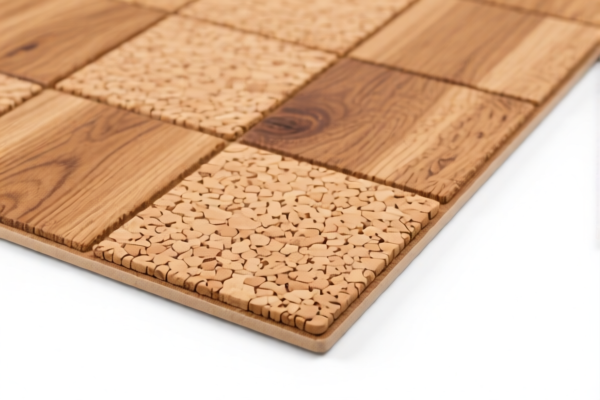
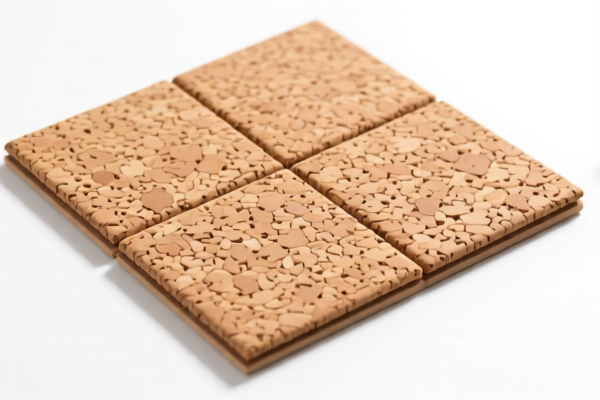
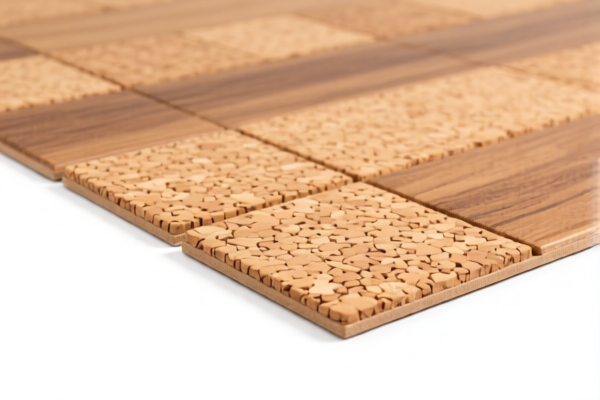
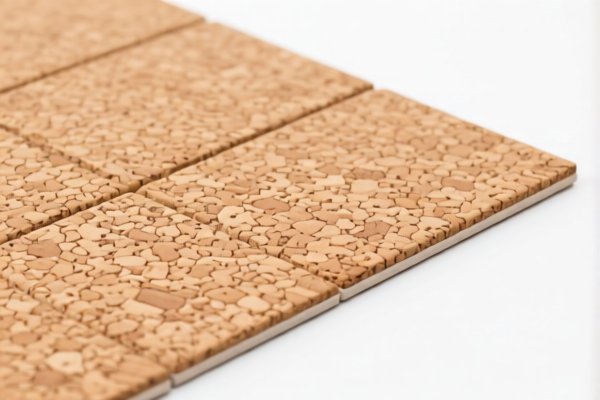
AI分析
🍾 Sulfurated Cork Rubber Floor Tiles (Cork-Rubber Composite Flooring)
🌐 HS Code Reference & Customs Clearance Guide | 2026 Latest Tariff Analysis | Professional Compliance Strategy
📌 Part I: Product Definition & Classification: Do You Really Understand "Sulfurated Cork Rubber"?
Sulfurated cork rubber floor tiles are specialized composite materials widely used in sports arenas, gyms, industrial workshops, and residential flooring. They combine the elasticity of rubber with the resilience and acoustic insulation of cork. In international trade, classification depends strictly on the material composition and manufacturing process.
The term "Sulfurated" implies a vulcanization process, but the key distinction lies in whether the primary base is vulcanized rubber or bound/granulated cork.
⚠️ Key Distinction Point:
- If the product is primarily vulcanized rubber containing cork additives → Classified under Chapter 40 (Rubber).
- If the product is primarily cork (ground/filled) bound together with rubber or other binders → Classified under Chapter 45 (Cork).
📦 Part II: HS Code Classification Details (2026 Latest Tariff Authority Comparison)
Based on the provided data, here are the four possible HS Codes for "Sulfurated Cork Rubber Floor Tiles." Note that while the summary description is identical for all, the specific subheading changes based on material hierarchy.
| HS Code | Product Description | Applicable Scenario | Primary Material Basis |
|---|---|---|---|
4016.93.50.10 |
Vulcanized cork-rubber sealing pieces; Material: Vulcanized Rubber; Form: Sealing Piece | High-rubber content composite; Treated primarily as rubber goods | ✅ Vulcanized Rubber (Ch 40) |
4016.93.10.10 |
Vulcanized cork-rubber sealing pieces; Material: Vulcanized Rubber; Form: Sealing Piece; Classified as Other Sealing Parts | Specific sealing application within rubber category | ✅ Vulcanized Rubber (Ch 40) |
4504.10.50.00 |
Vulcanized cork-rubber sealing pieces; Material: Agglomerated Cork; Form: Sheet; Use: Sealing Parts | High-cork content; Treated as agglomerated cork products | ✅ Agglomerated Cork (Ch 45) |
4504.10.10.00 |
Vulcanized cork-rubber sealing pieces; Material: Ground/Filled Cork with Rubber; Form: Vulcanized Sheets/Plates | Cork granules bound with rubber; Treated as cork sheets | ✅ Ground/Filled Cork (Ch 45) |
🔍 Critical Reminder:
- Although the user input says "Floor Tiles," the provided data classifies them as "Sealing Pieces" (密封片) or "Sheets/Plates" (片和板). This is a common discrepancy. Ensure your commercial invoice matches the HS Code classification (e.g., if classified under Ch 45, describe as "Cork Sheets," not "Sealing Gaskets").
- Chapter 40 (Rubber) items have a 0% Base Tariff, while Chapter 45 (Cork) items have a 0% Base Tariff. Both are subject to the same surcharges.
💰 Part III: 2026 Latest Tariff Rate Breakdown (Including Surcharges & Policy Add-ons)
✅ Applicable Country: United States (US)
✅ Origin: China (CN)
✅ Effective Date: November 10, 2025 onwards (for subsequent imports)
🎯 1. Rubber-Based Codes: 4016.93.50.10 & 4016.93.10.10
| Item | Content |
|---|---|
| Base Tariff | 2.5% (ad valorem) |
| Section 301 Surcharge | +25.0% (USITC Footnote 9903.88.01) |
| Section 122 / IEEPA Surcharge | +10.0% (Targeting Chinese-origin goods) |
| Total Effective Rate | 37.5% |
| Tax Calculation | CIF Value × 37.5% |
| De Minimis Eligibility | ❌ Not Eligible (deny_de_minimis applies to Section 301 goods) |
| Legal Basis Path | IEEPA:9903.01.25 → USITC:4016.93.xxxx → FOOTNOTE:9903.88.01 |
📌 Explanation:
- The 2.5% is the standard MFN (Most Favored Nation) duty for other rubber articles.
- The 25% is the high-profile "Section 301" tariff on Chinese rubber products.
- The 10% is an additional penalty tariff (referred to as "122 Clause" in the data, likely referencing specific enforcement actions or IEEPA authorities).
- Total: 37.5%. This is a high-cost classification.
🎯 2. Cork-Based Codes: 4504.10.50.00 & 4504.10.10.00
| Item | Content |
|---|---|
| Base Tariff | 0.0% (ad valorem) |
| Section 301 Surcharge | +25.0% (USITC Footnote 9903.88.01) |
| Section 122 / IEEPA Surcharge | +10.0% (Targeting Chinese-origin goods) |
| Total Effective Rate | 35.0% |
| Tax Calculation | CIF Value × 35.0% |
| De Minimis Eligibility | ❌ Not Eligible (deny_de_minimis applies) |
| Legal Basis Path | IEEPA:9903.01.25 → USITC:4504.10.xxxx → FOOTNOTE:9903.88.01 |
📌 Explanation:
- The 0% base tariff reflects the duty-free status of many cork products.
- However, the 25% + 10% surcharges still apply due to the "Made in China" origin.
- Total: 35.0%. This is 2.5% cheaper than the rubber-based classification.
🛠️ Part IV: Customs Clearance Practical Advice (Battle-Tested Pitfall Avoidance)
✅ 1. Document Checklist (Non-negotiable)
| Document | Required? | Explanation |
|---|---|---|
| ✅ Product Specification Sheet | ✔️ | Must explicitly state % composition of Cork vs. Rubber. This determines Ch 40 vs. Ch 45. |
| ✅ Material Safety Data Sheet (MSDS) | ✔️ | Proves vulcanization process and chemical composition. |
| ✅ Commercial Invoice | ✔️ | Description must match HS Code. If using 4504, describe as "Cork Rubber Sheets," not "Rubber Seals." |
| ✅ Certificate of Origin (CO) | ✔️ | Critical to prove Chinese origin (to apply the correct surcharges) or non-Chinese origin (to avoid them). |
| ✅ Packing List | ✔️ | Detail net/gross weight. |
| ✅ Photos of Product & Label | ✔️ | Show texture and any printed markings. |
✅ 2. Classification Strategy (Key Mnemonic)
🔥 “Cork High? Go Chapter 45. Rubber High? Go Chapter 40. Both pay ~35-37.5%.”
| Scenario | Correct HS Code | Wrong Code | Consequence |
|---|---|---|---|
| >50% Cork by weight/volume | 4504.10.50.00 or 4504.10.10.00 |
4016.93.50.10 |
Risk of misclassification penalty. Slight tax saving (35% vs 37.5%). |
| >50% Rubber by weight/volume | 4016.93.50.10 |
4504.10.50.00 |
Risk of re-classification by CBP. Higher tax (37.5%). |
| Mixed Composition | Depends on "Essential Character" | Guessing | CBP may audit. Provide technical analysis. |
✅ 3. Special Handling Cases
| Situation | Handling Advice |
|---|---|
| "Floor Tiles" vs. "Sealing Pieces" | The data classifies these as "Sealing Pieces." If importing for flooring, ensure the Use description in the invoice does not contradict the HS Code. If classified as Ch 45, "Cork Sheets" is safer for flooring than "Sealing Gaskets." |
| Origin Shifting | If sourced from Vietnam, Malaysia, or India, these surcharges may not apply. Check FTAs. |
| De Minimis (Section 321) | Do not attempt to use the $800 de minimis exemption for these HS codes. They are explicitly flagged as deny_de_minimis in the data. Full formal entry is required. |
🌍 Part V: Global Market Comparison (2026 Latest)
| Country/Region | Recommended HS Code | Tariff (China Origin) | Certification | Notes |
|---|---|---|---|---|
| 🇺🇸 USA | 4504.10.50.00 (Preferred) |
35.0% | N/A | Cheapest option in data. Rubber codes (4016) are 37.5%. |
| 🇨🇳 China | 4504.10.50.00 |
0% - 5% (Import Duty) | N/A | Low base duty, no Section 301. |
| 🇪🇺 EU | 4504.10.50.00 |
0% (If Cork >50%) | CE (if industrial) | EU generally has lower tariffs on cork products. |
| 🇬🇧 UK | 4504.10.50.00 |
5-10% | UKCA | Post-Brexit rules apply. |
| 🇦🇺 Australia | 4504.10.50.00 |
5% | N/A | No major surcharges like US Section 301. |
📌 Conclusion:
- USA is the highest-cost market due to Section 301 + IEEPA surcharges.
- Chapter 45 (Cork) is slightly cheaper (35%) than Chapter 40 (Rubber, 37.5%) in the US.
- If possible, optimize the product formulation to maximize cork content to justify4504classification.
📌 Part VI: Common Errors & Pitfall Guide (Lessons Learned)
❌ Error 1: Calling it "Rubber Flooring" but classifying under 4504 (Cork)
👉 Consequence: CBP may suspect undervaluation or misclassification. Consistency is key. If it's 70% rubber, use 4016.
❌ Error 2: Assuming "Floor Tiles" are exempt from de minimis
👉 Consequence: Shipments under $800 will be rejected or seized because these HS codes are flagged for surcharges.
❌ Error 3: Ignoring the "122 Clause" (IEEPA 10%)
👉 Consequence: Underpaying by 10%. This is not a "Section 301" tariff but a separate punitive duty. Total must be 35-37.5%.
❌ Error 4: Using "Sealing Gasket" description for "Floor Tiles"
👉 Consequence: While the HS data uses "Sealing Pieces," if the product is physically large and used for flooring, CBP may question the "Sealing" intent. Use "Cork-Rubber Composite Sheets" or "Flooring Tiles" in the description, but align the HS Code with material composition.
✅ Correct Approach:
"Sulfurated Cork-Rubber Composite Sheets, 100% Chinese Origin, Used for Flooring/Industrial Surfaces, HS Code 4504.10.50.00"
🎯 Part VII: Conclusion: Professional Classification Saves Money!
🎯 Remember the Mnemonic:
🔹 "Cork Base = Ch 45 (35% Total). Rubber Base = Ch 40 (37.5% Total). No De Minimis. No Exceptions."
🔹 "HS Code dictates tariff. Material % dictates HS Code. Be consistent!"
📌 Pro Tip:
If you can source non-Chinese origin materials (e.g., Portuguese Cork + Vietnamese Rubber), you may avoid the 35-37.5% surcharges entirely.
Recommendation: Apply for an Advance Ruling (CBP Ruling) if your composition is borderline between Cork and Rubber to avoid future audits.
📣 Immediate Action:
📞 Consult a Customs Broker + Provide Material Composition % + Verify Origin
🚀 Ensure your Invoice Description matches the HS Code Material Basis.
💸 Optimize for Chapter 45 to save the extra 2.5% if applicable!
✨ Professional Clearance Starts with Precise Classification!
💼 Every percentage point counts in today’s trade war!
用户评价
关于 HS 编码归类
协调制度(HS)是由世界海关组织(WCO)制定的国际贸易商品分类标准。全球 200 多个国家采用 HS 系统作为海关关税、贸易统计和进出口监管的基础。
每个 HS 编码遵循以下层级结构:
- 章(2 位)——商品大类(例如:第 84 章:机器和机械设备)
- 品目(4 位)——章内的更具体分类
- 子目(6 位)——国际通用细分,所有 WCO 成员国统一使用
- 本国细分(8-10 位)——各国自行扩展的细分编码,如美国 HTSUS 10 位编码
正确的 HS 编码归类对于顺利通关、准确缴纳关税和遵守贸易法规至关重要。错误归类可能导致海关延误、多缴关税或罚款。
从CN进口到US时,适用的关税税率可能包括:
- 最惠国(MFN)税率——适用于 WTO 成员国的标准关税税率
- 普通税率——适用于无贸易协定国家
- 贸易救济关税——附加关税,如 301 条款(反倾销)、232 条款(国家安全)或反补贴税
本页内容仅供参考。如需正式归类,请咨询当地海关或持牌报关代理。