Supported Sulfide Catalyst
CN → US| HS编码 | 关税税率 | 原产国 | 目的国 | 文档 |
|---|---|---|---|---|
| 3815905000 | 40.0% | CN | US | 官方文档 |
| 3815903000 | 35.0% | CN | US | 官方文档 |
| 3824993200 | 41.5% | CN | US | 官方文档 |
| 3824993990 | 35.0% | CN | US | 官方文档 |
| 2830909000 | 38.0% | CN | US | 官方文档 |
商品图片
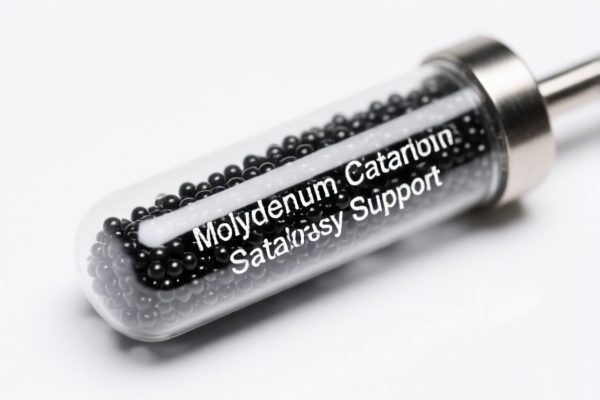
AI分析
💣 Sulfide Catalysts: The Hidden Risks of Chemical Classification (US Import Guide 2026)
🌐 HS Code Reference & Customs Clearance Guide | 2026 Latest Tariff Analysis | Professional Clearance Strategy
📌 I. Product Definition: What is a "Sulfide Catalyst"?
In the chemical industry, a Sulfide Catalyst is a specialized chemical agent used to accelerate chemical reactions without being consumed. The term "Supported" implies that the active sulfide component is dispersed on a solid carrier material (such as alumina, silica, or carbon) to increase surface area and stability.
In international trade, these materials are critical for petrochemical refining, desulfurization processes, and organic synthesis.
⚠️ Critical Distinction for Customs:
Sulfide catalysts are NOT simple bulk minerals. They are complex chemical preparations. Misclassifying them as raw materials (e.g., pure sulfides) can lead to severe penalties due to incorrect duty calculations and regulatory non-compliance.
📦 II. HS Code Classification Matrix (2026 Official Customs Data)
Based on the provided dataset, here are the 5 Potential HS Codes for "Supported Sulfide Catalysts," ranging from specific chemical mixtures to general catalytic preparations.
| HS Code | Product Description / Classification Logic | Total Tax Rate | Tax Structure Detail |
|---|---|---|---|
3815.90.50.00 |
General Catalysts: Matches "Catalyst" usage. Classified under "Other" as a chemical preparation. Broadest fit for catalytic function. | 40.0% | Base: 5.0% Section 301: 25.0% IEEPA: 10.0% |
3815.90.30.00 |
Inorganic Catalysts: Fits "Catalyst" usage. Assumes the component is inorganic sulfides ("composed entirely of inorganic substances"). | 35.0% | Base: 0.0% Section 301: 25.0% IEEPA: 10.0% |
3824.99.32.00 |
Inorganic Compound Mixtures: Fits "Sulfide" as an inorganic compound. Matches "mixtures of inorganic compounds" used in chemical industries. | 41.5% | Base: 6.5% Section 301: 25.0% IEEPA: 10.0% |
3824.99.39.90 |
Mixed Inorganic Preparations: Fits "Inorganic chemical preparations." Assumes the catalyst is a mix of multiple metal sulfides (common for supported catalysts). Excludes specific lithium-nickel-cobalt-oxides. | 35.0% | Base: 0.0% Section 301: 25.0% IEEPA: 10.0% |
2830.90.90.00 |
Raw Sulfides: Matches "Sulfide" material strictly. Fits "Other" sulfides. High Risk if the product is a supported preparation rather than pure sulfide. | 38.0% | Base: 3.0% Section 301: 25.0% IEEPA: 10.0% |
🔍 Key Insight:
- Code3815focuses on the Function (Catalyst).
- Code3824focuses on the Composition (Inorganic Mixture).
- Code2830focuses on the Material (Sulfide).
Customs authorities often scrutinize2830for "supported" catalysts, arguing that a supported catalyst is a preparation (Chapter 38) rather than a raw substance (Chapter 28).
💰 III. 2026 Tariff Breakdown & Legal Basis
✅ Applicable Country: United States (US)
✅ Origin: China (CN)
✅ Effective Date: November 10, 2025 (and onwards)
🎯 1. 3815.90.50.00 – Catalysts, Other (General Use)
| Item | Detail |
|---|---|
| Base Tariff | 5.0% |
| USITC (Sec 301) | +25.0% |
| IEEPA (China) | +10.0% |
| Total Effective Rate | 40.0% |
| Calculation | CIF Value × 40% |
| De Minimis Exemption? | ❌ NO (Deny De Minimis) |
| Legal Path | IEEPA:9903.01.25 → USITC:3815.90.50.00 |
📌 Explanation:
This code is the safest for general-purpose catalysts. If the "support" material is complex or organic-inorganic hybrid, this is often the default. The 40% total duty is significant and must be factored into landed cost models.
🎯 2. 3815.90.30.00 – Catalysts, Inorganic
| Item | Detail |
|---|---|
| Base Tariff | 0.0% |
| USITC (Sec 301) | +25.0% |
| IEEPA (China) | +10.0% |
| Total Effective Rate | 35.0% |
| Calculation | CIF Value × 35% |
| De Minimis Exemption? | ❌ NO |
| Legal Path | IEEPA:9903.01.24 → USITC:3815.90.30.00 |
📌 Explanation:
If your technical datasheet explicitly states the catalyst is 100% inorganic sulfides, you may qualify for this lower rate. However, if it contains binders or organic supports, this classification may be challenged.
🎯 3. 3824.99.32.00 – Inorganic Compound Mixtures
| Item | Detail |
|---|---|
| Base Tariff | 6.5% |
| USITC (Sec 301) | +25.0% |
| IEEPA (China) | +10.0% |
| Total Effective Rate | 41.5% |
| Calculation | CIF Value × 41.5% |
| De Minimis Exemption? | ❌ NO |
| Legal Path | IEEPA:9903.01.25 → USITC:3824.99.32.00 |
📌 Explanation:
This is the highest tax bracket in the dataset. It applies if customs views the product as a "mixture of inorganic compounds" that doesn't fit the specific "catalyst" definition of Chapter 38. Use this only if the catalyst is a physical blend of distinct inorganic sulfides without a unified catalytic structure.
🎯 4. 3824.99.39.90 – Other Inorganic Preparations
| Item | Detail |
|---|---|
| Base Tariff | 0.0% |
| USITC (Sec 301) | +25.0% |
| IEEPA (China) | +10.0% |
| Total Effective Rate | 35.0% |
| Calculation | CIF Value × 35% |
| De Minimis Exemption? | ❌ NO |
| Legal Path | IEEPA:9903.01.24 → USITC:3824.99.39.90 |
📌 Explanation:
A competitive alternative to3815.90.30.00. If the catalyst is a multi-metal sulfide mixture (e.g., Cobalt-Molybdenum Sulfide on Alumina), this code may apply. The 35% rate makes it highly attractive if the "catalyst" definition in Chapter 38 is rejected.
🎯 5. 2830.90.90.00 – Other Sulfides
| Item | Detail |
|---|---|
| Base Tariff | 3.0% |
| USITC (Sec 301) | +25.0% |
| IEEPA (China) | +10.0% |
| Total Effective Rate | 38.0% |
| Calculation | CIF Value × 38% |
| De Minimis Exemption? | ❌ NO |
| Legal Path | IEEPA:9903.01.25 → USITC:2830.90.90.00 |
📌 Explanation:
⚠️ HIGH RISK CODE. While the base tax is low (3%), this code is for pure sulfides. A "Supported" catalyst is technically a preparation (Chapter 38). Customs may reclassify this as Chapter 38, leading to underpayment penalties and back duties. Only use if the "support" is negligible or inert.
🛠️ IV. Customs Clearance Operational Advice (Battle-Tested Tips)
✅ 1. Documentation Checklist (Mandatory)
| Document | Required? | Purpose |
|---|---|---|
| Technical Data Sheet (TDS) | ✅ YES | Proves chemical composition (inorganic vs. organic mix). Critical for choosing between Ch 28 and Ch 38. |
| Formula/Composition Breakdown | ✅ YES | Lists percentages of active sulfide vs. support material (e.g., Al2O3, SiO2). |
| Function Statement | ✅ YES | Explicitly states: "Used as a catalyst in hydrodesulfurization process." |
| Safety Data Sheet (SDS) | ✅ YES | Required for hazardous materials. Must confirm if it’s corrosive or toxic. |
| Commercial Invoice | ✅ YES | Must match the HS Code description exactly. Do not use vague terms like "Chemical Powder." |
| Certificate of Origin (CO) | ✅ YES | To confirm China origin and apply IEEPA/Sec 301 rates correctly. |
✅ 2. Declaration Strategy (The "Golden Rules")
🔥 "Declare Function, Not Just Material!"
| Scenario | Recommended HS Code | Risk Level |
|---|---|---|
| Standard Industrial Catalyst (e.g., Co-Mo on Alumina) | 3815.90.30.00 (35%) or 3824.99.39.90 (35%) |
🟢 Low-Medium |
| General Purpose Catalyst (Unclear composition) | 3815.90.50.00 (40%) |
🟢 Safe |
| Highly Specific Mixture | 3824.99.32.00 (41.5%) |
🟡 High Cost |
| Claiming as Raw Sulfide | 2830.90.90.00 (38%) |
🔴 Very High Risk (Reclassification likely) |
Key Tip:
If the support material is inorganic (like alumina), prefer Chapter 38. If you declare under Chapter 28, customs will ask: "Is this a pure chemical or a preparation?" If it's a "supported" catalyst, it's a preparation.
✅ 3. Special Circumstances
| Situation | Advice |
|---|---|
| Mixed with Organic Binders | DO NOT use 2830 or 3815.90.30.00. Use 3815.90.50.00 (40%) as the organic component disqualifies it from "Inorganic" categories. |
| Small Samples (Under $800) | ❌ NO DE MINIMIS. All listed codes have deny_de_minimis. Even small shipments are taxed. |
| New Formulation | Apply for a Binding Ruling from CBP before shipping. The difference between 35% and 41.5% is significant for high-volume imports. |
🌍 V. Global Market Comparison (2026)
| Market | Preferred HS Code | Effective Duty (China Origin) | Key Requirement |
|---|---|---|---|
| 🇺🇸 USA | 3815.90.30.00 / 3815.90.50.00 |
35% - 40% | Sec 301 + IEEPA apply. No de minimis. |
| 🇨🇳 China (Import) | 3815.90.50.00 |
~5% - 10% | Standard VAT 13%. No Section 301. |
| 🇪🇺 EU | 3815.10 or 3824.99 |
0% - 6.5% | REACH Registration required. |
| 🇮🇳 India | 3815.90 |
~7.5% - 18% | BIS Certification may apply. |
📌 Conclusion:
The US is the most expensive market for these goods due to the 35-40% combined duty. Suppliers must optimize logistics and consider pre-rulings to avoid surprises.
📌 VI. Common Errors & Pitfalls (Learn from Others' Mistakes)
❌ Error 1: Misclassifying "Supported Catalyst" as "Raw Sulfide"
👉 Result: Declaring under 2830.90.90.00 (38%) instead of 3815.90.50.00 (40%). Customs may reject this, leading to back taxes + penalties for wrong classification.
👉 Fix: Always check if the product is a chemical preparation (Ch 38) or a pure substance (Ch 28). Supported = Preparation.
❌ Error 2: Ignoring the IEEPA 10% Tax
👉 Result: Calculating only Base + Sec 301 (e.g., 5% + 25% = 30%). The actual rate is 40%. This 10% gap destroys profit margins.
👉 Fix: Always include IEEPA (10%) in your Landed Cost Model for China-origin chemical goods.
❌ Error 3: Vague Invoice Descriptions
👉 Result: Invoice says "Chemical Mix." Customs flags it for inspection.
👉 Fix: Use precise descriptions: "Supported Molybdenum Sulfide Catalyst, Inorganic, for Hydrodesulfurization, HS 3815.90.30.00."
🎯 VII. Conclusion: Precision is Profit
🎯 Remember the Golden Rule:
🔹 "Supported Catalysts are Preparations (Ch 38), not Raw Materials (Ch 28)."
🔹 "Base Tax is irrelevant; Look at the Total 35-40% Rate."
🔹 "No De Minimis for Chemicals from China."
📌 Pro Tip:
If your sulfide catalyst is used in lithium-ion battery production, double-check exclusions. Some codes exclude specific lithium compounds. However, sulfide catalysts are generally distinct from cathode materials.
📣 Immediate Action Plan:
📞 Step 1: Obtain the Technical Data Sheet from your supplier.
📞 Step 2: Confirm if the support is Inorganic (Alumina/Silica) or Organic.
📞 Step 3: Select HS Code:3815.90.30.00(if Inorganic) or3815.90.50.00(if General).
🚀 Step 4: Calculate Landed Cost using 35-40% Duty.
✨ Professional clearance starts with accurate classification!
💼 Don't let classification errors erode your margins. Declare correctly, clear faster, profit more!
用户评价
关于 HS 编码归类
协调制度(HS)是由世界海关组织(WCO)制定的国际贸易商品分类标准。全球 200 多个国家采用 HS 系统作为海关关税、贸易统计和进出口监管的基础。
每个 HS 编码遵循以下层级结构:
- 章(2 位)——商品大类(例如:第 84 章:机器和机械设备)
- 品目(4 位)——章内的更具体分类
- 子目(6 位)——国际通用细分,所有 WCO 成员国统一使用
- 本国细分(8-10 位)——各国自行扩展的细分编码,如美国 HTSUS 10 位编码
正确的 HS 编码归类对于顺利通关、准确缴纳关税和遵守贸易法规至关重要。错误归类可能导致海关延误、多缴关税或罚款。
从CN进口到US时,适用的关税税率可能包括:
- 最惠国(MFN)税率——适用于 WTO 成员国的标准关税税率
- 普通税率——适用于无贸易协定国家
- 贸易救济关税——附加关税,如 301 条款(反倾销)、232 条款(国家安全)或反补贴税
本页内容仅供参考。如需正式归类,请咨询当地海关或持牌报关代理。