Synthetic Leather Medical Accessories
CN → US| HS编码 | 关税税率 | 原产国 | 目的国 | 文档 |
|---|---|---|---|---|
| 4205008000 | 35.0% | CN | US | 官方文档 |
| 4205001000 | 35.0% | CN | US | 官方文档 |
| 6217109550 | 32.1% | CN | US | 官方文档 |
| 6217909095 | 32.1% | CN | US | 官方文档 |
商品图片

AI分析
🩺 Synthetic Leather Medical Accessories: HS Code Classification & US Customs Clearance Guide (2026)
🌐 HS Code Reference & Customs Strategy | 2026 Latest Tariff Analysis | Professional Clearance Protocol
📌 1. Product Definition & Classification: What Are "Synthetic Leather Medical Accessories"?
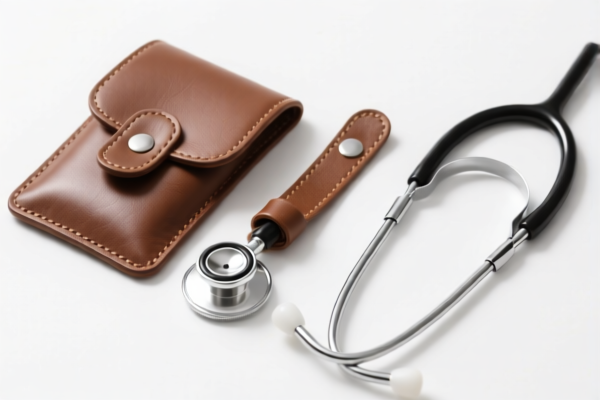
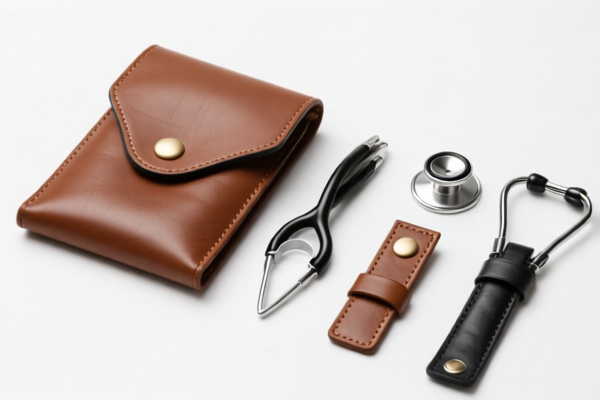
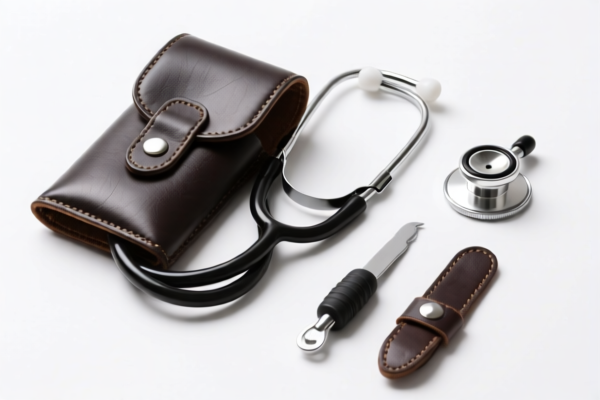
"Synthetic Leather Medical Accessories" typically refer to components made from composite leather, faux leather, or synthetic materials used in the manufacturing of medical apparel, protective gear, or accessory parts (e.g., straps, pockets, reinforcement panels, or decorative covers for medical devices). These items do not constitute the primary function of the medical device but serve as ancillary components.
In international trade, the classification hinges on two key factors: 1. Material Composition: Is it primarily leather/fur skin (Chapter 41/42) or textile/fabric (Chapter 60/62)? 2. Form & Function: Is it a ready-made garment accessory (Chapter 62) or a generic leather article/fitting (Chapter 42)?
⚠️ Critical Distinction:
- If the item is a textile-based fabric with a synthetic leather coating → Often falls under Chapter 62 (Articles of Apparel and Clothing Accessories).
- If the item is a pure leather composite or synthetic leather sheet/cut-out used as a general fitting → Often falls under Chapter 42 (Articles of Leather).
📦 2. HS Code Classification Details (2026 Latest Tariff Authority)
Based on the provided data, there are four potential HS Codes. The choice depends on whether customs views the item as a "Leather Article" (Ch. 42) or a "Textile Accessory" (Ch. 62).
| HS Code | Product Description | Classification Logic | Tax Rate (US/CN Origin) |
|---|---|---|---|
4205.00.80.00 |
Other articles of leather or composite leather; Other | Classified as a general leather article/fitting. "Composite leather" fits the definition of leather articles under Ch. 42. | 35.0% |
4205.00.10.00 |
Other articles of leather or composite leather; Parts/Accessories | Classified specifically as parts or accessories made of leather/composite leather. | 35.0% |
6217.10.95.50 |
Other made-up clothing accessories; Other | Classified as a garment accessory made of synthetic leather. Synthetic leather is often treated as a textile composite in Ch. 62 if not purely leather. | 32.1% |
6217.90.90.95 |
Other made-up clothing accessories; Other | A catch-all category for medical accessories made of synthetic/composite leather, falling under "other accessories." | 32.1% |
🔍 Key Takeaway:
- Ch. 42 Codes (4205...) attract a 35% total duty.
- Ch. 62 Codes (6217...) attract a 32.1% total duty.
- Strategic Choice: If the product can be justified as a "textile-based accessory" (Ch. 62), you save 2.9% in duty. However, if it is strictly "composite leather" without textile backing, Ch. 42 may be the legally correct classification.
💰 3. 2026 US Tariff Rate Breakdown (China Origin)
✅ Applicable Country: United States (US)
✅ Origin: China (CN)
✅ Effective Date: Post-2025 regulations (Section 301 & IEEPA)
🎯 Option A: Classification under Chapter 42 (Leather/Composite Leather)
HS Codes: 4205.00.80.00 / 4205.00.10.00
Total Duty: 35.0%
| Component | Rate | Legal Basis |
|---|---|---|
| Base Duty | 0.0% | Ad Valorem (Most Favored Nation rate) |
| Section 301 (Added Duty) | 25.0% | USITC Footnote 9903.88.01 (China-origin goods) |
| IEEPA Section 122 Tariff | 10.0% | Executive Order on Additional Tariffs (Effective Nov 2025) |
| Total Effective Rate | 35.0% | High Cost |
📌 Explanation:
- The 0% base duty is misleading; the 35% effective rate makes these goods very expensive to import into the US.
- No De Minimis Exemption: These items are subject to full duty assessment.
🎯 Option B: Classification under Chapter 62 (Garment Accessories)
HS Codes: 6217.10.95.50 / 6217.90.90.95
Total Duty: 32.1%
| Component | Rate | Legal Basis |
|---|---|---|
| Base Duty | 14.6% | Standard MFN Rate for Textile Accessories |
| Section 301 (Added Duty) | 7.5% | USITC Footnote 9903.88.01 (Specific subset of textile/leather hybrids) |
| IEEPA Section 122 Tariff | 10.0% | Executive Order on Additional Tariffs |
| Total Effective Rate | 32.1% | Moderate-High Cost |
📌 Explanation:
- The base duty is higher (14.6%), but the Section 301 penalty is lower (7.5% vs 25%).
- This results in a 2.9% savings compared to Chapter 42.
- Crucial: You must prove the item is a "garment accessory" (e.g., part of a medical gown, protective suit, or wearable device) to qualify for this lower penalty rate.
🛠️ 4. Customs Clearance Practical Advice (Avoiding Pitfalls)
✅ 1. Documentation Checklist (Mandatory)
| Document | Required? | Purpose |
|---|---|---|
| ✅ Product Specification Sheet | Yes | Detail material composition: e.g., "Polyurethane-coated polyester fabric" vs. "Genuine Leather Composite." |
| ✅ Material Composition Statement | Yes | Clearly state: "100% Synthetic Leather" or "Textile Base + PU Coating." |
| ✅ Product Photos | Yes | Show the item in context (e.g., attached to a medical gown or device) to prove it is an "accessory." |
| ✅ Commercial Invoice | Yes | Description must match HS Code rationale: "Synthetic Leather Straps for Medical Gowns." |
| ✅ Packing List | Yes | Ensure weight and dimensions match declaration. |
✅ 2. Classification Strategy & Tips
🔥 "Accessory vs. Article: The 2.9% Savings Rule"
| Scenario | Recommended HS Code | Why? |
|---|---|---|
| Item is a strap, pocket, or patch attached to medical apparel | 6217.10.95.50 |
It is a made-up clothing accessory. Qualifies for lower Section 301 rate (7.5%). |
| Item is a standalone sheet or cut-out with no specific garment form | 4205.00.10.00 |
It is a raw/semi-finished leather article. Higher Section 301 rate (25%) applies. |
| Item is part of a medical device housing | Consult Specialist | May fall under Chapter 90 (Medical Instruments), but if leather-based, Ch. 42/62 is likely. |
⚠️ Critical Warning:
- Do NOT misdeclare Ch. 62 items as Ch. 42 to avoid base duty, or vice versa.
- If the item is clearly a textile fabric with synthetic coating, argue for 6217 to save 2.9%.
- If the item is dense, non-textile composite leather, Ch. 42 is safer to avoid penalties for misclassification.
✅ 3. Special Circumstances
| Situation | Handling Advice |
|---|---|
| Medical Gowns with Synthetic Leather Patches | Declare the entire gown under Chapter 62 (Apparel). The patch is part of the garment, not a separate accessory. This may avoid separate accessory duties. |
| OEM Custom Medical Accessories | Provide client design specs. If designed specifically for a garment, use 6217. |
| Mixed Shipments (Leather + Textile) | Separate declarations. Do not bundle Ch. 42 and Ch. 62 items in one line item to avoid confusion. |
🌍 5. Global Market Comparison (2026)
| Region | Recommended HS Code | Effective Duty (China Origin) | Notes |
|---|---|---|---|
| 🇺🇸 USA | 6217.10.95.50 (Preferred) |
32.1% | Lower Section 301 penalty vs. Ch. 42. |
| 🇺🇸 USA | 4205.00.10.00 |
35.0% | Higher duty, but safer if material is pure leather composite. |
| 🇪🇺 EU | 4205.00.80 or 6217.90 |
~5-10% | No Section 301/IEEPA tariffs. Significantly cheaper. |
| 🇨🇳 China | 4205.00.80 or 6217.10 |
~10-15% | Import duty applies, but no punitive tariffs. |
📌 Conclusion:
- The US market is the most expensive due to IEEPA 10% and Section 301 tariffs.
- Chapter 62 (6217...) is the optimal classification for synthetic leather accessories if they are garment-related, saving 2.9% in total duty.
- Chapter 42 (4205...) is the fallback if the item is purely a leather article.
📌 6. Common Errors & Pitfalls (Learn from Mistakes)
❌ Error 1: Declaring "Synthetic Leather" as "Textile" without proof.
👉 Consequence: Customs may reclassify to Ch. 42 or penalize for misdeclaration.
Fix: Provide material lab tests showing polymer/fabric composition.
❌ Error 2: Using Ch. 42 codes for garment accessories.
👉 Consequence: Paying 35% instead of 32.1%.
Fix: Argue that the item is a "made-up accessory" (Ch. 62) rather than a "general leather article."
❌ Error 3: Ignoring the IEEPA 10% Tariff.
👉 Consequence: Unexpected cost increase in 2026.
Fix: Include IEEPA 10% in all cost calculations for US imports.
🎯 7. Conclusion: Smart Classification Saves Money
🎯 Key Takeaway:
🔹 "Accessory First, Leather Second."
If it’s part of a medical garment or wearable, fight for6217.10.95.50to save 2.9% in duties.
🔹 "Base Duty vs. Penalty."
Ch. 62 has higher base duty (14.6%) but lower Section 301 penalty (7.5%). Ch. 42 has 0% base but 25% penalty.
🔹 "Document Everything."
Provide clear photos and material specs to justify Ch. 62 classification.
📌 Pro Tip:
If your synthetic leather medical accessories are exported to the US, calculate the 32.1% rate as your baseline.
For EU/Other Markets, expect 5-15% duty.
Consult a US Customs Broker for a Pre-Ruling (ACE) to lock in the 6217 classification and avoid audits.
📣 Action Plan:
📞 Step 1: Confirm material composition (Polyurethane vs. Genuine Leather).
📞 Step 2: Determine if the item is a "garment accessory" (Ch. 62) or "general article" (Ch. 42).
📞 Step 3: Declare under6217.10.95.50if possible, to minimize duty burden.
🚀 Result: Compliant, Cost-Effective, and Efficient Customs Clearance.
✨ Professional Clearance Starts with Accurate Classification!
💼 Your Profit Margin Depends on the 2.9% Difference!
用户评价
关于 HS 编码归类
协调制度(HS)是由世界海关组织(WCO)制定的国际贸易商品分类标准。全球 200 多个国家采用 HS 系统作为海关关税、贸易统计和进出口监管的基础。
每个 HS 编码遵循以下层级结构:
- 章(2 位)——商品大类(例如:第 84 章:机器和机械设备)
- 品目(4 位)——章内的更具体分类
- 子目(6 位)——国际通用细分,所有 WCO 成员国统一使用
- 本国细分(8-10 位)——各国自行扩展的细分编码,如美国 HTSUS 10 位编码
正确的 HS 编码归类对于顺利通关、准确缴纳关税和遵守贸易法规至关重要。错误归类可能导致海关延误、多缴关税或罚款。
从CN进口到US时,适用的关税税率可能包括:
- 最惠国(MFN)税率——适用于 WTO 成员国的标准关税税率
- 普通税率——适用于无贸易协定国家
- 贸易救济关税——附加关税,如 301 条款(反倾销)、232 条款(国家安全)或反补贴税
本页内容仅供参考。如需正式归类,请咨询当地海关或持牌报关代理。