Synthetic Monofilament and Flat Strips
CN → US| HS编码 | 关税税率 | 原产国 | 目的国 | 文档 |
|---|---|---|---|---|
| 3916903000 | 41.5% | CN | US | 官方文档 |
| 3916100000 | 40.8% | CN | US | 官方文档 |
| 5405003000 | 41.9% | CN | US | 官方文档 |
| 5405006000 | 40.8% | CN | US | 官方文档 |
| 5404110000 | 41.9% | CN | US | 官方文档 |
商品图片
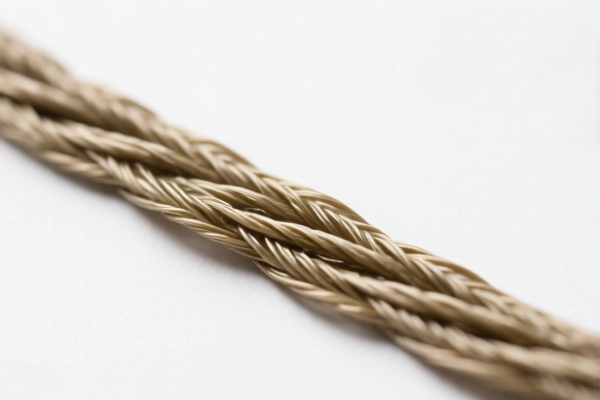
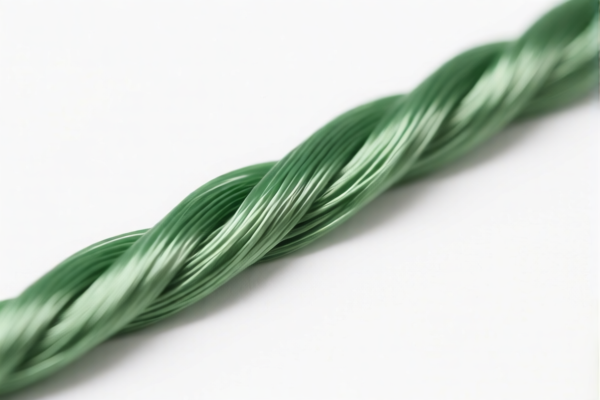
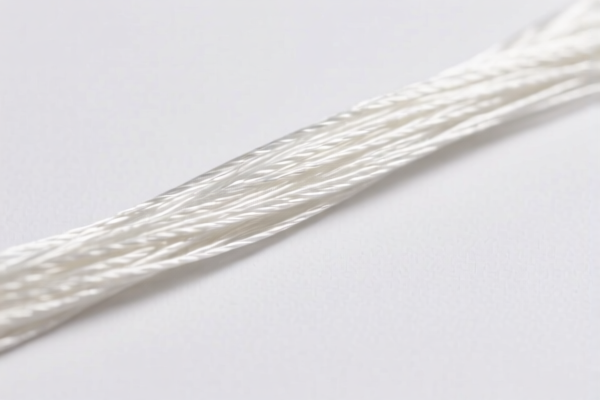
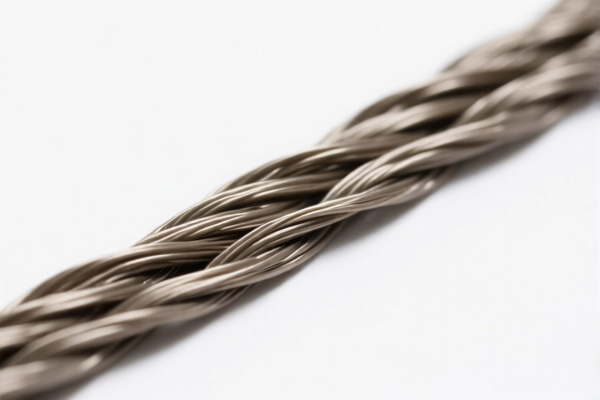
AI分析
🧵 Synthetic Monofilament and Flat Strips (Composite Textiles/Plastics)
🌐 HS Code Reference & Customs Clearance Guide | 2026 Latest Tariff Analysis | Professional Entry Strategies
📌 I. Product Definition & Classification: What Exactly Are "Synthetic Monofilaments and Flat Strips"?
In international trade, Synthetic Monofilaments and Flat Strips refer to continuous strands of synthetic polymers (such as polypropylene, polyester, or nylon) that are extruded into specific shapes. They are critical raw materials for manufacturing ropes, nets, geotextiles, fishing gear, and industrial twines.
They are broadly categorized by form and material origin: * Monofilaments (Single Filaments): Single continuous threads with a diameter of 1mm or more (Plastics) or less than 1mm (Textiles). * Flat Strips: Sheets or strips cut from plastic films or textiles, typically used for weaving or bundling. * Material: Must be synthetic (man-made polymers), distinguishing them from natural fibers (cotton, silk) or artificial fibers (viscose/rayon).
⚠️ Critical Distinction Point:
- Plastic-based (e.g., Polypropylene/Polyethylene >1mm or specific film cuts) → Often classified under Chapter 39.
- Textile-based (e.g., Polyester/Nylon filaments <1mm or specific woven strips) → Often classified under Chapter 54.
- Misclassification Risk: Confusing "plastic strips" with "textile strips" leads to significant tariff differences, especially with US import restrictions.
📦 II. HS Code Classification Details (2026 Latest Tariff Authority对照)
Based on the provided data, here are the applicable HS Codes for Synthetic Monofilaments and Flat Strips imported into the US from China.
| HS Code | Product Description | Key Matching Criteria | Total Tax Rate |
|---|---|---|---|
3916.90.30.00 |
Plastic Monofilaments/Strips | Matches Form (Single Filament & Flat Strip) and Material (Synthetic Plastic/Polymer) | 41.5% |
3916.10.00.00 |
Plastic Monofilaments | Matches Material (Synthetic Plastic) and Form (Monofilament only) | 40.8% |
5405.00.30.00 |
Synthetic Monofilaments (Textile) | Matches "Synthetic" Material and "Monofilament & Flat Strip" Form | 41.9% |
5405.00.60.00 |
Synthetic Flat Strips (Textile) | Matches "Synthetic Monofilament" Material and "Flat Strip" Form Characteristic | 40.8% |
5404.11.00.00 |
Synthetic Monofilament Strips | Matches "Synthetic Monofilament" Material and "Flat Strip/Belt-like" Form | 41.9% |
5404.90.00.00 |
Other Synthetic Monofilaments/Strips | Matches "Synthetic" Material and "Monofilament & Flat Strip" Form | 35.0% |
🔍 Key Insight:
- Chapter 39 (3916.xx) typically covers plastic monofilaments/strips that are not textile fibers.
- Chapter 54 (5404/5405) covers synthetic filament yarns and related strips used in textile manufacturing.
- Tax Variance: The total tax ranges from 35.0% to 41.9%, heavily influenced by the specific chemical composition and physical dimensions (diameter/width).
💰 III. 2026 Latest Tariff Rate Breakdown (Including Surtaxes & Policy Surcharges)
✅ Applicable Country: United States (US)
✅ Origin: China (CN)
✅ Effective Time: Ongoing (Subject to Section 301 & IEEPA)
🎯 1. General Tax Structure for Synthetic Monofilaments
All listed HS Codes share a common structure of Base Tariff + Section 301 Surtax + 122-Clause Tariff.
| Component | Rate | Source |
|---|---|---|
| Base Tariff | 0.0% – 6.9% | HTSUS Standard Rate (varies by specific subheading) |
| Section 301 Surtax | +25.0% | USITC Footnote 9903.88.01 / Trade Act of 1974 |
| 122-Clause Tariff | +10.0% | Specific provision targeting Chinese synthetic materials |
| Total Effective Rate | 35.0% – 41.9% | Sum of above components |
📌 Detailed Breakdown by HS Code Group:
A. Plastic-Based (3916.xx)
- HS Code
3916.90.30.00:- Base: 6.5% | 301: 25% | 122: 10% → Total: 41.5%
- HS Code
3916.10.00.00:- Base: 5.8% | 301: 25% | 122: 10% → Total: 40.8%
B. Textile-Based (5404/5405)
- HS Code
5405.00.30.00:- Base: 6.9% | 301: 25% | 122: 10% → Total: 41.9% (Highest Rate)
- HS Code
5405.00.60.00:- Base: 5.8% | 301: 25% | 122: 10% → Total: 40.8%
- HS Code
5404.11.00.00:- Base: 6.9% | 301: 25% | 122: 10% → Total: 41.9% (Highest Rate)
- HS Code
5404.90.00.00:- Base: 0.0% | 301: 25% | 122: 10% → Total: 35.0% (Lowest Rate)
📌 Note:
- The 10% "122-Clause" tariff is a critical add-on for these specific synthetic materials from China.
- De Minimis Exemption (Section 321): ❌ NOT APPLICABLE.
High-value synthetic materials are explicitly excluded from the $800 de minimis exemption. All shipments are subject to full duty calculation.
🛠️ IV. Customs Clearance Practical Advice (Battle-Tested Pitfall Avoidance)
✅ 1. Documentation Checklist (Non-Negotiable)
| Document | Required | Purpose |
|---|---|---|
| Product Specification Sheet | ✔️ | Must specify Material (e.g., 100% Polypropylene, 100% Polyester), Diameter/Width, and Tenacity. |
| Technical Data Sheet (TDS) | ✔️ | Proves if it is "Plastic" (Ch 39) or "Textile Fiber" (Ch 54). |
| Commercial Invoice | ✔️ | Must clearly state "Synthetic Monofilament" or "Flat Strip", not generic "Plastic Strip" or "String". |
| Certificate of Origin (CO) | ✔️ | Critical for proving China origin (triggers 301 + 122 clauses). |
| Material Safety Data Sheet (MSDS) | ✔️ | Required for chemical classification verification. |
| Packing List | ✔️ | Detailed breakdown of net/gross weight to calculate ad valorem duties accurately. |
✅ 2. Classification Strategy & Keyword Tips
🔥 "Define Material First, Then Shape. Name Precisely, Avoid Generic Terms!"
| Scenario | Recommended Declaration | Risk of Misclassification |
|---|---|---|
| Polypropylene (PP) Twine/Strap | "Synthetic Plastic Monofilament, PP, Diameter X mm" | If misclassified as textile, rate may drop but penalty risk is high. |
| Polyester Nylon Fishing Line | "Synthetic Textile Monofilament, Nylon, Diameter <1mm" | Must specify diameter to distinguish between Ch 39 and Ch 54. |
| Woven Polypropylene Bag Material | "Flat Strip of Plastic, Width X mm" | Ensure it fits 3916.90.30.00 criteria for flat strips. |
| Generic "String" or "Rope" | ❌ Avoid | Too vague. Customs will classify based on worst-case scenario or demand re-classification. |
✅ 3. Special Handling for High-Tax Codes
-
For
5404.90.00.00(35.0% Rate):- This is the most favorable code in the list. If your product qualifies (e.g., certain types of synthetic filaments not otherwise specified), ensure the technical data supports this classification.
- Action: Provide lab tests confirming the polymer type and lack of textile-specific treatments.
-
For
5405and3916(40.8%-41.9% Rate):- These are high-tax categories.
- Action: Verify if the product is a "finished good" (e.g., pre-cut netting) which might fall under a different chapter (e.g., 5608 for nets). If it is raw monofilament/strip, these are the correct codes.
🌍 V. Global Market Comparison (2026 Latest)
| Country/Region | Recommended HS Code | Base Tariff | Surtax/Policy Tax | Total Effective Rate | Remarks |
|---|---|---|---|---|---|
| 🇺🇸 USA | 3916.90.30.00 / 5405.00.30.00 etc. |
0-6.9% | +35% (301+122) | 35.0% - 41.9% | Highest Barrier. Strict enforcement on synthetic materials. |
| 🇨🇳 China | 3916.90.30.00 / 5405.00.30.00 |
6.5-6.9% | 0% | 6.5% - 6.9% | Low entry tax. No anti-dumping for general trade. |
| 🇪🇺 EU | 3916.90 / 5405.00 |
4-6.5% | 0% | 4% - 6.5% | No Section 301. VAT applies separately (19-27%). |
| 🇲🇽 Mexico | 3916.90 / 5405.00 |
5-7% | 0% | 5% - 7% | Benefit from USMCA if originating in North America. |
📌 Conclusion:
- US Market: Extremely costly due to Section 301 + 122-Clause tariffs.
- Alternative Markets: EU, Mexico, and Asia offer significantly lower entry barriers (5-7%).
- Supply Chain Shift: Many exporters are moving final assembly or material sourcing to Vietnam, India, or Mexico to avoid US surtaxes.
📌 VI. Common Errors & Pitfall Guide (Lessons Learned)
❌ Error 1: Classifying Plastic Strips as Textile Yarn
👉 Consequence: If deemed "Plastic," the rate might change, but if deemed "Textile" incorrectly, you face fraud penalties and retroactive duties.
✅ Fix: Provide chemical composition analysis (e.g., PP vs. Polyester).
❌ Error 2: Ignoring the 122-Clause Tariff
👉 Consequence: Many importers only calculate the 25% Section 301 tariff and forget the extra 10%, leading to underpayment and CBSA/USCBP audits.
✅ Fix: Always add 10% for specific synthetic materials from China.
❌ Error 3: Using "Plastic Rope" instead of "Monofilament/Flat Strip"
👉 Consequence: Customs may classify under a different, potentially higher or restricted subheading, causing delays and storage fees.
✅ Fix: Use precise technical terms: "Monofilament" (single filament) vs. "Strand" (multiple twisted).
❌ Error 4: Assuming De Minimis ($800) applies
👉 Consequence: Shipments under $800 are still subject to duty and must be formally entered. Ignoring this leads to seizure.
✅ Fix: File Entry Type 86 or Type 11 appropriately, even for low-value shipments.
🎯 VII. Conclusion: Precision in Classification Saves Costs!
🎯 Remember the Golden Rule:
🔹 "Material Defines Chapter, Shape Defines Subheading, Origin Defines Surtax."
🔹 "Synthetic = High Tax in US. Verify 122-Clause + 301-Clause."
🔹 "Do Not Guess. Provide Technical Data. Save Up to 7% with Correct Code."
📌 Pro Tip:
If your synthetic monofilaments are originating from Vietnam, Thailand, or India, you may avoid the Section 301 (25%) and 122-Clause (10%) tariffs, reducing the total rate to the Base Tariff (0-6.9%).
Action: Consider supply chain restructuring or substantial transformation rules to leverage free trade agreements (FTAs).
📣 Immediate Action Required:
📞 Contact your customs broker with Product Specifications
📤 Request HS Code Pre-Ruling from USCBP if uncertain
🚀 Optimize Your Supply Chain to Reduce Tariff Burden!
✨ Professional Customs Clearance Starts with Accurate Classification!
💼 Every Percentage Point of Tax is a Percentage Point of Profit Lost!
用户评价
关于 HS 编码归类
协调制度(HS)是由世界海关组织(WCO)制定的国际贸易商品分类标准。全球 200 多个国家采用 HS 系统作为海关关税、贸易统计和进出口监管的基础。
每个 HS 编码遵循以下层级结构:
- 章(2 位)——商品大类(例如:第 84 章:机器和机械设备)
- 品目(4 位)——章内的更具体分类
- 子目(6 位)——国际通用细分,所有 WCO 成员国统一使用
- 本国细分(8-10 位)——各国自行扩展的细分编码,如美国 HTSUS 10 位编码
正确的 HS 编码归类对于顺利通关、准确缴纳关税和遵守贸易法规至关重要。错误归类可能导致海关延误、多缴关税或罚款。
从CN进口到US时,适用的关税税率可能包括:
- 最惠国(MFN)税率——适用于 WTO 成员国的标准关税税率
- 普通税率——适用于无贸易协定国家
- 贸易救济关税——附加关税,如 301 条款(反倾销)、232 条款(国家安全)或反补贴税
本页内容仅供参考。如需正式归类,请咨询当地海关或持牌报关代理。