Synthetic Rubber Latex Carboxylated SBR
CN → US| HS编码 | 关税税率 | 原产国 | 目的国 | 文档 |
|---|---|---|---|---|
| 4002110000 | 35.0% | CN | US | 官方文档 |
| 4002510000 | 35.0% | CN | US | 官方文档 |
| 3905915000 | 40.3% | CN | US | 官方文档 |
| 4002590000 | 35.0% | CN | US | 官方文档 |
| 4002910000 | 35.0% | CN | US | 官方文档 |
商品图片

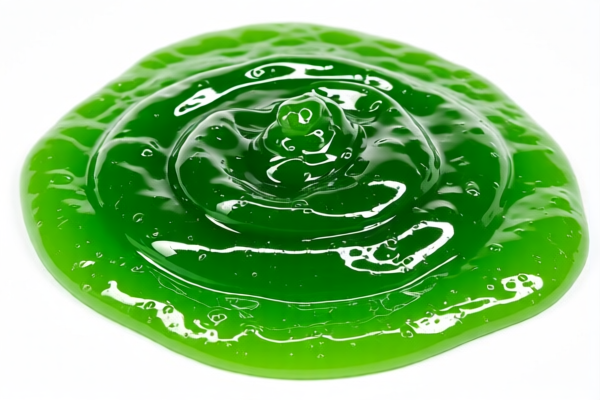
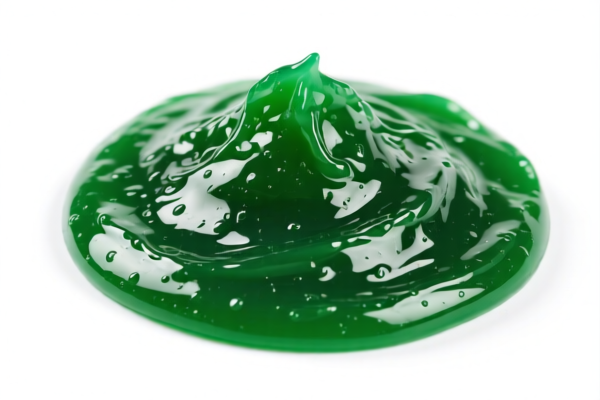
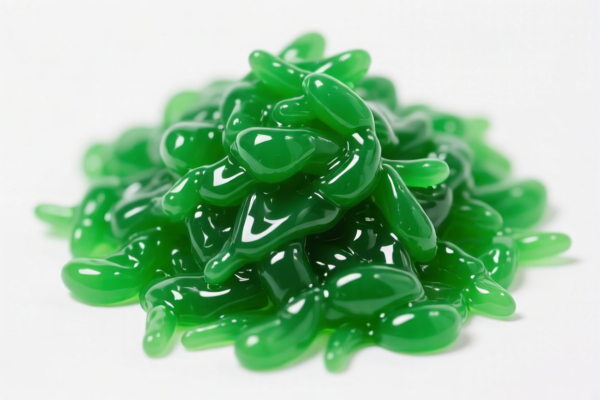
AI分析
🧪 Synthetic Rubber Latex – Carboxylated SBR (Carboxylated Styrene-Butadiene Rubber)
🌐 HS Code Reference & Customs Clearance Guide | 2026 Latest Tariff Analysis | Professional Clearance Strategy
📌 I. Product Definition & Classification: What is "Carboxylated SBR Latex"?
Carboxylated SBR (XNBR) is a modified styrene-butadiene rubber synthesized by copolymerizing styrene, butadiene, and a carboxylic acid monomer (usually acrylic acid or methacrylic acid). Unlike standard SBR, XNBR offers superior oil resistance, better adhesion to polar materials (like nylon or polyester), and improved vulcanization characteristics.
In international trade, XNBR is typically imported in two forms: 1. Latex (Emulsion): An aqueous dispersion (liquid/paste form) used in coatings, adhesives, paper coating, and non-woven fabrics. 2. Solid Rubber: Pellets or sheets used in tire manufacturing and industrial rubber goods.
⚠️ Key Distinction for Customs:
- Latex/Emulsion State: Goods in liquid or semi-liquid dispersion form are generally classified under Chapter 40 (Rubber and Articles Thereof), specifically heading 4002.
- Solid State: If the product is dried into solid blocks or pellets, it still falls under 4002 but may require different subheading verification depending on the specific modification.
- Chemical vs. Rubber: Do NOT classify under Chapter 39 (Plastics) unless it is a pure resin without rubbery properties, which is rare for SBR.
📦 II. HS Code Classification Details (2026 Latest Tariff Alignment)
Based on the provided data, the following HS Codes are the most accurate classifications for Carboxylated SBR Latex.
| HS Code | Product Description | Summary & Justification | Total Tax Rate (US) |
|---|---|---|---|
| 4002.11.00.00 | Carboxylated SBR Latex | Matches "Carboxylated Styrene-Butadiene Rubber Latex". Material and form (latex/emulsion) fit the definition precisely. | 35.0% |
| 4002.51.00.00 | Industrial Grade Carboxylated SBR Latex | Classified as "Synthetic Rubber Latex". Specifically for industrial applications where the carboxylated modification is present. | 35.0% |
| 4002.59.00.00 | Carboxylated SBR (XNBR) Latex | Falls under "Other Styrene-Butadiene Rubber Modified". XNBR is a specific modified type of SBR. | 35.0% |
| 4002.91.00.00 | SBR Latex | General classification for "Styrene-Butadiene Rubber Latex". Fits the base material and emulsion form. | 35.0% |
| 3905.91.50.00 | Industrial SBR Emulsion Copolymer | Alternative Classification: Matches "Vinyl Copolymers" if deemed primarily a chemical polymer rather than rubbery elastomer. Higher tax due to base duty. | 40.3% |
🔍 Critical Analysis:
- 4002 Series (35% Total): This is the standard and preferred classification for rubber lats. It carries a 0% base duty but is hit with 35% in附加 tariffs (25% Section 301 + 10% IEEPA).
- 3905 Series (40.3% Total): This is a less common/alternative classification for industrial emulsions. It incurs a 5.3% base duty plus the same 35% in附加 tariffs. Avoid unless explicitly advised by a customs broker, as it is more expensive and harder to justify for "rubber" latex.
💰 III. 2026 Latest Tariff Rate Breakdown (Including Surcharges & Policy Add-ons)
✅ Applicable Country: United States (US)
✅ Origin: China (CN)
✅ Effective Date: Post-November 2025 (Current Trade Environment)
🎯 1. Primary Classification: 4002.xxxx.xx.xx (e.g., 4002.11.00.00)
Product: Carboxylated SBR Latex (Rubber Emulsion)
| Item | Content |
|---|---|
| Base Tariff Rate | 0.0% (Ad Valorem) – Standard duty for most rubber latex under Chapter 40. |
| Section 301 Surcharge | +25.0% – Additional duty imposed on Chinese-origin goods under USITC Footnote 9903.88.01. |
| IEEPA Surcharge (122 Clause) | +10.0% – Additional duty under the International Emergency Economic Powers Act for Chinese products. |
| Total Effective Rate | 35.0% |
| Tax Calculation | CIF Value × 35% |
| De Minimis Exemption | ❌ Not Eligible (Deny de minimis). Goods valued over $800 do not qualify for the $800 duty-free threshold. |
| Legal Basis Path | IEEPA:9903.01.25 → Section 301: USITC Footnote 9903.88.01 → HS Code: 4002.xx.xx.xx |
📌 Explanation:
- The 0% base duty might sound good, but the 35% combined surcharge is substantial.
- Both the 25% Section 301 and 10% IEEPA taxes apply cumulatively to the CIF value.
- Total Cost Impact: For every $100,000 of goods, you will pay $35,000 in duties.
🎯 2. Alternative Classification: 3905.91.50.00
Product: Industrial SBR Emulsion (Polymer)
| Item | Content |
|---|---|
| Base Tariff Rate | 5.3% – Standard duty for vinyl copolymers/emulsions in Chapter 39. |
| Section 301 Surcharge | +25.0% |
| IEEPA Surcharge (122 Clause) | +10.0% |
| Total Effective Rate | 40.3% |
| Tax Calculation | CIF Value × 40.3% |
📌 Note:
- This classification is 5.3% more expensive in total duty than the 4002 series.
- It is only used if the product is legally argued to be a "plastic/polymer emulsion" rather than a "rubber latex," which is risky and often challenged by CBP (Customs and Border Protection).
🛠️ IV. Customs Clearance Practical Advice (Pitfall Avoidance Guide)
✅ 1. Documentation Checklist (Non-Negotiable)
| Document | Required? | Explanation |
|---|---|---|
| ✅ Product Specification Sheet | ✔️ | Must explicitly state: "Carboxylated Styrene-Butadiene Rubber," "Latex/Emulsion Form," "Solid Content %," "pH Level." |
| ✅ Chemical Safety Data Sheet (SDS) | ✔️ | Proves the product is a chemical/rubber mixture, not a finished good. |
| ✅ Commercial Invoice | ✔️ | Clearly describe as "Synthetic Rubber Latex, Carboxylated SBR, Emulsion." Avoid vague terms like "Glue" or "Adhesive" alone. |
| ✅ Certificate of Origin | ✔️ | Essential for determining origin (China vs. Other) to apply correct tariffs. |
| ✅ Formula/Molecular Structure | ✔️ | Sometimes requested to prove it is indeed SBR and not a different polymer. |
| ✅ Packing List | ✔️ | Indicate if the latex is stabilized, preservative-free, or contains ammonia. |
✅ 2. Declaration Tips (Key Mantras)
🔥 "Declare Form, Declare Content, Avoid Ambiguity!"
| Scenario | Correct Declaration | Incorrect Declaration |
|---|---|---|
| Liquid Latex | "Carboxylated SBR Latex, 50% solids, aqueous dispersion" | "Rubber Glue" or "Adhesive" (Too vague, may be reclassified) |
| Industrial Grade | "Industrial Synthetic Rubber Latex, XNBR" | "Plastic Resin" (Wrong chapter, leads to 3905 classification) |
| Mixed with Fillers | "Carboxylated SBR Latex with Fillers" | Must disclose filler % as it may affect valuation. |
| Value Declaration | Accurate CIF Value | Under-declaring leads to seizures and penalties. |
✅ 3. Special Case Handling
| Situation | Handling Advice |
|---|---|
| Is XNBR considered "Rubber" or "Chemical"? | It is classified as Rubber (Ch 40) because it retains elastomeric properties. Do not classify under Ch 39 unless it is purely a coating resin without rubbery recovery. |
| Can I use De Minimis ($800)? | No. Section 301 and IEEPA tariffs are not eligible for de minimis exemption. All shipments must be formally entered. |
| What if the supplier says "Emulsion"? | "Emulsion" can refer to paints (Ch 32) or polymers (Ch 39). You must prove it is a rubber latex (Ch 40) by providing the SDS and molecular structure. |
| Origin Shifting | If shipped from Vietnam/Malaysia but made in China, it is still Chinese Origin. Do not try to obscure origin; CBP tracks supply chains aggressively. |
🌍 V. Global Market Comparison (2026 Latest)
| Country/Region | Recommended HS Code | Total Tariff (China Origin) | Key Requirements | Notes |
|---|---|---|---|---|
| 🇺🇸 USA | 4002.11.00.00 / 4002.51.00.00 |
35.0% | SDS, Spec Sheet, CO | High tariff due to 301 + IEEPA. Formal entry required. |
| 🇨🇳 China | 4002.11.00.00 |
0.0% - 5% | Import License | Generally low duty for raw rubber materials. |
| 🇪🇺 EU | 4002.11.00 |
0.0% | REACH Registration | No additional tariffs for rubber latex. REACH compliance is critical. |
| 🇯🇵 Japan | 4002.11.00 |
0.0% - 3% | JIS Standards | Generally low tariff. Check EPA benefits if applicable. |
📌 Conclusion:
- The US market is the most expensive for Carboxylated SBR Latex due to the 35% combined tariff.
- The EU and Japan offer significantly lower duty costs (0-5%).
- If your end-market is the US, factor the 35% duty into your pricing model immediately.
📌 VI. Common Errors & Pitfalls (Blood & Tears Lessons)
❌ Error 1: Declaring "SBR Latex" as "Acrylic Adhesive" (Ch 35)
👉 Consequence: Wrong classification. If found, CBP may penalize under 1592 (Gross Negligence). Also, Ch 35 may have different duty rates, triggering audits.
❌ Error 2: Using De Minimis for small samples
👉 Consequence: CBP has cracked down on de minimis for Chinese rubber goods. Samples may be held or duties charged retrospectively.
❌ Error 3: Vague Description "Rubber Latex" on Invoice
👉 Consequence: CBP may classify under 4002.99 (Other Rubber) or even Ch 39 if they doubt the rubbery nature, leading to disputes and delays.
❌ Error 4: Ignoring the 10% IEEPA Tariff
👉 Consequence: Underpayment of duties. The 10% IEEPA tax is in addition to the 25% Section 301. Total is 35%, not 25%.
✅ Correct Approach:
"Carboxylated Styrene-Butadiene Rubber Latex, Emulsion Form, 50% Solid Content, HS Code 4002.11.00.00, Origin: China, Total Duty: 35%"
🎯 VII. Conclusion: Professional Declaration, Cost Efficiency, Risk Mitigation
🎯 Remember the Mantra:
🔹 "Form is Key: Latex = 4002. Solid = 4002. Emulsion ≠ Paint."
🔹 "US Market = 35% Duty. Plan Your Price."
🔹 "No De Minimis for Chinese Rubber. Declare Fully."
📌 Pro Tip:
If your supply chain allows, consider sourcing standard SBR (non-carboxylated) if the carboxyl group is not strictly necessary for your end-use, as it may sometimes have different trade negotiations. However, for XNBR, the 35% duty is unavoidable for Chinese origin.
Recommendation: Apply for a Pre-Decision Ruling from US CBP if you are shipping large volumes, to lock in the 4002 classification and avoid audits.
📣 Immediate Action:
📞 Contact a licensed customs broker.
📄 Prepare SDS and Technical Data Sheets.
🚀 Get your HS Code pre-ruled to save costs and time!
✨ Professional Customs Clearance Starts with Accurate Classification!
💼 Every percentage point of duty affects your profit margin. Calculate wisely!
用户评价
关于 HS 编码归类
协调制度(HS)是由世界海关组织(WCO)制定的国际贸易商品分类标准。全球 200 多个国家采用 HS 系统作为海关关税、贸易统计和进出口监管的基础。
每个 HS 编码遵循以下层级结构:
- 章(2 位)——商品大类(例如:第 84 章:机器和机械设备)
- 品目(4 位)——章内的更具体分类
- 子目(6 位)——国际通用细分,所有 WCO 成员国统一使用
- 本国细分(8-10 位)——各国自行扩展的细分编码,如美国 HTSUS 10 位编码
正确的 HS 编码归类对于顺利通关、准确缴纳关税和遵守贸易法规至关重要。错误归类可能导致海关延误、多缴关税或罚款。
从CN进口到US时,适用的关税税率可能包括:
- 最惠国(MFN)税率——适用于 WTO 成员国的标准关税税率
- 普通税率——适用于无贸易协定国家
- 贸易救济关税——附加关税,如 301 条款(反倾销)、232 条款(国家安全)或反补贴税
本页内容仅供参考。如需正式归类,请咨询当地海关或持牌报关代理。