Synthetic Rubber Latex for Waterproof Coatings
CN → US| HS编码 | 关税税率 | 原产国 | 目的国 | 文档 |
|---|---|---|---|---|
| 3209900000 | 40.9% | CN | US | 官方文档 |
| 3904901000 | 35.0% | CN | US | 官方文档 |
| 3904691000 | 35.0% | CN | US | 官方文档 |
| 3901909000 | 41.5% | CN | US | 官方文档 |
| 3904901000 | 35.0% | CN | US | 官方文档 |
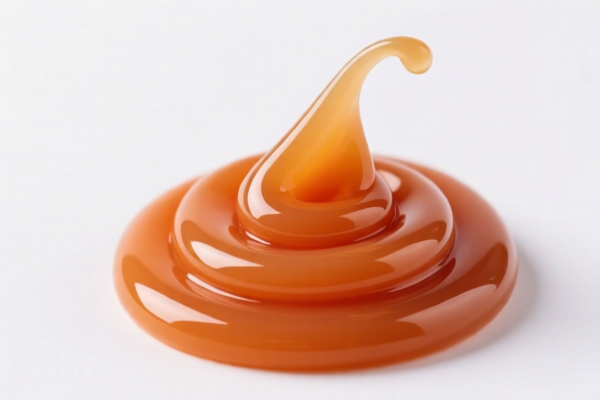
商品图片



AI分析
🧪 Synthetic Rubber Latex for Waterproof Coatings (Paper & Surface Coating Applications)
🌐 HS Code Reference & Customs Clearance Guide | 2026 Latest Tariff Analysis | Strategic Import Strategy for US Market
📌 I. Product Definition & Classification: What Exactly is "Synthetic Rubber Latex"?
Synthetic Rubber Latex, specifically formulated for waterproof and paper coatings, is a complex emulsion. In international trade, it is not treated as a single uniform product. Its classification depends heavily on its polymer base material and specific chemical composition.
⚠️ Key Distinction Points:
- If the latex is water-dispersed and based on general synthetic polymers (but not PVC or Vinyl Chloride), it often falls under Chapter 32 (Prepared Binders) or Chapter 39 (Plastics).
- If the latex is primarily based on Vinyl Chloride (PVC) or other Halogenated Olefins, it is strictly classified under Chapter 39 (Plastics).
- If the latex is based on Ethylene Polymers (e.g., LDPE/HDPE emulsions) for film applications, it falls under Chapter 39, Section 01.
📦 II. HS Code Classification Details (2026 Latest Tariff Authority Comparison)
Based on the specific chemical structure and application described in your data, here are the precise HS Codes and their corresponding tax implications.
| HS Code | Product Description | Application/Features | Total Tax Rate (US Import from CN) |
|---|---|---|---|
3209.90.00.00 |
Synthetic Rubber Latex for Paper Coating; based on synthetic polymers, dispersed/dissolved in aqueous media. | Paper coating, general synthetic polymer latex, water-based dispersion. | 40.9% |
3904.90.10.00 |
Synthetic Rubber Latex; Material: Vinyl Chloride or other Halogenated Olefin Polymers; Form: Latex. | PVC-based latex, halogenated polymer coating, waterproofing agents. | 35.0% |
3904.69.10.00 |
Synthetic Rubber Latex; Polymer material characteristics; Form: Primary Shape/Latex. | Paper coating, primary shape polymer latex, specific halogenated olefin type. | 35.0% |
3901.90.90.00 |
Synthetic Rubber Latex; Material: Ethylene Polymers; Form: Latex. | Film applications, ethylene-based latex, polyethylene emulsions. | 41.5% |
3904.90.10.00 |
Synthetic Rubber Latex; Material: Halogenated Olefin Polymers; Form: Latex. | Multi-purpose coating, halogenated polymer, waterproof/surface coating. | 35.0% |
🔍 Critical Note:
-3209.90.00.00is for general synthetic polymer latex dispersed in water.
-3904.xxxxxx.xxcodes are for halogenated polymers (like PVC) or ethylene polymers in primary shapes/emulsions.
- Misclassification between Chapter 32 (Prepared Binders) and Chapter 39 (Plastics) is a common customs audit trigger.
💰 III. 2026 Latest Tariff Rate Breakdown (Including Surcharges & Policy Add-ons)
✅ Applicable Country: United States (US)
✅ Country of Origin: China (CN)
✅ Effective Date: From November 10, 2025 (including subsequent imports)
🎯 1. 3209.90.00.00 — Synthetic Rubber Latex (Water-Based, General Synthetic Polymer)
| Item | Details |
|---|---|
| Base Duty Rate | 5.9% (Ad Valorem) |
| Section 301 Surcharge | +25.0% (USITC Footnote 9903.88.01 / Trade Act Sec 301) |
| IEEPA Surcharge | +10.0% (Against China/HK products, effective Nov 2025) |
| Total Tax Rate | 40.9% |
| Tax Calculation | CIF Value × 40.9% |
| De Minimis Eligibility | ❌ NOT Eligible (deny_de_minimis) |
| Legal Basis Path | Base: 5.9% → 301: 25.0% → IEEPA: 10.0% |
📌 Explanation:
- This code falls under Chapter 32.
- The 25% Section 301 tariff applies to most synthetic polymer products from China.
- The 10% IEEPA tariff is an additional layer for specific chemical/polymer imports from China starting in late 2025.
- Total burden is high (40.9%). Cost calculation must include this fully.
🎯 2. 3904.90.10.00 & 3904.69.10.00 — Halogenated Olefin Polymers (PVC/Vinyl Chloride Based)
| Item | Details |
|---|---|
| Base Duty Rate | 0.0% (Ad Valorem) |
| Section 301 Surcharge | +25.0% |
| IEEPA Surcharge | +10.0% |
| Total Tax Rate | 35.0% |
| Tax Calculation | CIF Value × 35.0% |
| De Minimis Eligibility | ❌ NOT Eligible (deny_de_minimis) |
| Legal Basis Path | Base: 0.0% → 301: 25.0% → IEEPA: 10.0% |
📌 Explanation:
- These codes fall under Chapter 39, Heading 3904 (Polymers of Vinyl Chloride or Other Halogenated Olefins).
- Although the base duty is 0%, the 25% Section 301 and 10% IEEPA surcharges still apply fully.
- Total burden is 35.0%, which is lower than Code 3209 but still significant.
- Ensure your SDS (Safety Data Sheet) clearly states the polymer type as "Vinyl Chloride" or "Halogenated Olefin" to justify this classification.
🎯 3. 3901.90.90.00 — Ethylene Polymers (PE-based Latex)
| Item | Details |
|---|---|
| Base Duty Rate | 6.5% (Ad Valorem) |
| Section 301 Surcharge | +25.0% |
| IEEPA Surcharge | +10.0% |
| Total Tax Rate | 41.5% |
| Tax Calculation | CIF Value × 41.5% |
| De Minimis Eligibility | ❌ NOT Eligible (deny_de_minimis) |
| Legal Basis Path | Base: 6.5% → 301: 25.0% → IEEPA: 10.0% |
📌 Explanation:
- This code falls under Chapter 39, Heading 3901 (Polymers of Ethylene).
- Base duty is higher than PVC-based latex.
- Total burden is the highest at 41.5%.
- Use this code only if the primary polymer is definitively Ethylene (e.g., LDPE emulsion) and not PVC or general synthetic rubber.
🛠️ IV. Customs Clearance Practical Advice (Avoid Pitfalls)
✅ 1. Required Documentation Checklist (All Mandatory)
| Document | Required? | Description |
|---|---|---|
| ✅ Safety Data Sheet (SDS) | ✔️ | Must clearly list polymer type (PVC, Ethylene, or General Synthetic) and water content. Critical for HS Code determination. |
| ✅ Product Specification Sheet | ✔️ | Includes viscosity, solids content, pH, and specific application (e.g., "Paper Coating" vs. "Film Application"). |
| ✅ Commercial Invoice | ✔️ | Must accurately describe the product using the HS Code-specific terminology (e.g., "Vinyl Chloride Polymer Latex" for 3904). |
| ✅ Certificate of Origin (CO) | ✔️ | Mandatory for claiming origin status, though tariffs are high for China. |
| ✅ Bill of Lading (B/L) | ✔️ | Standard shipping document. |
| ✅ Filing Form 7501 | ✔️ | Entry summary filed by broker, declaring Section 301 and IEEPA eligibility (or lack thereof). |
✅ 2. Declaration Tips (Key Mnemonics)
🔥 "Polymer Type Dictates Chapter: PVC = 3904, PE = 3901, Water-Based = 3209"
| Scenario | Correct Declaration | Incorrect Practice |
|---|---|---|
| PVC-based Latex | 3904.90.10.00 |
Misdeclared as 3209.90.00.00 → Penalty for Misclassification |
| Ethylene-based Latex | 3901.90.90.00 |
Misdeclared as 3904.xxxx → Underpayment of Base Duty |
| General Synthetic Latex | 3209.90.00.00 |
Misdeclared as 3904.xxxx → Overpayment/Underpayment Risk |
| Dry Polymer Powder | Different HS Code | Declaring liquid latex as dry polymer → Major Compliance Violation |
✅ 3. Special Case Handling
| Situation | Advice |
|---|---|
| Mixed Polymer Latex | If the product contains both PVC and other polymers, customs may classify it based on the principal material or the material that gives it its essential character. SDS is vital. |
| Re-importation | If these materials are re-imported after processing, ensure proper duty drawback claims are filed if applicable. |
| Small Samples | Even samples are subject to these tariffs. De Minimis exemption (Section 321) does NOT apply to Chinese-origin synthetic latex due to Section 301/IEEPA lists. |
🌍 V. Global Market Comparison (2026 Latest)
| Country/Region | Recommended HS Code | Tariff (China Origin) | Certification Requirements | Notes |
|---|---|---|---|---|
| 🇺🇸 USA | 3209.90.00.00 / 3904.xxxx |
35.0% - 41.5% | FDA (if food contact), EPA (VOCs) | Highest tariff burden globally. |
| 🇨🇳 China | 3209.90.00.00 / 3904.xxxx |
0% - 5% | CCC (if applicable) | No Section 301/IEEPA. |
| 🇪🇺 EU | 3209.90.90 / 3904.90 |
0% - 6.5% | REACH, SVHC Declaration | No "Section 301" equivalent. |
| 🇯🇵 Japan | 3209.90.10 / 3904.90 |
0% - 2.0% | JIS, Chemical Substances Control Law | Very low tariffs. |
📌 Conclusion:
- The USA is the most challenging market for importing synthetic rubber latex from China due to the cumulative 35-41.5% tariff.
- Competitors importing from Vietnam, Thailand, or Malaysia may benefit from lower or zero Section 301 tariffs if they can prove substantial transformation.
- Cost mitigation strategies: Consider supply chain diversification or applying for exclusions if available (though rare for these categories in 2026).
📌 VI. Common Errors & Pitfalls (Lessons Learned)
❌ Error 1: Using "Latex" as the sole description without specifying the polymer base.
👉 Consequence: Customs may assign the highest general duty rate or reject the entry.
✅ Fix: Always specify "Vinyl Chloride Polymer Latex" or "Ethylene Polymer Latex."
❌ Error 2: Assuming De Minimis (under $800) applies to small shipments.
👉 Consequence: Seizure of goods. Section 301 and IEEPA surcharges apply to ALL shipments from China, regardless of value.
✅ Fix: Budget for full tariffs even for small samples.
❌ Error 3: Confusing "Synthetic Rubber" with "Natural Rubber."
👉 Consequence: Natural rubber has different HS codes (e.g., 4002) and different tariff treatments.
✅ Fix: Check the SDS. If it's synthetic (emulsion polymerization), it's Chapter 32 or 39.
🎯 VII. Conclusion: Professional Declaration, Cost Optimization!
🎯 Remember Mnemonic:
🔹 "PVC is 3904 (35%), PE is 3901 (41.5%), Water-Based is 3209 (40.9%)."
🔹 "Section 301 + IEEPA = No De Minimis. Always Pay Up."
🔹 "SDS is King: It determines the Polymer, and the Polymer determines the Tax."
📌 Pro Tip:
If your synthetic rubber latex is not primarily Chinese-made (e.g., produced in Vietnam or Thailand by a Chinese-owned factory with substantial transformation), you may qualify for preferential duty rates under USMCA or general MFN rates.
Recommendation: Apply for a Pre-Import Ruling from CBP (U.S. Customs and Border Protection) to lock in the correct HS Code and tax rate before shipment.
📣 Immediate Action:
📞 Consult a licensed customs broker + Provide SDS + Verify Origin
🚀 Accurate classification is your best defense against high tariffs and delays!
✨ Professional Customs Clearance Starts with Precise Classification!
💼 Every percentage point of tax matters. Get it right.
用户评价
关于 HS 编码归类
协调制度(HS)是由世界海关组织(WCO)制定的国际贸易商品分类标准。全球 200 多个国家采用 HS 系统作为海关关税、贸易统计和进出口监管的基础。
每个 HS 编码遵循以下层级结构:
- 章(2 位)——商品大类(例如:第 84 章:机器和机械设备)
- 品目(4 位)——章内的更具体分类
- 子目(6 位)——国际通用细分,所有 WCO 成员国统一使用
- 本国细分(8-10 位)——各国自行扩展的细分编码,如美国 HTSUS 10 位编码
正确的 HS 编码归类对于顺利通关、准确缴纳关税和遵守贸易法规至关重要。错误归类可能导致海关延误、多缴关税或罚款。
从CN进口到US时,适用的关税税率可能包括:
- 最惠国(MFN)税率——适用于 WTO 成员国的标准关税税率
- 普通税率——适用于无贸易协定国家
- 贸易救济关税——附加关税,如 301 条款(反倾销)、232 条款(国家安全)或反补贴税
本页内容仅供参考。如需正式归类,请咨询当地海关或持牌报关代理。